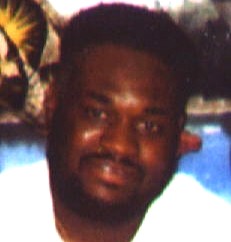
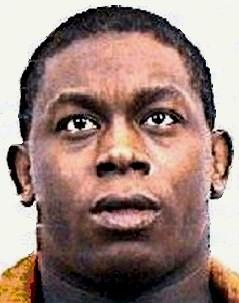
Abdullah Hameen
Homicide - Murderer Douglas Turner
Homicide - Murderer · USA · 1987
Douglas Turner was a juvenile who was released from an alcohol treatment progra…
9 victims
Douglas Turner
Homicide - Murderer · USA · 1987
Douglas Turner was a juvenile who was released from an alcohol treatment progra…
9 victims
 Carl Brandt
Homicide - Murderer · USA · 1971
Carl “Charlie” Brandt · Jan. 3, 1971 — Carl Brandt killed his pregnant mother a…
6 victims
Carl Brandt
Homicide - Murderer · USA · 1971
Carl “Charlie” Brandt · Jan. 3, 1971 — Carl Brandt killed his pregnant mother a…
6 victims
 Henry Brisbon
Homicide - Murderer · USA · 1973
Henry Brisbon was a juvenile (17) when he was convicted for double murder. The…
3 victims
Henry Brisbon
Homicide - Murderer · USA · 1973
Henry Brisbon was a juvenile (17) when he was convicted for double murder. The…
3 victims
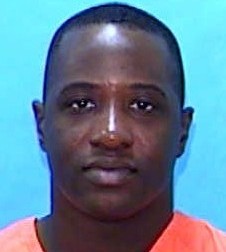 Antonio Melton
Homicide - Murderer · USA · 1990
Antonio Melton was sentenced to death on May 19, 1992. He was born on 12/29/72.…
2 victims
Antonio Melton
Homicide - Murderer · USA · 1990
Antonio Melton was sentenced to death on May 19, 1992. He was born on 12/29/72.…
2 victims
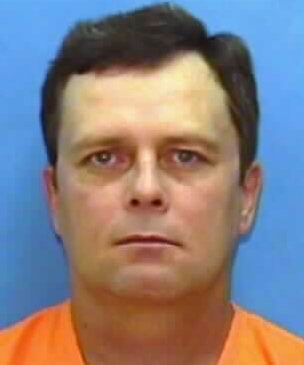 Dana Williamson
Homicide - Murderer · USA · 1975
Dana Williamson (born 09/18/59) was convicted and sentenced to death for the 11…
2 victims
Dana Williamson
Homicide - Murderer · USA · 1975
Dana Williamson (born 09/18/59) was convicted and sentenced to death for the 11…
2 victims
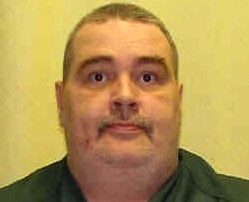 Jessie James Cowans
Homicide - Murderer · USA · 1977
Jessie James Cowans Jessie James Cowans was arrested for armed robbery when he…
2 victims
Jessie James Cowans
Homicide - Murderer · USA · 1977
Jessie James Cowans Jessie James Cowans was arrested for armed robbery when he…
2 victims
 Friedrich Leibacher
Mass murderer · Switzerland · 2001
Friedrich Leibacher (July 21, 1944 – September 27, 2001) was a Swiss spree kill…
14 victims
Friedrich Leibacher
Mass murderer · Switzerland · 2001
Friedrich Leibacher (July 21, 1944 – September 27, 2001) was a Swiss spree kill…
14 victims
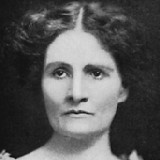 Linda Hazzard
Homicide · USA · 1911
Linda Burfield Hazzard was an alternative medicine practitioner who promoted fa…
1 victim
Linda Hazzard
Homicide · USA · 1911
Linda Burfield Hazzard was an alternative medicine practitioner who promoted fa…
1 victim
 Dennis Roark
Mass murderer · USA · 1989
Dennis Roark Roark returned to the home after a night of drinking at 5:00 a.m.…
4 victims
Dennis Roark
Mass murderer · USA · 1989
Dennis Roark Roark returned to the home after a night of drinking at 5:00 a.m.…
4 victims
 Trupti Patel
Justice miscarriage · United Kingdom · 1997
Trupti Patel was a qualified pharmacist from Berkshire, England. She was born i…
0 victims
Trupti Patel
Justice miscarriage · United Kingdom · 1997
Trupti Patel was a qualified pharmacist from Berkshire, England. She was born i…
0 victims
 Mark Aaron Brown
Murderer · USA · 1994
Mark Aaron Brown (also referred to as Mark A. Brown) was born on November 13, 1…
2 victims
Mark Aaron Brown
Murderer · USA · 1994
Mark Aaron Brown (also referred to as Mark A. Brown) was born on November 13, 1…
2 victims
 Stacey Castor
Murderer · USA · 2005
Stacey Castor (born July 24, 1967) was a resident of Clay, New York. She was co…
1 victim
Stacey Castor
Murderer · USA · 2005
Stacey Castor (born July 24, 1967) was a resident of Clay, New York. She was co…
1 victim
- Gender
- male
- Country
- USA
- Location
- Delaware, USA
- Date of birth
- October 7, 1963
- Age at first offence
- 17
- Characteristics
- juvenile (17)
- Victim profile
- Patron of a bar / Troy Hodges (drug deal)
- Method of murder
- Shooting
- Date(s) of murder
- 1980 / 1991
- Years active
- 1980–1991
- Date of arrest
- October 23, 1991
- Status
-
Executed
Executed by lethal injection in Delaware on May 25, 2001
Case record
Abdullah Hameen was executed by lethal injection in Delaware on May 25, 2001. He was also known as Cornelius Ferguson and Abdullah Tanzil Hameen.
Timeline
- May 17, 2000 — The United States Court of Appeals for the Third Circuit case was filed: Abdullah Tanzil Hameen, a/k/a Cornelius Ferguson v. State of Delaware, Cornelius E. Ferguson, Jr., a/k/a Abdullah Tanzil Hameen, Appellant.
- February 22, 2000 — The Third Circuit was reargued.
- January 28, 1998 — The Third Circuit was argued.
- May 25, 2001 — Abdullah Hameen was executed by lethal injection; he was pronounced dead at 12:07 a.m. after the lethal injection began just after 12 a.m.
- May 17, 2000 — The Third Circuit appeal record notes: Filed May 17, 2000.
- June 13, 1996 — After unsuccessful post-conviction relief in the state courts, Ferguson filed his habeas petition pursuant to 28 U.S.C. § 2254 in the district court.
- December 13, 1996 — The district court denied habeas corpus relief (without holding an evidentiary hearing after oral argument) and declined to issue a certificate of appealability.
- December 13, 1996 — The order denying habeas corpus relief was issued.
- September 30, 1991 — He was transported to Media courthouse, Court of Common Pleas, where he waived extradition.
- October 1, 1991 — He was extradited to the State Police station Troop 2 New Castle County, Delaware, where he was fingerprinted, photographed, and transported to the Gonder Hill prison.
- September 26, 1991 — He called his parole officer to confirm that the Chester police wanted to question him concerning a murder; he turned himself in at 1:30 pm and was transported to Media, PA, where he was interrogated until 3:30 pm; interrogation resumed until 7:45, when he was taken to the Media police station to await Detective Mark Daniels; he was questioned again and given a copy of the affidavit and listened to Tyrone’s taped confession against him; he gave a taped statement confessing to the murder at 10:15 pm.
- October 15, 1991 — He was indicted by the Grand Jury in and for New Castle County, Delaware, on the following counts: Murder in the first degree (intentional and felony murder), two counts possession of deadly weapon during commission of felony, two counts conspiracy in the first degree, two counts.
- October 23, 1991 — He was officially arrested Superior Court of Wilmington, Delaware.
- September 10, 1991 — Chester police along with the State Police picked up Tyrone for questioning at the Criminal Investigation Division in Media, PA.
- September 23, 1991 — He was informed that the State Police wanted to question him concerning a murder.
- September 26, 1991 — He turned himself into his parole officer and was interrogated and confessed.
- On or after November 4, 1991 — The Delaware capital sentencing statute was amended effective November 4, 1991.
- February 2, 1992 — A Proof Positive Hearing was conducted by Judge Gebelein finding Proof Positive in favor of the state.
- November 2-3, 1992 — His trial began and ended; he was found guilty by a vote of 12-0 of all charges, except Count two, Conspiracy of felony murder, which was nolle pros.
- November 16-18, 1992 — Penalty hearing was conducted; the jury vote was 12-0 in favor of the death penalty.
- December 1, 1992 — He was sentenced to two death sentences for each count of murder (I and IV) and terms of incarceration for count III and IV and a term of incarceration for count V to be followed by six months at a halfway house.
- Wednesday — The pardons board testified and deliberated; Tara Hodges testified; Hameen and several supporters testified at the first hearing.
- Thursday — Several appeals were rejected; a judge denied motions, and Judge Richard S. Gebelein denied motions to reconsider and to stay execution.
- Late Thursday morning — Superior Court Judge Richard Gebelein denied a defense motion asking him to reconsider.
- Late Thursday afternoon — A protest rally outside Legislative Hall occurred; Judge Gebelein denied a motion filed by the Wilmington-based North American Islamic Foundation to halt the execution.
- Earlier that day (of the execution-related reporting) — A Wilmington Imam was forced to go to court several times to challenge the prison for not letting him meet with Hameen as his spiritual advisor.
Background
Abdullah Hameen was executed early on May 25, 2001. He was described as “a career criminal” who killed 2 men. He was born Cornelius Ferguson. He was on death row for the 1991 murder of Troy Hodges.
At the time of execution, Hameen was 37.
He was on parole for a murder committed in 1980, when he was 17, and he killed a patron of a bar.
The offence
Hameen killed Troy Hodges during a drug deal at a Claymont mall. The killing occurred during a confrontation when an argument erupted about the deal, as Troy Hodges attempted to exit the car.
Hameen admitted shooting Hodges, but claimed that the beeper Hodges was reaching for was a gun, and that he shot in self-defense.
Hodges died of massive hemorrhaging due to a single gunshot wound. The autopsy indicated that the bullet was fired from behind; it entered Hodges’ left side and traveled through his body in an upward trajectory. The hole in Hodges’ shirt and the wound in his torso indicated that the muzzle of the gun had been pressed against Hodges’ body when the shot was fired.
Other people involved
Hameen’s accomplice was Tyrone Hyland, who drove the car and later pled guilty to Murder 2d Degree and was sentenced to 15 years.
Alvin Wiggins accompanied Hodges to the mall and testified at Ferguson’s trial. At the time of these events, Wiggins was seventeen years old.
Stewart Cohen testified that on the night of August 5, 1991, he was in the parking lot of the K-Mart at the Tri-State Mall, heard a “popping sound,” saw a blue Chevrolet Cavalier moving slowly in the parking lot, saw a person shoved or jumping out of the car, and saw the person run towards him and collapse on the sidewalk.
Investigation and statements
Ferguson gave a tape recorded statement to the Delaware State Police on September 26, 1991. In his statement, he admitted he was a passenger in a car driven by Hyland to the mall on the night of August 5, 1991 and that he was sitting in the back seat. He stated that Hyland parked the car, that Hodges got into the front passenger seat, and that Hyland and Hodges argued about money and drugs.
According to Ferguson, Hyland clandestinely gave him a gun; the gun was already cocked when he received it. He pointed the gun at Hodges. He stated that although the car was moving slowly toward the mall, Hodges opened the car door and tried to leave. Ferguson stated that Hodges slapped at the gun, causing it to “accidentally” fire a single shot. Ferguson claimed he did not know Hodges had been wounded and died until days later.
In his later statement, Ferguson explained his version of events as follows, including his asserted background and timeline of that day:
“On that very unfortunate evening of August 5, 1991, I still had a contract, (a murder for hire) out on my life and in that vein I kept a gun with me at all times for self protection. This particular day started out like every other in that I would get in around 6-6:30AM, take a shower and nap, then take my lady friend to work, with us leaving the house, around 7:15. After dropping her off I would stop by a female friends house where I would leave my gun so it would be close by. Upon leaving work I would pick my gun up. While at work I would call my cousin on lunch break to make sure everything and everyone were all right…” “Later, after my trial and I had been sentenced to death (I learned by way of my co-defendants attorney, the object I perceived as a gun was a beeper) at this point my intent was only to prevent him grabbing and firing his gun.” “Thereafter, we returned to Chester, we did not learn of his death until days later and were officially notified on September 10, 1991 when Chester police along with the State Police picked up Tyrone for questioning at the Criminal Investigation Division in Media, PA.” “On September 26, 1991, I was interrogated by Detectives until 3:30 pm… resumed the interrogation until 7:45, at which time I was taken to the Media police station… Around 10:15 pm I gave a taped statement confessing to the murder of Troy Hodges.”
He stated that after his taped confession he was transported to the Magisterial District of Chester’s police station, where he was arraigned and ultimately transported to Delaware county prison.
He further stated that on October 15, 1991 he was indicted by the Grand Jury in and for New Castle County, Delaware, on the counts listed in the record.
Arrest and detention
After being indicted, he described being officially arrested on October 23, 1991 at Superior Court of Wilmington, Delaware.
He described being transported to Media courthouse, Court of Common Pleas on September 30, 1991 where he waived extradition, and being extradited on October 1, 1991 to Delaware State Police station Troop 2 New Castle County, Delaware, where he was fingerprinted, photographed, and transported to the Gonder Hill prison.
Trial
His trial began and ended November 2-3, 1992.
At the conclusion of the guilt and innocence phase, he was found guilty by a vote of 12-0 of all charges except Count two, Conspiracy of felony murder, which was nolle pros.
After the guilt and innocence phase, a penalty hearing was held November 16-18, 1992, which ended with a jury vote of 12-0 in favor of the death penalty.
Sentencing
On December 1, 1992, he was sentenced to two death sentences for each count of murder (I and IV) and two consecutive mandatory terms of incarceration for twenty years (for count III and IV), and to a consecutive mandatory term of incarceration for five years for count V, to be followed by six months at a halfway house.
In the sentencing process described for the case:
- a Delaware state jury convicted Ferguson of two counts of first-degree murder as well as other charges resulting from a single homicide and robbery in 1992.
- after a penalty hearing, the jury unanimously found three aggravating circumstances beyond a reasonable doubt:
- Ferguson previously had been convicted of another murder or manslaughter or of a felony involving the use of, or threat of, force or violence upon another person,
- Ferguson committed the murder while engaged in the commission of, or attempt to commit, or flight after committing or attempting to commit any degree of robbery,
- Ferguson committed the murder for pecuniary gain.
The record also reflected that the trial court independently analyzed the evidence and reached the same conclusions, including that it considered the robbery and pecuniary gain aggravators as one factor and placed no independent weight on the pecuniary gain aggravator.
Appeals
Ferguson pursued relief in Delaware courts and federal habeas proceedings.
A Delaware Supreme Court decision is referenced:
- “Ferguson v. State, 642 A.2d 772 (Del. 1994) (en banc)”.
Post-conviction proceedings were referenced:
- “State v. Ferguson, 1995 WL 413269 (Del. Super. Ct. Apr. 7, 1995)”.
- “Ferguson v. State, 676 A.2d 902 (Del. 1995) (table)”.
Federal habeas proceedings were referenced:
- “Ferguson v. State, 1996 WL 1056727 (D. Del. 1996)”.
- “Ferguson v. State” in the Third Circuit appeal, with arguments and filings as listed in the timeline.
The Third Circuit appeal described was:
- the court considered sentencing issues and affirmed the denial of habeas relief.
Outcome
Hameen was executed by lethal injection in Delaware on May 25, 2001.
Warden Robert Snyder asked if he had any last words or statements; Snyder said:
“Hameen,” Snyder said, “I'm going to ask at this time if you have any last words or statements.”
Hameen replied:
“Tara, I hope this brings you comfort and eases your pain some,” Hameen said.
“Mom and Shakeerah, I love you,” he said.
“I'll see you on the other side. That's all.”
After the lethal drugs began to flow, Hameen exhaled loudly three times before falling silent.
The lethal drugs began to flow into Hameen’s veins; Snyder announced:
“Hameen passed on at 12:07,” Snyder said.
He was pronounced dead at 12:07 a.m.
Aftermath and reactions
Tara Hodges spoke at a post-execution news conference, describing the execution’s effect on her family’s life. She said:
“The nightmare, this chapter, is over,”
and: “I wanted to know he was paying the price. This should have happened 10 years ago. I needed to see this happen to make sure he was really dead,”
and: “I hope it sends a message to people that you can't kill 1, 2 or 3 times and expect to get away with it,”
and: “It was meaningless to me. ... I felt comfort, not from what he said, but the act brought me some comfort.”
and: “I hope this deters anybody who wants to commit a murder,”
“We don't have to fear him any more.”
Shakeerah Hameen said she attended the execution to complete an Islamic pre-death affirmation with her husband and stated:
“It hurt to see my husband die, but I know that one day, inshallah, [God willing], I will meet him again,”
Corrections Department spokeswoman Beth Welch stated that Hameen spent his last 24 hours sleeping, eating, reading, writing letters, watching television and talking to prison staff, family members and his attorney, visited with family members and his spiritual adviser, and selected his last meal of lobster, crab legs, baked potato with sour cream, a mango and ice water.
Protesters gathered outside the Delaware Correctional Center; Warden Robert Snyder stated he asked Hameen if he had any last words. Hameen replied with the same last words quoted above.
Other details
Hameen’s supporters and his attorneys sought commutation to life; those appeals were rejected by state superior and supreme courts.
The Board of Pardons concluded that Hameen had expressed true remorse and made genuine attempts at rehabilitating himself and others, but it did not find sufficient justification to overturn a jury’s unanimous recommendation that he be put to death.
Superior Court Judge Richard S. Gebelein denied a motion asking him to reconsider and denied requests for a stay of execution.
A motion filed by the Wilmington-based North American Islamic Foundation to halt the execution was denied; the foundation director Ismaa’eel Hackett said:
“God states that a Muslim cannot be put to death for killing a disbeliever, Mr. Hackett said. Based on those premises, we have to say that Abdullah Hameen should not be put to death.”
The record described that Judge Gebelein ruled the foundation had no standing to seek a stay of execution and that similar motion filed with the state Supreme Court was affirmed.
The Third Circuit opinion also described that at the time of Hameen’s offences, Delaware’s capital sentencing statute procedure differed from the amended version effective November 4, 1991. The Third Circuit addressed Ferguson’s Ex Post Facto Clause argument and rejected it, concluding the Delaware Supreme Court’s decisions did not violate the AEDPA “contrary to” clause and were not an unreasonable application of clearly established federal law.
The Third Circuit opinion also discussed a “duplicative aggravating statutory circumstances” claim, involving aggravating circumstances for pecuniary gain and robbery, and concluded that it failed and that any discussion of procedural default was unnecessary given the merits disposition.
The record included a long statement from Abdullah Hameen recounting his version of events and describing his later confession and trial timeline, including his claims that “Tyrone gave a taped statement implicating me,” and describing his waiver of extradition and his being indicted and arrested and his trial and sentencing phases, and his account of the circumstances leading to the shooting as he perceived it as reaching for a gun and later learning it was a beeper.

Spotted an error, or have more information about this case?