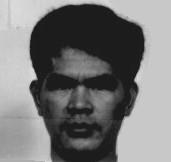
Hai Hai Vuong
Murderer Brian Kevin Rosenfeld
Murderer · USA · 1985
Brian Kevin Rosenfeld Brian Kevin Rosenfeld was sentenced to three concurrent l…
23 victims
Brian Kevin Rosenfeld
Murderer · USA · 1985
Brian Kevin Rosenfeld Brian Kevin Rosenfeld was sentenced to three concurrent l…
23 victims
 Yahweh ben Yahweh
Murderer · USA · 1980
Yahweh ben Yahweh was born and legally named Hulon Mitchell Jr. (October 27, 19…
23 victims
Yahweh ben Yahweh
Murderer · USA · 1980
Yahweh ben Yahweh was born and legally named Hulon Mitchell Jr. (October 27, 19…
23 victims
 Russell Ellwood
Murderer · USA · 1991
Russell Ellwood was a former taxi driver. Authorities suspected him of killing…
20 victims
Russell Ellwood
Murderer · USA · 1991
Russell Ellwood was a former taxi driver. Authorities suspected him of killing…
20 victims
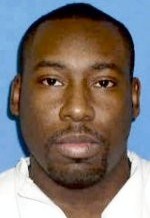 Frederick Patrick McWilliams
Murderer · USA · 1996
Frederick Patrick McWilliams McWilliams was executed by lethal injection in Tex…
1 victim
Frederick Patrick McWilliams
Murderer · USA · 1996
Frederick Patrick McWilliams McWilliams was executed by lethal injection in Tex…
1 victim
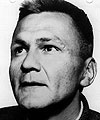 William Tahl
Murderer · USA · 1965
Name: William Tahl William Tahl clashed with authority for the first time at ag…
3 victims
William Tahl
Murderer · USA · 1965
Name: William Tahl William Tahl clashed with authority for the first time at ag…
3 victims
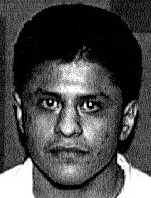 Pablo Melendez
Murderer · USA · 1994
Pablo Melendez was sentenced to death on May 21, 1996. At the guilt/innocence s…
1 victim
Pablo Melendez
Murderer · USA · 1994
Pablo Melendez was sentenced to death on May 21, 1996. At the guilt/innocence s…
1 victim
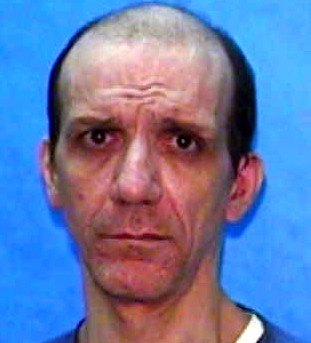 Francisco del Junco
Serial killer · USA · 1995
Francisco del Junco came to Miami in the 1980 Mariel boat lift. He was describe…
4 victims
Francisco del Junco
Serial killer · USA · 1995
Francisco del Junco came to Miami in the 1980 Mariel boat lift. He was describe…
4 victims
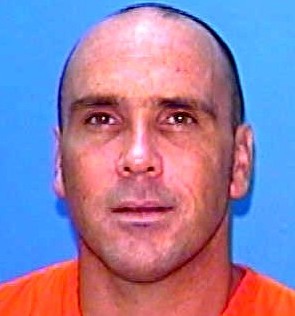 John Buzia
Murderer · USA · 2000
John Buzia was sentenced to death on March 11, 2004. · 03/14/00 — John Buzia di…
1 victim
John Buzia
Murderer · USA · 2000
John Buzia was sentenced to death on March 11, 2004. · 03/14/00 — John Buzia di…
1 victim
 Judith Neelley
Murderer · USA · 1982
Judith Neelley was also known as Judith Ann Adams Neelley. Judith Ann Adams Nee…
2 victims
Judith Neelley
Murderer · USA · 1982
Judith Neelley was also known as Judith Ann Adams Neelley. Judith Ann Adams Nee…
2 victims
- Gender
- male
- Country
- USA
- Location
- Jefferson County, Texas, USA
- Date of birth
- September 19, 1955
- Age at first offence
- 31
- Characteristics
- argument
- Victim profile
- Tien Van Nguyen, 27, and Hien Quang Tran, 16
- Method of murder
- Shooting ( semi-automatic .223 caliber rifle)
- Date(s) of murder
- December 7, 1986
- Years active
- 1986
- Date of arrest
- —
- Status
-
Executed
Executed by lethal injection in Texas on December 7, 1995
Case record
Status and appellate posture
Hai Hai Vuong challenged the dismissal of his petition for a writ of habeas corpus contesting his death sentence under 28 U.S.C. Sec. 2254. The United States Court of Appeals for the Fifth Circuit affirmed the district court’s decision. Vuong was executed by lethal injection in Texas on December 7, 1995.
Offender
Hai Hai Vuong was listed as offender #904 in the execution materials.
Last statement
Vuong’s last statement was:
I thank God that he died for my sins on the cross, and I thank Him for saving my soul, so I will know when my body lays back in the grave, my soul goes to be with the Lord. Praise God. I hope whoever hears my voice tonight will turn to the Lord. I give my spirit back to Him. Praise the Lord. Praise Jesus. Hallelujah.
Timeline
- December 7, 1986 — Vuong and two friends played pool and drank beer at the Tam Game Room in Port Arthur, Texas.
- March 1987 — A grand jury indicted Vuong for the capital murder of Hien Quang Tran in the course of committing the murder of Nguyen.
- July 1987 — Vuong was arrested on a public intoxication charge in California and was extradited to Texas.
- August 28, 1987 — Vuong gave a statement admitting to firing several shots in the game room while maintaining that he did not recall hitting anyone.
- May 1988 — Vuong’s trial began.
- April 12, 1994 — A judge denied Vuong’s recusal motion in the state collateral review proceeding.
- August 16, 1995 — The Court of Appeals for the Fifth Circuit decided Vuong v. Scott (62 F.3d 673).
- November 30, 1992 — Vuong’s conviction became final on the day certiorari was denied.
- December 7, 1995 — Vuong was executed by lethal injection in Texas.
Background
Vuong’s federal habeas proceedings followed the dismissal of earlier claims and later submissions of additional grounds for relief. The Fifth Circuit’s decision stated that the facts were set forth in Vuong v. State, 830 S.W.2d 929, 933 (Tex.Crim.App.), cert. denied, --- U.S. ----, 113 S.Ct. 595, 121 L.Ed.2d 533 (1992), and in Vuong v. Collins, 867 F.Supp. 1268, 1271 (E.D.Tex.1994).
The offence
On December 7, 1986, Vuong and two friends were playing pool and drinking beer at the Tam Game Room in Port Arthur, Texas. Vuong claimed that Vietnamese gang members from New Orleans started to threaten him there. Vuong became angry, left the establishment, and went home to retrieve a Colt AR-15 or M-16 automatic or semi-automatic 1 .223 caliber rifle.
Vuong returned to the game room with his friend Thien Huu Nguyen, who was armed with a pistol. Vuong fired two shots into the rear wall or ceiling of the Game Room and told the patrons to remain as they were. Vuong then proceeded as the alleged gang members exited the establishment.
Vuong shot Nang Pham, who escaped out the front door, and Luan Mien Do. Vuong shot and killed Tien Van Nguyen (“Nguyen”). Vuong claimed that Nguyen stood up from behind a pool table and was reaching for a gun when shot. No weapon was found on Nguyen. Witness testimony indicated that Nguyen stood up and stated “Hai, it’s me,” in Vietnamese before he was shot.
After killing Nguyen, Vuong shot and wounded Binh Nguyen as he tried to run away, then shot Do a second time. Vuong then went to the doorway separating the game room from the adjoining cafe, which was part of the same business establishment. Vuong walked toward a table where Hien Quang Tran was seated. Tran stood up, and Vuong shot him in the chin, killing him. Vuong took a telephone from the owner of the game room and left.
Vuong fired a total of eleven rounds. Two persons were killed and three others were wounded. Vuong, Thien, and Tuan Van Nguyen left in a blue Monte Carlo that Tuan Van Nguyen had parked and waiting in the street. An arrest warrant was issued, but Vuong eluded police.
Weapon detail mentioned by Vuong
The materials included a note stating: 1 Petitioner maintains that the rifle was automatic rather than semi-automatic. The weapon has never been recovered
Investigation and arrest
An arrest warrant was issued after the killings, but Vuong eluded police. In July 1987, Vuong was arrested on a public intoxication charge in California and was extradited to Texas.
Trial
In March 1987, a grand jury indicted Vuong for the capital murder of Hien Quang Tran in the course of committing the murder of Nguyen, in violation of TEX.PENAL CODE ANN. Sec. 19.03(a)(6)(A).
Vuong gave a statement on August 28, 1987. He admitted to firing several shots in the game room but maintained that he did not recall hitting anyone.
Vuong’s trial began in May 1988. The jury convicted him of capital murder and answered affirmatively the special issues set out in TEX.CODE CRIM.PROC.ANN. art. 37.071, whereupon he was sentenced to death.
The conviction was affirmed on direct review. Vuong v. State, 830 S.W.2d 929 (Tex.Crim.App.), cert. denied, --- U.S. ----, 113 S.Ct. 595, 121 L.Ed.2d 533 (1992).
Indictment excerpt
The decision reproduced the following portion of the indictment:
... HAI HAI VUONG and THIEN HUU NGUYEN on or about the 7th day of December, 1986, and anterior to the presentment of this indictment, in the County of Jefferson and State of Texas, did then and there intentionally and knowingly cause the death of an individual, HIEN QUANG TRAN, by shooting him with a firearm; and the said HAI HAI VUONG and THIEN HUU NGUYEN did then and there intentionally and knowingly cause the death of an individual, TIEN VAN NGUYEN, by shooting him with a firearm, and both of said murders were committed during the same criminal transaction....
Sentencing (punishment phase)
Under Texas law applicable to Vuong, the court submitted three “special issues” required for death sentencing. The materials stated that in multiple murder cases under TEX.PENAL CODE Sec. 19.03(a)(6), the court submitted the three special issues only with regard to the “conduct of the defendant in murdering the deceased individual first named in the indictment.” TEX.CODE CRIM.PROC.ANN. art. 37.071(f).
The indictment named Hien Quang Tran first and Nguyen second. The special issues were submitted as follows:
- “Do you believe beyond a reasonable doubt that the conduct of the defendant that caused the death of Hien Quang Tran was committed deliberately and with the reasonable expectation that the death of Hien Quang Tran or another would result? ...”
- “Do you believe beyond a reasonable doubt that there is a probability that the defendant would commit criminal acts of violence that would constitute a continuing threat to society?”
- “Do you believe beyond a reasonable doubt that the conduct of the defendant in killing Hien Quang Tran was unreasonable in response to the provocation, if any, by Hien Quang Tran?”
Appeals
Direct review
Vuong v. denied, --- U.S. ----, 113 S.Ct. 595, 121 L.Ed.2d 533 (1992).
Federal habeas proceedings in district court
After an execution date was set by the state trial court, Vuong filed a federal habeas petition alleging one claim. The district court granted a stay of execution and granted a motion for substitution of counsel. Vuong filed an amended petition alleging eight errors. The state asserted that Vuong had failed to exhaust state remedies, and the petition was dismissed without prejudice.
Vuong then filed for state collateral relief and filed motions for a stay of execution, an evidentiary hearing, and the recusal of the judge who had presided over the trial. The recusal motion was denied by another judge on April 12, 1994. The trial judge denied the motion for an evidentiary hearing and ordered that affidavits be filed by the parties. After that occurred, the state court entered findings of fact and conclusions of law recommending that relief be denied. After the Texas Court of Criminal Appeals accepted the trial court’s recommendations, Vuong filed another federal habeas petition.
Vuong’s second federal habeas petition again raised eight grounds for relief and asked for a stay of execution, which was granted. The district court dismissed the petition and denied the motion for an evidentiary hearing. Vuong v. Collins, 867 F.Supp. 1268 (E.D.Tex.1994).
Fifth Circuit decision
Vuong appealed. The Fifth Circuit decision addressed his Penry claim about mitigating evidence and later claims about jury communication during punishment deliberations.
Outcome
The Fifth Circuit affirmed the district court’s judgment. The judgment in Vuong’s federal appeal was affirmed.
Aftermath
Other details
Participants mentioned in the offence
- Thien Huu Nguyen was Vuong’s friend and was armed with a pistol.
- Nang Pham escaped out the front door after being shot.
- Luan Mien Do was shot.
- Tien Van Nguyen (“Nguyen”) was killed; no weapon was found on Nguyen.
- Witness testimony indicated Nguyen stated “Hai, it’s me,” in Vietnamese before he was shot.
- Binh Nguyen was shot and wounded as he tried to run away.
- Do was shot a second time.
- Hien Quang Tran was shot in the chin and killed.
- Vuong left with Thien and Tuan Van Nguyen in a blue Monte Carlo.
Criminal law notes included in the decision
- At the time, the statute provided that a person was guilty of capital murder if “he murders more than one person during the same criminal transaction.” This provision was now found in Sec. 19.03(a)(7)(A).
- A note also stated: 2 At that time, the statute provided that a person is guilty of capital murder if "he murders more than one person during the same criminal transaction." This provision is now found in Sec. 19.03(a)(7)(A)
- Another note stated: 3 According to the relevant portion of the indictment: ... (followed by the indictment excerpt).
Parole-related punishment-stage claims
During jury deliberations at the punishment stage, the jury submitted a note to the court asking about, among other things, Vuong’s eligibility for parole. Under Texas law, “a jury may not consider the possibility of parole in its deliberations on punishment.” Felder v. State, 758 S.W.2d 760, 762 (Tex.Crim.App.1988).
The court responded with an explanatory note indicating that a person sentenced to life in prison could earn good time that would reduce the amount of time he had to serve, and that the jury was not to consider parole when determining the sentence.
Vuong alleged two errors arising from events during deliberations:
- He alleged the court communicated with the jury in response to the note without consulting defense attorneys, which he claimed violated Sixth Amendment and Due Process rights.
- In the alternative, he claimed his trial counsel rendered ineffective assistance by failing to object to the communication.
The Fifth Circuit addressed these claims, including issues about the presumption of correctness for state collateral-review findings and whether Vuong established prejudice under Strickland v. Washington and Lockhart v. Fretwell. The Fifth Circuit concluded Vuong failed to establish the requisite prejudice and affirmed the judgment.
Sixth Circuit panel identities mentioned
The Fifth Circuit opinion identified the judge writing the decision as JERRY E. SMITH, Circuit Judge.


Spotted an error, or have more information about this case?