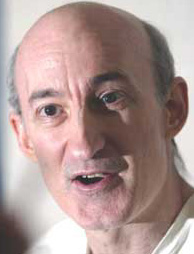
Stephen Vrabel
Homicide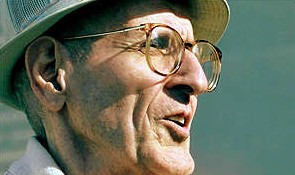 Jack Kevorkian
Homicide · USA · 1990
Jack Kevorkian (born May 26, 1928) was a controversial American pathologist. He…
130 victims
Jack Kevorkian
Homicide · USA · 1990
Jack Kevorkian (born May 26, 1928) was a controversial American pathologist. He…
130 victims
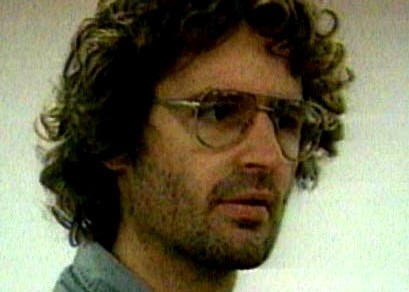 David Koresh
Homicide · USA · 1993
David Koresh (born Vernon Wayne Howell; August 17, 1959 – April 19, 1993) led t…
79 victims
David Koresh
Homicide · USA · 1993
David Koresh (born Vernon Wayne Howell; August 17, 1959 – April 19, 1993) led t…
79 victims
 Todd Hall
Homicide · USA · 1996
Todd Hall was described by neighbors as "mentally slow" and was said to have su…
9 victims
Todd Hall
Homicide · USA · 1996
Todd Hall was described by neighbors as "mentally slow" and was said to have su…
9 victims
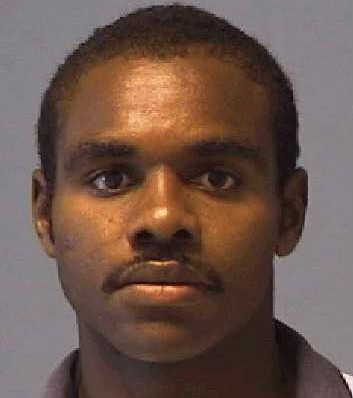 Clinton Bankston
Homicide · USA · 1987
15 August 1987 — Ann Morris (63), her sister Sally Nicholson (59), and Sally’s…
5 victims
Clinton Bankston
Homicide · USA · 1987
15 August 1987 — Ann Morris (63), her sister Sally Nicholson (59), and Sally’s…
5 victims
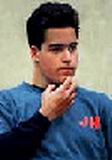 Joshua Jenkins
Homicide · USA · 1996
Joshua Jenkins was a 15-year-old American killer who killed five members of his…
5 victims
Joshua Jenkins
Homicide · USA · 1996
Joshua Jenkins was a 15-year-old American killer who killed five members of his…
5 victims
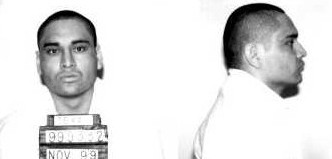 Juan Carlos Alvarez
Murderer · USA · 1998
Juan Carlos Alvarez, born on March 9, 1977, in San Luis, Mexico, was a Hispanic…
5 victims
Juan Carlos Alvarez
Murderer · USA · 1998
Juan Carlos Alvarez, born on March 9, 1977, in San Luis, Mexico, was a Hispanic…
5 victims
 Mariano Juarez Rosales
Murderer · USA · 1985
Mariano Juarez Rosales was sentenced to death on December 27, 1985. · 1984 — Ma…
2 victims
Mariano Juarez Rosales
Murderer · USA · 1985
Mariano Juarez Rosales was sentenced to death on December 27, 1985. · 1984 — Ma…
2 victims
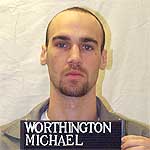 Michael Worthington
Murderer · USA · 1995
Michael Worthington was convicted after pleading guilty to first-degree murder,…
1 victim
Michael Worthington
Murderer · USA · 1995
Michael Worthington was convicted after pleading guilty to first-degree murder,…
1 victim
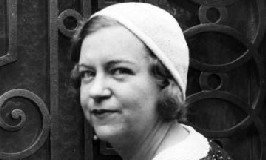 Elvira Barney
Murderer? · United Kingdom · 1932
Elvira Barney Elvira Barney was found not guilty on July 5, 1932. Michael Scott…
1 victim
Elvira Barney
Murderer? · United Kingdom · 1932
Elvira Barney Elvira Barney was found not guilty on July 5, 1932. Michael Scott…
1 victim
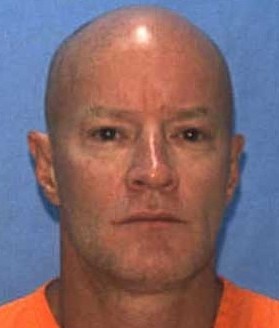 Loran Cole
Murderer · USA · 1994
02/21/94 — Defendant arrested. · 03/04/94 — Defendant entered a plea of “not gu…
1 victim
Loran Cole
Murderer · USA · 1994
02/21/94 — Defendant arrested. · 03/04/94 — Defendant entered a plea of “not gu…
1 victim
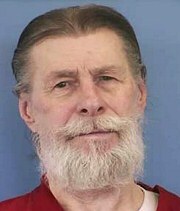 Gerald James Holland
Murderer · USA · 1986
Defendant: Gerald James Holland · Victim: Krystal Dee King (15) · Victim’s sist…
1 victim
Gerald James Holland
Murderer · USA · 1986
Defendant: Gerald James Holland · Victim: Krystal Dee King (15) · Victim’s sist…
1 victim
- Gender
- male
- Country
- USA
- Location
- Mahoning County, Ohio, USA
- Date of birth
- October 15, 1956
- Age at first offence
- 33
- Characteristics
- parricide, mentally ill
- Victim profile
- Susan Clemente, 29 (his live-in girlfriend) and Lisa, 3 (their hysterical daughter)
- Method of murder
- Shooting
- Date(s) of murder
- March 3, 1989
- Years active
- 1989
- Date of arrest
- April 6, 1989 (surrenders)
- Status
-
Executed
Executed by lethal injection on July 14, 2004 in Ohio
Case record: Stephen Vrabel
Background
Stephen Allen Vrabel was a white male who lived in an apartment in Struthers, Ohio, with Susan Clemente, his girlfriend. Vrabel and Susan Clemente were not married but lived together and had a child, Lisa, who was born in 1985. Susan Clemente was 29 years old at the time of the murders. Lisa Clemente was 3 years old at the time of the murders.
Vrabel was later found to be incapable of assisting in his own defense due to mental illness and therefore incompetent to stand trial. After five years of confinement in mental hospitals, Vrabel was found sufficiently recovered to go to trial and was re-indicted on aggravated murder charges.
At the time of clemency proceedings, Vrabel was represented by attorney John B. Juhasz; co-counsel Mary Jane Stephens was unable to attend. Vrabel did not request, and did not want, clemency.
The offence
On March 3, 1989, Vrabel bought a handgun at the Miller Rod & Gun Store in Youngstown, Ohio. When he initially attempted to purchase a gun, he was told he could not purchase it because his license had expired. Later that afternoon, he returned with a valid Ohio ID card and purchased a Jennings .22 semi-automatic handgun and ammunition. There was no waiting period to purchase it at that time. During the visit, he appeared calm and did not seem nervous, anxious, or intoxicated. Vrabel later told police he had bought the gun for no particular reason except that he had always wanted one.
When Vrabel returned to the apartment, he loaded the gun and put it in the hallway closet. He then began drinking beer heavily and smoking marijuana. Vrabel retrieved the loaded gun and pointed it at Susan as she was walking to the kitchen. Vrabel fired one shot at Susan’s head; she fell face down, moaning. Lisa began “freaking out”. Vrabel then shot Susan in the head again as she lay on the kitchen floor.
Vrabel thought Susan had been better off dead and that Lisa would be better off dead because her mother was dead and her father would be going to prison. Vrabel fired one shot at Lisa’s head and “felt that she died immediately”.
Investigation
After the shootings, Vrabel left the apartment with the gun and checked into a motel in Liberty Township, where he spent the night. The next morning, he drove Susan’s 1976 Plymouth to Wheeling, West Virginia, and left it there. He took a Greyhound Bus to Columbus, Ohio, and spent the night at a hotel near the Ohio State University campus. The following morning, he took a bus back to Wheeling, picked up Susan’s car, and drove back to his apartment in Struthers.
Vrabel poured floor stripper over the bodies because they smelled and slept in the apartment that night. The next day, he wrapped the bodies in blankets and sheets. He emptied the refrigerator and put Susan’s body in the refrigerator and Lisa’s body in the freezer compartment. He put two of Lisa’s favorite stuffed animals in the freezer with her. Vrabel tried to clean the blood off the floor with several household-cleaning agents. He cut out a blood-stained portion of the hallway carpet and disposed of it in the apartment dumpster.
During the rest of March 1989, Vrabel continued to live in the Struthers apartment. Susan’s sister, Linda Aey, attempted to visit Susan several times in order to collect the March rent. On one occasion, Vrabel opened the back window and told Linda that Susan and Lisa were not feeling well. Another time, he told Linda that Lisa and Susan were at the grocery store. On each occasion, Vrabel seemed fine to Linda.
On April 4, 1989, Vrabel checked into a motel in Liberty Township. The following night he spent the night at a motel in Austintown. On April 5, 1989, Michael Aey went to Vrabel’s apartment to collect two months’ rent. As he went up the apartment stairs, he noticed the smell of cleaning fluids. When he entered the apartment, he saw it was “messed-up”. Before he left, he opened the refrigerator and discovered Susan’s body. Michael Aey went home to call the police because there was no phone in the apartment.
When police arrived, they found the apartment to be a mess with beer cans in every room. During the investigation, police found Lisa’s body in the freezer compartment wrapped in a blanket, along with a pillow with gunshot residue on it. Police found three shell casings in plain view. The Deputy Corner later determined that both Susan and Lisa died from gunshot wounds to the head.
On the morning of April 6, 1989, Vrabel was driving Susan’s car to Parma when he heard on the radio that the bodies of Susan and Lisa had been discovered and that police were looking for the victim’s boyfriend. Vrabel went to St. Charles Catholic Church in Parma and approached Father Carlin. Vrabel told Father Carlin he had been involved in the homicide of his wife and child. Father Carlin accompanied him to the Parma Police Department. Parma Police advised Vrabel of his rights, and Vrabel waived them before giving an oral statement.
Vrabel admitted shooting Susan and Lisa but claimed he did not know why he shot Susan. He stated the gun used was in the back seat of the Plymouth in a gray duffel bag. Police obtained a search warrant and found the gun where he said it would be. Parma Police informed Struthers Police that they had Vrabel in custody. Struthers Police also advised Vrabel of his rights, which he waived before giving a statement. When asked what caused the offense, Vrabel responded: “Sometimes when I drink, things happen.”
Vrabel admitted committing the murders and described to police the events surrounding the murders and his actions during the month leading up to his surrender and arrest in Parma. Ballistics testing and comparisons made on cartridge casings and bullet fragments were consistent with bullets test-fired from the murder weapon belonging to Vrabel.
Arrest
Vrabel was in custody after Parma Police informed Struthers Police that they had him in custody. He had approached Father Carlin, who accompanied him to the Parma Police Department, where he gave an oral statement and later gave a statement after waiving his rights again to Struthers Police.
Trial
Vrabel was indicted by a grand jury on two counts of aggravated murder on April 10, 1989. Each count carried a death-penalty specification alleging that the murders were committed as a course of conduct involving the killing or attempt to kill two or more persons, and each count carried a firearm specification.
Following his indictment, the trial court appointed mental health professionals to evaluate him. Psychologist Nancy Huntsman found Vrabel incompetent to stand trial. Vrabel was committed to the Timothy B. Moritz Forensic Center in 1990 and remained there until 1994.
On August 30, 1994, the Western Reserve Psychiatric Hospital notified the Mahoning County Prosecutor that Vrabel was competent to stand trial and had no active mental illness.
After reindictment, the state and defense agreed to have Dr. Otto Kausch examine Vrabel to evaluate competency to stand trial. At a November 3, 1994 competency hearing, Dr. Kausch testified that Vrabel possessed the capacity and willingness to assist in his own defense. Dr. Kausch observed that Vrabel had personality problems that, under stress, could cause him to act in ways potentially disruptive to trial proceedings. Dr. Kausch concluded that Vrabel was malingering and not mentally ill based on the evaluations.
At the conclusion of the hearing, the court held Vrabel competent to stand trial and ordered a mental exam pursuant to his plea of not guilty by reason of insanity. At a February 7, 1995 competency hearing, both sides stipulated to the reports of Dr. Giannini and the Forensic Psychiatric Center of Northeast Ohio, and the court again declared Vrabel competent to stand trial. Vrabel moved to withdraw his insanity plea.
At a March 21, 1995 hearing upon advisory counsel’s motion, the court ordered Vrabel’s competency to stand trial reevaluated. On March 24, 1995, the court admitted the report of Dr. Brian Sullivan, who concluded Vrabel was competent to stand trial; Dr. Sullivan found Vrabel “is able to understand the charges against him and participate meaningfully in his defense.” Vrabel acknowledged that his motion to change venue to the spirit world was “meant as a joke.” Vrabel entered another plea of not guilty by reason of insanity.
The trial began with voir dire of prospective jurors on September 12, 1995. The state called numerous witnesses, and the defense presented several witnesses in support of Vrabel’s insanity defense. Dr. Douglas Darnall, a clinical psychologist called on behalf of the defense, testified that Vrabel “did not have the ability to conform to the confines of law [and] could not distinguish between right and wrong.” In rebuttal, the state presented Dr. James Giannini, who opined that Vrabel “was sane at the time of the commission of the two acts for which he is being charged. * * * [H]e did know the difference between right and wrong.”
After deliberation, the jury found Vrabel guilty as charged. During mitigation, Vrabel elected to present only his unsworn statement as evidence, and he said: “[B]asically what I am saying is there is nothing of a mitigatory factor that can outweigh the aggravating circumstances that occurred that most notably of two people's lives being wiped out.”
The trial court instructed the jury on mitigating factors: R.C. 2929.04(B)(3) mental disease or defect; R.C. 2929.04(B)(5) lack of a significant history of criminal convictions; and R.C. 2929.04(B)(7) any other factors relevant to whether defendant should be sentenced to death.
Vrabel was found guilty by a jury and sentenced to death on both counts.
During pretrial proceedings, Vrabel filed written pleas of not guilty and not guilty by reason of insanity and asserted his right to waive legal counsel and represent himself. The court appointed two attorneys to serve as advisory counsel, but Vrabel refused to provide them information or accept their assistance in preparing a defense. In one of several pretrial competency hearings at which he represented himself, Vrabel did not dispute a court-appointed psychiatrist’s testimony that he was competent to stand trial. Less than a month before the scheduled trial date, the court granted his motion to represent himself at trial and he withdrew his insanity plea. Five days before the scheduled trial date, Vrabel re-filed a plea of not guilty by reason of insanity and requested counsel assistance. The trial was postponed for six months to allow attorneys to prepare a defense. Once jurors had been selected, Vrabel moved to dismiss his attorneys and represent himself; the court denied his motions.
After the jury convicted Vrabel on both murder charges, the judge granted his request to limit mitigation testimony during the sentencing phase to a brief personal statement by Vrabel to the jurors. In that statement, Vrabel told the jury there were no mitigating circumstances that should prevent them from imposing the death penalty.
Sentencing
Vrabel received the death sentence on both aggravated murder counts. After less than a day of deliberation, the jury returned a death penalty recommendation.
The trial record later included presiding judge information from the clemency materials: Honorable R. Scott Krichbaum. The clemency materials listed prosecuting attorney James Philomena and assistant prosecuting attorney Ken Bailey.
Appeals
Vrabel appealed his aggravated murder convictions and death sentence. The 7th District Court of Appeals upheld both the murder convictions and death sentence.
In July 2003, Vrabel submitted a handwritten letter asking to waive any further appeals to Ohio Public Defender David Bodiker. Vrabel waived the remainder of his available federal appeals.
The Ohio Supreme Court case was identified as State v. Vrabel, 790 N.E.2d 303 (Ohio 2003) (Direct Appeal). The Supreme Court affirmed the convictions and death sentence. The Supreme Court opinion described that Vrabel was properly found competent to stand trial, received effective assistance of counsel, the trial court permitted waiving mitigating evidence, the trial court did not abuse its discretion in denying the untimely request to represent himself, prospective jurors were not subject to challenge for cause, gruesome autopsy and crime scene photographs were admissible, and the sentence of death was appropriate; judgment was affirmed. Chief Justice Thomas Moyer dissented with an opinion joined by Pfeifer and Lundberg Stratton.
In the dissenting portion quoted in the clemency materials, Chief Justice Thomas Moyer wrote:
“On the record before us,” Ohio Supreme Court Chief Justice Thomas Moyer wrote for the dissenting minority, “I cannot conclude beyond a reasonable doubt that Vrabel’s mental illness did not causally contribute to his tragic criminal conduct, thereby reducing his moral culpability to a level inconsistent with the imposition of the ultimate penalty of death.”
Clemency proceedings
Clemency was initiated by the Honorable Bob Taft, Governor of the State of Ohio, and the Ohio Parole Board pursuant to Section 2967.03 of the Ohio Revised Code and Parole Board Policy 105-PBD-01. A Death Row Clemency Review Hearing took place on June 25, 2004 at 1030 Alum Creek Drive, Columbus, Ohio 43205, with eight members of the Ohio Parole Board participating.
Attorney John B. Juhasz appeared to represent Vrabel, and co-counsel Mary Jane Stephens was unable to attend. Representatives of the victims’ families testified, including Ms. Rita Sakara (victims’ aunt/great aunt), Alex Clemente (victim’s brother/uncle), and Linda Aey (victim’s sister/aunt). The clemency materials stated that family members gave testimony sharing sadness and sense of loss at the death of Susan and Lisa Clemente.
The Ohio Parole Board discussed copies of competency reports from clinical psychologist John M. Fabian dated March 16, 2004, and from Phillip J. Resnick, M.D. dated February 4, 2004. These reports were prepared to assess Vrabel’s competence to waive appeals and competence to be executed.
Phillip J. Resnick, M.D. concluded that Vrabel: gave clean and logical reasons for preferring to have the death penalty; had a comprehensive understanding of his legal position; stated that if he were choosing between prison and freedom he would not choose death; had a clear understanding of the ramifications of his decision; had spoken of donating body organs and understood the irreversibility of death; had consistently for nine years voiced a desire for the death penalty rather than life in prison and denied mitigation to preclude death; could weigh advantages and disadvantages of obtaining further appeals; did not desire to commit suicide because he lacked the means of assuring he could complete the action; believed he would have approximately one year of life prior to execution and could change his mind during that time; had a history of paranoid delusion but none were currently evident; had no hallucinations reported; had a measured IQ in the average range and no mental retardation; had no signs of confusion about the decision to waive appeals; and had no signs of depression to distort reasoning about abandoning further appeals.
Arguments in opposition to clemency included brutality of the crime, vulnerability of the victims (one only 3 1/2 years old), senselessness with no explanation, Vrabel’s role as father and husband of the victims, and Vrabel not asking for clemency. The clemency materials also described that Vrabel initially tried to avoid conviction by defiant resistance to clinical assessment, resulting in a finding of incompetence to stand trial and transfer to a forensic facility; in the 14 clinical assessments that followed, he had not been found incompetent, and any mental disturbance or illness was said to be in remission with a recent finding of competency to waive appeals. The clemency materials stated there was no question of guilt because he confessed to police and was found guilty by jury.
The clemency materials also recorded a conclusion from the parole board: Vrabel did not want clemency and no mercy appeared warranted; there was no manifest injustice in denying executive clemency; significant mitigation found by Ohio Supreme Court dissenters was said to be greatly outweighed by aggravating circumstances of a double murder including Vrabel’s 3 1/2 year old daughter; mental illness did not preclude the imposition of the death sentence, and there was information to show no sign of major mental illness; there was some evidence suggesting possibility of malingering in the past but no current evidence of mental defect. The report stated members concurred with imposition of the death penalty and found exercise of clemency not warranted. The Ohio Parole Board recommended to Governor Bob Taft that executive clemency be denied in the case of Stephen Allen Vrabel #313-033 by a vote of eight to zero.
In a statement attributed to Attorney General Jim Petro in the clemency-related materials, he said: “The evidence in this case is one that is substantially overwhelming, so he’s kind of basically willing to throw in the towel,” and “That’s not a bad thing.”
Outcome
Vrabel was executed by lethal injection in Ohio on July 14, 2004. He was pronounced dead at 10:14 a.m. at the Southern Ohio Correctional Facility. He was described as calm and voluntarily going to death, with a brief final statement.
Vrabel’s final statement before the execution was:
“I want to thank my sister for all the joy and happiness she has brought into Lisa's life, and I want to apologize to anyone I may have wronged in my life.”
The clemency and sentencing materials included “Final Words” as: "I want to thank my sister for all the joy and happiness she brought into Lisa's life, and I want to apologize to anyone I may have wronged in my life."
After giving his statement, Vrabel began blinking rapidly. After the drugs took effect, he breathed deeply three times, gasped twice, then took a series of shallow breaths. His Adam’s apple bobbed up and down several times, and then he was still.
The clemency materials and other narrative also stated that Vrabel had asked to be executed for his two murder convictions, dropped his federal appeals, and voluntarily abandoned court appeals to speed the process. It was also noted that he was the second Ohio death row inmate since 1999 to drop his appeals, and that Gov. Bob Taft declined to stop his scheduled execution.
The Canton Repository and other included material stated that Vrabel would be buried that day in a state-owned cemetery in Chillicothe, according to Larry Greene.
Aftermath
Vrabel’s sister, Karen Koval, sobbed quietly throughout the execution and leaned on her son, Greg Koval. Susan Clemente’s father, son, two brothers, and two brothers-in-law witnessed the execution. Family members and friends also witnessed the execution, including Kenneth Kotouch, who later said:
“Susan and Lisa Clemente have finally been put to rest after 15 years of legal battles with the court system. They both can rest in peace now knowing that this nightmare has finally come to an end,”
and also said: “There were no winners today, there was only justice.”
Clemency materials described the offense as two counts of aggravated murder with firearm specifications and specifications of aggravating circumstances, with trial by jury. The verdict was “Found guilty as charged by jury of both counts,” and the sentence was “Death on both counts.”
The clemency materials listed the date and place of crime as 3/3/89, Struthers, Ohio, and listed county of conviction as Mahoning. The clemency materials listed case number as 94CR789.
Clemency materials also listed institutional and custody information: received at DOC on 10/20/95, admitted to institution October 20, 1995, time served 104 months prison time served, age at admission 39 years old (DOB: 10/15/56), and jail time credit 10 days.
Other details
Victims and relationships
- Susan Clemente: 29-year-old girlfriend/live-in partner; described as a nursing home aide and former high school runner.
- Lisa Clemente: 3-year-old daughter.
Vrabel and Susan Clemente had a child, Lisa, who was born in 1985.
Locations mentioned in the case materials
- Struthers, Ohio (apartment and residence)
- Youngstown, Ohio (gun store; also where police investigations involved)
- Liberty Township (motel stays and overnight trip during the period after the murders)
- Wheeling, West Virginia (left Susan’s 1976 Plymouth)
- Columbus, Ohio (hotel near Ohio State University campus; Greyhound travel)
- Austintown (motel stay)
- Parma, Ohio (church and police department interaction during surrender)
- St. Charles Catholic Church in Parma
- Southern Ohio Correctional Facility in Lucasville, Ohio
Gun purchase details
Vrabel purchased a Jennings .22 semi-automatic handgun and ammunition after returning with a valid Ohio ID card.
Post-offence conduct and concealment
Vrabel placed Susan’s body in the refrigerator and Lisa’s body in the freezer compartment. Vrabel put two of Lisa’s favorite stuffed animals (a bear and a bunny) in the freezer with her. Vrabel poured floor stripper over the bodies and tried to clean blood off the floor using household-cleaning agents. He cut out a blood stained portion of hallway carpet and disposed of it in the apartment dumpster.
Prior record
The clemency materials listed prior record:
- 5-3-83 Disorderly Conduct (Youngstown, OH)
- 6-12-85 DUI (Youngstown, OH)
- 12-6-85 DUI (Cuyahoga Falls, OH)
Institutional adjustment
A review of the Mansfield Correctional Institution Unit file indicated one severe conduct violation (3/19/99 - Possession of Weapon) in an otherwise acceptable institutional adjustment history.
Final meal
The clemency and execution materials listed “Final Meal” as: A BLT with extra mayonnaise, ham and cheese omelet with extra cheese, two hot dogs with mustard, pork and beans, potato salad, vanilla ice cream, chocolate pudding and six Cokes.
Spotted an error, or have more information about this case?