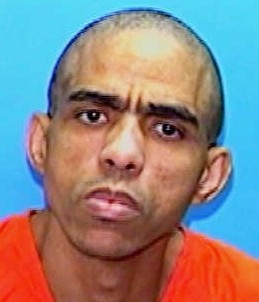
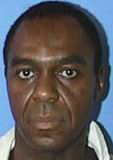
Tony Randall Watts
Murderer Brian Kevin Rosenfeld
Murderer · USA · 1985
Brian Kevin Rosenfeld Brian Kevin Rosenfeld was sentenced to three concurrent l…
23 victims
Brian Kevin Rosenfeld
Murderer · USA · 1985
Brian Kevin Rosenfeld Brian Kevin Rosenfeld was sentenced to three concurrent l…
23 victims
 Yahweh ben Yahweh
Murderer · USA · 1980
Yahweh ben Yahweh was born and legally named Hulon Mitchell Jr. (October 27, 19…
23 victims
Yahweh ben Yahweh
Murderer · USA · 1980
Yahweh ben Yahweh was born and legally named Hulon Mitchell Jr. (October 27, 19…
23 victims
 Russell Ellwood
Murderer · USA · 1991
Russell Ellwood was a former taxi driver. Authorities suspected him of killing…
20 victims
Russell Ellwood
Murderer · USA · 1991
Russell Ellwood was a former taxi driver. Authorities suspected him of killing…
20 victims
 Robert Martines Perez
Murderer · USA · 1994
Name: Robert Martines Perez · Other name used in proceedings: Robert Martinez P…
15 victims
Robert Martines Perez
Murderer · USA · 1994
Name: Robert Martines Perez · Other name used in proceedings: Robert Martinez P…
15 victims
 Christopher Stevens
Murderer · USA · 1993
Christopher Stevens was on probation, and his probation was transferred to Clov…
1 victim
Christopher Stevens
Murderer · USA · 1993
Christopher Stevens was on probation, and his probation was transferred to Clov…
1 victim
 Jessie Joe Patrick
Murderer · USA · 1989
Jessie Joe Patrick was convicted of capital murder and was executed by lethal i…
1 victim
Jessie Joe Patrick
Murderer · USA · 1989
Jessie Joe Patrick was convicted of capital murder and was executed by lethal i…
1 victim
 Cesar Laurean
Murderer · USA · 2007
Cesar Laurean was a former United States Marine and a corporal. He was 23 at th…
1 victim
Cesar Laurean
Murderer · USA · 2007
Cesar Laurean was a former United States Marine and a corporal. He was 23 at th…
1 victim
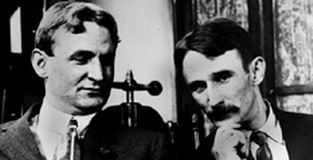 James & John McNamara
Mass murderer · USA · 1910
James B. (“J.B.”) McNamara · John J. (“J.J.”) McNamara · The brothers were Iris…
21 victims
James & John McNamara
Mass murderer · USA · 1910
James B. (“J.B.”) McNamara · John J. (“J.J.”) McNamara · The brothers were Iris…
21 victims
- Gender
- male
- Country
- USA
- Location
- Duval County, Florida, USA
- Date of birth
- August 23, 1966
- Age at first offence
- 22
- Characteristics
- attempted rape, armed robbery
- Victim profile
- Simon Jurado
- Method of murder
- Shooting
- Date(s) of murder
- February 18, 1988
- Years active
- 1988
- Date of arrest
- September 1988
- Status
-
Sentenced to death
Sentenced to death on September 15, 1989
Case information
- Name: Tony Randall Watts
- Date of birth: 08/23/66
- Court/venue: Fourth Judicial Circuit, Duval County
- Case number: 88-11507
- Florida Supreme Court opinion: 74776 (SC00-1591)
- DC number: 286020
- Sentencing judge: The Honorable L. Page Haddock
- Attorneys: Alan Chipperfield and William White (Assistant Public Defenders)
- Direct appeal: David A. Davis (Assistant Public Defender)
- Collateral appeal: Frank J. Tassone, Jr., Esq. (Registry)
Timeline
- 02/18/88 — Glenda Jurado was returning home from jogging when Tony Watts forced her at gunpoint towards her house.
- 09/15/89 — Tony Watts was sentenced.
- 09/26/89 — Watts filed a direct appeal in the Florida Supreme Court.
- 01/02/92 — The Florida Supreme Court affirmed Watts’ convictions and sentence of death.
- 04/15/92 — Watts filed a Petition for Writ of Certiorari in the United States Supreme Court.
- 06/22/92 — The United States Supreme Court denied certiorari.
- 09/16/93 — Watts filed a 3.850 Motion in the Circuit Court.
- 05/04/99 — Watts was determined to be incompetent to proceed with his postconviction relief and was committed to the Florida State Mental Hospital.
- 90-day — Competency reevaluations were scheduled every 90 days.
The offence
On the morning of 02/18/88, Glenda Jurado was returning home from jogging when Tony Watts forced her at gunpoint towards her house. Watts told Glenda that he was just released from prison and needed money to leave town. Simon Jurado, Glenda’s husband, answered the door. Glenda told her husband that Watts had a gun and was demanding money.
Simon gave Watts all the money he had, but Watts demanded more and stated that he would kill Glenda if Simon did not get it. In response to his threats, Simon gave Watts a piggy bank containing money. After searching the house, Watts made Simon undress in the bathroom and told Glenda to get undressed as well.
Watts penetrated Glenda with his finger and unsuccessfully attempted to have sexual intercourse with her. Simon yelled and threw a chair at Watts. The chair knocked Watts into the hallway. Glenda ran from the house while the two men struggled. Glenda heard a shot fired and her husband scream. She witnessed Watts run out of the house and down the street with the gun. Simon ran out of the house but collapsed on the lawn and died.
The cause of death was a gunshot wound to Simon’s mouth, which severed an artery leading to his brain.
Investigation
In September 1988, Glenda and a neighbor who witnessed Watts running from the house identified Tony Watts as the assailant. Watts’ baseball cap, found inside the Jurado’s house, contained hairs microscopically similar to his. Fingerprints were found on the door of the front porch.
Trial
Charges
The defendant was indicted on the following charges:
- Count I: First-Degree Murder
- Count II: Armed Burglary With an Assault
- Count III: Armed Robbery
- Count IV: Armed Sexual Battery
Count IV was later reduced to Sexual Battery Using Physical Force.
Verdicts
On 08/03/89, the jury found the defendant guilty of all counts charged in the indictment.
Advisory sentencing and jury vote
On 08/17/89, upon advisory sentencing, the jury voted for the imposition of a death sentence by a 7 to 5 majority.
Sentence
On 09/15/89, the defendant was sentenced as follows:
- Count I: First-Degree Murder — Death
- Count II: Armed Burglary With an Assault — Life
- Count III: Armed Robbery — Life
- Count IV: Sexual Battery Using Physical Force — 30 Years
Appeals
Direct appeal (Florida Supreme Court)
On 09/26/89, Watts filed a direct appeal in the Florida Supreme Court. He claimed that the trial court was required by section 916.11(1)(d) Florida Statutes (1987) to appoint the Department of Health and Rehabilitative Services (HRS) diagnosis and evaluation team for evaluation of his mental competence and competence level to stand trial. The Florida Supreme Court found that the trial court did abuse its discretion, but Watts’ attorney neglected to preserve the issue for appeal.
Watts also claimed the trial court erred in finding that he was competent to stand trial, citing conflicting expert testimony. In a third claim, Watts contended that the trial court did not advise him that he had the right to represent himself and failed to conduct a Faretta inquiry when he requested another attorney.
Watts also argued that the court should have granted a mistrial because of prosecutorial misconduct. The statements made by the prosecutor during closing arguments were found to have had no effect on the verdict.
In the penalty phase, Watts claimed that the trial court erred in considering his crime to have been especially heinous, atrocious or cruel. The Florida Supreme Court agreed the crime was not especially heinous, atrocious or cruel but found the error to be harmless.
Watts next argued that executing a mentally retarded person was cruel and unusual punishment. The Florida Supreme Court found that even if executing the mentally retarded were cruel and unusual, Watts was found to be competent. The Florida Supreme Court affirmed Watts’ convictions and sentence of death on 01/02/92.
United States Supreme Court
On 04/15/92, Watts filed a Petition for Writ of Certiorari in the United States Supreme Court. Certiorari was denied on 06/22/92.
Postconviction motion
On 09/16/93, Watts filed a 3.850 Motion that was still pending in the Circuit Court.
On 05/04/99, Watts was determined to be incompetent to proceed with his postconviction relief and was committed to the Florida State Mental Hospital. Competency reevaluations were scheduled every 90 days.
Outcome
- Watts was convicted on all counts charged in the indictment, and was sentenced to death for First-Degree Murder on 09/15/89.
- The United States Supreme Court denied certiorari on 06/22/92.
- A 3.850 motion remained pending in the Circuit Court after 09/16/93.
- Watts was found incompetent to proceed with postconviction relief on 05/04/99 and was committed to the Florida State Mental Hospital, with competency reevaluations scheduled every 90 days.
Other details
The proceedings identified the “registry” attorney as Frank J. Tassone, Jr., Esq. and listed Alan Chipperfield and William White as Assistant Public Defenders for trial representation.
Spotted an error, or have more information about this case?