
Jessie Joe Patrick
Murderer Brian Kevin Rosenfeld
Murderer · USA · 1985
Brian Kevin Rosenfeld Brian Kevin Rosenfeld was sentenced to three concurrent l…
23 victims
Brian Kevin Rosenfeld
Murderer · USA · 1985
Brian Kevin Rosenfeld Brian Kevin Rosenfeld was sentenced to three concurrent l…
23 victims
 Yahweh ben Yahweh
Murderer · USA · 1980
Yahweh ben Yahweh was born and legally named Hulon Mitchell Jr. (October 27, 19…
23 victims
Yahweh ben Yahweh
Murderer · USA · 1980
Yahweh ben Yahweh was born and legally named Hulon Mitchell Jr. (October 27, 19…
23 victims
 Russell Ellwood
Murderer · USA · 1991
Russell Ellwood was a former taxi driver. Authorities suspected him of killing…
20 victims
Russell Ellwood
Murderer · USA · 1991
Russell Ellwood was a former taxi driver. Authorities suspected him of killing…
20 victims
 Robert Martines Perez
Murderer · USA · 1994
Name: Robert Martines Perez · Other name used in proceedings: Robert Martinez P…
15 victims
Robert Martines Perez
Murderer · USA · 1994
Name: Robert Martines Perez · Other name used in proceedings: Robert Martinez P…
15 victims
 Colin Howell
Murderer · United Kingdom · 1991
Colin Howell (born 14 March 1959) was a Northern Irish convicted double murdere…
2 victims
Colin Howell
Murderer · United Kingdom · 1991
Colin Howell (born 14 March 1959) was a Northern Irish convicted double murdere…
2 victims
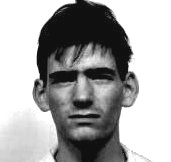 Robert Madden
Murderer · USA · 1985
Robert Anthony Madden (born Sept. 9, 1963); executed as Robert Madden #822 at a…
2 victims
Robert Madden
Murderer · USA · 1985
Robert Anthony Madden (born Sept. 9, 1963); executed as Robert Madden #822 at a…
2 victims
 David Renz
Murderer · USA · 2013
March 14, 2013 — David Renz carjacked Liverpool librarian Lori Ann Bresnahan an…
1 victim
David Renz
Murderer · USA · 2013
March 14, 2013 — David Renz carjacked Liverpool librarian Lori Ann Bresnahan an…
1 victim
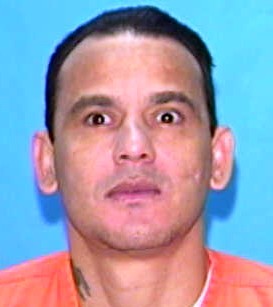 Norberto Pietri
Murderer · USA · 1988
Norberto Pietri was at Lantana Community Correctional Work Release Center await…
1 victim
Norberto Pietri
Murderer · USA · 1988
Norberto Pietri was at Lantana Community Correctional Work Release Center await…
1 victim
 Maurice Lydell Harris
Murderer · USA · 1994
Maurice Lydell Harris was sentenced to death on December 20, 1996. The Californ…
1 victim
Maurice Lydell Harris
Murderer · USA · 1994
Maurice Lydell Harris was sentenced to death on December 20, 1996. The Californ…
1 victim
 Yasuaki Uwabe
Mass murderer · Japan · 1999
Yasuaki Uwabe (Japanese: 上部康明) was born in Shimonoseki, Yamaguchi. After gradua…
5 victims
Yasuaki Uwabe
Mass murderer · Japan · 1999
Yasuaki Uwabe (Japanese: 上部康明) was born in Shimonoseki, Yamaguchi. After gradua…
5 victims
- Gender
- male
- Country
- USA
- Location
- Dallas County, Texas, USA
- Date of birth
- February 23, 1958
- Age at first offence
- 31
- Characteristics
- rape, robbery, child molester, torture, domestic violence
- Victim profile
- Nina Rutherford Redd (female, 80)
- Method of murder
- St abbing with knife
- Date(s) of murder
- July 8, 1989
- Years active
- 1989
- Date of arrest
- J uly 22, 1989
- Status
-
Executed
Executed by lethal injection in Texas on September 17, 2002
Case overview
Jessie Joe Patrick was convicted of capital murder and was executed by lethal injection in Texas on September 17, 2002.
The offence
On July 8, 1989, 80-year-old Nina Rutherford Redd’s partially clad body was found on the floor of her bedroom in Pleasant Grove near Dallas. Her throat had been slashed, one of her arms had been twisted behind her back, and her face and body were covered with bruises. The window screen had been pried loose from a bathroom window, and a rusty butcher knife was found at the scene.
Patrick called the police in the early morning hours of July 8, 1989 to report that his house, two doors from Redd’s, had been burglarized. When police went to Patrick’s house to investigate, no one was home. The back door was kicked in, and a large rock covered with blood was found on the side of the house.
The house was ransacked. Evidence tying Patrick to the murder was found in his nearby home, including a sock and toilet paper soaked with the victim’s blood. Prosecutors introduced a palm print found on Nina’s open bathroom window and bite marks on her arm. The murder weapon, a knife found at the scene, was identified as belonging to Patrick.
Sperm was found in Nina’s body, and an officer testified she had been raped. Although sperm was found, it was not tested and Patrick was not charged with sexual assault.
Patrick admitted to a written confession that he broke into the house and tried unsuccessfully to have sex with Redd. He stated that he slit her throat with the knife, then added: "I don't really remember cutting her throat." Patrick confessed to the crime shortly after his arrest but later recanted.
Investigation
Police searched Patrick’s home the next day. They found a man’s sock saturated with dried blood, a number of wadded toilet tissues with dried blood on them, and an old pair of men’s denim jeans with suspicious stains.
Analysis of the sock showed genetic markers consistent with genetic markers found in Redd’s blood sample. DNA testing on the bloody sock and blood-soaked tissues matched the DNA in Redd’s blood sample. A partial palm print from the outside sill of the bathroom window was identified as belonging to Patrick.
Three hairs found at the scene were the same as Patrick’s. Patrick’s live-in girlfriend identified the knife found in Redd’s home as hers and Patrick’s.
Arrest
On July 22, 1989, Patrick was arrested at his sister’s home in Jackson, Mississippi. When officers arrived, he was hiding under a bed.
People involved
- Nina Rutherford Redd was the victim. She was 80 years old.
- Patrick’s live-in girlfriend identified the knife found at the scene as hers and Patrick’s.
- Hester Patrick was Patrick’s wife. She was described as a British woman who Patrick met as a pen pal and married by proxy in 1997. She raised funds for DNA testing.
Trial
Patrick was convicted of capital murder in the 282nd District Court of Dallas County. The sentencing proceeded under the Texas death penalty framework.
At trial, Patrick’s conviction and sentence were affirmed by the Texas Court of Criminal Appeals on June 28, 1995.
In the punishment phase, three women testified Patrick either had assaulted or raped them in a drunken rage. Jurors deliberated about 50 minutes before convicting him of the slaying. It took the same jury less than 45 minutes to decide on the death sentence.
Patrick raised points of order during his direct appeal to the Texas Court of Criminal Appeals, including allegations of ineffective assistance of counsel.
Patrick argued that his counsel failed to discover that a prior aggravated assault conviction was invalid and failed to object to its admission at trial; this invalid conviction was used by the prosecution to argue that Patrick constituted a future danger to society. He also argued that his trial counsel failed to object to the admissibility of DNA evidence introduced by the prosecutor and failed to contest its accuracy, and that his trial counsel failed to object to incorrect definitions given to the jury. His trial counsel also argued during the punishment phase of the trial that Patrick was raised in a foster home and subjected to physical abuse as a child.
Sentencing
On April 16, 1990, Patrick was sentenced to die for the capital murder of Nina Rutherford Redd in Pleasant Grove, Texas, on July 8, 1989.
His conviction and sentence were affirmed by the Texas Court of Criminal Appeals on June 28, 1995. His petition for writ of certiorari was denied by the United States Supreme Court on March 25, 1996.
Appeals
Patrick filed a state habeas corpus application, which the Court of Criminal Appeals denied on April 22, 1998. Patrick then filed a federal habeas petition, which the district court denied on Aug. 23, 2000.
After the district court disposed of several post-judgment motions, he attempted to appeal to the United States Court of Appeals for the Fifth Circuit. Both the district court and the Fifth Circuit denied him a certificate of appealability to do so.
He then filed a petition for writ of certiorari, which was denied by the Supreme Court on Sept. 12, 2002. Patrick’s motion for a stay of execution was also denied on Sept. 12, 2002.
The Texas Court of Criminal Appeals dismissed the State’s appeal on Sept. 11, 2002 but granted mandamus relief in relation to Patrick’s motion for DNA testing.
DNA testing litigation
A state district judge determined that Patrick was not entitled to testing under Chapter 64 of the Texas Code of Criminal Procedure because there was no reasonable probability that favorable DNA results would have led to an acquittal. Because Patrick was willing to pay the costs of DNA testing, the court ruled that he could have testing at his expense.
The State appealed that ruling to the Court of Criminal Appeals and filed a petition for writ of mandamus to force the trial judge to rescind her order. On Sept. 11, 2002, the Court of Criminal Appeals dismissed the State’s appeal but granted mandamus relief, holding that because Patrick did not meet the statute’s requirements, he was not entitled to testing regardless of whether he was willing to bear the costs.
Prior criminal history
On Jan. 6, 1986, Patrick was convicted of aggravated assault in the Criminal District Court Number Five of Dallas County and sentenced to eight years probation.
On July 17, 1986, his probation was revoked and he was sentenced to imprisonment for four years.
Execution
Patrick was scheduled to be executed after 6 p.m. on Tuesday, Sept. 17, 2002, and he was executed by lethal injection on September 17, 2002.
His lawyer, Keith Hampton, claimed that Patrick was constitutionally ineligible for execution because he was mentally retarded. Neither Hampton nor any of Patrick’s other lawyers ever raised a mental retardation claim in court, and they did not have his IQ tested. Patrick declined requests for interviews and made no last statement.
During the execution, Patrick was pronounced dead at 6:17 p.m. He smiled and nodded to his wife, brother and relatives as they entered the chamber. He gasped and sputtered when the drugs began taking effect, and his wife Hester began wailing. She cried out "Bastards!"
As the lethal dose began, Hester Patrick said "I love you" to her husband through the plexiglass divider. After a few moments, she turned away and began to address Texas Department of Criminal Justice employees in the room with her, calling them "bastards." She said: "I hope you are satisfied now," and: "You ought to do something about your justice system. This is a disgrace and you should be ashamed of yourselves." Then she emitted a loud wail.
Aftermath
Redd’s family expressed compassion for the Patrick family in a statement released after the execution, writing: "Our prayers are for the Patrick family during this sad time of grief," and: "This is not a vendetta or a social event. We all hurt and hope the Patricks can understand our grief for the past 13 years waiting for justice to be done." The statement also said: "Our family will always grieve for the way Nina die."
Other details
Patrick was described as having a history of assaults and as being already on parole when evidence showed he crawled through a window and killed Nina Rutherford Redd.
A number of fragments about mental competence and impairment were discussed in the materials, including that Patrick had attempted to argue he was mentally retarded, and that his inability to remember was described as being due to brain damage he suffered in a fight.
Patrick’s confession included that he had been drinking before the killing.
Patrick was identified as a 44-year-old at execution time and as 31 at the time of the July 8, 1989 killing.
Patrick’s direct appeal raised 31 points of order, and all were denied.
Patrick requested DNA testing relating to semen found in Redd’s body, and the efforts included litigation over access to biological evidence.
A statement attributed to the niece of the victim, Marcie Bowling, said: "The reason I don't care if he has peace of mind or not he didn't care that he was scaring my mother half to death before he took her life," and: "She could have lived through a rape," and: "He's grasping at straws." Another quoted statement attributed to the victim’s family said "Our prayers are for the Patrick family during this sad time of grief," and: "This is not a vendetta or a social event. We all hurt and hope the Patricks can understand our grief for the past 13 years waiting for justice to be done..."
The media advisory identified the execution schedule and described the case as a capital murder of Nina Rutherford Redd in Pleasant Grove, Texas, on July 8, 1989.
The materials included an allegation that a DNA test could not be used to amplify DNA from samples presented as evidence of a sexual offence, and that later privately raised funds enabled testing.

Spotted an error, or have more information about this case?