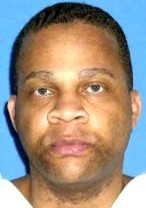
William Wyatt
Murderer Russell Ellwood
Murderer · USA · 1991
Russell Ellwood was a former taxi driver. Authorities suspected him of killing…
20 victims
Russell Ellwood
Murderer · USA · 1991
Russell Ellwood was a former taxi driver. Authorities suspected him of killing…
20 victims
 Robert Martines Perez
Murderer · USA · 1994
Name: Robert Martines Perez · Other name used in proceedings: Robert Martinez P…
15 victims
Robert Martines Perez
Murderer · USA · 1994
Name: Robert Martines Perez · Other name used in proceedings: Robert Martinez P…
15 victims
 Billy Frank Vickers
Murderer · USA · 1993
Billy Frank Vickers Vickers was executed by lethal injection in Texas on Januar…
14 victims
Billy Frank Vickers
Murderer · USA · 1993
Billy Frank Vickers Vickers was executed by lethal injection in Texas on Januar…
14 victims
 Tracy Garrison
Murderer · USA · 2001
Tracy Garrison was convicted of first degree murder in 2004. She was sentenced…
1 victim
Tracy Garrison
Murderer · USA · 2001
Tracy Garrison was convicted of first degree murder in 2004. She was sentenced…
1 victim
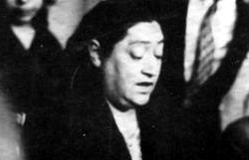 Felicitas Sanchez Aguillon
Serial killer · Mexico · 1930
Felícitas Sánchez Aguillón or Sánchez Neyra (1890 - June 16, 1941) was a Mexica…
50 victims
Felicitas Sanchez Aguillon
Serial killer · Mexico · 1930
Felícitas Sánchez Aguillón or Sánchez Neyra (1890 - June 16, 1941) was a Mexica…
50 victims
 Sandra Jessee
Murderer · USA · 1998
Sandra Jessee was convicted of ordering the killing of her husband, Jack Jessee…
1 victim
Sandra Jessee
Murderer · USA · 1998
Sandra Jessee was convicted of ordering the killing of her husband, Jack Jessee…
1 victim
- Gender
- male
- Country
- USA
- Location
- Bowie County, Texas, USA
- Date of birth
- December 20, 1964
- Age at first offence
- 33
- Characteristics
- rape
- Victim profile
- H is girlfriend's 3-year-old son
- Method of murder
- Smothered with a plastic bag
- Date(s) of murder
- February 4, 1997
- Years active
- 1997
- Date of arrest
- Next day
- Status
-
Executed
Executed by lethal injection in Texas on August 3, 2006
Case details
William Wyatt was a Black, male corrections officer who was scheduled to be executed in Texas on August 3, 2006.
He was convicted and sentenced to death for the capital murder of three-year-old Damien Willis.
At the time of the murder, Damien and his mother, Renee Porter, were living with William Wyatt in Bowie County.
Timeline
- February 4, 1997 — William Wyatt was babysitting Damien after taking Damien’s mother, Renee Porter, to work; Wyatt later called 911 reporting Damien had accidentally drowned.
- March 5, 1997 — A Bowie County grand jury indicted Wyatt for capital murder for killing Damien Willis.
- February 13, 1998 — A jury found Wyatt guilty of capital murder and sentenced him to death after a separate punishment hearing.
- March 3, 2000 — The Texas Court of Criminal Appeals affirmed Wyatt’s conviction and death sentence on direct appeal.
- June 21, 2000 — Wyatt filed an application for writ of habeas corpus in the state trial court.
- March 28, 2001 — The Texas Court of Criminal Appeals denied habeas relief.
- April 2, 2002 — Wyatt filed a petition for writ of habeas corpus in the U.S. District Court for the Eastern District of Texas, Tyler Division.
- December 8, 2003 — The federal district court denied habeas relief on all but two of Wyatt’s claims; an evidentiary hearing was ordered.
- August 20, 2004 — An evidentiary hearing was held in the federal district court.
- October 18, 2004 — The federal district court denied habeas relief on the remaining two claims.
- January 31, 2006 — The 5th U.S. Circuit Court of Appeals affirmed the district court’s denial of habeas relief.
- February 21, 2006 — The trial court entered an order setting the execution date for August 3, 2006.
- August 3, 2006 — William Wyatt was executed by lethal injection in Texas.
- August 3, 2006 — U.S. Supreme Court rejected an appeal seeking to block the punishment, two hours before the execution.
The offence
On February 4, 1997, William Wyatt was babysitting Damien Willis after taking Damien’s mother, Renee Porter, to work.
Texarkana police received a 9-1-1 call from Wyatt at about 6:07 p.m., asking for an ambulance for an accidental drowning victim. When emergency personnel arrived, Damien had no pulse and was not breathing. Damien was taken immediately to a nearby hospital and was pronounced dead at 7:24 p.m.
The medical examiner concluded that Damien was smothered to death.
In statements to authorities, Wyatt stated that he sexually assaulted the boy. He also stated that he believed Damien had placed something in a light socket and that he whipped Damien with a belt. When Damien began screaming, Wyatt stated he placed a plastic bag over the child’s face until he stopped screaming.
In additional descriptions of events surrounding Wyatt’s statements:
- Wyatt told authorities that he held a plastic bag over the child’s mouth to stop him from screaming, and that the child then jerked away and hit his head on the tub.
- Wyatt stated that he left to get ice for the child’s forehead and that when he returned the child was not breathing; after attempting CPR, he called 911.
- Wyatt also made statements describing at least three versions of events over three days following his arrest, including accounts that he found the child underwater, then accounts acknowledging sexual assault and smothering with a plastic bag.
Investigation
Wyatt’s statements described a narrative beginning with an alleged accidental drowning in the bathtub and later included admissions to sexual assault and smothering.
A medical examiner concluded that Damien was smothered to death.
One attending physician noted that Damien’s body temperature was 84 degrees when approximately 96 would have been expected if the child had died around 6:00 p.m., and found bruising on Damien’s forehead and thighs and both fresh and healed injuries to his rectum; the physician opined that Damien had been sexually assaulted prior to his death.
Authorities also determined the bathtub in the house was dry.
Wyatt was arrested the evening of the child’s death.
Arrest and statements to police
Wyatt gave multiple statements to police over three days after the child’s death.
His first statement (February 4, 1997) provided that he was in the laundry room while Damien was bathing, that Wyatt returned to the bathroom to find the child underwater, and that after attempting CPR Wyatt called 911.
On February 5, 1997, Wyatt gave a statement acknowledging he had not told the entire truth previously and confessed to sodomizing the child before he took a bath.
On February 6, 1997, Wyatt stated that while Porter was at work the child wanted to take a bath; after the child began running the bath water Wyatt saw something on television that “made [him] feel like having sex”; Wyatt sodomized the child; believing the child had lodged something in the light socket, he hit the child with a belt five or six times; the child began screaming; Wyatt held a plastic bag over the child’s face to stop him; when the child tried to jerk away, the child hit his head on the tub; Wyatt left to get ice for the child’s forehead; when Wyatt returned the child was not breathing; and after attempting CPR, Wyatt called 911.
In the legal proceedings, Wyatt argued that his statements were coerced, and he also argued that his requests for a lawyer went unanswered.
At a suppression hearing, Texarkana Police Officer Larry Parker testified that Wyatt was read his Miranda warnings and that Wyatt signed warning forms acknowledging receipt and understanding of rights. Parker also testified that Wyatt voluntarily went to the Justice Center for questioning, agreed to a sexual assault kit, and did not request an attorney or ask for the interview to cease at any time.
Texarkana Officer Ronnie Sharp testified about the February 6, 1997 statement, stating that Sharp advised Wyatt of his rights, that Wyatt signed an acknowledgment form, and that Wyatt did not request an attorney or ask to stop the interview at any time.
Wyatt testified at the suppression hearing that he did not voluntarily make the later statements, that he signed because he was scared, and that officers yelled at him, cursed him, threatened him, and intimidated him into signing. He also testified that he did not read the statements before signing them and did not make corrections because he did not have his glasses with him, while admitting he could see well enough to sign the forms and statements on the lines provided.
The trial court held Wyatt’s confessions were free and voluntary after considering the totality of circumstances.
Trial
A Bowie County grand jury indicted Wyatt for capital murder for killing Damien Willis on March 5, 1997.
On February 13, 1998, a jury found Wyatt guilty of capital murder and sentenced him to death after a separate punishment hearing.
Wyatt v. State, 23 S.W.3d 18 (Tex.Crim.App. 2000) described issues on automatic direct appeal and affirmed the conviction. In particular, the Texas Court of Criminal Appeals held:
- Texas police officer jurisdiction to arrest Wyatt inside Bi-State Criminal Justice Center.
- Confessions were free and voluntary.
- Evidence of sexual assault accompanied the murder and was admissible as same transaction contextual evidence.
- A witness offered by the state was qualified to testify as expert regarding characteristics of sex offenders.
- Autopsy photographs were relevant.
- Evidence was sufficient to prove intent to kill. It also stated that the appellate court affirmed the judgment, with a unanimous opinion by HOLLAND, J.
Evidentiary issues and appellate points on direct appeal
Wyatt argued on appeal that the trial court erred by failing to suppress his confessions due to the location of questioning and arrest and also claimed constitutional issues involving state jurisdiction and detainers.
He also argued that the trial court admitted evidence of the sexual assault that accompanied the murder and that evidence should have been excluded or redacted.
The appellate discussion stated that same transaction contextual evidence could be admissible where crimes were intermixed such that full proof of one could not be given without showing the others. It concluded that evidence of sexual assault was intertwined with the murder so that the jury’s understanding would have been obscured without it, and that it tended to establish evidentiary facts such as motive, opportunity, or preparation.
Wyatt also complained that the trial court violated Brady v. Maryland by allegedly not requiring the State to produce an exculpatory statement by the deceased’s mother until after she had been called as a witness; the appellate discussion rejected that claim.
Wyatt argued that the trial court erred by allowing a witness, Sann Thompson, to testify as an expert regarding sexual offenders; the appellate discussion held the trial court did not abuse its discretion.
Wyatt also raised arguments about leading questions, closing argument time limits, autopsy photographs, insufficiency of evidence for intent to kill, and cumulative error; the appellate discussion overruled each of these points and affirmed.
Quotations from Wyatt’s last statement
In the moments before execution, Wyatt made statements including the following:
- “I went home to be with my father, and I went home as a trooper,''
- “I did not murder your son,” Wyatt said.
- “I did not do it. I just wan you to know that. I did not murder Damien, and I would ask for all of your forgiveness, and I will see all of you soon.''
- “I would also like to say to Damien's family, I did not murder your son,” Wyatt said.
- “I did not do it. I just want you to know that.
Sentencing
A jury sentenced Wyatt to death after a separate punishment hearing on February 13, 1998.
The Texas Court of Criminal Appeals affirmed the conviction and sentence on March 3, 2000.
Appeals
Direct appeal
On automatic direct appeal, the Texas Court of Criminal Appeals affirmed Wyatt’s conviction and death sentence in Wyatt v. State, 23 S.W.3d 18 (Tex.Crim.App. 2000).
State habeas proceedings
Wyatt filed an application for writ of habeas corpus in the state trial court on June 21, 2000.
The Texas Court of Criminal Appeals denied habeas relief on March 28, 2001.
Federal habeas proceedings
Wyatt filed a petition for writ of habeas corpus in the U.S. District Court for the Eastern District of Texas, Tyler Division, on April 2, 2002.
On December 8, 2003, the federal district court denied habeas relief on all but two of Wyatt’s claims and ordered an evidentiary hearing.
On August 20, 2004, an evidentiary hearing was held in federal district court.
On October 18, 2004, the federal district court denied habeas relief on the remaining two claims.
Wyatt appealed, and on January 31, 2006, the 5th U.S.
A later appellate decision described issues including an alleged Brady claim about a notebook prepared by the victim’s mother and issues relating to Ring and ineffective assistance of counsel under Strickland; it denied a certificate of appealability for an equal protection issue and affirmed denial of habeas relief.
U.S. Supreme Court
Wyatt sought certiorari review and a stay of execution in the U.S. Supreme Court on May 31, 2006.
On August 3, 2006, the U.S. Supreme Court rejected an appeal seeking to block the punishment, and the execution occurred about two hours later.
Outcome
William Wyatt was executed by lethal injection in Texas on August 3, 2006.
He was pronounced dead at 6:20 p.m. CDT.
Aftermath and final remarks
During the execution, Wyatt protested his innocence in statements to the victim’s father and grandmother.
The victim’s father and paternal grandmother attended Wyatt’s execution, and they watched him through a window as he received lethal injection.
Damien Willis’s aunt Gwen Montgomery also attended the execution.
Bowie County District Attorney Bobby Lockhart attended.
Renee Porter did not attend the execution; she was described as wanting it over and wanting closure.

Spotted an error, or have more information about this case?