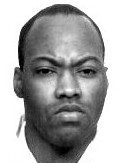
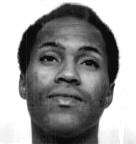
Gerald Smith
Murderer Ervil LeBaron
Murderer · USA · 1972
Ervil Morrell LeBaron (1925 to August 16, 1981) was the leader of a polygamous…
35 victims
Ervil LeBaron
Murderer · USA · 1972
Ervil Morrell LeBaron (1925 to August 16, 1981) was the leader of a polygamous…
35 victims
 Brian Kevin Rosenfeld
Murderer · USA · 1985
Brian Kevin Rosenfeld Brian Kevin Rosenfeld was sentenced to three concurrent l…
23 victims
Brian Kevin Rosenfeld
Murderer · USA · 1985
Brian Kevin Rosenfeld Brian Kevin Rosenfeld was sentenced to three concurrent l…
23 victims
 Marvin Gray
Murderer · USA · 1975
Marvin Gray was convicted killer who claimed responsibility for 23 slayings and…
23 victims
Marvin Gray
Murderer · USA · 1975
Marvin Gray was convicted killer who claimed responsibility for 23 slayings and…
23 victims
 Yahweh ben Yahweh
Murderer · USA · 1980
Yahweh ben Yahweh was born and legally named Hulon Mitchell Jr. (October 27, 19…
23 victims
Yahweh ben Yahweh
Murderer · USA · 1980
Yahweh ben Yahweh was born and legally named Hulon Mitchell Jr. (October 27, 19…
23 victims
 Russell Ellwood
Murderer · USA · 1991
Russell Ellwood was a former taxi driver. Authorities suspected him of killing…
20 victims
Russell Ellwood
Murderer · USA · 1991
Russell Ellwood was a former taxi driver. Authorities suspected him of killing…
20 victims
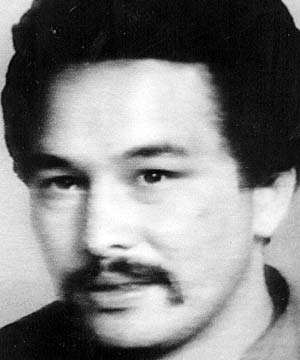 Paul Joseph Dally
Murderer · New Zealand · 1989
Paul Joseph Dally kidnapped Karla Cardno, 13, in Lower Hutt on May 26, 1989. He…
1 victim
Paul Joseph Dally
Murderer · New Zealand · 1989
Paul Joseph Dally kidnapped Karla Cardno, 13, in Lower Hutt on May 26, 1989. He…
1 victim
 Jonathan Arce
Homicide · USA · 1998
Jonathan Arce was 14 when he fatally stabbed a neighbor, retired University of…
1 victim
Jonathan Arce
Homicide · USA · 1998
Jonathan Arce was 14 when he fatally stabbed a neighbor, retired University of…
1 victim
 Richard Dean Hurles
Murderer · USA · 1993
Richard Dean Hurles · Defendant: Richard Dean Hurles (Caucasian) · Victim: Cauc…
1 victim
Richard Dean Hurles
Murderer · USA · 1993
Richard Dean Hurles · Defendant: Richard Dean Hurles (Caucasian) · Victim: Cauc…
1 victim
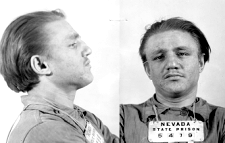 Lazslo Varga
Murderer · USA · 1948
Lazslo Varga was executed by asphyxiation-gas in Nevada on June 7, 1949. Varga…
1 victim
Lazslo Varga
Murderer · USA · 1948
Lazslo Varga was executed by asphyxiation-gas in Nevada on June 7, 1949. Varga…
1 victim
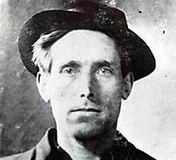 Joe Hill
Murderer · USA · 1914
Joe Hill was a Swedish-American labor activist, songwriter, and member of the I…
2 victims
Joe Hill
Murderer · USA · 1914
Joe Hill was a Swedish-American labor activist, songwriter, and member of the I…
2 victims
 Juanita Spinelli
Murderer · USA · 1940
Juanita Spinelli was known as "The Duchess". She was first woman to die in San…
1 victim
Juanita Spinelli
Murderer · USA · 1940
Juanita Spinelli was known as "The Duchess". She was first woman to die in San…
1 victim
- Gender
- male
- Country
- USA
- Location
- Missouri, USA
- Date of birth
- October 7, 1958
- Age at first offence
- 23
- Characteristics
- revenge
- Victim profile
- Karen Roberts / Man ( fellow death-row inmate )
- Method of murder
- Beating with a metal bar / St abbing with homemade knife
- Date(s) of murder
- 1981 / 1983
- Years active
- 1981–1983
- Date of arrest
- —
- Status
-
Executed
Executed by lethal injection in Missouri on January 18, 1990
Case overview
Gerald Smith was convicted and sentenced to death for the 1980 slaying of Karen Roberts in St. Louis, Missouri. He was executed by lethal injection in Missouri on January 18, 1990.
Timeline
- January 18, 1990 — Gerald Smith was executed by lethal injection in Missouri.
- September 29, 1988 — A panel of the United States Court of Appeals for the Eighth Circuit denied a certificate of probable cause, effectively dismissing an appeal from a federal district court judgment.
- September 30, 1988 — A petition for rehearing by the panel, with suggestions for rehearing en banc, was filed.
- October 3, 1988 — Three judges (Lay, C.J., Heaney, McMillian) granted an emergency temporary stay of execution.
- October 4, 1988 — Smith’s execution was scheduled by the Supreme Court of Missouri.
- December 8, 1988 — The United States Court of Appeals for the Eighth Circuit, en banc, denied the petition for rehearing en banc.
- November 9, 1984 — The Missouri Supreme Court set Smith’s execution date after affirming dismissal of a state-court proceeding.
- October 1984 — A Missouri circuit court granted Smith’s motion and ruled he was competent to abandon the proceeding.
- June 1985 — Smith changed his position again before the District Court hearing, coming to oppose post-conviction relief.
- November 1985 — Smith was transferred to MSP’s maximum-security area, the Special Management Unit (SMU).
- August 25, 1986 — Gerald Smith wrote a letter to the Court stating that he desired to prosecute his habeas petition.
- February 18, 1986 — The District Court began a hearing focused on Smith’s decision to waive further proceedings.
- 1985 — Smith was also sentenced to death for the slaying in 1985 of a fellow death-row inmate.
The offence
Smith and his girlfriend were driving around in the girlfriend’s car. After an hour or so, Smith announced that his intentions were to visit a person whom he said was his cousin. Smith told his girlfriend that he was going to hurt this person because she had once given him “the clap”.
At approximately 9:30pm, Smith and his girlfriend drove to the home of Karen Roberts, the victim. After some time, the girlfriend went home and Karen was persuaded to stay by Smith. Sometime after the girlfriend’s departure, Smith left his house to walk Karen home.
During the walk, Smith and Karen argued as to whether she had given him a venereal disease. At one point, Karen cursed him and Smith pushed her to the ground. When she got up, Karen was holding a heavy metal bar which she swung at Smith. Smith blocked the blow and jerked the bar away. When Karen started to run, Smith chased her. He finally caught her and bludgeoned her to death with the metal bar. An autopsy revealed massive head injuries, with the back of her skull caved in. Karen suffered six head lacerations, skull fractures “too numerous to count”, and multiple contusions and bruises of the brain.
A New York Times report stated that the prisoner Gerald Smith was convicted of killing his girlfriend and was executed by injection early that day.
Smith also was sentenced to death for the slaying in 1985 of a fellow death-row inmate.
Investigation and evidence
An autopsy revealed massive head injuries, including the back of Karen Roberts’s skull being caved in; six head lacerations; skull fractures “too numerous to count”; and multiple contusions and bruises of the brain.
A letter signed by Gerald Smith, dated as reported in the New York Times coverage, stated:
''I wanted her to feel some pain so I beat her little lousy head in,''
''If she were living now I would do it all over to her again.''
A separate reported statement from a letter to a newspaper by Gerald Smith stated:
''I chased and killed the victim, Karen Roberts because she gave me a venereal disease.''
The letter was signed:
''Gerald Smith, the cold blooded killer.''
The case narrative further stated that Smith killed Karen Roberts by bludgeoning her with a heavy iron bar, and that Smith stated he did this because Roberts gave him a venereal disease, which caused his girlfriend to take their child and leave him.
Arrest, prosecution and conviction
Gerald Smith killed Karen Roberts on September 8, 1980.
In 1981, Smith was convicted and sentenced to death for the slaying of Karen Roberts in St. Louis, Missouri. The Missouri Supreme Court affirmed Smith’s capital murder conviction and death sentence in State v. Smith, 649 S.W.2d 417 (Mo.1983) (en banc). Smith’s certiorari petition was denied.
Smith’s earlier conduct included a period after his arrest for the murder when his lawyer and the prosecutor were on the verge of entering a plea-bargain agreement for a second-degree murder plea, but the St. Louis Globe-Democrat published a letter from Smith. Smith signed the letter “Gerald Smith, the cold-blooded killer,” and claimed that he had planned the murder for four months, and that although he had a gun with him, he bludgeoned Roberts so that she would feel more pain. The prosecutor ended plea negotiations, and Smith was tried and convicted for capital murder. Smith testified in the competency hearing that he had not, in fact, planned the murder or carried a gun at the time.
Prior and related proceedings (habeas and competency)
After the conviction, a direct appeal and several state- and federal-court collateral proceedings were filed by Smith or by his brother, Eugene Smith, Jr., acting as a next friend. From the time of the conviction to the filing of the federal habeas corpus petition at issue, Smith changed his mind about the desirability of post-conviction relief at least eight times.
The Missouri Supreme Court ruled the appeal was mandatory and affirmed Smith’s capital murder conviction and death sentence.
Smith’s pursuit of collateral relief changed over time:
- Smith initially opposed pursuing collateral review, then relented and permitted his attorney to file for relief in a Missouri circuit court under Mo.S.Ct.R. 27.26.
- Smith then moved that the petition be dismissed.
- In October 1984, the state circuit court granted Smith’s motion and ruled that Smith was competent to abandon the proceeding, though it held no formal adversarial hearing on competence.
- Four days later, the Missouri Supreme Court affirmed dismissal and set Smith’s execution for November 9, 1984.
Eugene Smith filed a next-friend petition in the District Court, staying Smith’s execution pending a competency hearing. Gerald Smith then elected to resume pursuit of remedies and was substituted as sole petitioner. The District Court dismissed claims without prejudice for failure to exhaust state-court remedies under Rose v. Lundy.
After Smith recanted again, Eugene Smith filed another next-friend petition in state circuit court. The Missouri Supreme Court refused to stay Smith’s execution, holding the Rule 27.26 petition was a nullity because the October 1984 state circuit court determination that Smith was competent barred further inquiry, and it would grant no further extensions of Smith’s execution date.
Gerald Smith sought to proceed by filing a federal habeas corpus petition in which Eugene Smith alleged Smith was not competent and that the decision was not voluntary. The District Court stayed Smith’s execution pending an up-to-date evaluation of competence and ordered transfer to the Federal Medical Center in Springfield, Missouri, for examination and testing.
Next-friend standing and competency standard
The federal proceedings considered whether a next friend had standing and whether Smith was competent to abandon further litigation.
The Court articulated the Rees v. Peyton competency standard:
- whether the inmate had capacity to appreciate his position and make a rational choice with respect to continuing or abandoning further litigation,
- or whether the inmate was suffering from a mental disease, disorder, or defect that may substantially affect capacity.
The District Court concluded Smith was competent and that the decision was voluntary, even assuming that death-row conditions violated the Eighth Amendment.
Competency hearing findings (mental disorders and voluntariness)
The District Court held an evidentiary hearing beginning February 18, 1986, receiving live or videotaped expert testimony from six psychiatrists who examined Smith, plus written reports from additional mental health professionals. The District Court also received testimony from Missouri prison officials and two death-row inmates about Smith’s behavior and prison conditions.
The District Court noted aspects of Smith’s life and medical history:
- Smith was born October 7, 1958.
- Smith suffered serious head injuries and was treated for lead poisoning as a child.
- Smith’s father was an alcoholic given to beating his wife and children.
- Smith began using drugs and alcohol by age 13.
- Smith began petty thievery by age ten and was placed in a Missouri juvenile-detention center at age 15.
- After release, he had no steady job and continued to steal.
- Smith had a girlfriend whom he abused physically, and she gave birth to their daughter in July 1979.
- On September 8, 1980, Smith killed Karen Roberts with a heavy iron bar.
- After an arrest, Smith’s letter to the Globe-Democrat claimed planning and bludgeoning to cause pain.
- Smith testified in the competency hearing that he did not plan the murder and did not carry a gun at the time.
- Before the murder, Smith attempted suicide three times; on the last such occasion he was admitted to Alexian Brothers Hospital in St. Louis, diagnosed with depression and a personality disorder, then released.
- After imprisonment, Smith engaged in self-mutilation, including multiple lacerations on his wrist and forearm.
- In May 1983, Smith attempted suicide by overdosing on Elavil.
The District Court received evidence about death-row and Special Management Unit conditions, including testimony about lack of exercise, back-up of raw sewage into cells, infestation of pests, and lack of ventilation, and later testimony after the transfer that SMU inmates were more isolated and that SMU inmates had bigger cells and better lighting, security, and supervision.
The Court found that expert witnesses generally agreed Smith suffered from:
- a borderline personality disorder,
- an antisocial personality disorder,
- and chronic mild-to-moderate depression.
The Court also described characteristics linked to those disorders: impulsive and erratic behavior, low self-esteem, and presentation of "a macho image, one that is invulnerable to fear, compassion or remorse,".
There were disagreements among experts about the relationship between these disorders and Smith’s decision to abandon post-conviction proceedings:
- Drs. Daniel and Harry concluded Smith’s opposition resulted directly from his mental disorders rather than rational decisionmaking, and that conclusion was also shared by Drs. Perlswig and Ratner.
- The State’s experts, including Dr. Ajans and Dr. Parwatikar, concluded the decision was the product of a rational thought process and appreciation of circumstances, and independent experts Dr. Foster and Dr. Pettipiece also concluded the decision was rational.
The District Court found Dr. Foster’s testimony particularly helpful, and concluded Smith’s decision to forego further legal proceedings was based on a reasonable assessment and was not irrational. The District Court found the decision voluntary, concluding death-row conditions did not render it involuntary because Smith adhered to the decision after transfer to SMU, and because it was the fact of confinement, not its conditions, that Smith found most oppressive.
Federal appellate decisions related to waiver and execution
The federal habeas proceedings included:
- Appellants: Missouri Public Defender Commission and Joseph W. Downey, Public Defender for the Twenty-second Judicial Circuit of Missouri, as next friends.
- Appellee: William Armontrout.
- Case caption: Gerald M. Smith, by and through the Missouri Public Defender Commission and Joseph W. Downey, Public Defender for the Twenty-second Judicial Circuit of Missouri, as next friends, v. William Armontrout.
- The Eighth Circuit affirmed the District Court’s conclusion that Smith’s decision to forego further legal proceedings was competent and voluntary and affirmed dismissal of the next-friend petition for lack of standing.
The Eighth Circuit also addressed a later en banc petition in 1988, involving Docket number 88-2359. It denied the petition for rehearing en banc. The dissenting opinions described the issue as whether an evidentiary hearing was required to determine Smith’s present competency and discussed disputed disclosures and testimony about fluctuating depression and rationality.
A panel previously denied a certificate of probable cause on September 29, 1988. After a petition for rehearing and suggested en banc rehearing was filed September 30, 1988, three judges entered an emergency temporary stay on October 3, 1988. The Supreme Court declined to set aside the three-judge stay. The execution scheduled for October 4, 1988 did not take place, and the stay remained in effect pending the en banc decision.
Sentencing
In 1981, Smith was sentenced to death for the slaying of Karen Roberts.
In 1985, Smith was sentenced to death for the slaying of a fellow death-row inmate.
Outcome
Gerald Smith’s federal appellate proceedings affirmed that he was competent to forego further federal habeas corpus review and that his decision was voluntary. The courts affirmed the dismissal of the next-friend petition for lack of standing.
Smith was executed by lethal injection in Missouri on January 18, 1990.
A New York Times report stated that Smith asked that his death sentence be carried out and was pronounced dead at 12:09 A.M. It further stated that he had no last words and refused an opportunity to write a last statement. It also reported that he met with his court-appointed lawyer, C. John Pleban.
Other details
Smith’s brother, Eugene Smith, Jr., originally filed the habeas petition as a next friend. During the pendency of the appeal, the District Court granted Eugene Smith’s request to be relieved of his duties as next friend, and the Eighth Circuit granted the current appellants’ request to be substituted as next friends.
The Eighth Circuit described multiple shifts by Smith regarding post-conviction relief, including correspondence to courts and threats to kill attorneys and prison guards if his execution wish was not respected. It also noted that when Smith had favored pursuing relief, he had apologized profusely for statements and behavior.
A letter to the Court dated August 25, 1986 stated that Smith desired to prosecute his habeas petition after being transferred back to death row, where conditions had improved. The Court considered that his earlier opposition may have been affected by conditions in SMU.
In the New York Times coverage, a reported statement attributed to Smith indicated:
The reported signing name was:
Spotted an error, or have more information about this case?