
Laurie Bembenek
Murderer Bobbie Sue Terrell
Murderer · USA · 1984
Bobbie Sue Dudley Terrell was a Pinellas County nurse and worked as the night s…
12 victims
Bobbie Sue Terrell
Murderer · USA · 1984
Bobbie Sue Dudley Terrell was a Pinellas County nurse and worked as the night s…
12 victims
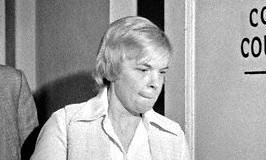 Marybeth Tinning
Murderer · USA · 1972
Marybeth Tinning (née Roe, born on September 11, 1942) was an American prisoner…
9 victims
Marybeth Tinning
Murderer · USA · 1972
Marybeth Tinning (née Roe, born on September 11, 1942) was an American prisoner…
9 victims
 Debbie Fornuto
Murderer · USA · 1972
Deborah Fornuto was the mother of six children whose deaths were initially rule…
7 victims
Debbie Fornuto
Murderer · USA · 1972
Deborah Fornuto was the mother of six children whose deaths were initially rule…
7 victims
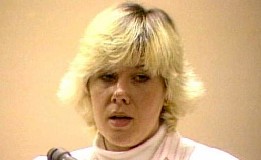 Catherine May Wood
Murderer · USA · 1987
Catherine May Wood was an American caregiver who worked at the Alpine Manor Nur…
5 victims
Catherine May Wood
Murderer · USA · 1987
Catherine May Wood was an American caregiver who worked at the Alpine Manor Nur…
5 victims
 Amy Bishop
Murderer · USA · 1986
Amy Bishop — biology professor and perpetrator · James Anderson — Bishop’s husb…
4 victims
Amy Bishop
Murderer · USA · 1986
Amy Bishop — biology professor and perpetrator · James Anderson — Bishop’s husb…
4 victims
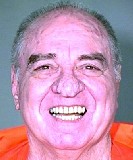 Richard Glassel
Murderer · USA · 2000
January 13, 2003 — Richard J. Glassel was sentenced to death for the murder of…
2 victims
Richard Glassel
Murderer · USA · 2000
January 13, 2003 — Richard J. Glassel was sentenced to death for the murder of…
2 victims
 Valmae Beck
Murderer · Australia · 1987
Valmae Beck Valmae Beck was sentenced to life imprisonment with a non parole pe…
1 victim
Valmae Beck
Murderer · Australia · 1987
Valmae Beck Valmae Beck was sentenced to life imprisonment with a non parole pe…
1 victim
 Shawn Patrick Lynch
Murderer · USA · 2001
Shawn Patrick Lynch was convicted and later sentenced to death. Shawn Patrick L…
1 victim
Shawn Patrick Lynch
Murderer · USA · 2001
Shawn Patrick Lynch was convicted and later sentenced to death. Shawn Patrick L…
1 victim
 Richard Sharpe
Murderer · USA · 2000
Richard Sharpe was sentenced to life in prison on November 29, 2001. He was fou…
1 victim
Richard Sharpe
Murderer · USA · 2000
Richard Sharpe was sentenced to life in prison on November 29, 2001. He was fou…
1 victim
 Olaf Däter
Serial killer · Germany · 2001
Olaf Däter (born September 25, 1969 in Bremerhaven) was a German serial killer…
5 victims
Olaf Däter
Serial killer · Germany · 2001
Olaf Däter (born September 25, 1969 in Bremerhaven) was a German serial killer…
5 victims
 Omar Thornton
Mass murderer · USA · 2010
Omar S. Thornton was 34 years old at the time of the Hartford Distributors shoo…
8 victims
Omar Thornton
Mass murderer · USA · 2010
Omar S. Thornton was 34 years old at the time of the Hartford Distributors shoo…
8 victims
- Gender
- female
- Country
- USA
- Location
- Milwaukee, Wisconsin, USA
- Date of birth
- August 15, 1958
- Age at first offence
- 23
- Characteristics
- escape
- Victim profile
- Christine Schultz, 30 (her husband's ex-wife)
- Method of murder
- Shooting ( Smith & Wesson .38-caliber revolver)
- Date(s) of murder
- May 28, 1981
- Years active
- 1981
- Date of arrest
- June 24, 1981
- Status
-
Died in custody
Paroled on December 9, 1992; died on November 20, 2010
Case record: Laurie Bembenek
Background
Lawrencia “Bambi” Bembenek (August 15, 1958 – November 20, 2010) was known as Laurie Bembenek. She was a former Milwaukee police officer who had been fired and had sued the department, claiming that it engaged in sexual discrimination and other illegal activities. She worked briefly as a waitress at a Lake Geneva, Wisconsin, Playboy Club. At the time of her arrest, she worked for Marquette University’s Public Safety Department in downtown Milwaukee.
Bembenek joined the Milwaukee Police Department in March 1980 as a trainee. She met and became close with a fellow trainee named Judy Zess. At a rock concert in May 1980, Zess was arrested for smoking marijuana. Bembenek’s dismissal from the police department occurred on August 25, and it stemmed from her involvement in filing a false report on Zess’ arrest. Bembenek later filed a lawsuit charging discrimination.
After her dismissal, she came into possession of nude photos of male police officers dancing in a public park. She gave the photos to internal affairs, and a U.S. Federal attorney named James Morrison began investigating allegations that the Milwaukee police force misused affirmative action funds and fired minorities on flimsy grounds. Bembenek came forward with allegations that women were hired and quickly fired to satisfy federal quotas and take advantage of employment equity grants.
Bembenek was described in publicity and later retellings with the nickname “Bambi,” a nickname she disliked. She became something of a folk hero following her escape from prison. A song was written about her, and T-shirts were sold with the slogan “Run, Bambi, Run.”
Bembenek legally changed her name to Laurie Bembenek in 1994.
In prison, Bembenek became a model inmate who was highly respected by her fellow prisoners. She earned a bachelor’s degree from the University of Wisconsin–Parkside and helped found a prisoners’ newspaper. She met and became engaged to Dominic Gugliatto, who had been visiting another inmate.
After her release, she wrote a book about her experience titled Woman on Trial. She was later arrested again on marijuana possession charges and filed for bankruptcy. She developed hepatitis C and other health problems and admitted to being an alcoholic.
The offence
On May 28, 1981, at approximately 2:15am, Christine Schultz was murdered in Milwaukee, Wisconsin.
Christine Schultz was age 30 and lived in her home with her two sons, then age 7 and 11. She was murdered by a single .38 caliber pistol shot fired point-blank into her back and through her heart. She had been gagged and blindfolded and her hands were tied in front of her with rope. The older boy, Sean, found her face down on her bed and bleeding.
Sean described the assailant as a masked male figure in a green army jacket and black shoes. Sean also said the man had a long (approx. 6" or 15 cm) reddish-colored ponytail.
Christine Schultz was the ex-wife of Laurie Bembenek’s then-husband, Elfred “Fred” Schultz, a Milwaukee Police Department detective. They had divorced six months before the murder.
Different descriptions in witness accounts included that Sean saw the intruder cover his mouth, eyes, and nose with a gloved hand; slip wire around his neck; rush back into Christine’s room; and shoot Christine in the back. Another account described a gloved hand covering Sean’s mouth and nose, a wire around his neck, and that the intruder ran past both boys and fled down the steps and out the door.
In one account of what was found at the scene, the body was wrapped in plastic and a clothesline-type cord was tied around Christine’s hands, binding them in front of her, and a blue bandanna-type scarf was wrapped around her head, gagging her mouth. A bullet hole was described near the wound in her right shoulder.
Ballistics testing described the weapon as Fred Schultz’s off-duty revolver after it was determined it was the murder weapon.
There were no signs of a break-in and no valuables taken.
Investigation
Ballistics analysis indicated that Fred Schultz’s service revolver, described as a Smith & Wesson .38-caliber revolver with a four-inch barrel, showed traces of blood consistent with the victim and with him. The 200 grain bullet fired from Fred Schultz’s off-duty .38 Smith & Wesson snub-nose revolver with a two-inch barrel proved that the killer had access to that gun. The markings on the slug matched markings in the gun barrel.
Blood was described as found on the gun.
Hairs and wig evidence were described as part of the investigation. It was stated that two human hairs found at the crime scene matched ones taken from the hairbrush of the defendant. A wig was described as being found in the plumbing system of Bembenek’s apartment building and as matching fibers found at the murder scene. A boutique employee testified that Bembenek purchased such a wig shortly before the murder. A brownish-red wig was also described as being found clogging shared drainage plumbing with another apartment.
One narrative stated that Christine’s autopsy report indicated radial expansion, described as the muzzle of the gun leaving a circular imprint on the victim’s skin, and that the bullet entered the back through the shoulder and made a direct path to the heart.
Other narrative details included that a hair was removed from the calf of Christine’s leg and that a wig and other materials were discovered and examined.
Multiple witnesses and details were included regarding what was seen in the neighborhood in early morning hours before the murder and prior weeks, including that area residents observed a man with reddish-brown hair and a green jogging suit carrying a blue bandanna.
Arrest
Bembenek was arrested on June 24, 1981.
At first, she was described as stunned and as claiming innocence. She later insisted she was being framed by the police department to stop her from releasing evidence of their fraudulent use of government funds.
Trial
Bembenek’s trial generated significant publicity. Newspapers referred to her as “Bambi” Bembenek, a nickname she disliked.
Her trial was described as lasting three weeks. Her lawyer was Donald S. Eisenberger, and it was stated that he called thirteen witnesses to the prosecution’s thirty-six. The prosecutor was Robert Kramer.
The prosecution portrayed Bembenek as wanting Christine Schultz dead so that her new husband would no longer have to pay alimony. The prosecution pointed to Bembenek’s financial problems and claimed that Bembenek was the only person with motive, means, and opportunity.
Witness testimony included claims that Bembenek had discussed killing Christine Schultz, and that she offered to pay a witness to carry out the murder. The prosecution used evidence described as including hairs matching the defendant, the gun used to kill Christine described as the defendant’s husband’s off-duty revolver, and additional claims of access to a key to Christine Schultz’s home.
One part of the testimony described witnesses for the prosecution saying that Bembenek owned a green jogging suit similar to what was described by Schultz’s son. It was also said that Bembenek owned clothesline and a blue bandanna similar to the items used to bind and gag the victim.
A defense theory described in the record was a switched gun theory. It claimed that before the crime someone replaced Schultz’s off-duty gun with one that looked like it, then killed Christine, and that during the next 22 days the same person switched the guns again so that tests showed Schultz’s off-duty gun killed the victim.
Bembenek was found guilty of first-degree murder in March 1982 and was sentenced to life in prison in Taycheedah Correctional Institution.
Sentencing
Bembenek was sentenced to life in prison in March 1982 in Taycheedah Correctional Institution in Fond du Lac County.
Appeals
It was stated that Bembenek filed three unsuccessful appeals of her conviction. The appeals cited police errors in handling of key evidence and that one prosecution witness, Judy Zess, recanted her testimony, stating it was made under duress.
There were also claims that Milwaukee police singled her out for prosecution due to her role as a key witness in a federal investigation into police corruption. Supporters suggested that Fred Schultz may have arranged for someone else to murder his ex-wife, with discussion of Frederick Horenberger as a possible candidate.
It was stated that Bembenek and her supporters alleged that the trial involved issues with hair evidence. Dr. Elaine Samuels was described as having originally concluded that hairs recovered from the body were consistent with that of the victim, and Diane Hanson was described as having later stated that two of the hairs were consistent with samples taken from Laurie Bembenek’s hairbrush. Dr. Samuels was also described as refuting that claim in a 1983 letter quoted in the Toronto Star in 1991. The quoted letter included:
"I recovered no blonde or red hairs of any length or texture ... [A]ll of the hairs I recovered from the body were brown and were grossly identical to the hair of the victim ... [I] do not like to suggest that evidence was altered in any way, but I can find no logical explanation for what amounted to the mysterious appearance of blonde hair in an envelope that contained no such hair at the time it was sealed by me."
The record included discussion that Zess had allegedly knocked on the door of a woman in another apartment and asked to use her bathroom and that the plumbing was mysteriously clogged after Zess used the bathroom. The record also included mention that Zess admitted to owning a brownish-red wig.
Bembenek sought a new trial after a Canadian review associated with her refugee status. The review did not find evidence of crimes by police or prosecutors but detailed seven major police blunders during the Christine Schultz murder investigation and she won the right to a new trial.
The Wisconsin Supreme Court refused to overturn her no contest plea, stating that such a plea cannot be withdrawn.
In April 2008, she filed a petition with the United States Supreme Court seeking reversal of the second murder conviction, and the appeal was denied in June 2008.
Outcome
After she escaped from Taycheedah Correctional Institution and was recaptured in Canada, she won the right to a new trial. Rather than risk a second conviction, Bembenek pleaded no contest to second-degree murder and was sentenced to time served and ten years probation. Her life sentence was described as being commuted to time served.
It was also stated that she received a reduced sentence limited to time already served plus parole and was released from prison in November 1992 after serving a little over ten years. She was paroled on December 9, 1992.
Aftermath
Escape and recapture
Bembenek escaped from prison on July 15, 1990 with the help of Dominic Gugliatto. Her escape reignited publicity surrounding her case. She fled with Gugliatto to Thunder Bay, Ontario, Canada, while stories about their relationship circulated in American tabloids.
They spent three months as fugitives before being apprehended. Gugliatto was sentenced to one year in prison for his role in the escape.
Post-conviction legal and personal life
After the escape and legal proceedings, Bembenek sought refugee status in Canada, claiming she was being persecuted by a conspiracy between the police department and the judicial system in Wisconsin. The Canadian government showed some sympathy and, before returning her to Wisconsin, obtained a commitment that Milwaukee officials would conduct a judicial review of her case.
After her release, she appeared on talk shows, including a visit with Oprah Winfrey. The record also stated that she tried to sell her paintings and gave speeches, and that it was hard for her to find work or make a living despite a college degree. She later moved to Washington state in 1996 to be near her retired parents in Vancouver. She met a local resident, U.S. Forest Service employee Marty Carson, and eventually married him. She was diagnosed with post-traumatic stress disorder, complicated by a growing addiction to alcohol. Carson encouraged her to paint.
It was stated that her early work was subject to an exhibition at UW–Milwaukee in 1992. After Carson constructed a studio for her, she amassed about thirty paintings displayed at a local art gallery. A gallery burned down in a fire and her paintings were destroyed.
In 2002, she fell or jumped from a second-story window, breaking her leg and causing an amputation below the knee. She claimed that she had been confined in an apartment by handlers for the Dr. Phil television show and was injured while attempting to escape. She continued to insist she was innocent, and the Wisconsin Supreme Court refused to overturn her no contest plea.
Death
On November 16, 2010, WTMJ reported that Bembenek was slipping in and out of consciousness and was near death in a hospice care center suffering from liver and kidney failure. On November 20, 2010, she died at a hospice facility in Portland, Oregon, at the age of 52.

Spotted an error, or have more information about this case?