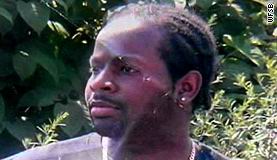
Omar Thornton
Mass murderer Omar Mateen
Mass murderer · USA · 2016
Omar Mir Seddique Mateen was an American mass murderer who killed 49 people and…
49 victims
Omar Mateen
Mass murderer · USA · 2016
Omar Mir Seddique Mateen was an American mass murderer who killed 49 people and…
49 victims
 Seung-Hui Cho
Mass murderer · USA · 2007
Seung-Hui Cho was a mass murderer who shot and killed 32 people and wounded man…
32 victims
Seung-Hui Cho
Mass murderer · USA · 2007
Seung-Hui Cho was a mass murderer who shot and killed 32 people and wounded man…
32 victims
 Adam Lanza
Mass murderer · USA · 2012
Adam Lanza, 20, fatally shot twenty children and six adult staff members in a m…
27 victims
Adam Lanza
Mass murderer · USA · 2012
Adam Lanza, 20, fatally shot twenty children and six adult staff members in a m…
27 victims
 Jiverly Wong
Mass murderer · USA · 2009
December 8, 1967 — Jiverly Antares Wong was born. · late 1980s — Wong first cam…
13 victims
Jiverly Wong
Mass murderer · USA · 2009
December 8, 1967 — Jiverly Antares Wong was born. · late 1980s — Wong first cam…
13 victims
 Nidal Hasan
Mass murderer · USA · 2009
Nidal Malik Hasan (born September 8, 1970) was a former United States Army Medi…
13 victims
Nidal Hasan
Mass murderer · USA · 2009
Nidal Malik Hasan (born September 8, 1970) was a former United States Army Medi…
13 victims
 Aaron Alexis
Mass murderer · USA · 2013
Aaron Alexis was a lone gunman who carried out a mass shooting at the headquart…
12 victims
Aaron Alexis
Mass murderer · USA · 2013
Aaron Alexis was a lone gunman who carried out a mass shooting at the headquart…
12 victims
 Mayra Perez
Murderer · USA · 2013
Mayra Perez was 23 and lived in northeast Denver with her husband, Ricky Perez,…
2 victims
Mayra Perez
Murderer · USA · 2013
Mayra Perez was 23 and lived in northeast Denver with her husband, Ricky Perez,…
2 victims
 John Dewberry
Homicide · USA · 1994
Defendant: John Curtis Dewberry Victim: Elmer Rode Jurisdiction/Court: Texas Co…
1 victim
John Dewberry
Homicide · USA · 1994
Defendant: John Curtis Dewberry Victim: Elmer Rode Jurisdiction/Court: Texas Co…
1 victim
 Daryl Atkins
Murderer · USA · 1996
Daryl Atkins was convicted of capital murder for the Aug. 16, 1996 murder of Er…
1 victim
Daryl Atkins
Murderer · USA · 1996
Daryl Atkins was convicted of capital murder for the Aug. 16, 1996 murder of Er…
1 victim
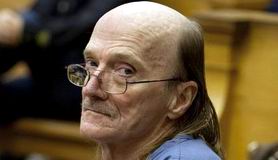 Jeffrey Cutlip
Serial killer · USA · 1975
Jeffrey Cutlip Jeffrey Cutlip pleaded guilty. A judge sentenced him to three co…
3 victims
Jeffrey Cutlip
Serial killer · USA · 1975
Jeffrey Cutlip Jeffrey Cutlip pleaded guilty. A judge sentenced him to three co…
3 victims
- Gender
- male
- Country
- USA
- Location
- Manchester, Connecticut , USA
- Date of birth
- 1975
- Age at first offence
- 35
- Characteristics
- —
- Victim profile
- Ex-coworkers
- Method of murder
- Shooting ( Ruger SR9)
- Date(s) of murder
- August 3, 2010
- Years active
- 2010
- Date of arrest
- —
- Status
-
Died in custody
Committed suicide by shooting himself the same day the Hartford Distributors shooting occurred on August 3, 2010
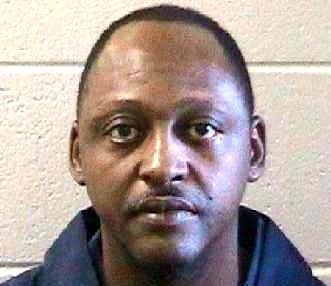
Case record: Omar Thornton
STATUS and identification
Omar S. Thornton was 34 years old at the time of the Hartford Distributors shooting.
The offence
The shooting was a mass shooting that occurred on August 3, 2010, in Manchester, Connecticut, United States.
The location of the crime was a warehouse owned by Hartford Distributors, a beer distribution company. Hartford Distributors was a wholesale distributor of Budweiser beer products and wine.
Thornton, a former employee, shot and killed eight people before turning a gun on himself. At the time Thornton started shooting, there were around 40 employees in the building.
Thornton had been called into his place of employment for disciplinary purposes. Hartford Distributors had been recorded on surveillance video showing Thornton stealing beer on a previous occasion. Given the options of being fired or resigning, Thornton signed the resignation papers and was being escorted out of the building; instead of leaving, he took two Ruger SR9s from his lunchbox and opened fire.
The shooting lasted just minutes. During the attack, Thornton seriously injured two others as he moved through the warehouse.
One executive victim, Steve Hollander, was shot but was treated at Hartford Hospital and released. Another victim was still at Hartford Hospital in critical condition.
Investigation and police response
Many employees made calls to 911, with some callers identifying Thornton.
Police arrived on the scene just three minutes after the first 911 call and entered the building 10 minutes after the first 911 call.
As police entered, Thornton hid in a locked office. As more police entered the building, Thornton called his mother and explained what he had done, including that he planned on turning the gun on himself.
Thornton called 911 again, saying his motive for the massacre was racism he had experienced in the workplace. He told the 911 operator that he wished he had killed more people. Soon after hanging up on 911, he killed himself with a shot to the head.
After the initial police response, buses took the employees from the warehouse to Manchester High School, where union representatives and Ross Hollander were comforting families of the victims.
Chief Marc Montminy of the Manchester Police Department said police were clearing the building and found Thornton in an office area. Chief Montminy stated, “He was alive when police responded.” He also said, “Police began clearing the building. He was funneled into an office area and took his own life.” Chief Montminy said it was unclear whether Thornton had fired more than one gun in the attack. Another law enforcement official said Thornton used a 9-millimeter Ruger in the attack, while Lt. Christopher Davis of the Manchester police said numerous guns were registered to Thornton.
Victims (named individuals)
Among the victims killed was Bryan Cirigliano, 51, president of Teamsters Local 1035, which represented drivers at Hartford Distributors. Cirigliano had been present for the disciplinary hearing.
Among the others identified were Steve Hollander and individuals including Louis Felder, Victor James, and Craig Peppin.
Louis Felder, 50, worked at the company as director of operations and was described as a father of three from Stamford, Connecticut. Felder was identified as one of those killed.
Victor James and Craig Peppin were identified as victims. Craig Peppin, 60, had worked at the company for more than 30 years. Peppin lived in South Windsor.
Victor James, who was 60 and lived in Windsor, Connecticut, had driven a Budweiser truck for 30 years and had been looking forward to retiring. His mother was Gloria Wilson, 86. Wilson stated, “I know a lot of people say that about their families, but this fellow loved children, and he took such good care of his grandchildren.”
Ron Peppin was Craig Peppin’s brother and said he heard about the shootings on the radio and knew right away it was the time when Craig would have been at the warehouse.
Background and context
The shooting occurred during the morning shift change and was described as the busiest time of the day at Hartford Distributors.
Thornton had come in at 7 a.m. on Tuesday for a disciplinary hearing. He had been with the company for two years. The disciplinary hearing was described as lasting about a half-hour and involving Thornton, a union representative, and one or more management officials, including Steve Hollander.
Authorities said Thornton had video showing him stealing beer from the company, and bosses gave him a choice between resigning or being fired.
Thornton had graduated from East Hartford High School in 1996 and had no criminal history outside of driving infractions, according to records. Clayton Mack, 53, who shared a house with Thornton and Kristi Hannah for several years in Enfield, north of Hartford, said, “He was a quiet person, not a mean bone in his body.”
Hartford Distributors was founded in 1944 and had been owned and operated by the Hollander family since the 1960s. The company moved from East Hartford to Manchester 16 years ago.
Bill Bartlett, who retired from the company, was at Manchester High School comforting former colleagues after the shooting. Bartlett said, “I lost a lot of friends today.”
John Hollis, a legislative affairs representative for the Connecticut Teamsters, said: “He came in to meet with the company, and after that all hell broke loose,” and “He pulled the gun and ran through the warehouse.”
Motive and disputes about racism
Thornton’s 911 call stated that the company was a racist place and that people treated him and other black employees badly.
Family statements described complaints of racial discrimination. Joanne Hannah said her daughter Kristi had been dating Thornton for parts of the last eight years and that Thornton had complained to her about being racially harassed at work. Joanne Hannah also said that things were being put on bathroom walls, including “a ‘hangman noose,’” and that Thornton had shown her daughter cellphone pictures of the bathroom walls.
Ms. Hannah said Thornton called her daughter from a bathroom at the warehouse and held the phone up so she could hear his supervisor and another employee talking disparagingly about blacks. After the shooting, Hannah said Thornton called his mother and said he “wanted to say goodbye, to tell everyone he loved them and that he had shot five people.”
Thornton’s cousin Annette Levine described Thornton’s final phone call to his mother and said he told her he had shot “the five racists.” Levine stated: “Those were his last words to her,” and “He loved her, and they pushed him over the edge.”
Union officials said Thornton never filed a complaint. Christopher Roos, an official with Teamsters Local 1035, said: “He never filed anything with the union,” and “As far as I know, there was never a state claim or a federal claim. Mr. Thornton was brought into the office about a disciplinary issue, and that was it.”
The union notes that he never filed a complaint with the union or any government agency. Company and union officials and workers at the facility denied charges of racism. A police probe did not find proof of racism at Hartford Distributors, and other minority workers interviewed by police disagreed with Thornton’s allegation that the company was “a racist place.”
Forensic psychiatrist Keith Ablow said, “I’ve evaluated plenty of murderers during my career... and I can tell you that people don’t commit atrocities because of name-calling.”
A police probe did not find proof of racism at Hartford Distributors, with other minority workers at Hartford Distributors interviewed by the police disagreeing with Thornton’s allegation.
Disciplinary hearing details
Steve Hollander told The Associated Press that Thornton “didn’t argue. He didn’t admit or deny anything. He just agreed to resign.”
One person familiar with details of the hearing said Thornton then went to get a glass of water. The person stated that Thornton’s back was to Hollander, he reached into what appeared to be a lunch bag, turned, and opened fire.
Hollander said two people standing near him were shot in the head and killed, while he was only grazed in the jaw and the arm. He said: “By just the grace of God, I don’t know how he missed me.”
911 call transcript (verbatim)
Transcript of Omar Thornton's 911 Call August 5, 2010
Dispatcher: State Police. Thornton: Is this 911? Dispatcher: Yeah, can I help you? Thornton: This is Omar Thornton, the, uh, the shooter over in Manchester. Dispatcher: Yes, where are you, sir? Thornton: I'm in the building. Uh, you probably want to know the reason why I shot this place up. This place here is a racist place. Dispatcher: Yup, I understand that Thornton: They treat me bad over here, and they treat all the other black employees bad over here too, so I just take it into my own hands and I handled the problem — I wish I coulda got more of the people. Dispatcher: Yeah. Are you armed, sir? Do you have a weapon with you? Thornton: Oh yeah, I'm armed. Dispatcher: How many guns do you have with you? Thornton: I got one now, there's one out, one out in the uh, the uh, factory there. Dispatcher: Yup. OK, sir. Thornton: I'm not gonna kill nobody else, though. Dispatcher: Yeah, we're gonna have to have you surrender yourself somehow here, not make the situation any worse, you know what I mean? Thornton: These cops are gonna kill me. Dispatcher: No they're not. We're just gonna have to get you to relax Thornton: I'm relaxed, just calm down. Dispatcher: … to have you, you know, turn yourself over. Thornton: We're just talking, you're gonna play something on the news, you know I'm gonna be popular, right [inaudible] the right thing. SWAT team just rolled by in army gear. You don't know where I'm at, but, I don't know, maybe you can trace it from this phone call. But, yeah, these people here are crazy, they treat me bad from the start here, racist company. They treat me bad, I'm the only black driver they got here. They treat me bad over here, they treat me bad all the time. Dispatcher: This is a horrible situation, I understand that… Thornton: You don't need to calm me down, I'm already calmed down. I'm not gonna kill nobody else — I just want to tell my story so that you can play it back. Dispatcher: You're gonna help me get you out of the building, OK? Thornton: All right, I'm a, I get — don't worry about that, I got that taken care of, I don't need anybody to talk me into getting me out. … Dispatcher: Where in the building are you, Omar? Thornton: I'm not gonna tell you that. Where they find me, that's when everything will be over. Dispatcher: Yeah, just, you know, where are you located, are you up in the offices? Thornton: Where they fired me, everything be all right. … Manchester itself is a racist place. Dispatcher: Yeah, now, um, what time did you get there today? Thornton: Um, It was about 7 o'clock Dispatcher: Yeah. This morning? Thornton: Yeah, about 7 a.m., yeah, they told me to come early today. Dispatcher: What type of weapon do you have? Thornton: I got a Ruger SR9, 15 shot. Dispatcher: A Ruger? SR9? Thornton: Automatic, yeah Dispatcher: Is it a rifle? Thornton: No, no, it's a pistol. I like pistols too, they are my favorites. Dispatcher: Now, uh, you're gonna make the troopers and the people come in and catch ya? You're not gonna surrender yourself? Thornton: Well — I guess, I guess uh, maybe I'll surrender … nah. They come and get me, have them come get me. Dispatcher: Yeah, we wouldn't want to do it like that, Omar. You know, it's already been a bad enough scene here this morning, we want you to relax. Thornton: I'm relaxed though, I'm done. Dispatcher: Yeah, we don't want any more, any more, uh, you know, people to lose their life, here. Thornton: I'm not gonna kill nobody else. Dispatcher: OK. Thornton: I'm not coming out, I'm not coming out, they gonna have to find me. Probably use some dogs or whatever, I don't know what you're gonna do. Anyway. Dispatcher: How much ammunition you have with you? Thornton: I got uh, I shot, uh oh . Dispatcher: What was that? Thornton: It's all right. I guess it's got me … I have to take care of business. Tell my people I love them, and I gotta go now. Dispatcher: Omar. I really want you to help me stop this situation. OK? Thornton: OK. Dispatcher: If you work with me we'll get this to stop, OK? Omar? Omar? Omar? OK … [to others] Still alive... Courant.com Omar S. Thornton home last updates contact
Sentencing, trial, and appeals
No trial, sentencing, or appeals were described for Omar Thornton.
Outcome and aftermath
Omar Thornton committed suicide by shooting himself the same day.
Connecticut suffered a similar workplace shooting at the Lottery Headquarters in Newington on March 6, 1998, which left five dead including the shooter.
The massacre was described as the deadliest workplace shooting in Connecticut history.
Gov. M. Jodi Rell called the shootings a “senseless act of violence” and said: “How could someone do this? Why did they do this?”
Other people mentioned (related legal proceedings)
Christy Quail and Sean Quail were arrested for receiving the property alleged to have been stolen by Thornton.
Sean Quail was arrested on August 17 in an incident where he sprayed bug-repellent at reporters covering the case.
Quail was charged with three counts of first-degree reckless endangerment, three counts of third-degree assault, carrying a dangerous instrument, and breach of peace.
Spotted an error, or have more information about this case?