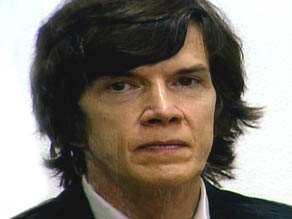
Richard Sharpe
Murderer Russell Ellwood
Murderer · USA · 1991
Russell Ellwood was a former taxi driver. Authorities suspected him of killing…
20 victims
Russell Ellwood
Murderer · USA · 1991
Russell Ellwood was a former taxi driver. Authorities suspected him of killing…
20 victims
 Robert Martines Perez
Murderer · USA · 1994
Name: Robert Martines Perez · Other name used in proceedings: Robert Martinez P…
15 victims
Robert Martines Perez
Murderer · USA · 1994
Name: Robert Martines Perez · Other name used in proceedings: Robert Martinez P…
15 victims
 Billy Frank Vickers
Murderer · USA · 1993
Billy Frank Vickers Vickers was executed by lethal injection in Texas on Januar…
14 victims
Billy Frank Vickers
Murderer · USA · 1993
Billy Frank Vickers Vickers was executed by lethal injection in Texas on Januar…
14 victims
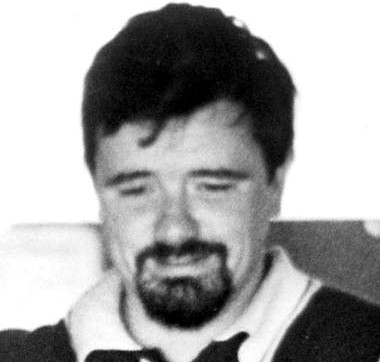 Erwin Mikolajczyk
Mass murderer · Germany · 1994
Erwin Mikolajczyk killed himself by detonating a homemade bomb the same day as…
6 victims
Erwin Mikolajczyk
Mass murderer · Germany · 1994
Erwin Mikolajczyk killed himself by detonating a homemade bomb the same day as…
6 victims
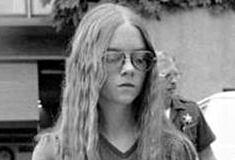 Brenda Spencer
Homicide · USA · 1979
Brenda Spencer was convicted after a school shooting at Grover Cleveland Elemen…
2 victims
Brenda Spencer
Homicide · USA · 1979
Brenda Spencer was convicted after a school shooting at Grover Cleveland Elemen…
2 victims
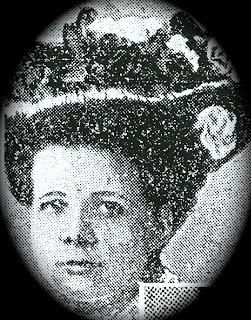 Augusta Fullam
Murderer · India · 1911
Augusta Fullam Augusta Fullam was sentenced to death in 1913. Her sentence was…
2 victims
Augusta Fullam
Murderer · India · 1911
Augusta Fullam Augusta Fullam was sentenced to death in 1913. Her sentence was…
2 victims
 Billy Lee Oatney
Murderer · USA · 1996
Defendant: Billy Lee Oatney Court: Washington County Circuit Court Judge: Alan…
1 victim
Billy Lee Oatney
Murderer · USA · 1996
Defendant: Billy Lee Oatney Court: Washington County Circuit Court Judge: Alan…
1 victim
- Gender
- male
- Country
- USA
- Location
- Boston, Massachusetts, USA
- Date of birth
- 1954
- Age at first offence
- 46
- Characteristics
- parricide, drug addict, abuse, domestic violence, child abuse, history of mental illness, child molester, pedophile, torture, rape, arson
- Victim profile
- H is estranged wife, Karen Sharpe, 44
- Method of murder
- Shooting
- Date(s) of murder
- July 14, 2000
- Years active
- 2000
- Date of arrest
- 2 days after
- Status
-
Died in custody
Committed suicide by hanging himself in his cell on January 5, 2009
Case record: Richard Sharpe
STATUS
Richard Sharpe was sentenced to life in prison on November 29, 2001. He was found hanged by a bedsheet in his cell in 2009.
Timeline
- July 14, 2000 — Karen Sharpe was shot and killed.
- July 16, 2000 — Richard Sharpe was arrested.
- July 21, 2000 — Richard Sharpe was charged with murder and held without bail.
- July 20, 2000 — Karen Sharpe’s family filed a wrongful death suit against Richard Sharpe.
- November 27, 2001 — Richard Sharpe was convicted of first-degree murder, and was sentenced to life in prison on November 29, 2001.
- December 2001 — Wrongful death suit was settled for $5 million.
- March 2002 — Sharpe tried to hang himself in prison.
- August 2007 — Sharpe was acquitted of charges that he plotted to kill the prosecutor in his murder trial.
- January 5, 2009 — Sharpe was found hanged by a bedsheet in his cell.
Background
Richard Sharpe was a cross-dressing dermatologist and Harvard Medical School faculty member who ran several businesses outside his medical practice. He parlayed his earnings into millions in the stock market. He was affiliated with both Addison Gilbert and Beverly hospitals, and he taught dermatology at Harvard Medical School.
Sharpe’s arrest drew national attention when photographs of him wearing slinky dresses and fishnet stockings were widely published. His wife had said in earlier affidavits that he stole her birth control pills in an effort to enlarge his breasts. Sharpe testified that he began cross-dressing at a young age to escape his father’s rage.
Defense witnesses, including Sharpe’s siblings, testified that Sharpe was abused for years by his father. A defense psychiatrist said Sharpe suffered from a half-dozen disorders, including depression and intermittent explosive disorder, which caused bursts of rage or aggression. The expert said alcohol made them worse. Prosecutors said Sharpe faked symptoms of mental illness.
Sharpe was described as a smart doctor who helped patients, but who often unsettled patients. He also branched off into other businesses including laser hair removal, and made millions of dollars. Over the years, he had hundreds of patients on Cape Ann. When he first came to Gloucester, his office had been at Cape Ann Medical Center at Blackburn Industrial Park. He later moved to an office near O’Maley Middle School and, lastly, had an office at the Shaw’s plaza on Eastern Avenue.
Alan Estes, a Gloucester musician, knew Sharpe because his wife at the time worked at Sharpe’s medical office for many years and because Estes also did work on the doctor’s house. Estes later wrote about the incident in a song titled “The Ballad of Dr. Sharpe.” Estes said his ex-wife had left Sharpe’s practice before the shooting. Estes said: “Everybody was watching him go down hill…He was a successful businessman and doctor and he was always walking a fine line of lunacy. People saw him losing more and more touch with reality as time went on.” Estes heard the news of Sharpe’s death from a fellow musician friend, Sal Baglio of Swampscott.
Fred Shrigley, owner of the Rhumb Line on Railroad Avenue, remembered Sharpe because he frequented the nightspot to hear Estes, a regular performer there. Shrigley said: “He would come in with Estes’ wife and listen to the music. She was a beautiful woman and I think he liked to be seen with her.” Shrigley added: “But he started to get weirder and weirder.” Shrigley said Sharpe was eventually barred from the bar after an incident in which Sharpe harassed the bar’s doorman while acting erratically, under the influence of some unknown substance.
The offence
Sharpe shot and killed his estranged wife, Karen Sharpe, in the foyer of her Wenham home.
On July 14, 2000, Sharpe confronted Karen Sharpe in the foyer of the home where she was staying with their two youngest children. With three witnesses looking on, he fired a single rifle shot to her chest, killing her.
The couple had a restraining order against Sharpe at the time of the incident. Karen Sharpe’s brother, his girlfriend, and a babysitter were in the home during the shooting. Sharpe’s weapon was never found.
Investigation
After the murder, a manhunt ensued as police searched for Sharpe. He was found in New Hampshire 30 hours later after a motel clerk recognized his face from a television news report. Police tracked him to Pine View Lodge in Tuftonborough, N.H., where he had registered for a motel room under his own name.
Gloucester police Lt. Michael McLeod and Sgt. William Leanos were at the location at the time of the arrest. McLeod said: “I remember that night in New Hampshire. He was strange that night. He showed no remorse.” McLeod further said: “It was pouring buckets of rain that night. It was torrential. They evacuated as many people as they could from the motel and threw in the biggest can of tear gas I ever saw in my life. He came right out. They put him to the ground and took him away.”
McLeod sat with Sharpe at the Tuftonborough Police Department after the arrest. McLeod said Sharpe “said just a few syllables” and: “He wasn’t upset. He wasn’t screaming or crying. It was like ‘OK, you got me.’”
During the manhunt, a Gloucester police dispatcher informed officers that the suspect may have been dressed as a woman. McLeod said he was shocked at Sharpe’s appearance when he was placed under arrest, because he looked like he was developing breasts.
Arrest
Richard Sharpe was arrested on July 16, 2000. He was held without bail on July 21, 2000.
Sharpe was transferred to Bridgewater State Hospital because officials feared he might attempt suicide. He was moved from the Essex County jail to the Bridgewater psychiatric hospital.
After his arrest, he was described as having run away to New Hampshire and being found in a motel less than two days after the shooting.
Trial
At trial, Sharpe did not dispute shooting his wife, but he claimed he was insane at the time of the killing.
Sharpe was charged with first-degree murder. At his trial, the jury returned a verdict convicting him of first-degree murder in 2001, and he was sentenced to life in prison on November 29, 2001.
The jury consisted of six women and six men and deliberated nearly 12 hours before returning the verdict. When the jury foreman announced the first-degree finding, a cry of “Yes!” rose up from the family and friends of Karen Sharpe, seated in the front row of the courtroom. Sharpe kept his eyes closed as the verdict was read.
Judge Christine McEvoy presided over the reading of the verdict. Sharpe had two outbursts during the trial. He said nothing but scowled as bailiffs placed him in handcuffs.
During closing arguments, prosecutor Robert Weiner urged the jury to “put aside the psychobabble.” Weiner painted Sharpe as a calculating murderer who planned an insanity defense. Weiner contended that Sharpe was furious because he believed his wife had stolen $3 million from him. Weiner shouted at the panel during closings: “He’s fakin’ it.”
A defense psychiatric expert, Dr. Kenneth Ablow, diagnosed Sharpe with several mental problems, including major depression, borderline personality disorder and intermittent explosive disorder, and said Sharpe was not criminally responsible for the shooting. Ablow traced Sharpe’s problems back to his abusive childhood. Ablow told jurors that the doctor began dressing as a woman as a young teen to avoid his father’s insults.
Weiner argued: “Child abuse is not an excuse.”
Taking the stand, Sharpe told jurors that a vague “compulsion” to reunite his family led him to her house with a loaded gun.
Sharpe later admitted quickly disposing of the murder weapon and fleeing to New Hampshire; the prosecution argued those actions showed a guilty conscience.
Sentencing
After conviction, Sharpe was sentenced to life in prison on November 29, 2001. The conviction meant he would receive a life sentence without the possibility of parole when sentenced.
Appeals
In 2007, Sharpe was acquitted of charges that he tried to hire a hitman to kill the prosecutor in his murder trial.
The 2007 trial centered on allegations that Sharpe approached another prison inmate for help in killing Robert Weiner, who had brought the murder case against Sharpe as an Essex County prosecutor. Sharpe was acquitted in a four-day trial.
Robert Weiner said: “Whenever a person takes their own life, obviously you feel badly for that person, but my true sympathy is with Karen Sharpe.” Weiner added: “She died needlessly.”
Outcome
Richard Sharpe was found hanged in his cell at the state prison in Norfolk.
A prison spokeswoman said he was found by his cellmate at MCI-Norfolk on Monday evening and declared dead at a hospital. A Department of Correction spokeswoman, Diane Wiffin, said: “He tied a bedsheet to the top bunk.” Wiffin declined to characterize the death as a suicide, saying it remained under investigation by the corrections department and the Norfolk district attorney’s office. An autopsy was planned.
A different reporting account stated that an autopsy was completed and that the medical examiner left the cause and manner of Sharpe’s death listed as undetermined, pending toxicology reports. Prison officials had not declared the death a suicide as of the latest report.
Aftermath
Sharpe’s death followed a prior attempt to hang himself in March 2002 while serving the life sentence.
Sharpe’s survivors included his children. Karen Sharpe’s sister, Kathleen Lembo, stood on courthouse steps after the verdict and described Karen Sharpe. Lembo said: “Karen Sharpe was a loving mother, the best sister anybody could have. She was a wonderful daughter and a friend.” Lembo added: “You got a sense of a lot of things that weren’t Karen Sharpe in the courtroom, but [Weiner] and his people were able to convey to the jury that she was not that person.” Lembo said: “She didn’t share it with any of us because she didn’t want us to feel her pain.”
Mark Smith, a partner in the law firm that represented Karen Sharpe in the divorce, said: “I hope that Sharpe’s death ‘brings some closure to this nightmare for the three Sharpe children.’”
After the shooting, a jury conviction in 2001 led to Sharpe’s life sentence. In December 2001, a wrongful death suit filed by Karen Sharpe’s family was settled for $5 million.
Not long after Sharpe was arrested, he had been transferred to Bridgewater State Hospital because officials feared he might attempt suicide.
During trial, a witness, Suzanne Crossen of Manchester, testified. When contacted after Sharpe’s death, she said she had no comment at this point. Other trial witnesses included Dr. Cynthia Bjorlie, Dr. Cynthia Bjorlie worked in the same office building at Cape Ann Medical Center, and Paula Hiltz, a former employee.
Sally Loring of Manchester, a former patient, said: “What does someone do with himself serving a life sentence? I just don’t know. I thought of sending him some books at first, but decided I just didn’t want to do that.” Loring added: “His wife is gone and someone is raising their children. The whole thing is terribly sad.”
Sharpe had written a letter to his daughter “last Valentine’s Day.” The letter said: “Dear Shannon, I loved your mother. I miss her terribly. I cry every day. I want nothing but the best for you, Mike, and Ali. The only thing that gets me through each day is the thought that my children may need me.”
Other details
Sharpe was described as having tried to hang himself in 2002.
Sharpe’s arrest occurred after police searched for him and tracked him to New Hampshire.
Gloucester residents remembered Sharpe’s development over time, including how he often unsettled patients, had a successful practice, and diversified into other businesses.
During the trial, the defendant was referred to as a “transvestite dermatologist” in one account, and he was described as wearing a white shirt and navy tie when the verdict was read.
A reported line from the defence counsel Joseph Balliro included: “He wasn’t a cross-dresser in the sense that he had an alternative life style,” and Balliro also said: “He wasn’t a cross-dresser in the sense that he had an alternative life style,” and Balliro said the defense would call at least one expert witness to testify to Sharpe’s insanity.
Spotted an error, or have more information about this case?