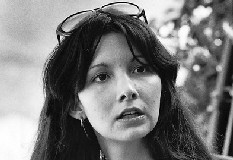
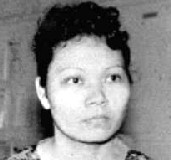
Patricia Columbo
Murderer Bobbie Sue Terrell
Murderer · USA · 1984
Bobbie Sue Dudley Terrell was a Pinellas County nurse and worked as the night s…
12 victims
Bobbie Sue Terrell
Murderer · USA · 1984
Bobbie Sue Dudley Terrell was a Pinellas County nurse and worked as the night s…
12 victims
 Marybeth Tinning
Murderer · USA · 1972
Marybeth Tinning (née Roe, born on September 11, 1942) was an American prisoner…
9 victims
Marybeth Tinning
Murderer · USA · 1972
Marybeth Tinning (née Roe, born on September 11, 1942) was an American prisoner…
9 victims
 Debbie Fornuto
Murderer · USA · 1972
Deborah Fornuto was the mother of six children whose deaths were initially rule…
7 victims
Debbie Fornuto
Murderer · USA · 1972
Deborah Fornuto was the mother of six children whose deaths were initially rule…
7 victims
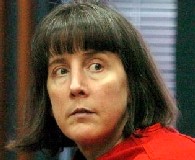 Amy Bishop
Murderer · USA · 1986
Amy Bishop — biology professor and perpetrator · James Anderson — Bishop’s husb…
4 victims
Amy Bishop
Murderer · USA · 1986
Amy Bishop — biology professor and perpetrator · James Anderson — Bishop’s husb…
4 victims
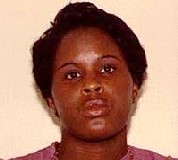 Debra Sue Tuggle
Murderer · USA · 1974
Debra Sue Tuggle was an African American woman born in Arkansas. She had a hist…
4 victims
Debra Sue Tuggle
Murderer · USA · 1974
Debra Sue Tuggle was an African American woman born in Arkansas. She had a hist…
4 victims
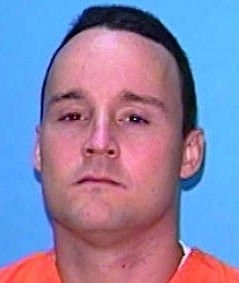 Alvin Leroy Molton
Murderer · USA · 1992
Alvin Leroy Molton was convicted in the Sixth Judicial Circuit, Pasco County, i…
2 victims
Alvin Leroy Molton
Murderer · USA · 1992
Alvin Leroy Molton was convicted in the Sixth Judicial Circuit, Pasco County, i…
2 victims
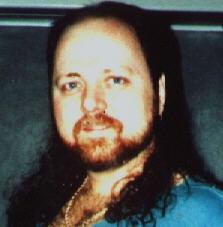 Don Wilson Hawkins
Murderer · USA · 1985
Don Wilson Hawkins Jr. was convicted in Oklahoma County District Court of first…
2 victims
Don Wilson Hawkins
Murderer · USA · 1985
Don Wilson Hawkins Jr. was convicted in Oklahoma County District Court of first…
2 victims
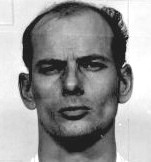 Jonathan Bruce Reed
Murderer · USA · 1978
Jonathan Bruce Reed was sentenced to death on September 6, 1969. His death sent…
1 victim
Jonathan Bruce Reed
Murderer · USA · 1978
Jonathan Bruce Reed was sentenced to death on September 6, 1969. His death sent…
1 victim
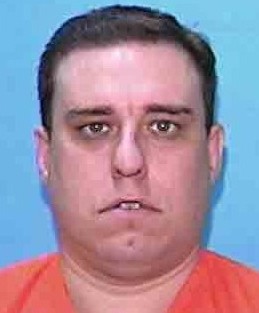 Frank Athen Walls
Serial killer · USA · 1985
Frank Athen Walls was convicted in connection with the murders of Edward Alger…
5 victims
Frank Athen Walls
Serial killer · USA · 1985
Frank Athen Walls was convicted in connection with the murders of Edward Alger…
5 victims
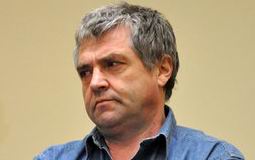 Thomas Selmayr
Murderer · Germany · 2011
March 21, 2011 — Police investigated the deaths of two girls, aged eight and 11…
2 victims
Thomas Selmayr
Murderer · Germany · 2011
March 21, 2011 — Police investigated the deaths of two girls, aged eight and 11…
2 victims
- Gender
- female
- Country
- USA
- Location
- Elk Grove, Illinois , USA
- Date of birth
- June 21, 1956
- Age at first offence
- 20
- Characteristics
- parricide, to inherit
- Victim profile
- H er parents, Mary, 41, and Frank Columbo, 43, and brother, Michael, 13
- Method of murder
- Shooting ( .32-caliber handgun)
- Date(s) of murder
- May 7, 1976
- Years active
- 1976
- Date of arrest
- 10 days after
- Status
-
Imprisoned
Sentenced to 200 to 300 years in prison for the murders; 150 years for conspiracy to commit murder; and an additional 50-year prison term for solicitation to commit murder
Case overview
Patricia Columbo and Frank DeLuca were convicted after a jury trial of three counts of murder, conspiracy and solicitation arising from the killings of Frank, Mary and Michael Columbo in their Elk Grove Village home. Patricia Columbo and Frank DeLuca were arrested following the murders and each was sentenced to 200 to 300 years in prison for the murders. The conspiracy charge merged in law with the murder charge, so no sentence was imposed with respect to the conspiracy counts. Patricia Columbo also received a sentence for solicitation.
Timeline
- May 4, 1976 — Patricia Columbo and Frank DeLuca decided to carry out the plan; they entered the Columbo family home and killed Frank, Mary and Michael Columbo.
- May 7, 1976 — Chicago police found a car belonging to Elk Grove resident Frank Columbo abandoned after apparently being stolen.
- May 7, 1976 — A village police officer found Frank Columbo’s body in the Columbo home; Mary and Michael Columbo’s bodies were found in the home.
- May 8, 1976 — Autopsies were performed on Frank, Mary and Michael Columbo.
- May 14, 1976 — Investigator Raymond J. Rose testified that Mitchell gave information about Patricia Columbo’s solicitation of him to murder her family, including that Columbo informed him he could enter the parents’ home through patio doors she would leave unlocked.
- May 15, 1976 — Investigator Raymond J. Rose arrested Patricia Columbo at the apartment she shared with Frank DeLuca at 2015 Finley Road, Lombard, Illinois, and the court later denied motions to quash arrest and to suppress physical evidence and statements.
- May 15, 1976 — Evidence officers entered and searched the apartment where Columbo and DeLuca lived; Columbo shouted at the police while they were attempting to enter.
- Rose questioned Columbo regarding overdue rent payments; Columbo stated she wrote the dossier and explained forced sexual activities and that the dossier was prepared for murder.
- May 17, 1976 — The psychiatrist Paul Cherian examined Columbo and diagnosed “acute situational reaction, depressive type.”
- May 17, 1976 — Investigators Landers and Gargano interviewed Columbo at the Cook County jail.
- May 19, 1976 — Investigators Landers and Gargano went to the Cook County jail complex to see Columbo, who was in a hospital room at the time and did not want to talk to them.
- July 17, 1976 — Investigator Gene Gargano went to Frank DeLuca’s apartment with a warrant for his arrest.
- August 8, 1977 — Patricia Columbo filed a motion for a new trial and to vacate judgment on the verdicts of conspiracy and solicitation.
- September 26, 1977 — A hearing was held on DeLuca’s motion to have counsel appointed for his appeal.
- November 15, 1983 — Rehearing was denied.
- June 24, 1983 — The appellate court opinion was filed affirming the trial court’s judgment.
Background
Patricia Columbo was the surviving member of her family after the killings of her parents and brother. Frank DeLuca was her married lover. Frank DeLuca was involved in work at Walgreen’s Drugstore in Elk Grove Village; DeLuca was store manager at the time of the murders, and later testimony concerned his role at Walgreen’s and his contacts with employees and witnesses.
The offence
Frank, Mary and Michael Columbo were killed in their Elk Grove Village home. The jury found defendants guilty of three counts of murder, conspiracy and solicitation. The trial court sentenced Columbo to concurrent sentences of 20 to 50 years for solicitation and 200 to 300 years for the murders of Frank, Mary and Michael Columbo. The court also sentenced DeLuca to concurrent sentences of 10 to 50 years for solicitation and 200 to 300 years for the murders of Frank, Mary and Michael Columbo. The conspiracy verdict merged in law with the murder charge, and no sentence was imposed with respect to the conspiracy counts.
Victims
- Frank Columbo
- Mary Columbo
- Michael Columbo
Investigation
Police officers investigated the killings at the Columbo home and processed physical evidence from the scene and from cars connected to the defendants.
Scene evidence and injuries
Investigators described the bodies and physical evidence found at the home:
- Frank Columbo’s body was found in the living room. There was a two-inch slash across his throat and a torn and bloody lamp shade was nearby. Teeth were missing from his jaw.
- Mary Columbo’s body was found on the landing in front of the bathroom. She had a bullet wound and a one-inch slash across her throat. Her purse contents were strewn on the floor, and an ash tray with Pall Mall Menthols butts was found.
- Michael Columbo’s body was found on the bedroom floor. The court record described a bullet wound on the left side and a second bullet wound on the back, with 98 puncture wounds on Michael’s neck and chest. A pair of bloodied scissors with crossed blades was found on Michael’s desk, and a bloodied bowling trophy was found next to his body.
Police observed no forced entry indicators and no valuables were taken, though there was testimony about an attempt to give the impression of robbery.
Forensic and scientific evidence
The trial included testimony about:
- Autopsy estimates of time of death, with Dr. Robert Stein estimating death to have occurred between 11 p.m., May 4, 1976, and 1 a.m., May 5, 1976, based on stomach remains and absence of rigor mortis.
- Firearms evidence identifying bullets and fragments as .32-caliber.
- Evidence about locks and the possibility of opening with a shim device being discussed on cross-examination.
- Hair comparison testimony involving head hair standards from the defendants and a hair found on Michael Columbo’s T-shirt.
- Handprint identification testimony by Professor Eugene Giles, including conclusions that the handprints on the Thunderbird were made by someone missing the index finger on his left hand and conclusions about gloves and flexed position.
Arrest
Patricia Columbo’s arrest
Investigator Raymond J. Rose testified that on May 15, 1976, approximately 7 a.m., he arrested Patricia Columbo at the apartment she shared with Frank DeLuca at 2015 Finley Road, Lombard, Illinois.
Warrant and entry dispute
The appellate court addressed defendants’ argument that the warrantless arrest and entry violated constitutional requirements. It held that entry was demanded under color of office and was not consensual. The appellate court further concluded that exigent circumstances justified prompt police action. It analyzed factors including the grave and violent nature of the murders, that a firearm was used, probable cause from Mitchell’s statements, strong reason to believe defendants were in the premises, and the likelihood that the suspects might escape if not swiftly apprehended.
Physical evidence seizure
The appellate court affirmed the trial court’s denial of the motion to suppress physical evidence and held that evidence seized in plain view and incident to a lawful arrest was admissible. The items included cigarette butts of the same brand, unruled notebook paper similar to dossier paper, and an address book relevant to contacts associated with Mitchell and the Club Claremont.
Statements and confessions
Oral and written statements on May 15, 1976
Investigators questioned Columbo after her arrest. Investigator Rose testified that Columbo indicated she understood her rights after Miranda warnings and later said: “All right, all right, I wrote it,” referring to the dossier. Columbo told Rose she believed that Mitchell’s people wanted to kill her parents, that she had been forced to participate in numerous sexual activities although they had not raped her, and that she had been afraid to tell police and that she had not told DeLuca. Columbo also discussed the telephone number of Club Claremont and said she called there on several occasions.
Lieutenant Braun testified that Columbo told him she was afraid Mitchell might kill her if she said anything and that “they” were going to kill her family and forced her to have sex.
Investigator Glenn Gable testified to Columbo’s comments while in transit, including: “You f____ animals. You pigs. What is going to happen to my dog?”
Investigator John G. Landers testified that Columbo initiated a conversation, was advised of Miranda rights, and gave a written statement. Landers described Columbo stating during Miranda-related discussion: “I have already heard this before. I understand my rights and I want to talk.” Landers testified that Columbo’s later attempted second statement was not completed. The trial court denied the motion to suppress oral and written statements.
In her own testimony, Columbo denied being struck and denied making some of the profanity claims attributed to her, but she admitted the possibility that she used language out of fear when police knocked.
Vision statement on May 17, 1976
The appellate court addressed Columbo’s statement given while in custody at the Cook County jail on May 17, 1976. Deputy sheriff Jean Roti testified that Columbo jumped up and said: “Oh, how could I forget. It was so simple. Paper bag. How could I forget. That’s it.”
Landers testified to Columbo’s vision statement at length. During examination, Landers recited Columbo’s account:
“[I]n this vision that she had [she] saw her mother and father [lying] on the floor in the living room of the house next to a chair by the rail, and he was laying on his back. He was wearing dark colored pants and she said he had socks on, but no shoes. She said that she went — she saw in the hallway her mother. Her mother was laying on the floor and that her mother was wearing * * * a nightgown and a bathrobe. She said she saw her brother in the bedroom and she said the bedroom was dark, she couldn't tell if he had on any clothes or not, any pajamas or not. She said there was a hall light on, she said that she then saw a scissors with blood on it. At that time I asked her if she saw herself in the house and she said yes. I said,
Do you see yourself involved in the killing of your mother, your father, or your brother?' And she says,I'm not certain, I'm confused.' At that time I asked her to go on with the statement, and she said that her — she saw her father and her father told her that Jesus, Jesus would forgive her, that she had been wrong. * * * She said that she saw herself there [in the Columbo house when the murders occurred], she thought she was there. She said she might have been involved and that she saw them all laying there together. * * * She then started talking about how she had been living with fear, fear of what her parents would do to her and also would do, and then hate, hate for her parents.”
Landers testified that Columbo also told him: “I told my attorneys that I wanted to talk to you. I told them I didn't care what they say, I want to talk to you guys, I want to see you guys.” Landers also testified to Columbo stating: “I'm afraid that I was there and did it.”
The appellate court held the statement was properly admitted because it was not the product of interrogation and was volunteered.
Trial
Charges and verdict
Following jury trial, Patricia Columbo and Frank DeLuca were found guilty of three counts of murder, conspiracy and solicitation. The verdicts led to separate sentencing for solicitation and murders, with conspiracy merging in law with murder for sentencing.
Pretrial motions
Before trial, Columbo filed motions to quash arrest, quash a search warrant, suppress statements and suppress physical evidence. The court quashed the search warrant but denied the other motions.
The appellate court affirmed:
- the ruling that exigent circumstances justified entry and warrantless arrest,
- the denial of suppression of physical evidence,
- the denial of suppression of oral and written statements,
- the admission of the May 17 vision statement,
- the denial of severance,
- evidentiary rulings concerning conspiracy and related hearsay,
- rulings regarding jury instructions,
- denial of mistrial based on improper closing argument, and
- denial of the motions for new trial.
Severance
The appellate court affirmed denial of Columbo’s petition for severance. It held Columbo failed to demonstrate true conflict of defenses requiring severance and that precautions and redactions limited prejudice from DeLuca’s statements.
Sentencing
The trial court sentenced:
- Columbo to concurrent sentences of 20 to 50 years for solicitation and 200 to 300 years for the murders of Frank, Mary and Michael Columbo.
- DeLuca to concurrent sentences of 10 to 50 years for solicitation and 200 to 300 years for the murders of Frank, Mary and Michael Columbo. The conspiracy verdict merged in law with the murder charge, and no sentence was imposed with respect to conspiracy counts.
Appeals
Appeal outcome
The appellate court affirmed the trial court’s judgment. It stated: “Judgment affirmed.” and “Affirmed.”
Legal issues on appeal
The appellate court addressed, among other issues:
- denial of motion to suppress physical evidence,
- denial of motion to suppress oral and written statements,
- admission of the May 17 vision statement,
- denial of severance,
- admission of coconspirator statements and related hearsay analysis,
- jury instruction issues,
- claims regarding effective assistance of counsel and conflict,
- reasonable doubt arguments,
- admission of expert forensic anthropology testimony using handprints,
- admission of hair comparison testimony,
- limitations on cross-examination and impeachment of Joy Heysek,
- limitations on other-defense theories including motives of third parties and reconciliation evidence,
- exclusion of testimony about the substance of a telephone conversation between Michael Dunkle and Mary Columbo,
- refusal of tendered jury instructions on promises or leniency for immunized witnesses.
Other details
Immunity and witnesses
The record described immunities for witness Mitchell and Sobczynski. It also described agreements and State-paid housing and bodyguard arrangements for witness Clifford Childs. The jury was instructed using IPI Criminal No. 1.02 and IPI Criminal No. 3.17.
Telephone and evidence matters
The appellate court addressed evidence about a telephone conversation between Michael Dunkle and Mary Columbo on May 5, 1976, and excluded testimony about the substance of the conversation as cumulative and irrelevant because identity had already been established and no claim of mistaken identity was made by the State.
Vision and mental health
A psychiatrist diagnosed Columbo with “acute situational reaction, depressive type.” Testimony addressed suicide potential, depression, anxiety, confusion, and the effect of psychomotor retardation on judgment.
Spotted an error, or have more information about this case?