Harold Lamont Otey
Murderer Ervil LeBaron
Murderer · USA · 1972
Ervil Morrell LeBaron (1925 to August 16, 1981) was the leader of a polygamous…
35 victims
Ervil LeBaron
Murderer · USA · 1972
Ervil Morrell LeBaron (1925 to August 16, 1981) was the leader of a polygamous…
35 victims
 Brian Kevin Rosenfeld
Murderer · USA · 1985
Brian Kevin Rosenfeld Brian Kevin Rosenfeld was sentenced to three concurrent l…
23 victims
Brian Kevin Rosenfeld
Murderer · USA · 1985
Brian Kevin Rosenfeld Brian Kevin Rosenfeld was sentenced to three concurrent l…
23 victims
 Marvin Gray
Murderer · USA · 1975
Marvin Gray was convicted killer who claimed responsibility for 23 slayings and…
23 victims
Marvin Gray
Murderer · USA · 1975
Marvin Gray was convicted killer who claimed responsibility for 23 slayings and…
23 victims
 Yahweh ben Yahweh
Murderer · USA · 1980
Yahweh ben Yahweh was born and legally named Hulon Mitchell Jr. (October 27, 19…
23 victims
Yahweh ben Yahweh
Murderer · USA · 1980
Yahweh ben Yahweh was born and legally named Hulon Mitchell Jr. (October 27, 19…
23 victims
 Lendell Hunter
Murderer ? · USA · 1975
Lendell Hunter carried out a string of violent rapes that shocked Augusta, Geor…
1 victim
Lendell Hunter
Murderer ? · USA · 1975
Lendell Hunter carried out a string of violent rapes that shocked Augusta, Geor…
1 victim
 Carolyn King
Murderer · USA · 1993
Carolyn King was convicted along with Bradley Martin of the 1993 murder of 74-y…
2 victims
Carolyn King
Murderer · USA · 1993
Carolyn King was convicted along with Bradley Martin of the 1993 murder of 74-y…
2 victims
 Carole Tregoff
Murderer · USA · 1959
Carole Tregoff was convicted in connection with the murder of Barbara Finch. Sh…
1 victim
Carole Tregoff
Murderer · USA · 1959
Carole Tregoff was convicted in connection with the murder of Barbara Finch. Sh…
1 victim
 Martin Lecian
Serial killer · Czech Republic · 1927
Martin Lecián was a Czech serial killer. He was executed on October 6, 1927. ·…
11 victims
Martin Lecian
Serial killer · Czech Republic · 1927
Martin Lecián was a Czech serial killer. He was executed on October 6, 1927. ·…
11 victims
 Amber Torrez
Homicide · USA · 2004
Amber Lee Torrez was found not guilty by reason of insanity in connection with…
2 victims
Amber Torrez
Homicide · USA · 2004
Amber Lee Torrez was found not guilty by reason of insanity in connection with…
2 victims
- Gender
- male
- Country
- USA
- Location
- Douglas County, Nebraska, USA
- Date of birth
- August 1, 1951
- Age at first offence
- 26
- Characteristics
- rape, robbery
- Victim profile
- Jane McManus (female, 26)
- Method of murder
- Strangulation with a belt
- Date(s) of murder
- June 11, 1977
- Years active
- 1977
- Date of arrest
- —
- Status
-
Executed
Executed by electrocution in Nebraska on September 3, 1994
Name
Harold Lamont Otey
Background
Harold Lamont Otey was born on August 1, 1951. He died on September 2, 1994. He spent 17 years on death row. He maintained his innocence for more than 15 years and recanted his guilty plea.
The offence
Otey was convicted of first degree murder in the perpetration of first degree sexual assault and was sentenced to death.
Otey was convicted of the rape and murder of 26-year-old Jane McManus in her Omaha apartment. The state said that Otey entered the apartment in the middle of the night and removed a stereo. When he reentered to remove other items, McManus awoke. Otey raped McManus, then stabbed her, and finally strangled her with a belt.
Investigation
Otey was arrested six months later in Florida. He confessed to the crime but later recanted.
The investigation included interviews involving Tucker Brown, a boyfriend of the deceased who allegedly confessed to the crime. Brown was interviewed by the Omaha police and subsequently was cleared as a suspect.
Arrest
Trial
Otey was represented by an inexperienced attorney. The state was represented by the most experienced homicide prosecutor in Nebraska.
During the trial, the court also addressed a juror who expressed reservations about the death penalty. After voir dire was completed and the jury sworn, the trial court removed a juror for cause for expressing reservations about the death penalty.
The federal appeal described the conviction as being based on Otey’s conviction of first degree murder in the perpetration of first degree sexual assault and the sentence of death.
The New York Times account stated that in 1978 Otey was convicted of the murder of a 26-year-old Nebraska woman, largely on the basis of a graphic description of how he had stabbed and smothered her and then hit her a few times with a hammer just to be sure she was dead. It further stated that later he said the confession had been coerced, and that his volunteer lawyer did not take that tack.
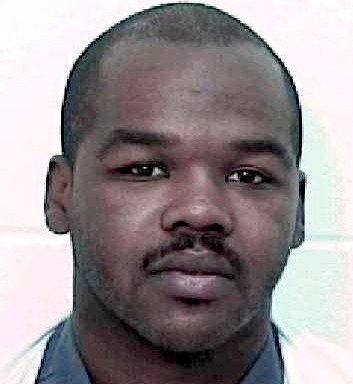
Harold Lamont "Wili" Otey Fotojones.com Harold Lamont Otey was convicted of the rape & murder of 26 year old Jane McManus in her Omaha apartment. According to the state, Otey entered the apartment in the middle of the night & removed a stereo. When he reentered to remove other items, McManus awoke. Otey raped McManus, then stabbed & finally strangled her with a belt. Arrested six months later in Florida, Otey confessed to the crime but later recanted.
Sentencing
Otey was sentenced to death.
Appeals
Otey’s conviction and sentence were affirmed on direct appeal to the Nebraska Supreme Court in State v. Otey, 205 Neb. 90, 287 N.W.2d 36 (1979), and certiorari was denied, 446 U.S. 988, 100 S.Ct. 2974, 64 L.Ed.2d 846 (1980).
State post-conviction relief was denied, and that result was affirmed on appeal in State v. Otey, 212 Neb. 103, 321 N.W.2d 453, cert. denied, 459 U.S. 1080, 103 S.Ct. 502, 74 L.Ed.2d 641 (1982).
Otey then filed in federal court a petition for a writ of habeas corpus raising thirty-one grounds for relief. The District Court denied Otey’s petition by adopting the Magistrate’s extensive report and recommendation.
Federal appellate decision on habeas petition (Eighth Circuit)
The Eighth Circuit case was:
- Harold Lamont Otey, Appellant, v. Gary Grammer, Warden of Nebraska Penal and Correctional Complex, Appellee.
- No. 87-1522, United States Court of Appeals, Eighth Circuit
- Submitted Dec. 18, 1987; Decided Oct. 13, 1988
- Before JOHN R. GIBSON, BOWMAN, and WOLLMAN, Circuit Judges
- BOWMAN, Circuit Judge
The decision stated:
- Otey argued that he was denied effective assistance of counsel during his trial, at sentencing, and on appeal.
- Otey argued that he was denied an impartial jury when the trial court removed a juror for cause for expressing reservations about the death penalty.
- Otey argued that the Nebraska death penalty statute was unconstitutional because it deprived defendants of the right to have a jury determine the facts underlying aggravating and mitigating circumstances.
- Otey argued that the sentencing panel erred by failing to conduct a proportionality review.
- Otey argued that the sentencing panel erred in considering charges of other crimes.
- Otey argued that the death penalty in Nebraska was arbitrarily imposed.
- Otey argued that certain incriminating statements were obtained in violation of Miranda.
- The Eighth Circuit affirmed the District Court’s decision and rejected the arguments.
Effective assistance of counsel issues
Otey’s ineffective assistance claims included:
- Trial counsel’s failure to conduct an adequate investigation.
- Trial counsel’s failure to discuss trial strategy and sentencing with Otey.
- Trial counsel’s performance at the sentencing hearing.
- Trial counsel’s failure to request that all stages of the proceeding be recorded.
- Trial counsel’s reference in his opening statement to Otey’s intention to testify when no such decision had been made and when, in fact, Otey did not take the stand.
- Appellate counsel’s refusal to raise meritorious issues despite Otey’s demands that the issues be raised.
The decision addressed trial counsel’s investigation and found trial counsel’s investigation was not unreasonable. It also stated Otey did not demonstrate prejudice.
The decision addressed counsel’s discussion of strategy and sentencing and concluded that counsel fulfilled the duty to consult with the defendant on important decisions and keep the defendant informed of important developments.
The decision addressed the Miranda-related claim and described the interrogation circumstances:
- At a Miranda pre-trial hearing, two officers of the Omaha Police Department testified that they interrogated Otey twice during a two-day period.
- They apprised him of his constitutional rights at least four times over the two days and received from him at least two signed rights advisory forms.
- During the second interview, after a short general discussion, the dialogue turned to the murder for which Otey later was indicted.
- After a recorded statement, officers stopped the tape when Otey indicated he was reluctant to answer specific questions about the murder.
- Otey agreed to have his general conversation recorded after a new tape was inserted.
- Otey delivered a general, rambling narrative about his life with references to the murder.
- The decision concluded Otey’s constitutional rights were scrupulously honored and that the statement was admissible, so counsel did not render ineffective assistance in not objecting.
The decision addressed voir dire recording and opening and closing statements and stated that even in criminal cases, including first degree murder, the customary practice was not to record voir dire and opening and closing statements.
The decision addressed the opening statement comment about Otey testifying, including a factual dispute about what was actually said, and concluded that Otey suffered no prejudice due to a cautionary instruction and the overwhelming evidence of guilt.
The decision addressed appellate counsel’s performance and stated that appellate counsel briefed seven issues chosen not to dilute the effort with weaker arguments and that the performance could not be considered inadequate.
The Eighth Circuit concluded:
- The claims were rejected, and the decision of the District Court was affirmed.
Eighth Circuit decision on motion regarding stay of execution and habeas petition about commutation (Eighth Circuit)
Another Eighth Circuit case was:
- Harold Otey, Appellee, v. Frank X. Hopkins, Warden of the Nebraska Penal and Correctional Complex, Appellant.
- No. 92-2733
- United States Court of Appeals, Eighth Circuit
- Submitted Aug. 4, 1992; Decided Aug. 4, 1992
- Before JOHN R. GIBSON, BOWMAN and MAGILL, Circuit Judges
- John R. Gibson, Circuit Judge
The decision stated:
- Otey was scheduled for execution August 6, 1992.
- The district court stayed execution to permit consideration of a petition for a writ of habeas corpus raising new issues.
- Hopkins filed a motion to vacate the stay.
- The Eighth Circuit denied the motion.
The decision described that Otey’s petition was directed to the commutation hearing before the Nebraska Board of Pardons conducted in June 1991.
- The Board of Pardons denied commutation by a vote of two to one.
- Otey attacked the commutation proceedings in state court.
- The Nebraska Supreme Court ruled against him in Otey v. State of Nebraska, 240 Neb. 813, 485 N.W.2d 153 (1992), filed on May 29, 1992.
- The Nebraska Supreme Court held that in Nebraska as a matter of law the judicial branch had no jurisdiction to review the granting or denial of clemency in a death sentence case by the Board of Pardons.
- The Nebraska Supreme Court also held that the clemency decision did not implicate any interest protected by the due process clause of the federal or state constitutions.
Otey claimed constitutional violations in that the attorney general participated in conflicting capacities in the Board of Pardons proceedings, acting simultaneously as prosecutor and witness before that Board; sat as a decisionmaker; and directed the Nebraska Board of Parole not to make a recommendation to the Nebraska Board of Pardons.
The district court denied the state’s motion to dismiss on the ground that Otey’s claims were not properly the subject of a petition for habeas corpus under 28 U.S.C. § 2254, but the Eighth Circuit described the district court’s reasoning as concluding that a habeas petition may attack executive restraints on liberty, including decisions of the executive branch with respect to insanity, citing Peyton v. Rowe, Harris v. Nelson, Burnside v. White, and Ford v. Wainwright.
The Eighth Circuit described the district court’s conclusion that unusual constitutional issues required more thorough examination than could be given before the scheduled execution date because legal issues were new and the record was not yet fully developed. The Eighth Circuit noted that the district court stated an evidentiary hearing may be necessary, that the claims were not frivolous, and that a stay was required under the court’s standard.
The Eighth Circuit analyzed arguments about Dumschat and concluded it rejected the argument that Dumschat required vacating the stay, entering decision on merits, and permitting execution.
The Eighth Circuit stated that the case involved unusual constitutional issues requiring development of a factual record, and that because it was not dealing with a successive or abusive petition and the district court made a clear statement that the claims were not frivolous, a stay was required to fully and diligently consider the issues. The motion to vacate the stay was denied.
Dissent
BOWMAN, Circuit Judge, dissented and would have granted the motion to vacate the stay of execution. The dissent stated that it would first address a threshold question: whether the Due Process Clause applied to the Nebraska commutation proceeding, and that the answer was no. The dissent cited:
- Neb. Const., art. IV, § 13 (governor, attorney general, and secretary of state sitting as a board have power to grant commutations, etc.).
- Connecticut Board of Pardons v. Dumschat.
- Spinkellink v. Wainwright.
- Bundy v. Dugger.
- Artway v. Pallone.
The dissent stated that the discretionary, standardless executive power did not give rise to due process protections to those who wished to have their commutation request granted and that clemency decisions not statutory rights did not implicate due process protections.
The dissent concluded that since Otey’s claims were not the proper subject of a habeas petition, an evidentiary hearing or further factual development was unnecessary and that the motion to vacate the stay should be granted.
Outcome
Otey’s clemency request was denied. He spent 17 years on death row and was executed in 1994 by the State of Nebraska by electrocution.
Aftermath
The Eighth Circuit and other narratives described that Otey became the first person executed in Nebraska since 1976 when the death penalty was reinstated and was the first person to die in Nebraska’s electric chair since Charles Starkweather was executed in 1959.
The New York Times account included an exchange between Richard Schlesinger and Otey:
"What's going to kill you?" the plain-speaking Mr. Schlesinger asks a remarkably self-possessed Mr. Otey, "old age or electricity?"
It also stated that the follow-up program used material from the earlier report that followed Otey’s lawyers and the state’s lawyers, the mother and sister of Jane McManus, Otey’s friends and admirers, and the official in charge of the preparations for the execution.
The New York Times account included a statement by Mr. Covalt:
"It should never be easy to kill."
It also included the electric chair overseer’s statement:
"In this work," he says, "self-control is a major item. As for that question about the value to society of so many appeals over so many years, you will find no answer here. But the program leaves no doubt about the strength of the emotions on both sides.
A narrative about Otey included references to his prison privileges and transformations, stating:
- Otey was now articulate and well read.
- His college education had been paid for by the state.
- He had published three books of verse.
- Guards were described as comfortable enough with him that he could move about the prison unescorted.
- The prison administrators admitted he was a changed person.
- Media attention kept his story on the front page for years, with pressure mounting to reinstate executions in Nebraska, with Omaha World-Herald demanding his death.
- It stated he was represented in communications and described a governor-demanded showing of remorse for an act he claimed he did not do.
It further stated that on 13 September 1994, at one minute past midnight, Harold ‘Wili’ Otey made history and became the first man to be electrocuted in the state of Nebraska in 31 years, and that he maintained his innocence to the end.
Spotted an error, or have more information about this case?