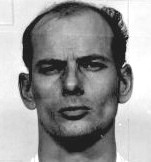
Jonathan Bruce Reed
Murderer Ervil LeBaron
Murderer · USA · 1972
Ervil Morrell LeBaron (1925 to August 16, 1981) was the leader of a polygamous…
35 victims
Ervil LeBaron
Murderer · USA · 1972
Ervil Morrell LeBaron (1925 to August 16, 1981) was the leader of a polygamous…
35 victims
 Brian Kevin Rosenfeld
Murderer · USA · 1985
Brian Kevin Rosenfeld Brian Kevin Rosenfeld was sentenced to three concurrent l…
23 victims
Brian Kevin Rosenfeld
Murderer · USA · 1985
Brian Kevin Rosenfeld Brian Kevin Rosenfeld was sentenced to three concurrent l…
23 victims
 Marvin Gray
Murderer · USA · 1975
Marvin Gray was convicted killer who claimed responsibility for 23 slayings and…
23 victims
Marvin Gray
Murderer · USA · 1975
Marvin Gray was convicted killer who claimed responsibility for 23 slayings and…
23 victims
 Yahweh ben Yahweh
Murderer · USA · 1980
Yahweh ben Yahweh was born and legally named Hulon Mitchell Jr. (October 27, 19…
23 victims
Yahweh ben Yahweh
Murderer · USA · 1980
Yahweh ben Yahweh was born and legally named Hulon Mitchell Jr. (October 27, 19…
23 victims
 Coy Wesbrook
Mass murderer · USA · 1997
Coy Wayne Wesbrook was the appellant in a Texas capital murder case. He had sep…
4 victims
Coy Wesbrook
Mass murderer · USA · 1997
Coy Wayne Wesbrook was the appellant in a Texas capital murder case. He had sep…
4 victims
 Roger Dean
Mass murderer · Australia · 2011
Roger Kingsley Dean was an aged-care nurse and worked at Quakers Hill Nursing H…
11 victims
Roger Dean
Mass murderer · Australia · 2011
Roger Kingsley Dean was an aged-care nurse and worked at Quakers Hill Nursing H…
11 victims
 Edith McAlinden
Murderer · United Kingdom · 2004
Edith McAlinden (born 1968) — accused; convicted for murder; mother of John McA…
1 victim
Edith McAlinden
Murderer · United Kingdom · 2004
Edith McAlinden (born 1968) — accused; convicted for murder; mother of John McA…
1 victim
 Jackie Arklöv
Murderer · Sweden · 1999
Jackie Arklöv was sentenced to life imprisonment. Jackie Arklöv (born June 6, 1…
2 victims
Jackie Arklöv
Murderer · Sweden · 1999
Jackie Arklöv was sentenced to life imprisonment. Jackie Arklöv (born June 6, 1…
2 victims
- Gender
- male
- Country
- USA
- Location
- Dallas County, Texas, USA
- Date of birth
- October 19, 1951
- Age at first offence
- 27
- Characteristics
- rape
- Victim profile
- Wanda Jean Wadle, 26
- Method of murder
- Strangulation
- Date(s) of murder
- November 1, 1978
- Years active
- 1978
- Date of arrest
- —
- Status
-
Sentenced to death
Sentenced to death on September 6, 1969; reversed in 2009.
STATUS
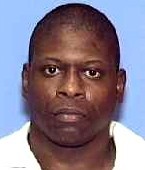
Jonathan Bruce Reed was sentenced to death on September 6, 1969. His death sentence was reversed in 2009.
Background
Reed was a white man on Texas death row for nearly 30 years. In 2009, the United States Court of Appeals for the Fifth Circuit issued opinions numbered 05-70046-2007 and 05-70046-2009 addressing his case.
Reed was convicted and condemned for the November 1978 rape-slaying of Wanda Jean Wadle at her Dallas apartment.
Reed had been on death row since September 1979, making him among the longest-serving prisoners awaiting execution in Texas.
The offence
Reed was convicted for the November 1978 rape-slaying of Wanda Jean Wadle at her Dallas apartment.
On Nov. 1, 1978, Reed attacked Wanda Jean Wadle and her roommate, Kimberly Pursley, at their Dallas apartment. The account stated that Reed entered their apartment by posing as a maintenance man. Pursley survived an attempted strangulation by feigning unconsciousness.
The account stated that two other residents identified Reed as the man they saw in the apartment complex just before the time of the attack.
Investigation
The account described the case as involving racial bias during jury selection, drawing a comparison to another Texas capital case involving Thomas Miller-El.
It also described a manual written by a prosecutor in 1969 that had been used for years, advising Dallas prosecutors to exclude minorities from juries. Documents in Miller-El’s case described how the memo advised prosecutors to avoid selecting minorities because “they almost always empathize with the accused.”
Trial
In 2009, the Fifth Circuit ruled that Dallas County prosecutors improperly excluded black prospective jurors from Reed’s trial. The Fifth Circuit concluded that the Constitution afforded Reed a right to relief.
A three-member panel of the Fifth Circuit wrote in the ruling posted late Monday:
“Although we do not relish adding a new chapter to this unfortunate story more than 30 years after the crime took place, we conclude that the Constitution affords Reed a right to relief,”
Jamille Bradfield, a spokeswoman for Dallas County District Attorney Craig Watkins, said:
“We still need time to dissect the opinion,”
The Fifth Circuit ordered that Reed be released unless prosecutors chose to retry him quickly.
The account described Reed’s case as mirroring the capital murder case of Thomas Miller-El, who had been on Texas death row for nearly 20 years until the Supreme Court overturned his verdict, citing racial discrimination during jury selection.
Appeals
The account described the Supreme Court’s action in Miller-El’s case as overturning his verdict due to racial discrimination during jury selection.
It stated that Miller-El took a life prison sentence as part of a plea deal.
The Fifth Circuit panel stated that Reed presented historical evidence of racial bias in the Dallas County District Attorney’s Office:
“Reed presents this same historical evidence of racial bias in the Dallas County District Attorney’s Office,”
Outcome
The Fifth Circuit ruled that Reed could be released because prosecutors improperly excluded blacks from his jury. The Fifth Circuit ordered his release unless prosecutors chose to retry him quickly.
Reed’s death sentence was reversed in 2009.
Other details
The account stated that Reed was 57 at the time of the 2009 ruling.
The account included statements that it was premature to comment on whether Reed would be retried, and that Dallas County District Attorney Craig Watkins’s office needed time to dissect the opinion.

Spotted an error, or have more information about this case?