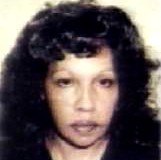
Josephine Gray
Murderer Bobbie Sue Terrell
Murderer · USA · 1984
Bobbie Sue Dudley Terrell was a Pinellas County nurse and worked as the night s…
12 victims
Bobbie Sue Terrell
Murderer · USA · 1984
Bobbie Sue Dudley Terrell was a Pinellas County nurse and worked as the night s…
12 victims
 Marybeth Tinning
Murderer · USA · 1972
Marybeth Tinning (née Roe, born on September 11, 1942) was an American prisoner…
9 victims
Marybeth Tinning
Murderer · USA · 1972
Marybeth Tinning (née Roe, born on September 11, 1942) was an American prisoner…
9 victims
 Debbie Fornuto
Murderer · USA · 1972
Deborah Fornuto was the mother of six children whose deaths were initially rule…
7 victims
Debbie Fornuto
Murderer · USA · 1972
Deborah Fornuto was the mother of six children whose deaths were initially rule…
7 victims
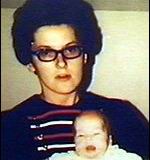 Waneta Ethel Hoyt
Murderer · USA · 1965
Waneta Ethel (Nixon) Hoyt was born in Richford, New York, and died in prison on…
5 victims
Waneta Ethel Hoyt
Murderer · USA · 1965
Waneta Ethel (Nixon) Hoyt was born in Richford, New York, and died in prison on…
5 victims
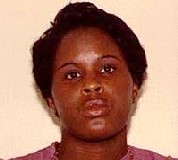 Debra Sue Tuggle
Murderer · USA · 1974
Debra Sue Tuggle was an African American woman born in Arkansas. She had a hist…
4 victims
Debra Sue Tuggle
Murderer · USA · 1974
Debra Sue Tuggle was an African American woman born in Arkansas. She had a hist…
4 victims
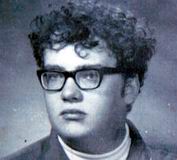 Michael Woodmansee
Homicide · USA · 1975
Michael Woodmansee was a sixteen-year-old junior at South Kingstown High School…
1 victim
Michael Woodmansee
Homicide · USA · 1975
Michael Woodmansee was a sixteen-year-old junior at South Kingstown High School…
1 victim
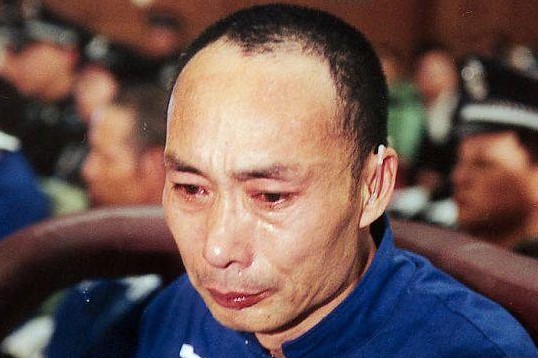 Jin Ruchao
Mass murderer · China · 2001
Jin Ruchao was blamed and arrested for planning and carrying out the Shijiazhua…
108 victims
Jin Ruchao
Mass murderer · China · 2001
Jin Ruchao was blamed and arrested for planning and carrying out the Shijiazhua…
108 victims
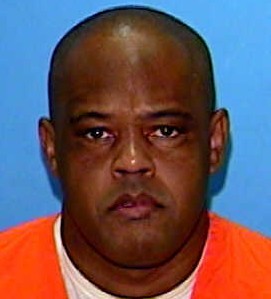 Kayle Barrington Bates
Murderer · 1982
Kayle Barrington Bates was convicted of first-degree murder, kidnapping, armed…
1 victim
Kayle Barrington Bates
Murderer · 1982
Kayle Barrington Bates was convicted of first-degree murder, kidnapping, armed…
1 victim
 Donald Lavell Craig
Murderer · USA · 1995
Donald Lavell Craig was tried and convicted in Ohio for the rape and aggravated…
2 victims
Donald Lavell Craig
Murderer · USA · 1995
Donald Lavell Craig was tried and convicted in Ohio for the rape and aggravated…
2 victims
- Gender
- female
- Country
- USA
- Location
- Montgomery/Baltimore Counties, Maryland, USA
- Date of birth
- 1946
- Age at first offence
- 28
- Characteristics
- attempt to collect insurance money, abuse, domestic violence
- Victim profile
- Norman Stribbling (husband) / William Robert Gray (husband) / Clarence Goode (boyfriend)
- Method of murder
- Shooting
- Date(s) of murder
- March 3, 1974 / November 9, 1990 / June 21, 1996
- Years active
- 1974–1996
- Date of arrest
- December 5, 2001
- Status
-
Imprisoned
Sentenced to 40 years in prison on December 2, 2002; re-sentenced to 40 years in prison on August 7, 2006.
Case details
Josephine Virginia Gray, also known as Josephine Stribbling and Josephine Mills, was convicted in the United States District Court for the District of Maryland and re-sentenced in 2006 after resentencing ordered by the Supreme Court’s decision in United States v. Booker.
Gray was also known as “The Black Widow.”
STATUS and sentencing
Gray was sentenced to 40 years in prison on December 2, 2002. On August 7, 2006, she was re-sentenced to 40 years in prison.
Timeline
- March 3, 1974 — Norman Stribbling, Gray’s husband at that time, was found murdered with a single gunshot wound to the right side of his head.
- August 1975 — Gray and Robert Gray bought a house in Gaithersburg, Maryland, using most of the proceeds from Stribbling’s insurance policy as a down payment.
- November 1975 — Gray and Robert Gray married.
- August 1990 — Josephine Gray and William Gray separated.
- October 5, 1990 — Robert Gray appeared in court; the case against Gray and Goode was continued.
- Late August 1990 — Robert Gray removed Gray as beneficiary under two other insurance policies.
- November 9, 1990 — Mr. Gray was discovered shot to death in his apartment.
- November 16, 1990 — A trial date for criminal charges against Gray and Goode was referenced in the appellate record.
- June 21, 1996 — Clarence Goode’s body was found in the trunk of his car in Baltimore; he had been shot in the head (including evidence describing a 9-millimeter handgun).
- September 1996 — Gray filed a claim for benefits under Goode’s life insurance policy.
- 1998 — A civil suit was filed in Baltimore City Circuit Court regarding a $100,000 policy on Goode’s life and whether Gray should be barred from collecting.
- 1990 to 1996 — Clarence Goode and Josephine Gray lived together.
- 1990 to 1996 (period referenced) — Changes to life insurance policies were made to remove Josephine Gray as beneficiary.
- 2001 — Excess benefits were made available after federal law enforcement provided Minnesota Mutual a current address for Gray; Minnesota Mutual mailed Gray a form letter.
- February 2002 — Federal agents contacted Wilma Jean Wilson; she immediately asked about Andre Savoy.
- December 2, 2002 — Gray was sentenced to 40 years in prison.
- August 16, 2002 — Gray was convicted of mail and wire fraud.
- April 29, 2005 — The United States Court of Appeals for the Fourth Circuit affirmed Gray’s conviction and vacated her sentence, remanding for resentencing consistent with United States v. Booker.
- August 7, 2006 — Gray was re-sentenced to 40 years in prison.
Other names and identifiers
Josephine Virginia Gray was also described as “Josephine Stribbling” and “Josephine Mills.”
Background and personal details
Gray was described as a mother of six and a grandmother of 11. She retired after 27 years as a custodian in the Montgomery County schools. Before her arrest, she provided day-care services in the Upper Marlboro home where she had lived for 11 years.
In later proceedings, she was described by a federal jury as convicted of mail fraud and wire fraud involving her receipt of life insurance proceeds following homicides.
The offences
Fraud scheme based on deaths of three men
Gray was convicted for fraudulently collecting life insurance benefits arising from her involvement in the deaths of three men: her first husband, Norman Stribbling; her second husband, William Robert Gray; and Clarence Goode, described as a boyfriend.
The appellate record described a scheme involving executing a scheme to defraud multiple insurance companies:
- Counts One through Four charged Gray with executing a scheme to defraud Minnesota Mutual and LINA of life insurance benefits paid to her as a result of Robert Gray’s death.
- Counts Five through Eight charged Gray with executing a scheme to defraud Interstate Assurance of the benefits it paid Gray as a result of Goode’s death.
- The indictment alleged Gray “intentionally caused the death[s]” of both Robert Gray and Goode and then fraudulently concealed her role from the insurance companies.
Allegations and admitted conduct attributed at trial and in proceedings
The appellate record stated that Gray told Wilma Jean Wilson that “she had killed both her husbands and another gentleman.”
It further described Gray’s explanation to Wilson:
- She said she killed her first husband, Norman Stribbling, because she was tired of being abused by him.
- Wilson testified that Gray said they had gone out for a ride and that she shot him, left the body on River Road, and “it was set up to look like it was a robbery.”
- Gray also confessed to Wilson that she killed her second husband, William “Robert” Gray, and that “she had help” killing Robert Gray, with Clarence Goode.
- Gray told Wilson that Goode had tried to blackmail her, demanding money in exchange for his silence about the murder of Robert Gray, and that she had to get rid of him too.
People involved
Victims and insurance beneficiaries
- Norman Stribbling — Gray’s husband at the time of his death; found dead March 3, 1974, with a single gunshot wound to the right side of his head.
- William Robert Gray (also referenced as Robert Gray and William Gray) — Gray’s husband; discovered shot to death in his apartment on November 9, 1990; an affair and relationship details were described in proceedings.
- Clarence Goode — Gray’s boyfriend during the period referenced; body discovered June 21, 1996, in the trunk of his car in Baltimore; shot in the head; associated with a life insurance policy naming Gray as sole beneficiary.
Relatives and other named individuals
- Wilma Jean Wilson — friend who spoke with Gray and whom Gray confessed to killing.
- Andre Savoy — described as Gray’s boyfriend when she was arrested on federal charges in November; cited as a witness who told police in 1990 about Gray’s admissions and plans.
- John Hancock Mutual Life Insurance Company — referenced as maintaining a life insurance policy for Stribbling naming Gray as beneficiary.
- Minnesota Mutual Life Insurance Company (“Minnesota Mutual”) — referenced for Robert Gray’s insurance policy.
- Life Insurance Company of North America (“LINA”) — referenced for an accidental death policy naming Gray as beneficiary.
- Interstate Assurance Company (“Interstate Assurance”) — referenced for Goode’s life insurance policy naming Gray as beneficiary.
- Rod J. Rosenstein — United States Attorney for the District of Maryland; announced the August 7, 2006 re-sentencing.
- Deborah K. Chasanow — U.S. District Court Judge; imposed the original 40-year sentence and resentenced Gray to 40 years in 2006 after remand.
- Sandra Wilkinson — Assistant United States Attorney; discussed in proceedings.
- James Trusty — Assistant United States Attorney; discussed in proceedings.
- Douglas F. Gansler — State’s Attorney for Montgomery County; discussed in the context of state charges and witnesses.
- Michael CitaraManis — Assistant Public Defender; represented Gray in discussions and described as declining to comment.
- Daniel W. Stiller — Assistant federal public defender; made statements at sentencing-related proceedings.
- Jillyn K. Schulze — Magistrate Judge; referenced in hearings.
Other named family members/witnesses included:
- Donald Mills — Gray’s brother; mentioned in connection with statements and recantations.
- Regina Gray Mudano — daughter of Gray; referenced as providing testimony that charges were dropped after recantations.
- Thomas Tamm — former Montgomery County prosecutor; testified about witness fear and recantations.
- Detective Joseph Mudano — Montgomery County detective; testified about William Gray’s statement that he believed he was going to get killed.
- Darnell Gray — referenced in connection with statements made by Robert Gray.
- Rodney Gray — referenced in connection with statements made by Robert Gray.
Investigation and evidence described
Stribbling murder and alleged insurance claim
An autopsy revealed Stribbling died from a single gunshot wound to the head.
The record described the following related claims and evidence:
- Gray made a claim for insurance benefits after Stribbling’s death and later received a check for $16,000.
- Two men testified that Gray had solicited them, on separate occasions, to murder Norman Stribbling.
- A witness testified Gray had offered money to provide an alibi for Gray at the time of the murder.
- One witness (in addition to Wilma Jean Wilson) testified Gray had admitted shooting Stribbling.
- The appellate record included discussion of Gray telling Wilson she left the body on River Road and set it up to look like a robbery.
Robert Gray murder and alleged fraud concealment
Robert Gray left the Gaithersburg house in August 1990, telling family members that Gray was trying to kill him and that she was having an affair with Goode.
The record described:
- Robert Gray removed Gray as beneficiary under two insurance policies.
- The record described a sequence where Robert Gray noticed Gray’s car behind him, Gray drove her car alongside Robert Gray’s car, and Goode pointed a gun at him.
- After Robert Gray was shot in his new apartment, Gray told police she was not involved and denied owning a .45 caliber handgun; other witnesses testified Gray possessed a .45 caliber handgun and police retrieved a .45 caliber bullet from her purse.
- The record stated Minnesota Mutual paid approximately $51,625 to Perpetual Savings Bank to cover the mortgage, and that after the mortgage was satisfied, Gray sold the house for a significant profit.
- The record also described that because Minnesota Mutual did not process the excess benefit for about ten years due to lack of Gray’s whereabouts, it later mailed Gray a form letter in 2001 and Gray sought information about double-indemnity benefits by telephone.
LINA litigation was described:
- In May 1991, Gray made a claim for benefits under the LINA policy.
- LINA did not initially pay because it knew Gray was a suspect in Robert Gray’s murder.
- LINA asked Gray to disclaim her interest after indictment; she refused, and LINA filed an interpleader action.
- LINA and other named beneficiaries involved in the litigation led to LINA paying Gray $2,000 when other beneficiaries abandoned claims.
Goode murder and alleged fraud concealment
The record described the following:
- Goode’s body was found June 21, 1996, in the trunk of his car; he was shot in the head with a 9-millimeter handgun (as described in multiple places).
- Goode was described as having told his sister he was going to visit Gray at her house.
- A search warrant executed at Gray’s home found a large stain on the concrete floor of the garage that tested positive for blood, with a commercial vacuum cleaner nearby and small amounts of possible blood recovered from inside.
- The insurance company paid Gray $90,000 and paid Goode’s minor son the remaining $10,000.
Interpleader and related filings were described:
- Interstate Assurance refused to pay upon suspicion of Gray’s involvement.
- When Gray had not been arrested after two years, Interstate Assurance filed an interpleader action.
- In the course of the litigation, Gray filed pleadings by mail denying involvement; the parties settled, and Interstate Assurance paid Gray $99,990.
Trial
Charges and conviction
Gray was convicted on August 16, 2002 of intentionally causing the death of William Robert Gray and Clarence Goode, and making it illegal for her to profit by filing claims for life insurance benefits.
The appellate record described:
- A grand jury indicted Gray on five counts of mail fraud and three counts of wire fraud relating to her receipt of insurance proceeds following the deaths of her second husband and a former paramour.
- Gray was convicted on all counts.
- The district court sentenced her to 40 years’ imprisonment, three years of supervised release, restitution in the amount of $170,000, and a special assessment of $800.
- Gray challenged her conviction arguing insufficiency of evidence, improper reopening of the Government’s case regarding alleged mailings, and improper admission of other crimes and hearsay evidence.
Defensive positions described
At trial, defense attorneys called Gray a three-time surviving victim who was wrongly targeted by police with tunnel vision and who relied on “gossip, rumor and innuendo.”
Gray’s defense included arguments:
- Witnesses recanted and disappeared in earlier state proceedings due to fear of retaliation by Gray and belief in voodoo.
- The government’s case contained statements heard more than 20 years earlier.
Quotations presented in the record (verbatim)
Daniel W. Stiller, an assistant federal public defender, said: "For more than a quarter-century, she has been under scrutiny, when all this time she has been a victim who deserves our sympathy and our compassion, not this prosecution,"
Assistant U.S. Attorney James Trusty said: "really are written in the blood of three men who loved Josephine Gray."
In the appellate record, Gray told Wilma Jean Wilson: "she had killed both her husbands and another gentleman."
Wilma Jean Wilson testified Gray said: “She told me that they had gone out for a ride and that she had shot him․ [S]he left the body over on River Road, and it was set up to look like it was a robbery.”
Wilma Jean Wilson testified Gray explained: Goode “had tried to blackmail her,” demanding money in exchange for his silence about the murder of Robert Gray, so “she had to get rid of him too.”
A quote attributed to William Gray was: "I believe I'm going to get killed,"
A quote from the appellate record described Robert Gray stating about his estranged wife: his wife was trying to kill him and that she was having an affair with Goode
A quote attributed to the assistant federal public defender Michael T. CitaraManis was: "It's a case that has holes in it already,"
and also: "There's going to be more holes in it as the case goes on."
In the appellate record, Thomas Tamm testified: "I would say that fear permeated the case,"
Sentencing and resentencing
Original sentencing rationale and appeal remand
At her original sentencing hearing, U.S. District Court Judge Deborah K. Chasanow held that because Gray committed premeditated murder, she should be sentenced using guidelines for first degree murder rather than fraud.
After the Supreme Court’s 2005 decision in United States v. Booker, Gray appealed her original 40-year sentence. The appellate court vacated Gray’s sentence and remanded for resentencing in accordance with Booker, while affirming Gray’s conviction.
Resentencing
Under the advisory Sentencing Guidelines, Judge Chasanow reinforced the original ruling and resentenced Gray to 40 years.
Appeals
Fourth Circuit decision
The United States Court of Appeals for the Fourth Circuit affirmed Gray’s conviction and vacated her sentence, remanding for resentencing consistent with Booker.
The appellate court reviewed and addressed Gray’s challenges, including:
- Sufficiency of the evidence for the elements of mail fraud and wire fraud.
- Admission of “other crimes” evidence and hearsay testimony.
- Denial of motion for judgment of acquittal on Counts Seven and Eight related to mailings.
- Sentencing error related to judicial factfinding under the then-mandatory Guidelines, leading to vacatur and remand.
Outcome
Gray’s conviction was affirmed by the Fourth Circuit. Gray’s sentence was vacated and remanded for resentencing consistent with Booker, and she was re-sentenced to 40 years in prison on August 7, 2006.
Aftermath and related proceedings
State charges were described as having been dismissed earlier:
- Montgomery County prosecutors charged Gray in the killings of her husbands in 1974 and in 1990, but dropped charges after witnesses recanted and disappeared before trial.
- State prosecutors also filed new murder charges against Gray in connection with the killings; that case was pending in the reporting included in the material.
A civil suit in Baltimore City Circuit Court in 1998 was described regarding Clarence Goode’s $100,000 policy and whether Gray should have been barred from collecting.
Federal officials credited investigative work by the Federal Bureau of Investigation, the Montgomery County Police Department, and the Baltimore City Police Department. Assistant United States Attorneys Sandra Wilkinson and James Trusty were described as prosecutors.
Other details
Gray’s status in the appellate record included references to her intent to defraud insurance companies by concealing her role in the murders while submitting claims and participating in policy-related litigation.
Gray’s conduct described in the appellate record included:
- Submitting claims for benefits while consistently denying involvement in the murders.
- Filing pleadings in the Interstate Assurance interpleader action that denied involvement in Goode’s death.
- Telephoning Minnesota Mutual to inquire whether her policy claim could receive a double-indemnity benefit if Robert Gray’s death was accidental, while knowing it was not accidental.
Spotted an error, or have more information about this case?