Donald Lavell Craig
Murderer Brian Kevin Rosenfeld
Murderer · USA · 1985
Brian Kevin Rosenfeld Brian Kevin Rosenfeld was sentenced to three concurrent l…
23 victims
Brian Kevin Rosenfeld
Murderer · USA · 1985
Brian Kevin Rosenfeld Brian Kevin Rosenfeld was sentenced to three concurrent l…
23 victims
 Russell Ellwood
Murderer · USA · 1991
Russell Ellwood was a former taxi driver. Authorities suspected him of killing…
20 victims
Russell Ellwood
Murderer · USA · 1991
Russell Ellwood was a former taxi driver. Authorities suspected him of killing…
20 victims
 Robert Martines Perez
Murderer · USA · 1994
Name: Robert Martines Perez · Other name used in proceedings: Robert Martinez P…
15 victims
Robert Martines Perez
Murderer · USA · 1994
Name: Robert Martines Perez · Other name used in proceedings: Robert Martinez P…
15 victims
 Billy Frank Vickers
Murderer · USA · 1993
Billy Frank Vickers Vickers was executed by lethal injection in Texas on Januar…
14 victims
Billy Frank Vickers
Murderer · USA · 1993
Billy Frank Vickers Vickers was executed by lethal injection in Texas on Januar…
14 victims
 John Spenkelink
Murderer · USA · 1973
John Spenkelink was executed by electrocution in Florida on May 25, 1979. · Feb…
1 victim
John Spenkelink
Murderer · USA · 1973
John Spenkelink was executed by electrocution in Florida on May 25, 1979. · Feb…
1 victim
 Stephen Wayne Anderson
Serial killer · USA · 1970
May 24, 1979 — Stephen Wayne Anderson escaped from Utah State Prison. · May 26,…
8 victims
Stephen Wayne Anderson
Serial killer · USA · 1970
May 24, 1979 — Stephen Wayne Anderson escaped from Utah State Prison. · May 26,…
8 victims
 Derrick Wayne Frazier
Murderer · USA · 1997
Derrick Wayne Frazier was executed in Texas by lethal injection on August 31, 2…
2 victims
Derrick Wayne Frazier
Murderer · USA · 1997
Derrick Wayne Frazier was executed in Texas by lethal injection on August 31, 2…
2 victims
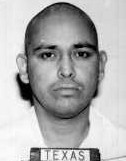 Luis Ramirez
Murderer · USA · 1998
Luis Ramirez was a Hispanic male executed by lethal injection in Texas on Octob…
1 victim
Luis Ramirez
Murderer · USA · 1998
Luis Ramirez was a Hispanic male executed by lethal injection in Texas on Octob…
1 victim
 Rhonda Wisto
Murderer · USA · 2010
Rhonda Maye Wisto was accused alongside her son, Frank Jacob York, in the Septe…
1 victim
Rhonda Wisto
Murderer · USA · 2010
Rhonda Maye Wisto was accused alongside her son, Frank Jacob York, in the Septe…
1 victim
- Gender
- male
- Country
- USA
- Location
- Summit County, Ohio, USA
- Date of birth
- February 1, 1960
- Age at first offence
- 35
- Characteristics
- rape, kidnapping, abuse, drug addict, alcohol
- Victim profile
- Malissa Nichole Thomas, 13 / Roseanna Davenport, 12
- Method of murder
- Strangulation
- Date(s) of murder
- 1995 / 1996
- Years active
- 1995–1996
- Date of arrest
- April 2002
- Status
-
Sentenced to death
Sentenced to death on July 21, 2004
Case record: Donald Lavell Craig
Background
Donald Lavell Craig was tried and convicted in Ohio for the rape and aggravated murder of 13-year-old Malissa Nichole Thomas and was later sentenced to death in connection with the rape and murder of 12-year-old Roseanna Davenport.
Craig’s death sentence was ultimately affirmed on appeal.
The offence
Murder of Roseanna Davenport
On February 28, 1996, at around 6:00 p.m., 12-year-old Roseanna Davenport was walking to her home in Akron, Ohio. Craig abducted her, then raped and murdered her.
Davenport’s body was discovered in the basement of a vacant duplex in Akron on March 5, 1996.
Police observed that the murder victim had a large abrasion across her neck and multiple injuries on much of her body. Her bra was rolled up above her breast line.
Police investigators collected fibers and carpet samples from the crime scene; they found no usable fingerprints. On the evening of March 5, the murder victim was identified as Roseanna Davenport.
Dr. Roberto Ruiz, the Chief Deputy Coroner for Summit County, conducted an autopsy on March 6. He concluded that Davenport suffered multiple injuries involving the head and neck, the chest, the abdomen, genitalia, and extremities, and that Davenport died as the result of cardiorespiratory arrest due to strangulation. Dr. Ruiz found extensive vaginal injuries including bruising of the left labia major, laceration of the vulva, and a small area of hemorrhage on the minor labia. Testing of a vaginal swab taken from Roseanna was positive for the presence of semen. Multiple lacerations were also found around the outer edge of the anal opening, and the lining of the anus was hemorrhagic and dilated. A mouth swab taken from Davenport indicated the likelihood that semen was present.
The vaginal and anal injuries were consistent with penetration. Inflammation in the vaginal and rectal mucosa established that vaginal and anal penetration occurred before Davenport was strangled. Dr. Lisa J. Kohler, the county’s chief medical examiner, estimated that death had occurred from three days to a week before Davenport’s body had been found.
Craig’s murder was unsolved for several years. In January 2002, Akron Detective James Pasheilich resubmitted some of the forensic evidence to BCI for new DNA testing, and DNA testing identified Craig as Davenport’s murderer.
Victimology and relationships relevant to the offence
Davenport and 15-year-old Esther Trijah Stone were friends who lived about a mile apart. Davenport often visited Stone at her home on 111 South Maple Street and once spent the night there.
Craig was the boyfriend of Stone’s mother, Michelle Lindsay, and lived at the Lindsay home. Craig knew Davenport from these visits.
After school on February 28, 1996, Davenport went to Lindsay’s home to play with Stone. Davenport told Patricia Huffman, the live-in girlfriend of her father Jerry Davenport, that she would be home by 6:00 p.m. At the Lindsay home, Davenport and Stone talked and watched television.
Around 6:00 p.m., Lindsay called a taxi to take Davenport home because it was getting dark outside. Davenport left before the taxi arrived. Craig was in the living room when Davenport departed; he left five to ten minutes later.
When Davenport failed to return home by 7:30 p.m., Huffman drove to Lindsay’s home to check on her. Lindsay told Huffman that Davenport had left their house at 6:00 p.m. Huffman then drove around the neighborhood searching for Davenport. The police were notified that Davenport was missing at about 10:00 p.m. Over the next few days, Jerry Davenport and Huffman searched the neighborhood and distributed flyers seeking information about Davenport.
Investigation
Timeline
- February 28, 1996 (around 6:00 p.m.) — 12-year-old Roseanna Davenport was walking home in Akron, Ohio; Craig abducted her, then raped and murdered her.
- March 2, 1996 — Yashica Clark reported seeing Davenport and another girl walking down the street near the corner of Bittman and Maple Street.
- March 5, 1996 — Davenport’s body was discovered in the basement of a vacant duplex in Akron.
- March 6, 1996 — Dr. Roberto Ruiz conducted an autopsy and concluded Davenport died due to strangulation.
- March 11, 1996 — Detective William Smith talked to Craig and asked if he had ever seen Davenport; Craig denied knowing her.
- March 14, 1996 — Police collected blood, hair, and saliva samples from Craig and other suspects and searched Craig’s residence.
- April 2002 — DNA testing identified Craig as Davenport’s murderer.
- January 2002 — Akron Detective James Pasheilich resubmitted forensic evidence to BCI for new DNA testing.
- July 21, 2004 — Craig was sentenced to death.
- September 20, 2006 — The appeal decision was issued affirming the convictions and the sentence of death on the aggravated murder charge, vacating rape and kidnapping sentences, and remanding for resentencing.
Evidence and forensic findings
Forensic testing timeline and results
Evidence collected during the investigation and the autopsy was sent for testing to the Ohio Bureau of Criminal Identification and Investigation (“BCI”). Semen was found in a stain on the crotch of Davenport’s underwear. The tests conducted at BCI did not establish a link between Craig, or the other suspects, and Davenport’s murder. There was no further DNA testing by BCI because the agency did not perform DNA typing in 1996.
Subsequently, the vaginal and rectal swabs and blood swatches from Davenport, blood swatches from the suspects, and a cutting from Davenport’s underwear were submitted to Cellmark Laboratory for DNA testing. Only a few sperm cells could be extracted from the underwear. The forensic examiner was unable to obtain sufficient DNA from the sperm fractions to type and use for comparison.
In January 2002, after cold-case file review, Detective James Pasheilich resubmitted forensic evidence to BCI. Linda Eveleth, a DNA examiner at BCI, testified that she used a type of DNA testing (short tandem repeat polymerase chain reaction) not available in 1996. DNA tests were conducted on the blood samples from the suspects, on the underwear, and on the rectal and vaginal swabs.
Testing established that “[t]he DNA profile from the sperm fraction of the panties * * * is a mixture consistent with contributions from Roseanna Davenport * * * and Donald Craig.” Further testing established that “[t]he partial DNA profile from the sperm fraction of the vaginal swab * * * is a mixture. The partial major DNA profile is consistent with Donald Craig * * *. The partial minor profile is consistent with Roseanna Davenport.” Eveleth testified that the probability of a particular individual contributing to the partial major DNA profile was one in 973,700,000,000,000 Caucasians, one in 222,200,000,000,000 African-Americans, and one in 4,005,000,000,000,000 Hispanics.
Suspect identification and interviews
As the investigation progressed, Craig and several other individuals were identified as suspects.
On March 11, Detective William Smith talked to Craig and asked if he had ever seen Davenport; Craig said: “[h]e had not seen her, did not know her.”
On March 14, police collected blood, hair, and saliva samples from Craig. Police also collected samples from other suspects including Duane Craig, Craig’s brother, Eran Riggins, Maurice Cummings, Aaron Trent, Davenport’s uncle, Frederick Frazier, and James Davenport, another uncle of the victim. Investigators also searched Craig’s residence and collected hair and fiber samples.
Other witnesses and evidence at trial
Michael Johnson’s observations
Michael Johnson bought, fixed, and rented houses. On February 28 or 29, 1996, he viewed the outside of two duplexes on South Maple Street for possible purchase. Each duplex contained two apartments; the apartments at 156 South Maple were vacant.
On March 1, Johnson returned to 156 South Maple and entered the building after finding the front door unlocked. He saw trash everywhere, including clothes and upside-down chairs. He looked in the basement but could not walk around or even “see the floor [because] there was so much stuff down there.” Johnson locked the doors before departing.
On March 2, after making an offer to purchase the apartments, Johnson returned to “take a peek” at the property. He noticed that the apartment doors were still locked and saw no signs of breaking or entering. On learning his offer had been accepted, Johnson started cleaning the apartments.
On March 5, Johnson entered the basement of the apartment at 156 South Maple and discovered a fully clothed body under a pile of clothing. Johnson called 911.
Mandy Allen’s testimony
In 1996, Mandy Allen and Davenport were friends and roller-skated together. A few days before Davenport disappeared, a man had chased them while they were roller-skating. Allen stated that the police had been notified and the man had been arrested.
Allen also testified that she had seen Davenport in the back of somebody’s car on March 2, 1996. During cross-examination, Allen testified that she and Davenport had gone to Esther Stone’s home together and that she had seen Craig touch Davenport’s leg a “few times.”
Eran Riggins’s testimony
Eran Riggins lived at the Lindsay home for two weeks during February and March 1996. While there, Riggins saw Duane Craig lying on top of Davenport. Riggins never saw Donald Craig do anything inappropriate with Davenport. During cross-examination, Riggins testified that Craig told him that Davenport was fast and loose.
Yashica Clark’s testimony
On March 19, 1996, after seeing Davenport’s picture in the paper, Yashica Clark notified police that she had seen Davenport and another girl walking down the street near the corner of Bittman and Maple Street on March 2, 1996. During cross-examination, Clark testified that she was “not absolutely sure” that the girl she had seen was Davenport.
Frederick Frazier’s testimony
During February and March 1996, Frederick Frazier lived near Bittman and Maple Street. Frazier admitted that he was a suspect in Davenport’s murder, stating that police officers questioned him several times and that he provided hair and blood samples.
Maurice Cummings’s testimony
During February and March 1996, Maurice Cummings was homeless but sometimes stayed with a friend who lived “around the corner” from the building where Davenport’s body was found. Cummings testified that he was a suspect in Davenport’s murder, that police interviewed him, and that he provided hair and blood samples.
Beverly Bacote’s testimony
Beverly Bacote lived behind the duplex where Davenport’s body was found. Cummings lived three doors down from Bacote’s residence. Bacote testified that she had seen Cummings walking near the duplex where the body was found on March 5 but had not seen Cummings and Davenport together. Akron Detective Steven Geiger interviewed Bacote during the homicide investigation. Geiger testified that Bacote told him she had seen Cummings talking to Davenport near the South Maple Street duplex on March 2.
Arrest and custody
At Craig’s arraignment, a magistrate, on Craig’s behalf, entered a plea of not guilty to all the charges.
In connection with the DNA evidence dispute, on March 11, 1996, Judge Maxson of the Akron Municipal Court signed an order requiring Craig “to submit to the taking of hair, saliva and blood samples.” After being served with the court order later that evening, Craig told police that, on the advice of counsel, he would not submit to the taking of any body samples.
On March 12, an order was issued for Craig’s arrest for contempt of court and a search warrant was authorized for the taking of Craig’s blood, hair, and saliva samples. Officer Gerald Kelley listed facts in the affidavit requesting the search warrant, including that Davenport’s autopsy revealed that the child had been raped anally and vaginally and that her anus was expanded to an extreme measure, and that semen samples had been recovered and sent to Ohio BCI & I.
The affidavit also stated that Michelle Lindsey’s statement said Lindsey witnessed the victim at the home of Donald Craig two weeks before the discovery of the victim’s body and that Lindsey is the girlfriend of Craig and lives at the 111 Maple Street premises. The affidavit stated that Detective Smith spoke to Donald Craig after the body was discovered and Craig denied knowing Davenport even though she stayed at his house shortly before her death. The affidavit included information about last confirmed sightings of Davenport alive by Susan Hackathorn on March 2, 1996 at the location of 126 South Maple Street, and included that Justin Flanagan, age 12, also saw Davenport in the same area and believed he saw her on the 4th of March.
The affidavit further stated: “Affiant is aware that Donald had been accused on three earlier occasions of illegal sexual contact, certain of the prior allegations involving minor victims. Affiant is also aware that Craig has spent time in the Grafton State Correctional Facility.”
Later on March 12, police officers contacted Craig, who again refused to provide samples. Craig was arrested pursuant to the contempt citation and search warrant and was taken into custody. On March 13, Craig appeared in court and was informed that he would remain in jail until the search warrant had been executed and until he agreed to provide the samples. Craig then agreed to provide body samples and was taken to a hospital, where the samples were taken. Thereafter, the contempt charges were dismissed and Craig was released from jail.
Trial
Charges and specifications
The grand jury indicted Craig for aggravated murder of Roseanna Davenport while committing or attempting to commit kidnapping or rape. The count also contained three death-penalty specifications:
- Murder while committing, attempting to commit, or fleeing after committing rape, with Craig as the principal offender in violation of R.C. 2929.04(A)(7).
- Murder while committing, attempting to commit, or fleeing after committing kidnapping, with Craig as the principal offender in violation of R.C. 2929.04(A)(7).
- Murder for the purpose of escaping detection or apprehension for the rape or kidnapping in violation of R.C. 2929.04(A)(3).
Craig was also charged with three counts of rape:
- Count two: rape by vaginal intercourse of a person under the age of 13.
- Count three: rape by anal intercourse of a person under the age of 13.
- Count four: rape by fellatio of a person under the age of 13.
Count five charged Craig with kidnapping of a person under the age of 13.
The jury found Craig guilty of the charges and recommended the death penalty.
Craig called eight mitigation witnesses during the penalty phase.
Evidence and rulings during appeal
Motion to suppress DNA evidence
In proposition of law I, Craig argued that the trial court erred in failing to exclude DNA test results because his blood samples had been obtained in violation of the Fourth Amendment.
The appellate court addressed that Craig initially refused to submit to samples after a court order; police later obtained a search warrant on March 12; samples were taken on March 13 after Craig agreed.
The appellate court concluded Craig suffered no prejudice from technical violations and held no constitutional error occurred. It rejected proposition of law I.
“Other acts” evidence of rape
In proposition of law II, Craig challenged admission of evidence that Craig previously raped Lavail Calhoun.
Over defense objection, Calhoun testified that she met Craig in 1991 when she was 17. Calhoun stated that Craig came by her house one evening, and while they were going to the store, Craig stopped at a house where “[h]e said he was house sitting for somebody.” After checking the house, Craig told Calhoun the house had been broken into and drove to a pay phone to call the police. They returned to the house. Calhoun asked to use the bathroom and they both entered the house.
Inside the house, Calhoun testified that Craig threw a sheet over her, carried her to a second-story bedroom, and flung her on a bed. Calhoun stated that while taking her upstairs, Craig told her to be quiet or he was going to kill her. Craig tied Calhoun’s hands to the bedposts, taped her mouth shut, and removed her pants and underwear. She testified that Craig vaginally raped her and unsuccessfully tried to anally rape her.
Calhoun testified that when Craig finished, he untied her, she got dressed, and he drove her home. Calhoun’s mother called police and reported the attack. After being examined at the hospital, Calhoun took police to the house where the attack had occurred. Calhoun later testified before a grand jury; the grand jury returned a no bill and Craig was never prosecuted for Calhoun’s rape.
Akron Police Officer Jerry Hughes testified that on April 28, 1991, Calhoun reported she had been raped by a black male named “Donald” and that she provided a description. Officer Hughes testified that on the way to the hospital, Calhoun showed him the house where the attack occurred and said the man was driving a gray Volvo.
Akron Police Officer Gerald Miles testified that on May 7, 1991, when he went to Craig’s residence to assist in serving a felony warrant, Craig had been arrested. Miles testified that at the time, a gray Volvo was parked in Craig’s driveway.
The appellate court held evidence met admissibility requirements under Evid.R. 404(B) for identity and motive and rejected proposition of law II.
Witness’s sexual history
In proposition of law IV, Craig argued the trial court erred by not allowing him to question Calhoun about her sexual history.
Craig’s argument involved medical records indicating Calhoun had sexual intercourse about two weeks prior to the rape, an old hymenal tear on physical examination, and older charts showing she had been treated after being hit in the face by a drunk uncle and for ETOH abuse.
The trial court permitted a reference to the hymenal tear to remain but ordered the prosecutor to redact references to Calhoun’s prior sexual activity, ETOH poisoning, and the assault by the drunk uncle; the prosecutor failed to remove the reference to prior sexual intercourse. The appellate court concluded no prejudice resulted and held the trial court did not abuse its discretion by not permitting questioning about sexual history because it did not meet exceptions under Ohio’s rape shield statute. The appellate court rejected proposition of law IV.
Evidence of drug use
In proposition of law III, Craig argued he was deprived of a fair trial because the state presented evidence of his illicit drug use. Michelle Lindsay testified she and Craig smoked crack cocaine and marijuana when they lived together in 1996. The appellate court noted defense did not object and found no plain error. The appellate court rejected proposition of law III.
Excluding evidence about another suspect
In proposition of law V, Craig argued he was denied the right to elicit testimony that another suspect might have raped and murdered Davenport.
Before Detective Washington Lacy testified, the state sought to prohibit defense from eliciting that Aaron Trent, Davenport’s uncle, was under investigation for raping her at the time. The trial court ruled such evidence did not meet criteria under R.C. 2907.02(D) and found it more prejudicial than probative, inflammatory, and confusing, and then ordered the defense not to introduce any testimony about the earlier rape or cross-examine witnesses about that incident.
During a subsequent proffer, trial counsel stated they would ask Detective Lacy why Aaron Trent was considered a suspect and whether he had knowledge of the rape investigation ongoing at the time of Rosie Davenport’s death. Trial counsel also stated Detective Jan Falcone would have testified that Trent was a suspect in Davenport’s murder.
The appellate court analyzed the rape shield law and concluded the trial court did not abuse its discretion by excluding the evidence of the earlier rape allegations, and also concluded that the victim’s death did not eliminate rape shield law protections. The appellate court rejected proposition of law V.
Medical examiner’s testimony and autopsy report
In proposition of law VI, Craig argued his Sixth Amendment confrontation right was violated by allowing Dr. Lisa Kohler to testify about Davenport’s autopsy though Dr. Roberto Ruiz had conducted it.
The appellate court described that Dr. Kohler testified after reviewing materials prepared in connection with Davenport’s autopsy and had reviewed pertinent aspects. The trial court admitted the autopsy report into evidence.
The appellate court concluded the trial court did not abuse its discretion by permitting Dr. Kohler to testify as an expert, and concluded autopsy records were admissible as nontestimonial business records under Crawford v. Washington. The appellate court also concluded Dr. Kohler’s testimony did not violate confrontation rights and rejected proposition of law VI.
Photographs
In proposition of law VII, Craig argued the trial court erred in admitting gruesome autopsy and crime-scene photographs. The appellate court addressed specific state exhibits and their probative value and concluded the trial court did not abuse its discretion admitting both crime-scene photographs and autopsy photographs, including during the penalty phase. The appellate court rejected proposition of law VII.
Prosecutorial misconduct
In proposition of law VIII, Craig argued prosecutorial misconduct occurred during penalty-phase closing argument. Craig failed to object and thus waived all but plain error.
The appellate court quoted portions of the prosecutor’s statements and addressed two allegations of misconduct:
- The prosecutor’s argument rejecting mitigation based on good family background, including the following quoted statements:
- “You heard, this guy had a fine family. They were supportive. They were emotionally supportive. They were there for him. He was there for them, apparently. ”
- “How in any way is that mitigating to what he did to this child? How is that mitigating? ”
- “The circumstances you have to consider are the rape, the kidnapping, and the fact that that was done to avoid detection for those crimes. ”
- “How in any way is the fact that he was raised in a stable family with a church background mitigating? ”
- “How does that lessen his blame? ”
- “That actually makes it worse. ”
- “You all are sitting there, and maybe have similar upbringings. Maybe had a background that was a supportive family. You were educated. You were given every opportunity. ”
- “He took that ability, he took the common sense that he had, he took the brains that he had, he took everything that his family apparently gave him, including a background in religion, and threw it away to do this. To do this.”
- The prosecutor’s statements about legislative authorization for the death penalty, including the following quoted statements:
- “The legislature allowed these particular specifications to exist so that the death penalty would be appropriate, so that the death penalty would be considered, just as you are doing now. ”
- “And it was done because children should be able to walk the streets. Children shouldn't be murdered after being raped and after being kidnapped. And that's why the legislature has allowed this penalty for this type of crime.”
The appellate court rejected proposition of law VIII.
Merger of rape and kidnapping
In proposition of law IX, Craig argued the trial court erred by refusing to merge kidnapping and rape specifications or the rape and kidnapping offenses. The trial court rejected the request for separate convictions, stating that kidnapping was not merely incidental but significantly independent.
The appellate court held evidence supported separate animus for kidnapping separate and apart from the rapes and rejected proposition of law IX.
Sentencing law application and resentencing for noncapital counts
In proposition of law X, Craig argued he was improperly sentenced for rape and kidnapping based on provisions not in effect at the time of the offenses.
The appellate court discussed that Am.Sub.S.B. No. 2 became effective July 1, 1996 and clarified Senate Bill 2 applied only to offenses on or after that date. Craig’s offenses were committed in February and March 1996. The appellate court concluded Craig was improperly sentenced for kidnapping and rape offenses because the trial court used provisions not in effect at the time, and remanded for resentencing under the law in effect when the noncapital offenses were committed.
Sentencing and aggravating circumstances
In proposition of law XI, Craig argued the death sentence was inappropriate because aggravating circumstances did not outweigh mitigating factors. The appellate court rejected this argument.
In proposition of law XII, Craig challenged Ohio’s death-penalty proportionality review, and the appellate court rejected the challenge.
In proposition of law XIII, Craig challenged constitutionality of Ohio’s death penalty statutes under the United States and Ohio Constitutions; the appellate court summarily rejected it, including rejecting claims about lethal injection and claims that death-penalty statutes violated international law and treaties.
In the independent sentence evaluation, the appellate court held evidence established beyond a reasonable doubt each aggravating circumstance charged against Craig:
- Murder while committing, attempting to commit, or fleeing after committing rape under R.C. 2929.04(A)(7).
- Murder while committing, attempting to commit, or fleeing after committing kidnapping under R.C. 2929.04(A)(7).
- Murder for the purpose of escaping detection or apprehension for rape or kidnapping under R.C. 2929.04(A)(3).
The appellate court found nothing mitigating in the nature and circumstances of the offenses, describing Craig abducting Roseanna Davenport while walking home, and then raping and murdering her, and further found Craig’s character offered no mitigation based on history and background providing little mitigation.
The appellate court discussed statutory mitigating factors generally inapplicable and evaluated some limited applicability of the catchall provision R.C. 2929.04(B)(7). It gave some weight to the love and support Craig shared with his family, gave considerable weight to below-average intelligence (IQ of 83), gave weight to substance abuse history, and gave weight to testimony that Craig would adapt well to life in prison. The appellate court found Craig’s military service entitled to no weight because he was dishonorably discharged and held there were no other mitigating factors under R.C. 2929.04(B)(7). After weighing, the appellate court concluded aggravating circumstances outweighed mitigating factors beyond a reasonable doubt and held the death penalty appropriate.
The appellate court also held the death sentence was proportionate to other death sentences approved in rape-murder cases, kidnapping-murder cases, and murders to avoid detection, apprehension, trial, or punishment.
Appeals
Timeline
- September 20, 2006 — The Supreme Court of Ohio issued an appeal decision in State v. Craig, No. 2004-1554.
In this appeal, Craig raised 13 propositions of law. The appellate court rejected all except proposition of law X. The appellate court independently weighed aggravating circumstances against mitigating factors, compared the sentence to similar cases, affirmed the convictions and the sentence of death on the aggravated murder charge, vacated sentences for rape and kidnapping, and remanded for resentencing.
The appellate court’s disposition included:
- Affirming Craig’s convictions.
- Vacating the sentences for rape and kidnapping and remanding the cause to the trial court for resentencing on counts two, three, and four (rapes) and count five (kidnapping), with resentencing based on the law in effect at the time noncapital offenses were committed.
- Affirming the sentence of death for the murder conviction.
- Entering judgment affirmed in part and vacated in part, and cause remanded.
Other offences mentioned in the proceedings
Prior allegation and uncharged rape of Lavail Calhoun (other-acts evidence)
The appellate decision included detailed testimony about an incident in 1991 involving Lavail Calhoun, where Calhoun alleged Craig raped her and attempted to anally rape her. Calhoun’s mother reported the attack, and the grand jury returned a no bill for the rape charges, and Craig was never prosecuted for that rape.
Malissa Thomas murder and related trial
The case summary stated that Donald L. Craig was found guilty of murdering Malissa Nichole Thomas, described as 13-year-old Malissa Thomas, on August 1, 2006 after six days on trial, for all three counts by a jury of his peers. The summary stated Summit County Prosecutor Sherri Bevan Walsh said Craig was found guilty of rape, kidnapping, and aggravated murder, and that the jury agreed to all three specifications. The summary also stated Craig bound, raped, and murdered Malissa Thomas in 1995 and that he was on death row for the murder of 12-year-old Roseanna Davenport occurring in March of 1996. The summary stated DNA evidence recently advanced by investigators placed Craig at the murder scene of Malissa Thomas and noted “extraordinary similarities” between the two cases, including that both victims were bound, sexually assaulted, strangled, and left for dead in abandoned houses.
The summary further stated that Malissa’s family stayed in the courtroom and sat through testimony and witnesses, and that they were barely able to contain joy after the jury read the guilty verdict.
The summary also stated that a federal “Cold Case” grant benefited Melissa’s case, providing funds for investigators to use modern DNA testing and technology to apprehend criminals such as Craig, and that the sentencing phase was set to begin at 9:00 a.m. on August 9, 2006 in Judge Murphy’s courtroom.
Other details
People mentioned
- Donald Craig (appellant)
- Roseanna Davenport (victim, age 12)
- Esther Trijah Stone (15-year-old friend of Davenport; witness)
- Michelle Lindsay (Stone’s mother; girlfriend of Craig)
- Patricia Huffman (live-in girlfriend of Jerry Davenport; witness)
- Jerry Davenport (Davenport’s father; referenced in search/flyers)
- Craig’s brother: Duane Craig (suspect referenced; samples collected)
- Eran Riggins (suspect; witness)
- Maurice Cummings (suspect; witness)
- Aaron Trent (Davenport’s uncle; suspect; samples collected; excluded evidence issue)
- Frederick Frazier (suspect; samples collected)
- James Davenport (another uncle of the victim; suspect; samples collected)
- Beverly Bacote (witness)
- Michael Johnson (witness)
- Mandy Allen (witness)
- Yashica Clark (witness)
- Frederick Frazier (suspect)
- Lavail Calhoun (complainant in other-acts testimony)
- Charles Jones (mitigation witness)
- Carolyn Jones (Craig’s mother; mitigation witness)
- Ray Craig (Craig’s younger brother; mitigation witness)
- Troy Craig (Craig’s youngest brother; mitigation witness)
- Lisa Griffin (Craig’s sister; mitigation witness)
- Joseph Dubina (regional administrator for the Adult Parole Authority; mitigation witness)
- Jason LaRouche (correctional program specialist; mitigation witness)
- Dr. Joseph Bendo (psychologist; mitigation witness)
- Dr. Roberto Ruiz (Chief Deputy Coroner; autopsy in March 1996)
- Dr. Lisa J. Kohler (county chief medical examiner; autopsy conclusions and testimony)
- Linda Eveleth (DNA examiner at BCI)
- Detective William Smith (interviewed Craig on March 11)
- Akron Detective Steven Geiger (interviewed Bacote)
- Detective James Pasheilich (resubmitted evidence in cold-case review)
- Officer Gerald Kelley (affidavit for search warrant)
- Officer Jerry Hughes (testified about 1991 report)
- Officer Gerald Miles (testified about 1991 arrest/gray Volvo)
- Detective Washington Lacy (mentioned in excluded evidence dispute)
- Detective Jan Falcone (referenced in proffer)
- Judge Maxson (signed the order for samples)
- Judge Murphy (referenced for sentencing date in the summary)
- Summit County Prosecutor Sherri Bevan Walsh (appeal counsel and quoted remarks in summary)
- Richard S. Kasay (Assistant Prosecuting Attorney; listed for appellee in appeal)
- Nathan A. Ray and George C. Pappas Jr. (for appellant)
- MOYER, C.J., RESNICK, LUNDBERG STRATTON, O'CONNOR, O'DONNELL and LANZINGER, JJ. (concurred)
Dates and times reflected in the record
- February 28, 1996 — Davenport abducted, raped, and murdered; also her scheduled return home by 6:00 p.m.
- March 1, 1996 — Johnson entered 156 South Maple after finding the front door unlocked.
- March 2, 1996 — Johnson returned to “take a peek”; also Clark reported seeing Davenport.
- March 5, 1996 — Davenport’s body found; Johnson called 911; victim identified in police records.
- March 6, 1996 — autopsy conducted.
- March 11, 1996 — Detective Smith interviewed Craig.
- March 12, 1996 — contempt order issued; search warrant authorized.
- March 13, 1996 — samples taken after Craig agreed.
- July 1, 1996 — Senate Bill 2 became effective (discussed in appeal)
- July 21, 2004 — Craig sentenced to death.
- August 1, 2006 and August 9, 2006 — referenced in the case summary for Malissa Thomas trial and sentencing timing.
- September 20, 2006 — appeal decision issued.
Quotations preserved
Detective William Smith’s account of Craig’s statement:
- “[h]e had not seen her, did not know her.”
Michael Johnson about the basement:
- “see the floor [because] there was so much stuff down there.”
Michael Johnson about returning to the property:
- “take a peek”
Mandy Allen about Craig touching Davenport’s leg:
- “a few times.”
Eran Riggins about Craig’s statement:
- “fast and loose”
Yashica Clark during cross-examination:
- “not absolutely sure”
Officer Gerald Kelley affidavit included the following quoted statement fragments:
- “3. Affiant states that he is aware through incident * * * and investigative reports of the Akron Police Department that Rosanna Davenport, age 12, died at the location of 156 South Maple Street, Akron, Summit County, Ohio and that her body was discovered on March 5, 1996. * * *”
- “4. The APD report of the statement of Michelle Lindsey states that Lindsey witnessed the victim at the home of Donald Craig the two weeks before the discovery of the victim's body. Lindsey [s]tates the victim left the home at that time. Lindsey is the girl friend of Craig and lives at the 111 Maple Street premises.”
- “5. Affiant is aware that Donald had been accused on three earlier occasions of illegal sexual contact, certain of the prior allegations involving minor victims.
DNA testing quotes from Linda Eveleth:
- “[t]he DNA profile from the sperm fraction of the panties * * * is a mixture consistent with contributions from Roseanna Davenport * * * and Donald Craig.”
- “[t]he partial DNA profile from the sperm fraction of the vaginal swab * * * is a mixture. The partial minor profile is consistent with Roseanna Davenport.”
- “1.1” (as reflected in record discussing IQ calculation context)
Prosecutor’s quoted statements during penalty-phase closing argument:
- They were supportive. They were there for him. ”
- How is that mitigating? ”
- ”
- ”
- ”
- “That actually makes it worse. ”
- You were educated. ”
- To do this.”
- ”
Case outcome
Craig’s aggravated murder conviction resulted in a sentence of death, and the sentence of death was affirmed on appeal.
The appellate court vacated sentences for rape and kidnapping and remanded for resentencing on counts two, three, and four (rapes) and count five (kidnapping) based on the law in effect at the time the noncapital offenses were committed.
Spotted an error, or have more information about this case?