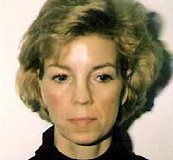
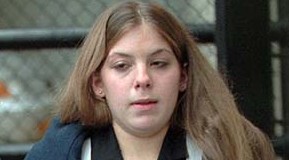
Susan Grund
Murderer Bobbie Sue Terrell
Murderer · USA · 1984
Bobbie Sue Dudley Terrell was a Pinellas County nurse and worked as the night s…
12 victims
Bobbie Sue Terrell
Murderer · USA · 1984
Bobbie Sue Dudley Terrell was a Pinellas County nurse and worked as the night s…
12 victims
 Megan Huntsman
Murderer · USA · 1996
Megan Huntsman was 40 at sentencing. She was a mother of three children who wer…
6 victims
Megan Huntsman
Murderer · USA · 1996
Megan Huntsman was 40 at sentencing. She was a mother of three children who wer…
6 victims
 Angela Johnson
Murderer · USA · 1993
Angela Jane Johnson was convicted in federal court of aiding and abetting the m…
5 victims
Angela Johnson
Murderer · USA · 1993
Angela Jane Johnson was convicted in federal court of aiding and abetting the m…
5 victims
 Catherine May Wood
Murderer · USA · 1987
Catherine May Wood was an American caregiver who worked at the Alpine Manor Nur…
5 victims
Catherine May Wood
Murderer · USA · 1987
Catherine May Wood was an American caregiver who worked at the Alpine Manor Nur…
5 victims
 Michele Kalina
Murderer · USA · 1996
Michele Kalina pleaded guilty to murder for one of five infants she initially w…
5 victims
Michele Kalina
Murderer · USA · 1996
Michele Kalina pleaded guilty to murder for one of five infants she initially w…
5 victims
 Amy Bishop
Murderer · USA · 1986
Amy Bishop — biology professor and perpetrator · James Anderson — Bishop’s husb…
4 victims
Amy Bishop
Murderer · USA · 1986
Amy Bishop — biology professor and perpetrator · James Anderson — Bishop’s husb…
4 victims
 Sam Poo
Murderer · Australia · 1865
Sam Poo was a Chinese bushranger in Australia who was active in the Coonabarabr…
1 victim
Sam Poo
Murderer · Australia · 1865
Sam Poo was a Chinese bushranger in Australia who was active in the Coonabarabr…
1 victim
 Timothy Wilson Spencer
Serial killer · USA · 1984
Name: Timothy Wilson Spencer · Alias(es) / monikers: “the Southside Slayer”; “t…
5 victims
Timothy Wilson Spencer
Serial killer · USA · 1984
Name: Timothy Wilson Spencer · Alias(es) / monikers: “the Southside Slayer”; “t…
5 victims
 Posteal Laskey
Serial killer · USA · 1965
Posteal Laskey was believed to be the person dubbed the “Cincinnati Strangler,”…
7 victims
Posteal Laskey
Serial killer · USA · 1965
Posteal Laskey was believed to be the person dubbed the “Cincinnati Strangler,”…
7 victims
 Michael Alig
Murderer · USA · 1996
Michael Alig was the offender. · “Angel” Melendez was the victim. Michael Alig…
1 victim
Michael Alig
Murderer · USA · 1996
Michael Alig was the offender. · “Angel” Melendez was the victim. Michael Alig…
1 victim
 Luis Caballero
Murderer · USA · 1995
Luis Caballero was born on 09/23/73. He was indicted in the Seventeenth Judicia…
1 victim
Luis Caballero
Murderer · USA · 1995
Luis Caballero was born on 09/23/73. He was indicted in the Seventeenth Judicia…
1 victim
- Gender
- female
- Country
- USA
- Location
- Peru, Miami County, Indiana, USA
- Date of birth
- 1958
- Age at first offence
- 34
- Characteristics
- parricide, abuse, domestic violence, motive unknown, history of mental illness
- Victim profile
- James Grund, 47 (her husband)
- Method of murder
- Shooting
- Date(s) of murder
- August 3, 1992
- Years active
- 1992
- Date of arrest
- November 4, 1992
- Status
-
Imprisoned
Sentenced to 60 years in prison in April 1994
Case record: Susan Grund
Status / outcome
Susan Grund was convicted of murdering her husband, James Grund, and the trial court sentenced her to sixty years in prison. The Indiana Court of Appeals affirmed the conviction and sentence, and the Indiana Supreme Court turned aside her appeal, declining to hear the case. Her earlier sentence was therefore left standing.
People involved
- Susan Grund — defendant
- James Grund — victim; Susan’s husband; former Miami County Prosecutor
- David Grund — victim’s son by a previous marriage; Susan’s stepson
- Jama Grund — victim’s daughter
- Jacob (Jacob Campbell) — child of Susan and her prior relationship; the son who was involved in events on the Fourth of July and later testified
- Tanelle — child of Susan and James Grund; victim’s stepdaughter in the narrative; a child witness in the case
- Darlene Worden — Susan’s sister
- Nellie Sanders — Susan’s mother
- Candice DeLong — former FBI agent who interviewed Susan Grund in a 2010 prison interview
- Wilbur Siders / Wil Siders — prosecutor
- Charlie Scruggs — defense attorney
- Dean Marks — Indiana State Police forensic technician
- Bob Brinson / Brunson — lead investigator on the case for the Indiana State Patrol
- Indiana State Police Detective Robert Brinson — investigated a prior burglary and testified at trial
- Indiana State Police Officer Gary Boyles — testified about statements to show the course of investigation and foundation
- Judge John Surbek — sentenced Susan Grund to 60 years
- Sgt. Gary Nichols — investigator who pursued the goal that Susan would not receive money from James Grund’s estate
- SUSAN’s mother’s surname referenced as Nellie Sanders — provided evidence by delivering a copper kettle filled with cement to police
- Linda “Suzane” — referenced as David’s girlfriend in the appeals court recitation of events (spelling appears as “Suzane”)
Timeline
- July 4, 1992 — Susan arrived unexpectedly at the home of David Grund, questioned him about a handgun he had purchased, and later the home was burglarized with the only missing item being David’s gun.
- August 3, 1992 — Susan arranged for Jacob to spend the night with Steven in a camper; later she requested an ambulance and told the dispatcher she had found her husband lying on the couch with blood coming out of his eyes and mouth. James Grund died from a single gunshot wound to the head.
- August 3, 1992 (time described) — detectives recovered a spent shell casing and a spent bullet from the couch area; both were from a 9 mm semi-automatic handgun, matching a weapon stolen from David’s house.
- August 1992 (described as “approximately two weeks after the murder”) — Susan, Jacob, Tanelle, and Susan’s mother moved from Peru to Vincennes.
- September 3 (1992) — a former neighbor informed Susan that police were searching her home in Peru; that night Susan met her sister Darlene at a McDonald’s near Indianapolis and drove to Peru.
- September 3, 1992 (that night, described) — Susan confessed to Darlene that she killed her husband and said it was supposed to be a double suicide but she had been unable to kill herself.
- Early November (described as “Around the beginning of November”) — Darlene saw the detective investigating the murder, feared repercussions, and told the detective about Susan’s confession.
- November 4, 1992 — Susan was arrested for murder.
- Around the beginning of the next summer (described as “The next summer”) — Susan’s mother planned to move back to Peru and found a copper kettle filled with cement in the attic and took it back to Peru and gave it to police.
- Before trial proceedings (described by timing) — defense counsel raised hearsay objections related to statements made by Tanelle.
- September 27, 1993 — Susan Grund’s murder trial began.
- March 16, 1994 — a jury convicted Susan Grund of murder.
- April (1994) — Susan Grund was sentenced to sixty years in prison.
- August 7, 1996 — the Indiana Supreme Court decision in Grund v. State was issued.
- June (year not specified in the source for the Court of Appeals decision) — the Indiana Court of Appeals turned down her appeal.
- 2010 — Susan Grund was featured in a prison interview for the Investigation Discovery channel with Candice DeLong.
Background
Susan Grund and James Grund were experiencing marital problems in the spring and summer of 1992. They were arguing frequently and were seeing a marriage counselor. There was talk of divorce, but it was not what Susan wanted because she feared losing custody of the children and feared losing Jim’s financial support.
Susan also had prior criminal history referenced in the Indiana Supreme Court’s sentencing discussion: she had a prior conviction in a case involving the beating of a young child, the son of a former husband, who suffered various injuries and was now severely handicapped. The court noted that although Susan entered a nolo contendere plea, the conviction was sufficient to support an aggravator.
The offence
On the afternoon of July 4, 1992, Susan arrived unexpectedly at the home of David Grund. She had been at the county fairgrounds and stopped in on her return claiming to have found a new shortcut home from the fairgrounds. She questioned David about a handgun he had recently purchased. David showed her where he kept his 9 mm semi-automatic weapon and allowed her to handle it.
Before leaving, Susan noticed the storm door was broken and secured by a shoestring, and she inquired about where David and his girlfriend Suzane kept their rottweiler puppy when no one was at home. Around 4:00 p.m., Susan and her husband, along with their two children, Jacob (thirteen-year-old) and Tanelle (seven-year-old), arrived at a barbecue at the home of Suzane’s parents and stayed until around 6:00 p.m. Shortly before dark, Susan telephoned Suzane’s parents to ask if David and Suzane planned to attend a fireworks display. She was told David was not feeling well and they would stay longer.
When David and Suzane returned home around 10:30 p.m., they found their home burglarized. Cash and jewelry were in plain sight, but the only thing missing was David’s gun.
On August 3, 1992, Susan arranged for Jacob to spend the night with his cousin Steven in the newly acquired family camper. She also arranged for Steven’s sister, Andrea, to spend the night at her home with Tanelle. At approximately 10:00 p.m., Susan left the two boys at the campground. She later picked up the girls at her mother’s house, arriving at the camper around 11:15 p.m. She gave beverages to the boys and took the girls home.
Just prior to midnight, Susan called the Miami County emergency phone number to request an ambulance, telling the dispatcher she had found her husband lying on the couch in the bedroom with blood coming out of his eyes and mouth. Emergency workers arrived to find that James Grund was already dead. The cause of death was a single gunshot wound to the head.
Detectives found spent shell casing on the floor and recovered a spent bullet from the couch in the area where Jim’s head had been. Both appeared to be from a 9 mm semi-automatic handgun. Detectives were aware that a similar weapon recently had been stolen from David’s house. After questioning David about where he might have fired the weapon, police recovered a bullet from a telephone pole across the street from David’s former residence. This bullet and the one recovered from the murder scene had been fired from the same gun.
In the version of events presented by Susan at trial, she claimed she arrived home, found her husband dead, called 911, and said the murder weapon was lying on the floor. She recognized it as David’s gun and testified that she hid it inside a teddy bear because she thought David might have had something to do with it.
Susan later testified that she was concerned for David because they had had an affair and she said she was having sex with her stepson for two years. She added: “He said he was going to get rid of his dad.”
In the trial court’s appellate recitation of facts, Susan confessed to Darlene that it was supposed to be a double suicide but she had been unable to kill herself, and she claimed Jim made her shoot him so that his will would remain effective.
Investigation and arrest
After the murder, police treated Susan as the primary suspect from the beginning, and the case development was described as being stymied for several months due to lack of definitive evidence until Susan’s confession.
Approximately two weeks after the murder, Susan, Jacob, Tanelle, and Susan’s mother moved from Peru to Vincennes. On September 3, Susan met her sister Darlene at a McDonald’s near Indianapolis and then drove to Susan’s Peru home. During the drive, Susan confessed that she had killed her husband. According to defendant, it was supposed to be a double suicide but she had been unable to kill herself, and she claimed that Jim made her shoot him so that his will would remain effective.
When Susan and her sister arrived at the Peru home, Susan went directly to the laundry room and told Darlene that “it” was still there. Susan was carrying two teddy bears, one ripped open across the back, and she later admitted she removed the gun from the house by hiding it in one of the bears. Susan then returned to Vincennes.
Later, Darlene’s husband brought a bag of cement to her in Vincennes. Around the beginning of November, Darlene saw a detective investigating the murder and believed that her mother was aware of Susan’s actions and feared repercussions for herself and for her mother. Darlene believed that the gun was in Susan’s home and was concerned for the children’s safety. Darlene told the detective about Susan’s confession.
Susan was arrested on November 4, 1992.
In the following summer, when Susan’s mother was planning to move back to Peru, she found a large copper kettle in the attic filled with cement. She took it back to Peru and gave it to police. When police broke the cement, they found a 9 mm semi-automatic weapon, the same gun that had been stolen from David’s house and used to kill Jim Grund.
Trial
Susan Grund’s murder trial began on September 27, 1993. The Indiana Supreme Court recited that at trial, Susan testified and described her actions after returning home on the night of the murder.
During Darlene’s testimony, Darlene testified about a discussion she had with Susan, Tanelle, and Jacob that involved the events on the Fourth of July. Darlene testified that Tanelle told them that after the boys were dropped off to see the fireworks, Tanelle and Susan did not go straight to the ice cream parlor as Susan claimed but instead went for a drive in the country. Darlene stated that Susan repeatedly insisted that Tanelle’s story was not correct. Defense counsel objected to Darlene’s testimony on hearsay grounds. The trial court overruled the objection and allowed the testimony.
The Indiana Supreme Court later analyzed whether the testimony about Tanelle’s statements was hearsay and concluded the statements were not admitted for the truth of the matter asserted and were not hearsay.
The Indiana Supreme Court also recounted that in Susan’s testimony she said she hid the weapon inside a teddy bear, recognized it as David’s gun, and said she was concerned for David because “we’d had an affair,” and that she testified “He said he was going to get rid of his dad.”
After 15 hours of deliberation in the first trial, the jury declared itself deadlocked, with at least two jurors stating they could not find Susan guilty.
A second trial began seven months later in March 1994, and the jury convicted Susan Grund of murder on March 23, 1994.
Sentencing
The trial court sentenced Susan Grund to sixty years in prison for murder. In the appellate decision, the Indiana Supreme Court referred to the trial court’s sentencing analysis and its aggravators and mitigators. The trial court found aggravating circumstances:
- Defendant’s prior criminal history.
- Defendant’s need for correction.
- A lesser sentence would depreciate the seriousness of the offense.
The trial court found no mitigating circumstances. The appellate court reviewed claims about sentencing and affirmatively concluded that the conviction and sentence were affirmed.
The Indiana Supreme Court’s opinion stated that the trial court imposed the maximum sentence of sixty years. It also addressed whether certain aggravators were proper and whether mitigating circumstances were overlooked.
Appeals
Susan Grund appealed her conviction and sentence, raising three issues:
- Whether the trial court erred by allowing hearsay evidence.
- Whether defendant was denied her constitutional right to effective assistance of counsel.
- Whether imposition of the maximum sentence was manifestly unreasonable.
The Indiana Supreme Court affirmed both the conviction and the sentence.
In the hearsay issue, the appellate court held that Tanelle’s statements were not admitted for the truth of the matter asserted and were not hearsay, and that even if they had been, the admission would not warrant reversal because Darlene’s testimony was cumulative.
In the ineffective assistance of counsel issue, the appellate court applied the required two-step process and rejected the claim that counsel’s performance was deficient and prejudicial. The appellate court discussed defense counsel’s actions regarding objections to testimony about Tanelle’s Fourth of July statements, as well as objections and motions regarding evidence of a 1990 burglary, and objections related to hearsay statements testified by police witnesses. The appellate court also discussed counsel’s continuing objections and the trial court’s limitation of inquiries regarding marital problems and the state of the marriage.
In the sentencing issue, the appellate court found no manifest unreasonableness in imposing the maximum sixty-year term and concluded the conviction and sentence were affirmed.
Outcome
Susan Grund’s conviction and sentence were affirmed by the Indiana Supreme Court, and her appeal did not result in reversal or a new sentencing outcome. She continued serving the sixty-year prison sentence.
Other details
- Susan Grund was described as having maintained her innocence and she was featured in a 2010 prison interview on Investigation Discovery with Candice DeLong, in which DeLong expressed skepticism about Grund’s recollection of events.
- In the appellate record, the trial court’s sentencing included aggravating circumstances tied to Susan Grund’s prior criminal history and a finding of need for correction, and it imposed the maximum term of years for murder.
Spotted an error, or have more information about this case?