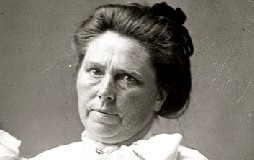
Belle Gunness
Serial killer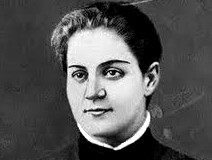 Jane Toppan
Serial killer · USA · 1887
Jane Toppan (1880-1901) was a nurse from Boston, Massachusetts. Another record…
31 victims
Jane Toppan
Serial killer · USA · 1887
Jane Toppan (1880-1901) was a nurse from Boston, Massachusetts. Another record…
31 victims
 Bertha Gifford
Serial killer · USA · 1909
Bertha Gifford (1872- August 20, 1951) was a farmwife in rural Catawissa, Misso…
17 victims
Bertha Gifford
Serial killer · USA · 1909
Bertha Gifford (1872- August 20, 1951) was a farmwife in rural Catawissa, Misso…
17 victims
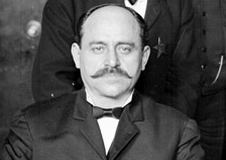 Johann Otto Hoch
Serial killer · USA · 1890
Johann Otto Hoch (1855 - 1906) was the most famous and last-used alias of a Ger…
15 victims
Johann Otto Hoch
Serial killer · USA · 1890
Johann Otto Hoch (1855 - 1906) was the most famous and last-used alias of a Ger…
15 victims
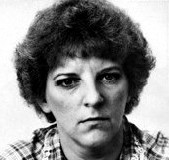 Genene Jones
Serial killer · USA · 1977
Genene Anne Jones (born July 13, 1950) was a former pediatric nurse who worked…
11 victims
Genene Jones
Serial killer · USA · 1977
Genene Anne Jones (born July 13, 1950) was a former pediatric nurse who worked…
11 victims
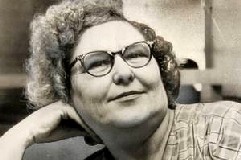 Nannie Doss
Serial killer · USA · 1954
Nannie Doss Nannie Doss pleaded guilty on May 17, 1955, and was sentenced to li…
11 victims
Nannie Doss
Serial killer · USA · 1954
Nannie Doss Nannie Doss pleaded guilty on May 17, 1955, and was sentenced to li…
11 victims
 Silvo Plut
Serial killer · Slovenia / Serbia · 1990
Silvo Plut was a Slovenian serial killer. He was born 29 May 1968 in Novo mesto…
3 victims
Silvo Plut
Serial killer · Slovenia / Serbia · 1990
Silvo Plut was a Slovenian serial killer. He was born 29 May 1968 in Novo mesto…
3 victims
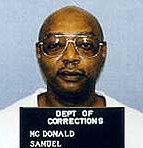 Samuel Lee McDonald
Murderer · USA · 1981
Name: Samuel Lee McDonald · Case citation: State of Missouri v. Samuel Lee McDo…
1 victim
Samuel Lee McDonald
Murderer · USA · 1981
Name: Samuel Lee McDonald · Case citation: State of Missouri v. Samuel Lee McDo…
1 victim
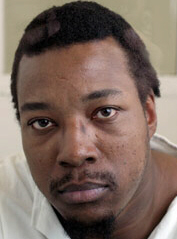 Richard Head Williams
Murderer · USA · 1997
Richard Head Williams killed Jeanette Williams in a capital murder committed fo…
1 victim
Richard Head Williams
Murderer · USA · 1997
Richard Head Williams killed Jeanette Williams in a capital murder committed fo…
1 victim
 Renee King
Murderer · USA · 2010
Renee King was sentenced in Macomb Circuit Court for the 2010 murder of her ste…
1 victim
Renee King
Murderer · USA · 2010
Renee King was sentenced in Macomb Circuit Court for the 2010 murder of her ste…
1 victim
- Gender
- female
- Country
- USA
- Location
- Illinois/Indiana, USA
- Date of birth
- November 11, 1859
- Age at first offence
- 21
- Characteristics
- attempted rape, cannibalism, poisoner, torture, mutilator, cannibal, abuse, abuser, kidnappings, financial gain
- Victim profile
- Men and children ( She killed most of her suitors and boyfriends, and her two daughters, Myrtle and Lucy. She may also have killed both of her husbands and all of her children, on different occasions)
- Method of murder
- Poisoning (strychnine) / Bludgeoning
- Date(s) of murder
- 1880's - 1908
- Years active
- 1880–1908
- Date of arrest
- —
- Status
-
Her death has never been confirmed; the headless adult female corpse found with the children on 28 April 1908 was never positively identified, and she was never tracked down.
Background
Belle Gunness was Norwegian-born. She was born as Brynhild Paulsdatter Størseth on November 22, 1859 in Selbu, Norway, and immigrated to the United States in 1881.
Gunness became known for suspicious fires and deaths that mostly resulted in insurance awards. She also began posting notices in lovelorn columns to entice wealthy men to her farm, after which they were never seen again.
Authorities eventually found the remains of over 40 victims on her property, but Gunness disappeared without a trace.
The offence
A series of crimes was linked to Gunness, including murders of men and children and the use of deception to lure victims to her farm. Her apparent motives involved collecting life insurance, cash and other valuables, and eliminating witnesses.
Gunness allegedly poisoned victims’ coffee with strychnine. When victims were killed, her reported disposal methods included bundling and burying remains in the hog pen and the grounds about the house. Accounts also described methods such as splitting heads with a meat chopper, chloroforming sleeping victims, and decapitating a victim whose head was removed and thrown into deep water.
The remains found in the wreckage included the bodies of her children and a headless adult female corpse that was never positively identified as Gunness.
Investigation
On April 28, 1908, the farmhouse burnt to the ground and workmen discovered four skeletons in the smoldering ruins. Three were identified as her foster children. The fourth skeleton was missing its skull.
After the fire, investigators and volunteers searched the ruins for evidence. The body of the headless woman was of deep concern to La Porte residents. C. Christofferson said it was not the remains of Belle Gunness; L. Nicholson and Mrs. Austin Cutler also said it was not her. Mrs. May Olander and Mr. Sigward Olsen arrived from Chicago and examined the remains, stating they were not Gunness. Doctors measured the remains and, making allowances for the missing neck and head, stated the corpse was that of a woman five feet three inches tall and weighing no more than 150 pounds, while friends and neighbors swore Gunness was taller than 5'8" and weighed between 180 and 200 pounds. Authorities compared detailed measurements with those on file with La Porte stores where she purchased her apparel and concluded the headless woman could not have been Belle Gunness, even when the ravages of the fire were taken into account.
Dr. J. Meyers examined internal organs of the dead woman. He sent stomach contents of the victims to a pathologist in Chicago, who reported months later that the organs contained lethal doses of strychnine.
Gunness’ dentist, Dr. Ira P. Norton, said that if the teeth/dental work of the headless corpse had been located, he could determine if it was her. Louis “Klondike” Schultz was hired to build a sluice and begin sifting debris to isolate human remains on a larger scale. On May 19, 1908, a piece of bridgework was found consisting of two human canine teeth, their roots still attached, porcelain teeth, and gold crown work in between. Norton identified them as work done for Gunness. Coroner Charles Mack officially concluded that the adult female body discovered in the ruins was Belle Gunness.
Asle Helgelien arrived in La Porte and told Sheriff Smutzer he believed his brother had met with foul play at Gunness’ hands. Joe Maxson came forward with information that Gunness had ordered him to bring loads of dirt by wheelbarrow to a large area surrounded by a high wire fence where the hogs were fed, and that deep depressions had been filled in with the dirt as rubbish. Smutzer took men back to the farm and began digging.
On May 3, 1908, the diggers unearthed the body of Jennie Olson, which had vanished December 1906. They then found small bodies of two unidentified children. Subsequently the body of Andrew Helgelien was unearthed, and his overcoat was found to be worn by Lamphere. As days progressed, additional bodies were discovered in the hog pen and grounds.
Remains discovered included Ole B. Budsberg of Iola, Wisconsin (vanished May 1907); Thomas Lindboe, who had gone to work as a hired man for Gunness three years earlier; Henry Gurholdt of Scandinavia, Wisconsin (vanished after going to wed her a year earlier, taking $1,500 to her); Olaf Svenherud from Chicago; John Moe of Elbow Lake, Minnesota (his watch was found in Lamphere’s possession); Olaf Lindbloom, age 35 from Wisconsin.
Reports of other possible victims were also described, including William Mingay; Herman Konitzer; Charles Edman; George Berry; Christie Hilkven; Chares Neiburg (a 28-year-old Scandinavian immigrant); John H. McJunkin; Olaf Jensen; Henry Bizge and his hired man Edward Canary; Bert Chase; Tonnes Peterson Lien; additional items such as a gold ring marked “S.B. May 28, 1907” found in the ruins; Abraham Phillips; Benjamin Carling; and others named as “possible victim” or reported unnamed victims.
Most of the remains found on the property could not be identified. Because of the crude recovery methods, the exact number of individuals unearthed on the Gunness farm was unknown, but was believed to be approximately twelve. On May 19, 1908, remains of approximately seven unknown victims were buried in two coffins in unmarked graves in the pauper’s section of LaPorte’s Pine Lake Cemetery. Andrew Helgelien and Jennie Olson were buried in La Porte’s Patton Cemetery, near Peter Gunness.
Arrest
Ray Lamphere was arrested and charged with murder and arson.
He was arrested on May 22, 1908 for murder and arson.
Trial
Ray Lamphere was tried for murder and arson after being arrested on May 22, 1908. He denied the charges of arson and murder that were filed against him.
Lamphere’s defense hinged on the assertion that the body found in the ruins was not Gunness. Lamphere’s lawyer, Wirt Worden, developed evidence that contradicted Norton’s identification of the teeth and bridgework. A local jeweler testified that although gold in the bridgework had emerged from the fire almost undamaged, the fierce heat of the conflagration had melted the gold plating on several watches and items of gold jewelry. Local doctors replicated the conditions of the fire by attaching a similar piece of dental bridgework to a human jawbone and placing it in a blacksmith’s forge; the real teeth crumbled and disintegrated while the porcelain teeth came out pocked and pitted, and the gold parts were rather melted. The hired hand Joe Maxson and another man also testified that they’d seen “Klondike” Schultz take the bridgework out of his pocket and plant it just before it was “discovered”.
Judge J.C. Richter presided over the trial. The prosecution was Ralph N. Smith and the defense was Wirt Worden.
Lamphere was found guilty of arson, but acquitted of murder.
Quotes from the trial
“Helgelien won't bother me no more. We fixed him for keeps.”
Sentencing
On November 26, 1908, Lamphere was sentenced to 20 years in the State Prison in Michigan City.
Lamphere died of tuberculosis on December 30, 1909.
Appeals
No appeals were described.
Outcome
Gunness’ death has never been confirmed. The bodies of her children were found in the home’s wreckage on April 28, 1908, but the headless adult female corpse found with them was never positively identified as Gunness. She was never tracked down and her death has never been confirmed.
In addition, in 1931 a woman known as “Esther Carlson” was arrested in Los Angeles for poisoning August Lindstrom for money. Two people who had known Gunness claimed to recognize her from photographs, but the identification was never proved. Carlson died while awaiting trial.
Aftermath
Gunness was reportedly seen or sighted for decades in cities and towns throughout the United States, and she became part of American criminal folklore.
Smutzer received reports for more than 20 years, averaging two reports a month.
Burial, exhumation and DNA analysis
The body believed to be that of Belle Gunness was buried next to her first husband at Forest Home Cemetery in Forest Park, Illinois.
On November 5, 2007, with the permission of descendants of Belle’s sister, the headless body was exhumed from Gunness’ grave in Forest Home Cemetery by a team of forensic anthropologists and graduate students from the University of Indianapolis to learn her true identity. An initial hope was that a sealed envelope flap on a letter found at the victim’s farm could contain enough DNA to compare to the body, but there was not enough DNA there, and efforts continued to find a reliable source for comparison purposes, including the disinterment of additional bodies and contact with known living relatives.
Timeline
- April 1, 1902 — Gunness married Peter Gunness in LaPorte; just one week after the ceremony, Peter’s infant daughter died while alone in the house with Belle.
- April 28, 1908 — Gunness’ farmhouse burnt to the ground; four bodies were found inside the house, including a headless adult female corpse with the children.
- May 3, 1908 — Digging unearthed the body of Jennie Olson.
- May 19, 1908 — Workmen found dental bridgework and Norton identified it as work done for Gunness; remains of approximately seven unknown victims were buried in two coffins in unmarked graves in the pauper’s section of LaPorte’s Pine Lake Cemetery.
- May 22, 1908 — Ray Lamphere was arrested and charged with murder and arson.
- May 12, 1908 — Schultz found Belle’s dentures; Dr. Norton agreed they were hers; the coroner pronounced Belle dead of “felonious homicide”.
- November 9, 1908 — Jury selection was underway for Ray Lamphere’s trial presided over by Judge J.C. Richter, with Ralph N. Smith and Wirt Worden.
- November 13, 1908 — Lamphere’s trial opened in the La Porte County Courthouse.
- November 16, 1908 — The second week of trial opened.
- November 20, 1908 — The defense opened its argument.
- November 26, 1908 — Lamphere was sentenced to 20 years in the State Prison (in Michigan City).
- December 30, 1909 — Lamphere died of tuberculosis.
- January 14, 1910 — Rev. E. A. Schell came forward with a confession that Lamphere was said to have made while comforting the dying man.
- 1931 — Esther Carlson was arrested in Los Angeles for poisoning August Lindstrom for money; Carlson died while awaiting trial.
- November 5, 2007 — The headless body believed to be Gunness was exhumed for forensic analysis.
Other details
Gunness was described as physically strong, and she was reported at times to be standing six feet tall and weighing over 200 pounds, though other accounts differed in measurements used to challenge identification after the fire.
After the fire, County Sheriff Smutzer sought out the ex-handyman and Ray Lamphere was said to have exclaimed: “Did Widow Gunness and the kids get out all right?” before denying involvement by claiming he was not near the farm when the blaze occurred.
John Solyem testified about seeing Lamphere running down the road just before the structure erupted in flames, and Lamphere responded: “You wouldn't look me in the eye and say that!”
In addition, Jennie Olsen was overheard confessing to a classmate:
"My mama killed my papa. She hit him with a meat cleaver and he died. Don't tell a soul."
A coroner’s inquest context was described surrounding Sorenson’s death and Peter Gunness’ death, including that Sorenson’s relatives claimed Gunness had poisoned him to collect on insurance and that a doctor initially thought strychnine poisoning was involved before a family doctor concluded death was caused by heart failure; an autopsy was considered unnecessary.
Gunness’ bank withdrawal behavior was described as withdrawing most funds shortly before the fire, and she was described as planning to evade the law.
Ray Lamphere was said to have made a confession to Rev. E. A. Schell and a fellow convict, Harry Meyers, shortly before his death, describing Gunness’ crimes and claiming she was still alive.
Names and people linked to the case (as described)
Gunness was linked to Mads Sorenson (first husband), Peter Gunness (second husband), Jennie Olsen (adopted daughter), Myrtle and Lucy (children), Phillip (baby boy), and Andrew Helgelein (suitor whose body was unearthed). Ray Lamphere was linked as a hired hand and defendant. Joe Maxson was linked as a replacement hired hand. Sheriff Smutzer was linked as county sheriff. Wirt Worden was Lamphere’s lawyer. Ralph N. Smith was the prosecutor. Judge J.C. Richter presided. Coroner Charles Mack concluded identification. Dr. Ira P. Norton was Gunness’ dentist. Louis “Klondike” Schultz was hired to build a sluice and sift debris. Asle Helgelien arrived looking for his brother.
A variety of additional named and reported victims and their details were described in the investigation narrative, including John Moo, Henry Gurholdt, Olaf Svenherud, Ole B. Budsburg, Olaf Lindbloom, Ole B. Budsberg’s sons Oscar and Mathew Budsberg, and William Mingay; Herman Konitzer; Christie Hilkven; Chares Neiburg; and more, as detailed above.


Spotted an error, or have more information about this case?