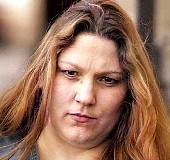
Angela Johnson
Murderer Bobbie Sue Terrell
Murderer · USA · 1984
Bobbie Sue Dudley Terrell was a Pinellas County nurse and worked as the night s…
12 victims
Bobbie Sue Terrell
Murderer · USA · 1984
Bobbie Sue Dudley Terrell was a Pinellas County nurse and worked as the night s…
12 victims
 Megan Huntsman
Murderer · USA · 1996
Megan Huntsman was 40 at sentencing. She was a mother of three children who wer…
6 victims
Megan Huntsman
Murderer · USA · 1996
Megan Huntsman was 40 at sentencing. She was a mother of three children who wer…
6 victims
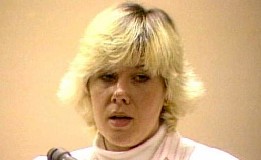 Catherine May Wood
Murderer · USA · 1987
Catherine May Wood was an American caregiver who worked at the Alpine Manor Nur…
5 victims
Catherine May Wood
Murderer · USA · 1987
Catherine May Wood was an American caregiver who worked at the Alpine Manor Nur…
5 victims
 Michele Kalina
Murderer · USA · 1996
Michele Kalina pleaded guilty to murder for one of five infants she initially w…
5 victims
Michele Kalina
Murderer · USA · 1996
Michele Kalina pleaded guilty to murder for one of five infants she initially w…
5 victims
 Amy Bishop
Murderer · USA · 1986
Amy Bishop — biology professor and perpetrator · James Anderson — Bishop’s husb…
4 victims
Amy Bishop
Murderer · USA · 1986
Amy Bishop — biology professor and perpetrator · James Anderson — Bishop’s husb…
4 victims
 Susan Eubanks
Murderer · USA · 1996
Susan Dianne Eubanks, also referred to as Susan Eubanks, was convicted by a jur…
4 victims
Susan Eubanks
Murderer · USA · 1996
Susan Dianne Eubanks, also referred to as Susan Eubanks, was convicted by a jur…
4 victims
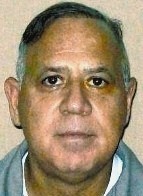 Lamont Underwood
Murderer ? · USA · 1994
Lamont Claxton Underwood, known as “L.C.,” was a former Salisbury policeman. Pr…
2 victims
Lamont Underwood
Murderer ? · USA · 1994
Lamont Claxton Underwood, known as “L.C.,” was a former Salisbury policeman. Pr…
2 victims
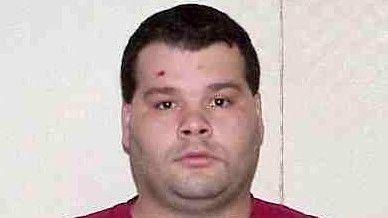 Robert Keith Woodall
Murderer · USA · 1997
Robert Keith Woodall (date of birth 3-19-74) was sentenced to death on Septembe…
1 victim
Robert Keith Woodall
Murderer · USA · 1997
Robert Keith Woodall (date of birth 3-19-74) was sentenced to death on Septembe…
1 victim
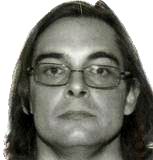 James Ritchie
Serial killer · USA · 2016
James Dale Ritchie (November 4, 1976 – November 12, 2016) was known in the medi…
5 victims
James Ritchie
Serial killer · USA · 2016
James Dale Ritchie (November 4, 1976 – November 12, 2016) was known in the medi…
5 victims
 Latasha Pulliam
Murderer · USA · 1991
Latasha Pulliam received clemency from the Governor of Illinois in March 2003 f…
1 victim
Latasha Pulliam
Murderer · USA · 1991
Latasha Pulliam received clemency from the Governor of Illinois in March 2003 f…
1 victim
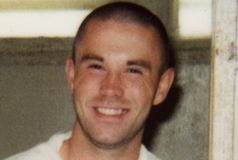 Mark Anthony Duke
Mass murderer · USA · 1997
Mark Anthony Duke was 16 years old when he committed a capital offense. He resi…
4 victims
Mark Anthony Duke
Mass murderer · USA · 1997
Mark Anthony Duke was 16 years old when he committed a capital offense. He resi…
4 victims
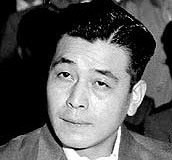 Masaru Okunishi
Mass murderer · Japan · 1961
Masaru Okunishi was a farmer from Kuzuo, a remote mountain village in Nabari ci…
5 victims
Masaru Okunishi
Mass murderer · Japan · 1961
Masaru Okunishi was a farmer from Kuzuo, a remote mountain village in Nabari ci…
5 victims
- Gender
- female
- Country
- USA
- Location
- Cerro Gordo County, Iowa, USA
- Date of birth
- 1964
- Age at first offence
- 29
- Characteristics
- abduction, domestic violence, kidnapping, murder for hire, rape, torture
- Victim profile
- Greg Nicholson, his girlfriend, Lori Ann Duncan, 31, and her two daughters, Kandace Duncan, 10, and Amber Duncan, 6 / Terry DeGeus, 32
- Method of murder
- Shooting
- Date(s) of murder
- July 25/November 4, 1993
- Years active
- 1993
- Date of arrest
- July 2000
- Status
-
Life imprisonment
Sentenced to death on December 19, 2005; death sentence vacated by Federal Judge Mark W. Bennett on March 23, 2012; remanded for a re-hearing of the punishment phase before a new jury or for a life without parole sentence.
Case information
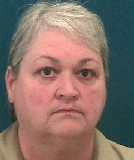
Angela Jane Johnson was convicted in federal court of aiding and abetting the murder of five individuals while working in furtherance of a continuing criminal enterprise (CCE), and of five counts of aiding and abetting the killings while engaging in a drug conspiracy. She was sentenced to death on December 19, 2005. On March 23, 2012, Federal Judge Mark W. Bennett vacated Johnson’s death sentence.
Timeline
- March 21, 1993 — Nicholson met with Dustin Honken to deliver drug proceeds; their conversation was monitored by police; Honken and Cutkomp were arrested the same day.
- April 1993 — A federal grand jury indicted Honken for conspiracy to distribute methamphetamine.
- July 7, 1993 — Johnson purchased a semi-automatic 9 mm assault pistol at a pawn shop about an hour’s drive from her home.
- July 24, 1993 — Johnson asked Christi Gaubatz to babysit so that Johnson and Honken could look for Nicholson for the last time.
- July 25, 1993 — Greg Nicholson, Lori Duncan, Lori Duncan’s two children Kandi Duncan and Amber Duncan, were murdered.
- October 27, 1993 — Several individuals, including Johnson and Aaron Ryerson, were subpoenaed in connection with potential connections between Honken and DeGeus.
- November 4, 1993 — Johnson asked DeGeus to meet her; DeGeus was murdered the same night.
- Late February or early March of 1993 — Cutkomp moved to Iowa but continued participating in Honken’s drug enterprise.
- March 5, 1995 — The federal drug charges against Honken were dismissed.
- 1995 — Honken enlisted Dan Cobeen to help with the methamphetamine operation, but Honken took him to see Johnson for her approval.
- February 7, 1996 — Law enforcement executed a search warrant for Honken’s home and seized items related to the production of methamphetamine.
- July 30, 1993 — Honken’s plea hearing date is referenced as scheduled.
- July 2000 — Johnson was charged with the murders.
- 2004 — Tokars testified at Honken’s trial.
- February 14, 2007 — The Eighth Circuit case was submitted.
- July 30, 2007 — The Eighth Circuit opinion was filed.
- December 19, 2005 — Johnson was sentenced to death.
- October (year not specified in the record excerpt) — Dustin Honken was sentenced to death.
- March 23, 2012 — Federal Judge Mark W.
- 1993 (year referenced repeatedly) — Johnson and Honken began searching for Nicholson during June and July 1993; Nicholson and others disappeared in 1993.
Background
Johnson was involved in a methamphetamine operation connected to Dustin Honken. Honken began manufacturing methamphetamine with Tim Cutkomp in Arizona in 1992. Honken’s brother Jeff Honken financed the operation. Honken distributed methamphetamine to Greg Nicholson and Terry DeGeus, who were drug dealers in Mason City, Iowa. During one of Honken’s trips to Mason City in early 1993, DeGeus sent Johnson, who was his girlfriend at the time, to deliver either drug proceeds or methamphetamine to Honken.
Johnson became involved in a romantic relationship with Honken, and within six months, she became pregnant with Honken’s child. In late February or early March of 1993, Cutkomp moved to Iowa but continued participating in Honken’s drug enterprise.
In March 1993, police began investigating Nicholson and executed a search warrant for Nicholson’s residence, which led to the discovery of methamphetamine and money. Nicholson agreed to cooperate with law enforcement and told agents that Honken had supplied him with several pounds of methamphetamine over a period of 10–11 months for which he paid Honken a total of approximately $100,000. On March 21, 1993, Nicholson met with Honken to deliver drug proceeds; their conversation was monitored by police, and police arrested Honken and Cutkomp. Officers found a note in Honken’s pocket listing money owed to Honken by two individuals referred to as “G-man” and “T-man.” A receipt for the purchase of chemicals was found in Cutkomp’s pocket. After Honken was arrested, Jeff Honken disposed of items from Honken’s drug lab that Honken had kept in one of Jeff Honken’s storage sheds.
After the arrest, Honken was released on bond. Honken informed the court that he intended to plead guilty, and a plea hearing was scheduled for July 30, 1993. During June and July 1993, Honken and Johnson searched for Nicholson. On the evenings they looked for Nicholson, Johnson asked Christi Gaubatz to babysit Johnson’s daughter; Honken and Johnson borrowed Gaubatz’s car so that they would not be spotted by Nicholson.
Johnson had a child from a previous marriage and was pregnant by Honken at the time of the murders.
The offence
Murder of Nicholson and the Duncan family (July 25, 1993)
In late June or early July 1993, Johnson purchased a semi-automatic 9 mm assault pistol at a pawn shop about an hour’s drive from her home on July 7, 1993. The record described that the last time Johnson asked Gaubatz to babysit so that she and Honken could look for Nicholson was July 24, 1993.
On July 25, 1993, Nicholson, Nicholson’s girlfriend Lori Duncan, and Lori Duncan’s two children, Kandi and Amber, were murdered. The Eighth Circuit described the events from Johnson’s accounts:
Johnson knocked on the door of the Duncans’ home and asked if she could look at their telephone book. Johnson was carrying a cosmetics demonstration bag and claimed that she had an appointment to give a demonstration, but was uncertain of the address. She secured entry into the house with Honken apparently right behind her. There was testimony that once the door was opened, Honken and Johnson “rushed” the occupants.
While Johnson and Honken were in the house, one or both of them videotaped Nicholson making statements exculpating Honken. At some point, Johnson went upstairs with Kandi and Amber and had them pack up some of their things either to persuade the girls that they were going on a trip or to convince visitors to the house that they had done so.
Honken and Johnson bound and gagged the adults with materials that either Honken or Johnson brought to the house. They drove the victims to a wooded area. Honken took the two adults out of the car and shot them in the head while Johnson waited in the car with the children. The children were then taken out of the car and shot. All four were placed in a single grave that had been dug earlier.
After the murders, Honken provided his attorney with the videotape in which Nicholson exculpated Honken. When Honken appeared for his plea hearing, which took place five days after the murders, he declined to plead guilty. His attorney told the prosecutor that the case was not as strong as the government had believed. The tape was eventually returned to Honken and “never seen again.”
The bodies were found years later, after Johnson scrawled a map of the graves and unwittingly gave it to a jailhouse informant. Prosecutors said the victims were tortured and shot, and that their bodies were found in 2000 after Johnson scrawled a map and gave it to a jailhouse informant.
Murder of DeGeus (November 4, 1993)
During October 27, 1993, subpoenas included Johnson and Aaron Ryerson. After Ryerson spoke with DeGeus, DeGeus called Johnson and told her what Ryerson had said about DeGeus’s time before the grand jury.
Nine days later, on November 5, DeGeus dropped his daughter off at his parents’ house and told them that he was going to meet with Johnson. By this time, DeGeus suspected something may have happened to Nicholson and he was concerned he might share Nicholson’s fate. DeGeus was killed that night.
The record described that DeGeus was either shot by Honken and then beaten with a baseball bat or beaten first and then shot. Johnson gave conflicting reports to police and others about the night DeGeus disappeared, telling some individuals she had not seen him and telling others she had seen him but that he had left after they had spoken.
Johnson’s death penalty eligibility and participation included luring DeGeus to a remote location, with the Court of Appeals describing that she procured the murder weapon, participated in the hunt for Nicholson, used a ruse to gain entry to the Duncans’ residence, bound and gagged at least one victim, and exploited her relationship with DeGeus to lure him to the remote location where he was killed.
Investigation and arrest
After Nicholson disappeared, the government’s attention turned to DeGeus. Following subpoenas on October 27, 1993, including Johnson, investigators obtained information from Ryerson and then from DeGeus.
In 1994, Gaubatz found a bag containing a large black handgun with a silencer attached in her closet. Gaubatz called Johnson, and Johnson retrieved the weapon.
In 1995, Cutkomp testified that Honken was reluctant to involve Johnson in efforts to kill Cobeen because she was a “hot head and just wanted to go do just do it.” Cutkomp was also worried about Johnson pushing Honken to follow through with the plans.
In 2000, after Johnson was charged with the murders in July 2000, she was taken to the Benton County, Iowa, Jail. There she met another inmate, Robert McNeese. McNeese convinced Johnson he was connected to the mob and that he could find an inmate already serving a life sentence who would confess to the murders. McNeese told her that he needed information about the crimes so that the inmate could convince authorities of his involvement. Johnson provided maps depicting the location of the victims’ bodies and information about how they were killed.
Using the maps, officers found Nicholson and the Duncan family in a single grave. The two adults were found bound and gagged and had been shot multiple times, including gunshots to the head. DeGeus’s body was found a few miles away in a field behind an abandoned house, suffering multiple gunshot wounds, and his skull had been fractured into dozens of pieces.
The record also included that Johnson was described as having attempted suicide when she learned she had been double-crossed.
Trial
Charges and legal theory
A federal jury found Johnson guilty of aiding and abetting the murder of five individuals while working in furtherance of a continuing criminal enterprise (CCE), violations of 21 U.S.C. § 848(e)(1)(A) and 18 U.S.C. § 2, and five counts of aiding and abetting the killing of these individuals while engaging in a drug conspiracy, also in violation of 21 U.S.C. § 848(e)(1)(A) and 18 U.S.C. § 2.
Johnson’s trial was trifurcated into three phases:
- a “merits” phase, in which the jury found her guilty of the murders,
- an “eligibility phase,” in which the jury determined she was eligible for the death penalty, and
- a “selection phase,” in which the jury voted for the death penalty for Johnson’s participation in the deaths of Lori Duncan, Amber Duncan, Kandi Duncan, and Terry DeGeus.
The jury voted for life imprisonment for Johnson’s participation in Greg Nicholson’s murder. The record described that in the separate trial, Honken was also convicted of the murders. Unlike Johnson, Honken received life sentences for the murders of Lori Duncan and DeGeus.
Statements, witness testimony, and evidence described
During the trial, Johnson’s accounts of the murders were included as recited from various witnesses.
During Honken’s trial, Tokars testified that Johnson herded the Duncans into a bedroom while Honken forced Nicholson, who had worn a wire as a cooperating witness, to videotape a statement exonerating him. Tokars also testified that Honken told him in 1998 that Kandi and Amber Duncan saw their mother and Nicholson murdered.
A tape played at Honken’s trial revealed Honken enjoyed killing, with a quotation reported as: “It’s like getting high,” he said.
During the merits-phase closing arguments and selection-phase proceedings, several disputed matters were addressed, including jury instructions on mitigation and procedural issues about juror selection.
Jury instructions and mitigation
The eligibility phase included an aggravating factor addressing torture or serious physical abuse. The jury considered whether: “[T]he defendant committed the offense in an especially heinous, cruel, or depraved manner in that it involved torture or serious physical abuse to the victim.” The record cited 21 U.S.C. § 848(n)(12) (2005).
The jury was instructed that “torture” includes “prolonged mental harm caused by . . . the threat that another person will be imminently subjected to death, or severe physical pain or suffering.”
During voir dire and closing argument discussions, Johnson challenged prosecutor statements about mitigating factors, and the appellate opinion analyzed whether the jury could give “no weight” to certain mitigating evidence. The appellate court concluded the prosecutor’s comments accurately reflected that jurors were obliged to consider relevant mitigating evidence but were permitted to accord it whatever weight they choose, including no weight at all.
Victim impact and selection-phase evidence
During the selection phase, the district court permitted Steven Vest, incarcerated with Honken, to testify to statements Honken made to Vest about the murders. Johnson challenged this testimony under the Confrontation Clause, arguing reliability and prejudice.
In addition, Lori Duncan’s brother Robert Milbrath read a short poem during the selection phase written by one of Amber Duncan’s childhood friends. The appellate record included the poem verbatim: “She was only six when she left on a picnic. Then the theft. She never would be able to get to the age of seven, for she was shot, sent to heaven. I never got to say good-bye. The nights I was scared, those nights I'd cry wishing to see her face again, wishing that it would have never been. For my dear friend, I loved her so. I never wanted her to go. Only five and not aware of what would be ahead. Oh, what a scare. Amber isn't just a color. She was my best friend.”
The appellate analysis treated the poem as victim-impact evidence.
Sentencing
Johnson was sentenced to death on December 19, 2005. The appellate court record described that the jury voted to impose the death penalty for four murders and life imprisonment for the fifth, with “a total of eight death sentences and two life sentences.”
A district judge, Mark W. Bennett, stated that he was bound by law to issue the sentence a jury recommended, but he was “troubled by the lack of certainty in the record concerning the precise involvement of Angela Johnson in these crimes”.
Johnson maintained her innocence and said she was manipulated by Dustin Honken, her ex-boyfriend. Johnson’s remarks included: “I regret I wasn't strong enough.”
A further description in the excerpt included a speech in which Johnson told Jeff Honken around the time of the sentencing hearing: “[I]f Dustin wasn't going to be able to see his kids she was going to make sure [Jeff Honken wasn't] going to be able to see [his].”
Appeals
Eighth Circuit appeal and remand
Johnson appealed to the Eighth Circuit (No. 06-1001, United States of America v. Angela Jane Johnson). She raised 28 issues. The appellate court remanded so the district court could vacate five of her ten convictions. In all other respects, the appellate court affirmed. The appellate opinion was submitted February 14, 2007 and filed July 30, 2007.
The opinion addressed multiple issues, including:
- proportionality of her death sentences under the Eighth Amendment, rejecting claims that the disparity with Honken violated the Eighth Amendment and concluding the jury had sufficient evidence of Johnson’s substantial participation and intent;
- equal protection challenges under Federal Rule of Criminal Procedure 24(b) concerning peremptory challenges;
- claims under the Sixth Amendment regarding for-cause challenges and the effect on peremptory challenges;
- challenges to the prosecutor’s statements about mitigation evidence and arguments during voir dire and closing;
- sufficiency of the evidence for conspiracy murder and for CCE murder, including the continuing nature of the methamphetamine operation and supervision of Nicholson and DeGeus by Honken;
- evidentiary challenges, including admission of evidence related to Honken’s guilty plea and subsequent bad acts;
- admission of hearsay statements under the forfeiture by wrongdoing doctrine and discussion of its applicability and the Ex Post Facto Clause;
- denial of an evidentiary hearing on alleged juror misconduct;
- multiplicitous convictions, concluding conspiracy murders and CCE murders were multiplicitous under Rutledge v. United States, and remanding so the district court vacated the conspiracy murder convictions.
Quotes from the appellate decision
The appellate court described Johnson’s participation as follows: “[T]he killings resulted from her substantial participation in the murders; namely, that she procured the murder weapon, participated in the hunt for Nicholson, employed a ruse so that she and Honken could gain entry to the Duncans’ residence, bound and gagged at least one of the victims, and exploited her relationship with DeGeus to lure him to the remote location where he was killed.”
Outcome and aftermath
Bennett vacated Johnson’s death sentence, citing a failure to introduce evidence about her mental state from an “alarmingly dysfunctional” defense team.
Johnson’s convictions were not affected by the vacating of the death sentences. The record described that her punishment phase would either be re-heard in front of a new jury or she would be sentenced to life without parole.
Johnson and Honken were described as the first people sentenced to death in Iowa in more than 40 years, and Iowa does not have the death penalty. The record also described that Johnson was the first woman sentenced to death by a United States Federal jury since Bonnie Brown Heady was executed by the gas chamber in 1953, and the first woman sentenced to die by a federal court in over 50 years. It also stated that forty-nine women have been executed under state laws since 1900.
Other details
The record included multiple disputes and quotations from participants, including:
- McNeese’s statements to Johnson, as quoted: “I told her I had been in prison a long time,” and “I knew a lot of people,” and “I told her she would have to describe how the crimes were committed, what the people were wearing when they were killed and where the bodies were located.”
- Honken’s statement to federal prisoner Fred Tokars, as quoted: “I killed my rats,” Honken told federal prisoner Fred Tokars.
- A statement attributed to the juror concerning prison visits and expectations about sentencing and appeals was mentioned in the context of Johnson’s juror misconduct claim; it included the investigator’s report that the juror had been advised “that prisoners serving life sentences are allowed in the general population, whereas those facing the death penalty are kept in solitary confinement,” and the statement that Johnson would have three automatic appeals and that the jury’s verdict would merely “set the stage” for these appeals.
- The record described that Johnson attempted suicide after she learned she had been double-crossed.
- The record described that Lori Duncan’s brother Robert Milbrath’s reading of the poem occurred during the selection phase and that the poem was written by one of Amber Duncan’s childhood friends.
- The record reported an armed handgun and described Johnson’s purchase of a semi-automatic 9 mm assault pistol on July 7, 1993, and that the handgun found by Gaubatz had a silencer attached.
- The appellate court discussed that Johnson’s conviction and sentences were remanded so the district court could vacate five of her ten convictions, specifically the multiplicitous conspiracy murder convictions.
Spotted an error, or have more information about this case?