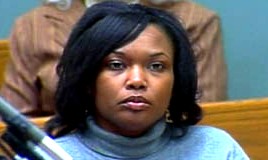
Carla Hughes
Murderer Miranda Barbour
Murderer · USA · 2013
Miranda Barbour, 19, defendant. · Elytte Barbour, 22, defendant and husband of…
100 victims
Miranda Barbour
Murderer · USA · 2013
Miranda Barbour, 19, defendant. · Elytte Barbour, 22, defendant and husband of…
100 victims
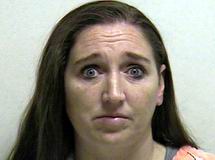 Megan Huntsman
Murderer · USA · 1996
Megan Huntsman was 40 at sentencing. She was a mother of three children who wer…
6 victims
Megan Huntsman
Murderer · USA · 1996
Megan Huntsman was 40 at sentencing. She was a mother of three children who wer…
6 victims
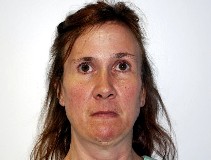 Michele Kalina
Murderer · USA · 1996
Michele Kalina pleaded guilty to murder for one of five infants she initially w…
5 victims
Michele Kalina
Murderer · USA · 1996
Michele Kalina pleaded guilty to murder for one of five infants she initially w…
5 victims
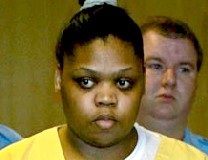 Tiffany Hall
Murderer · USA · 2006
Tiffany Hall was 24 when she was charged in September 2006. She later entered a…
5 victims
Tiffany Hall
Murderer · USA · 2006
Tiffany Hall was 24 when she was charged in September 2006. She later entered a…
5 victims
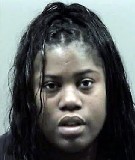 Banita Jacks
Murderer · USA · 2007
Banita Jacks was a Washington, DC resident convicted of murdering her four daug…
4 victims
Banita Jacks
Murderer · USA · 2007
Banita Jacks was a Washington, DC resident convicted of murdering her four daug…
4 victims
 Holly Grigsby
Murderer · USA · 2011
Holly Grigsby was sentenced to life in prison without parole on July 15, 2014.…
4 victims
Holly Grigsby
Murderer · USA · 2011
Holly Grigsby was sentenced to life in prison without parole on July 15, 2014.…
4 victims
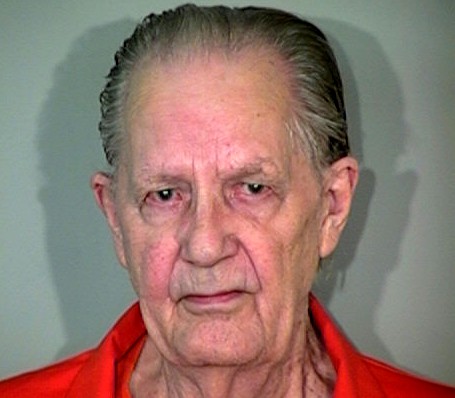 Viva Leroy Nash
Murderer · USA · 1977
Viva Leroy Nash was sentenced to death in Arizona on June 27, 1983. He died on…
2 victims
Viva Leroy Nash
Murderer · USA · 1977
Viva Leroy Nash was sentenced to death in Arizona on June 27, 1983. He died on…
2 victims
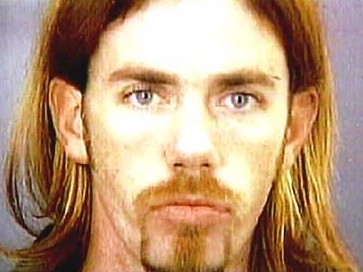 Patrick McIntyre
Murderer · USA · 1997
Patrick McIntyre was the son of a former Vero Beach police detective. Molly McI…
1 victim
Patrick McIntyre
Murderer · USA · 1997
Patrick McIntyre was the son of a former Vero Beach police detective. Molly McI…
1 victim
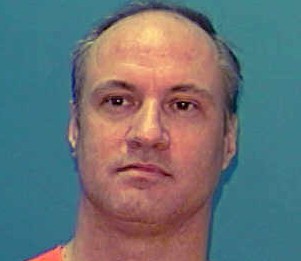 Michael Lambrix
Murderer · USA · 1983
Michael Lambrix was indicted in the Twentieth Judicial Circuit, Glades County,…
2 victims
Michael Lambrix
Murderer · USA · 1983
Michael Lambrix was indicted in the Twentieth Judicial Circuit, Glades County,…
2 victims
 Dennis Roark
Mass murderer · USA · 1989
Dennis Roark Roark returned to the home after a night of drinking at 5:00 a.m.…
4 victims
Dennis Roark
Mass murderer · USA · 1989
Dennis Roark Roark returned to the home after a night of drinking at 5:00 a.m.…
4 victims
 Aryon Williams
Murderer · USA · 1990
Aryon Williams was convicted in Superior Court (Pinal) of first-degree murder,…
1 victim
Aryon Williams
Murderer · USA · 1990
Aryon Williams was convicted in Superior Court (Pinal) of first-degree murder,…
1 victim
- Gender
- female
- Country
- USA
- Location
- Ridgeland, Madison County, Mississippi , USA
- Date of birth
- June 12, 1981
- Age at first offence
- 25
- Characteristics
- love triangle
- Victim profile
- Avis Banks, 27 (her lover's pregnant fiancee) and Banks's unborn child
- Method of murder
- Shooting (.38 caliber revolver)
- Date(s) of murder
- November 29, 2006
- Years active
- 2006
- Date of arrest
- December 6, 2006
- Status
-
Life imprisonment
Sentenced to two sentences of life imprisonment without the possibility of parole on October 13, 2009
Case details
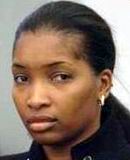
Name: Carla Hughes Other names: Carla Ann Hughes Date of birth: June 12, 1981 Age: 27 Role: defendant
Status and legal outcome
Carla Hughes was found guilty of two counts of capital murder. The jury declined to impose the death penalty, and the Circuit Court of Madison County imposed two sentences of life imprisonment without the possibility of parole, with both sentences to run concurrently.
Timeline
- November 26, 2006 — Patrick Nash loaned Hughes a Rossi .38 caliber gun loaded with five bullets and a folding hunting knife.
- November 29, 2006 — Avis Banks was killed in the garage of her Ridgeland home.
- December 1, 2006 — Hughes returned the Rossi .38 caliber gun empty after her police interview.
- December 5, 2006 — Nash turned the Rossi .38 caliber gun over to police.
- December 6, 2006 — Hughes was arrested on a charge of accessory after the fact.
- December 8, 2006 — Police executed a search warrant at Hughes’s house. Charges were upgraded to two counts of capital murder.
- October 7, 2009 — Lt. John Neal testified about processing the crime scene and identifying Hughes as the prime suspect.
- October 8, 2009 — Prosecutors played a DVD of Hughes’s first interview with police.
- October 10, 2009 — Prosecutors rested their case; Judge William Chapman denied requests to throw the case out and for a mistrial.
- October 11, 2009 — Character witnesses testified, including Lynda Nunn Hughes and Camesha Cotton Jones.
- October 12, 2009 — Hughes pled the fifth and decided not to testify.
- October 13, 2009 — The jury returned verdicts of guilty on both counts of capital murder and Hughes was sentenced to two consecutive life sentences without parole.
- October 15, 2009 — Reports described that Hughes was sentenced to life without parole for shooting and stabbing to death Avis Banks and her unborn child.
- August 30, 2010 — A Madison County judge denied Hughes’s request for a new trial.
- June 21, 2012 — The Mississippi Supreme Court affirmed the judgment of the Madison County Circuit Court.
Background
Carla Hughes was born on June 12, 1981, and was adopted by her uncle Carl and aunt Lynda Hughes when she was six weeks old. She was raised in Greenville, Mississippi. She excelled as a child in horseback riding and beauty pageants and was an honors student. She earned a Master’s Degree in education and later earned a PhD.
Carla Hughes was described as a former middle school teacher from Greenville, Mississippi. She took a job as a 7th grade language arts teacher at a Jackson, Mississippi middle school, and there she met Keyon Pittman, a fellow teacher. Hughes had an intimate relationship with Pittman despite Pittman being engaged to Avis Banks and expecting a child.
Hughes had a failed engagement in 2004, which gave her a son.
Hughes was described as having remained in the relationship despite her knowledge that Pittman planned to marry Banks and that Banks was pregnant with his child. Pittman testified that Hughes referred to him as her “future husband” when they were around Hughes’s friends and relatives and that Hughes was unhappy that Pittman would not leave Banks. Pittman testified that on one occasion Hughes began to drive to Pittman’s and Banks’s house to reveal her affair with Pittman, and that Pittman stopped her by threatening to call the police.
The Mississippi Supreme Court described Hughes’s motive as involving a “love triangle” among Hughes, Pittman, and Banks.
The offence
Carla Hughes was convicted of two counts of capital murder for the murders of Avis Banks and her unborn son.
Victims and circumstances
Avis Banks was a daycare worker. She was five months pregnant at the time of her death. Banks was killed in the garage of her Ridgeland, Mississippi home. The police concluded that Banks arrived home between 5:50 p.m. and 6:00 p.m. and was killed shortly thereafter.
An autopsy revealed that Banks was shot four times, stabbed three times, and slashed once. Three of the four gunshot wounds were fatal. The stab wounds were not fatal and may have occurred postmortem. All bullets were from a .38 caliber weapon. The autopsy confirmed Banks had been in her second trimester of pregnancy, carrying a male fetus, and because the baby had died from maternal demise, the baby’s death was classified as a homicide.
There was evidence suggesting forced entry into the home by kicking open a door. The initial search revealed that the back door had been forced open and there were two shoe prints on the exterior side of the glass door where it appeared the perpetrator had kicked the door. There were blood smears along the wall and light-switch plate. The door between the house and the garage was open, and there was a dent in the sheetrock where the doorknob had struck the wall. A bullet hole was found in the lower left corner of the garage door, but no shell casings were found. Nothing appeared to be missing from the house, though it appeared that there had been a burglary.
Investigation
Police collected several pieces of evidence during their investigation, including a smear of blood found on the light-switch plate and photographs and impressions of shoe prints.
Pittman gave a statement at the police station. His clothes were photographed because they had blood on them, and his hands were processed for gunshot residue; each hand had a single particle, which an expert witness testified could have come from touching Banks’s body.
Pittman remained a suspect until investigators established he had been at Chastain Middle School at the time of the murder. Pittman’s cell-phone records indicated he had not been in the vicinity of his house during the time the murder occurred. Witnesses who had been at Chastain Middle School during basketball practice verified that Pittman had been at the school when the murder had occurred.
Employees at Chastain Middle School told police that Pittman had several girlfriends, including Hughes. Police initially talked to Hughes at Chastain Middle School on December 1, 2006. In her initial statement, Hughes said she and Pittman were just friends. Hughes later gave another statement at the police station that evening admitting she had a sexual relationship with Pittman, and she said she did not own or have access to a gun. However, it was established Hughes had a gun on the day the homicide occurred.
Witness information about the gun
Hughes’s cousin Patrick Nash testified that on November 26, 2006, Hughes asked to borrow a weapon for protection because of attempted break-ins at her house. Nash said he loaned Hughes a Rossi .38 caliber gun with five bullets inside it and a three-and-a-half-to-four-inch-long folding hunting knife. Nash said he showed Hughes how to use the gun and gave her no additional bullets.
After her interview with police, on the evening of December 1, 2006, Hughes returned the Rossi .38 caliber gun and Nash noticed it had no bullets. Nash said Hughes did not return the knife. Nash became uneasy because Hughes had called him on the night of the murder and mentioned that someone had killed Pittman’s girlfriend.
James Nash testified that after Nash asked Hughes whether the gun had been involved in Banks’s murder, Hughes responded by dropping her head and shrugging her shoulders, which James took to mean “‘I really don't know’ or affirmative.”
Nash turned the Rossi .38 caliber gun over to police on December 5, 2006.
Search of Hughes’s house and evidence seized
After Hughes’s arrest on December 6, 2006, Detective John Neal obtained a search warrant. The warrant was executed on December 8, 2006. The police were specifically looking for:
- Any firearm, ammunition, shell casing, bullet projectile or packaging for any firearm, ammunition, shell casing or bullet projectile.
- Any tool or instrument with a folding blade which may be used to puncture, stab, slice or cut.
- Any article of clothing which may contain evidence of blood or blood stains.
- Any type of footwear which may contain the impression design as indicated in Exhibit “A.”
- Any glove which may contain physical evidence of blood or blood stains.
- Any notes, papers, documents or any form of written communication which may establish a relationship between Carla Hughes and Keyon Pittman.
A picture of the shoe-print impression taken from the crime scene was attached to the search warrant as Exhibit A. During the search, police seized:
- a pair of women’s size ten TredSafe 5 shoes,
- a photograph of Pittman that was in the master bedroom night stand, and
- a handwritten note/poem with the initials K.P. on it.
The shoes had a tread pattern that appeared to match the shoe prints from the crime scene.
Forensics and cell-phone evidence
The shoes and the Rossi .38 caliber gun were sent to the Mississippi Crime Laboratory for testing. Testing showed the tread pattern on the soles of the shoes matched impressions lifted from the crime scene. Test projectiles from the Rossi .38 caliber gun were compared to the projectiles removed from Banks’s body, and testing revealed that the gun had fired the bullets that had killed Banks.
Cell-phone records from Hughes’s cell phone were admitted. Mark Winstead, a radio-frequency engineer with Cellular South, testified about the cell-phone records and identified the cell towers from which Hughes’s calls had originated and terminated. Winstead testified about geographical ranges of cell towers and blocking behavior if a tower became overloaded. He prepared a map admitted into evidence showing geographical range of cell towers in the relevant area.
The Pittman/Banks home was within the geographical range of a cell tower located on Lake Harbor Drive in Ridgeland, with a two-mile radius. The records showed that at 5:37 p.m., Hughes answered a call within the range of that cell tower and terminated it within the range of that cell tower. The records further showed that at 6:04 p.m., Hughes placed a call within the range of that cell tower and terminated it within the range of that cell tower. Hughes’s next cell-phone activity at 6:07 p.m. was outside the range of that cell tower. The prosecution argued the evidence placed Hughes near the Banks/Pittman home at the time of the murders.
Thomas Gandy, a radio-frequency engineer for AT & T Mobility, testified about cell-phone records of Pittman and Banks. Gandy testified that Banks’s last call at 5:36 p.m. was in an area consistent with traveling toward her home. Pittman’s calls from between 5:12 p.m. and 7:18 p.m. were all associated with cell-tower coverage including Hughes’s house and Chastain Middle School, but not including his home. His calls from between 8:41 p.m. and 8:56 p.m. were all associated with the cell tower that covered his home.
Detective Neal testified that investigators determined from Hughes’s cell-phone records that she had been within the vicinity of a cell tower near Pittman’s and Banks’s home between just after 5:30 p.m. and just after 6:00 p.m. Detective Neal contrasted this with Pittman’s cell records showing calls in the vicinity of a cell tower near Chastain Middle School during that time. Because investigators concluded Banks’s murder occurred shortly after her arrival home between 5:50 p.m. and 6:00 p.m., the cell-phone records implicated Hughes.
Arrest
Hughes was arrested on December 6, 2006, on a charge of accessory after the fact.
Earlier reporting described that Ridgeland Police arrested a 25-year-old Jackson woman and charged her with accessory after the fact of murder, and that she was being held in the Madison County Detention Center in Canton. Reporting also stated that she resigned as a language arts teacher at Chastain Middle School the day after her arrest.
Charges and legal basis
Hughes was indicted on July 30, 2008, for two counts of capital murder under Mississippi Code Section 97–3–19(2)(e), for killing Avis Banks and her unborn child while committing a burglary with the intent to commit assault.
The capital murder indictment under Mississippi Code Section 97–3–19(2)(e) referenced that Hughes was “engaged in the commission of the crime of burglary, in that she did willfully, unlawfully, feloniously and burglariously break and enter into the dwelling house of [Banks], with the intent to commit the crime of assault therein.”
The case also addressed whether burglary was proven and the court found sufficient circumstantial evidence to support the underlying burglary element.
Trial
Jury selection and testimony disputes
During trial proceedings, the defense attempted to implicate Pittman, presenting evidence that Pittman had at one time had a key to her house and that Pittman had admitted he had borrowed Hughes’s shoes occasionally.
A defense witness testified that Pittman had not been inside the gym during the entirety of basketball practice as Pittman had stated; the witness was impeached with an earlier statement to police that Pittman had been present during the entire practice.
A friend of Hughes living within the range of the cell-phone tower near the Pittman/Banks home testified that to her knowledge Hughes had not visited her house that night. No other evidence explained Hughes’s presence inside the range of the cell tower near the Pittman/Banks home at the time of the murders.
Hughes’s interview and decision not to testify
The prosecution played a DVD of Hughes’s first interview with police. The interview included statements that Hughes and Keyon Pittman were just friends, followed by an admission that she was having an affair with him. Hughes described the call she received from Pittman on the night Banks was murdered. Hughes said Pittman called her screaming “Someone has attacked my fiance.”
During the trial, Hughes turned down two opportunities to take the stand. On October 12, 2009, Hughes pled the fifth and decided not to testify.
Key evidence presented
Prosecutors presented testimony and evidence including:
- testimony from Keyon Pittman describing finding Banks’s body in the garage and discussing Hughes’s relationship with him,
- the assertion that Hughes’s cousin’s gun was the murder weapon,
- that Hughes’s shoes were used to kick in the door, and
- cell phone records placing Hughes near Banks and Pittman’s home at the time of the murder.
The defense denied everything and attempted to blame Pittman for the murder. Defense attorneys called Pittman a “bona fide womanizer” and argued that Pittman wore Hughes’s shoes during the murder. The defense also discounted the testimony about how Hughes’s cellphone records placed her at the crime scene, claiming she had a friend in the area.
Reporting described that Pittman stated he invoked his right against self-incrimination during a preliminary hearing when asked where he was the afternoon Banks was killed.
Jury note during deliberations
During deliberations, the jury submitted a note stating: “[c]ould the State have called Carla Hughes to the stand?”
The trial judge instructed the jury that it was not to consider Hughes’s failure to testify as evidence of either guilt or innocence. The trial court instructed the jury to see Jury Instruction Number Four:
“The Court instructs the jury that the fact that Carla Hughes, did not take the witness stand and testify cannot be considered by you for any purpose, and no inference whatsoever can be drawn against Carla Hughes, because of her decision not to take the stand and testify.
The law gives every person charged with a crime the absolute and unqualified privilege of not testifying, if they so choose, and the law further requires that no inference adverse to that person can be drawn by you, the jury, because of her decision not to testify.”
Verdict
After eight hours of deliberation, the jury announced verdicts on October 13, 2009, finding Hughes guilty on both counts of capital murder. The Mississippi Supreme Court later stated that the jury declined to impose the death penalty.
Sentencing
The trial court imposed two sentences of life imprisonment without the possibility of parole. The Mississippi Supreme Court described that both sentences ran concurrently.
Reporting also described that Hughes was sentenced to serve two consecutive life sentences without parole.
A Madison County District Attorney Michael Guest asked the panel of nine women and three men to sentence Hughes to death based on the nature of Banks’s murder. The jury instead declined to impose the death penalty.
Carl Hughes, Hughes’s adoptive father, stated: “Carla has been a kind, loving person all her life,” and also said, “I'm not asking you, I'm pleading with you, to spare my daughter's life.”
Carla Hughes also made a statement reported as: “If you decide to kill her, there's nothing you can do bring her back, and if you later determine that someone else committed this crime, you won't be able to correct that.”
In closing arguments, Madison County Deputy District Attorney John Emfinger said:
“In my mind, this overshadows everything else she's done in life. She took the lives of two people in that garage,”
“When that door opened, (Avis Banks) was not met by a beauty pageant winner, she was not met by a member of the mayor's youth council, she was not met by a peacemaker. ... She was met by a stone-cold killer,”
Appeals
August 30, 2010 — new trial request denied
A Madison County judge denied Hughes’s request for a new trial on August 30, 2010.
June 21, 2012 — Mississippi Supreme Court affirmed
On June 21, 2012, the Mississippi Supreme Court affirmed the judgment of the Madison County Circuit Court (No. 2010–KA–01609–SCT).
The Mississippi Supreme Court stated the jury convicted Hughes of two counts of capital murder. It set out six issues on appeal and found no error.
Issues raised on appeal
Hughes raised six issues:
- Whether the jury committed misconduct by submitting a note to the judge during deliberations asking whether the State could have called Hughes to the stand.
- Whether the verdicts were against the overwhelming weight of the evidence.
- Whether the trial court erred during jury selection when it denied one of Hughes’s peremptory challenges.
- Whether the trial court erred by denying the motion to suppress evidence found in Hughes’s house.
- Whether the trial court erred in overruling Hughes’s motion for a directed verdict.
- Whether the trial court erred by admitting DNA evidence from a pair of TredSafe shoes.
Supreme Court disposition and rulings
The Mississippi Supreme Court concluded:
- The jury-misconduct issue was procedurally barred due to lack of a contemporaneous objection, and the court also concluded there was no error because the jury was presumed to follow instructions and Jury Instruction Number Four was a correct statement of law.
- The verdicts were not against the overwhelming weight of the evidence.
- The trial court did not err by denying Hughes’s peremptory challenge of juror number thirty-two.
- The trial court did not err in denying the motion to suppress because the municipal judge had a substantial basis for probable cause to issue the search warrant.
- The trial court did not err in denying Hughes’s motion for a directed verdict because the State presented sufficient circumstantial evidence supporting burglary as an underlying felony element.
- The DNA-evidence issue was procedurally barred for lack of a contemporaneous objection, and the court further concluded it was without merit because the State did not provide indications of probable tampering or substitution sufficient to support exclusion.
Other details
Cell-phone and timing evidence referenced by appellate court
The Supreme Court described that Pittman spoke to Banks at 5:12 p.m. and at 5:36 p.m., when Banks was driving home from work. Pittman left Hughes’s house around 5:10 p.m. or 5:15 p.m., and coaching basketball practice began around 5:30 p.m. and lasted until 7:30 p.m. or 7:45 p.m. Pittman returned to Hughes’s house after practice to pick up groceries and left Hughes’s house about 8:30 p.m.
When police arrived at 8:46 p.m., Pittman was in the garage holding Banks’s body. The police ordered Pittman away from Banks and conducted a search of the residence. The paramedics arrived and Banks was dead.
Evidence about shoes and gun
The Supreme Court stated that five bullets were found at the crime scene—four in Banks’s body and one in the garage door. It also stated that Nash verified he loaned a knife and a .38 caliber Rossi handgun loaded with five bullets on November 26, 2006, and that Hughes returned the empty gun on December 1, 2006, after her police interview.
The Supreme Court stated that shoes with a sole matching the tread impression found on the glass door of the Banks/Pittman home were found in Hughes’s house, and it stated that DNA testing showed Banks’s blood on the shoes taken from Hughes’s closet. It also stated that Pittman admitted he wore Hughes’s shoes, but the police verified he had been wearing lace-up Cole Haan-brand shoes on the night of the murders and his closet was checked for matching shoes with none found.
Trial procedure and procedural bars
The Supreme Court discussed procedural bar principles related to failure to make contemporaneous objections, and it found certain appellate issues procedurally barred but also addressed them on their merits in summary form.
The Supreme Court concluded its decision with:
- “COUNT I: CONVICTION OF CAPITAL MURDER AND SENTENCE OF LIFE IN THE CUSTODY OF THE MISSISSIPPI DEPARTMENT OF CORRECTIONS, WITHOUT THE POSSIBILITY OF PAROLE, AFFIRMED.”
- “COUNT II: CONVICTION OF CAPITAL MURDER AND SENTENCE OF LIFE IN THE CUSTODY OF THE MISSISSIPPI DEPARTMENT OF CORRECTIONS, WITHOUT THE POSSIBILITY OF PAROLE, AFFIRMED.”
- “THE SENTENCES IMPOSED SHALL RUN CONCURRENTLY WITH EACH OTHER.”
People involved
Defendant
- Carla Hughes — defendant; former middle schoolteacher
Victims
- Avis Banks — victim; daycare worker; 27 years old; pregnant (male fetus)
- Unborn child of Avis Banks — victim; homicide classification due to maternal demise
Key witnesses and investigators
- Keyon Pittman — Banks’s fiance; prosecution witness; admitted affair with Hughes; testified about relationship as only sexual
- Patrick Nash — Hughes’s cousin; testified about loaning Rossi .38 caliber gun and a folding hunting knife
- James Nash — testified about Hughes’s response regarding whether the gun was involved
- Frederick Banks — victim’s father; gave comments about a forced break-in
- Lt. John Neal — Ridgeland Police Department; testified about processing the crime scene and identifying Hughes as prime suspect
- Detective John Neal — named in the Supreme Court facts as obtaining the search warrant and testifying at suppression proceedings
- Mark Winstead — radio-frequency engineer with Cellular South; testified about Hughes’s cell-phone records and cell tower ranges
- Thomas Gandy — radio-frequency engineer for AT & T Mobility; testified about cell-phone records of Pittman and Banks
- Starks Hathcock — State crime lab ballistics expert; testified he matched the gun to bullets found at the crime scene
- Dr. Bo Scales — performed DNA testing of TredSafe shoes
- Michael Guest — Madison County District Attorney; addressed reporters and urged death during sentencing proceedings
- John Emfinger — Madison County Deputy District Attorney; made closing argument quoted above
- Brandon I. Dorsey — attorney for appellant
- Johnnie E. Walls, Jr. — attorney for appellant; also identified in reporting as Hughes’s attorney
- Stephanie B. Wood — attorney for appellee

Spotted an error, or have more information about this case?