
Banita Jacks
Murderer Miranda Barbour
Murderer · USA · 2013
Miranda Barbour, 19, defendant. · Elytte Barbour, 22, defendant and husband of…
100 victims
Miranda Barbour
Murderer · USA · 2013
Miranda Barbour, 19, defendant. · Elytte Barbour, 22, defendant and husband of…
100 victims
 Tiffany Hall
Murderer · USA · 2006
Tiffany Hall was 24 when she was charged in September 2006. She later entered a…
5 victims
Tiffany Hall
Murderer · USA · 2006
Tiffany Hall was 24 when she was charged in September 2006. She later entered a…
5 victims
 Holly Grigsby
Murderer · USA · 2011
Holly Grigsby was sentenced to life in prison without parole on July 15, 2014.…
4 victims
Holly Grigsby
Murderer · USA · 2011
Holly Grigsby was sentenced to life in prison without parole on July 15, 2014.…
4 victims
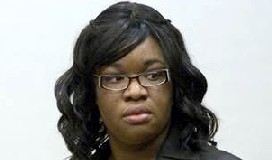 Jessica Tata
Murderer · USA · 2011
Jessica Tata was a Houston home day care owner who fled to Nigeria after a fire…
4 victims
Jessica Tata
Murderer · USA · 2011
Jessica Tata was a Houston home day care owner who fled to Nigeria after a fire…
4 victims
 Amanda Bennett
Murderer · USA · 2011
Amanda Bennett was an Indiana woman who shot her three children and set the fam…
3 victims
Amanda Bennett
Murderer · USA · 2011
Amanda Bennett was an Indiana woman who shot her three children and set the fam…
3 victims
 Amanda Hamm
Murderer · USA · 2003
Amanda Hamm was a mother of three children: Christopher Hamm, age 6; Austin Bro…
3 victims
Amanda Hamm
Murderer · USA · 2003
Amanda Hamm was a mother of three children: Christopher Hamm, age 6; Austin Bro…
3 victims
 Gordon Wardell
Murderer · United Kingdom · 1994
Gordon Wardell was the husband of Carol Wardell. Carol Wardell was the manager…
1 victim
Gordon Wardell
Murderer · United Kingdom · 1994
Gordon Wardell was the husband of Carol Wardell. Carol Wardell was the manager…
1 victim
 David Lee Sanders
Murderer · USA · 1987
David Lee Sanders (DOB 8-8-60) was sentenced to death on June 5, 1987. Sanders…
2 victims
David Lee Sanders
Murderer · USA · 1987
David Lee Sanders (DOB 8-8-60) was sentenced to death on June 5, 1987. Sanders…
2 victims
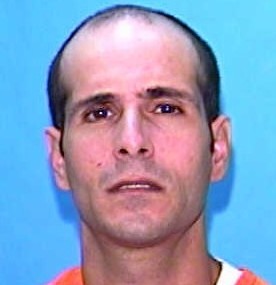 Pablo San Martin
Murderer · USA · 1991
Pablo San Martin was indicted on counts that included First-Degree Murder and o…
2 victims
Pablo San Martin
Murderer · USA · 1991
Pablo San Martin was indicted on counts that included First-Degree Murder and o…
2 victims
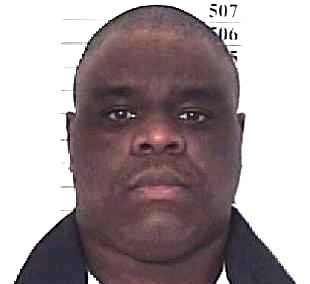 Scotty Morrow
Murderer · USA · 1994
Scotty Morrow began dating Barbara Ann Young in June 1994. Young broke up with…
2 victims
Scotty Morrow
Murderer · USA · 1994
Scotty Morrow began dating Barbara Ann Young in June 1994. Young broke up with…
2 victims
 James Allen Kinney
Murderer · USA · 1997
James Allen Kinney was convicted for the rape and murder of Keri Lynn Sherlock.…
3 victims
James Allen Kinney
Murderer · USA · 1997
James Allen Kinney was convicted for the rape and murder of Keri Lynn Sherlock.…
3 victims
 Angela Garcia
Murderer · USA · 1999
Angela Garcia was convicted in 2001 of setting a fire that killed her two young…
2 victims
Angela Garcia
Murderer · USA · 1999
Angela Garcia was convicted in 2001 of setting a fire that killed her two young…
2 victims
- Gender
- female
- Country
- USA
- Location
- Washington, District of Columbia, USA
- Date of birth
- 1974
- Age at first offence
- 33
- Characteristics
- parricide, child abuse, torture
- Victim profile
- Her four daughters, Aja Fogle, 5, N'Kiah Fogle, 6, Tatianna Jacks, 11, and Brittany Jacks, 17
- Method of murder
- Strangulation - Stabbing with knife
- Date(s) of murder
- Summer 2007
- Years active
- 2007
- Date of arrest
- January 9, 2008
- Status
-
Imprisoned
Sentenced to 120 years in prison on December 18, 2009
Case details
Banita Jacks was a Washington, DC resident convicted of murdering her four daughters. The daughters ranged in age from 5 to 17 years old.
Jacks was convicted of felony murder of all four girls, child cruelty towards all four girls, and first-degree murder of the younger three girls. She was acquitted of first-degree murder in the death of her oldest daughter, Brittany Jacks.
At sentencing on December 18, 2009, Judge Frederick H. Weisberg sentenced Jacks to 120 years in prison (30 years for each murder).
Timeline
- February 2007 — Nathaniel Fogle Jr. died of cancer.
- June 2007 — Tywana Richardson last saw the two youngest girls alive in the family’s living room.
- January 9, 2008 — Federal marshals arrived to serve an eviction at the home on the 4200 block of Sixth Street SE; the bodies were found and Jacks was questioned by detectives the same day.
- July 15, 2009 — Jacks’s trial began in Superior Court of the District of Columbia.
- July 29, 2009 — Judge Frederick H. Weisberg found Jacks guilty on the charges decided by the court.
- December 18, 2009 — Judge Weisberg sentenced Jacks to 120 years in prison.
Background
Jacks attended school in Charles County, Maryland. She told police she left school in the sixth grade. During trial, her mother, Mamie Jacks, said Banita dropped out in the tenth grade when she was seventeen years old and pregnant with her first child, Brittany Jacks.
Banita met Nathaniel Fogle in 2000 while working as a hairdresser. Jacks subsequently gave birth to N'Kiah and Aja Fogle. Jacks and her four daughters lived with Mamie Jacks for a short time in 2005 after being evicted. Mamie Jacks refused to allow Fogle to stay, and the family moved out when he was not allowed to remain.
The family lived in a variety of places, including a homeless shelter, before a nonprofit organization helped them move into the Washington, DC rowhouse in August 2006.
Family and neighbors described Jacks as a caring and attentive mother until the period following Nathaniel Fogle’s death in February 2007. Until Jacks’s 2008 arrest, Mamie Jacks had not seen her or the children since 2005. In court, Mamie Jacks said she had no reason to believe the children were in danger, despite a 2006 call she made to the Charles County social services department for information about the girls.
Mamie Jacks testified: "I never saw her mistreat the girls, and the girls never complained about her mistreatment."
LaShawn Ragland, a friend with whom the Jacks/Fogles lived for several months in 2006, testified about arguments between Brittany and Banita Jacks and about Banita’s punishing her oldest daughter by denying her food and isolating her from the younger girls. Ragland also testified that Jacks and Fogle often allowed their daughters Aja and N'Kiah, aged 3 and 4 years old at the time, to smoke marijuana while their parents laughed.
Jacks told investigators that the children were "possessed by demons".
The offence
Jacks lived in a Southeast Washington rowhouse with her dying children for about eight months and did not call for help.
When the bodies were found, the three younger girls were in an upstairs bedroom lined up according to age, each wearing a white t-shirt. Brittany Jacks’s body was in another upstairs bedroom, nude and lying on the floor in a pool of blood underneath a white t-shirt.
Medical examiners determined that the three younger girls had been strangled. They determined that Brittany had been stabbed repeatedly, but due to high decomposition they were unable to definitively attribute these injuries as causing the girls’ deaths.
Jacks told investigators that all four daughters had died in their sleep after unsuccessful attempts to revive them.
During interrogation, Jacks said her three youngest girls died in their sleep. In the videotaped interrogation, she called Brittany a "Jezebel" who was "possessed by demons" and said she was a bad influence on her sisters. In the videotaped interviews, she also referred to herself as Mary Magdalene and referred to her dead boyfriend as Jesus Christ. She was characterized as speaking of her children as "having demons".
Jacks quoted Brittany as saying: "I’m going to get you," and that she "I know what’s going on in there and I know what you’re doing." Jacks told detectives she did not call for help because she "didn't want to get into trouble."
Investigation
The investigation followed repeated attempts by a social worker to verify Brittany’s safety and inconsistent police reporting.
In April and May 2007, Brittany Jacks’s social worker Kathleen Lopes made repeated attempts to verify Brittany’s safety. Lopes was an employee of Booker T. Washington Charter School, where Brittany attended. On April 27, Lopes visited the Jacks home with a police officer and another school employee. Lopes testified that Banita refused to allow them inside; Lopes said she saw the two younger girls in the living room and that they appeared unkempt.
Over the next few days, Lopes made repeated calls to CFSA and to police. As a result of Lopes’s call, police sergeant James Lafranchise visited the home on April 30, 2007, and interviewed Banita Jacks in her front yard. Lafranchise did not file a report of the visit until January 9, 2008, the day the bodies were discovered. A rule requiring reports when checking on the welfare of a resident was instituted in the wake of the Jacks case.
In the initial report, Lafranchise said he had seen only the three younger girls on the visit. A follow-up report on January 13 said he "thought" he had seen Brittany as well. During the homicide investigation, he said the girls, including Brittany, appeared "clean and well fed, healthy and playful." At trial, when questioned, Lafranchise said he had not seen Brittany at the house. He said he had not been told to look for a teenager and assumed he was there to check on the three younger girls, even though he spoke with Lopes on his cell phone while he was at the Jacks home. The D.C. police department said it would conduct an internal investigation into Lafranchise and inconsistent reports.
On May 10, Lopes wrote a letter to the youth social service division of D.C. Superior Court expressing her fear that Brittany Jacks was "being held hostage." Social workers did not investigate her concerns.
In April 2009, the D.C. Office of the Inspector General released a report implicating CFSA and several other local government parties for failing to meet their obligations in the Jacks case and potentially prevent the four deaths. The Washington Post reported: "The family was supposed to receive monthly visits based on its housing placement; it never did. The school system didn't follow through when the girls dropped out of school. Police didn't fully investigate when they were called to the house. And health-care providers did not follow up on things that should have been red flags, according to the report." The report also faulted a lack of coordination and communication between agencies involved with the family.
Mayor Adrian Fenty fired six employees of Washington’s Child and Family Services Agency four days after the bodies were found. Fenty said they "just didn't do their job." In a statement, Mayor Fenty said: "The loss of these four young girls will never be forgotten. My administration will not rest until we have done everything humanly possible to prevent this type of tragedy in the future."
Traci Hughes, a police spokeswoman, said the Police Department began an investigation into Lafranchise’s conduct.
Arrest and interrogation
On January 9, 2008, federal marshals came to Jacks’s home to serve her with eviction. Jacks came to the door wearing only a white t-shirt and refused to allow the marshals inside. The marshals forced their way past the door.
Marshal Nicholas Garrett said he could immediately smell an odor of "rotting meat, like stink bait" which he thought was "rotten or spoiled food."
The marshals found bodies in two upstairs bedrooms. After discovery, the marshals ordered Jacks out of the house and handcuffed her.
The trial judge referenced Jacks’s videotaped eight-hour interrogation with detectives, during which she said her three youngest girls died in their sleep.
Jacks said Brittany was pounding on the walls and that eventually she found Brittany lying on her back on the hard-wood floor with her mouth open. Jacks told detectives she saw her from the doorway but did not go inside the room. She stated that she put all the furniture outside for trash pickup because the demons had infiltrated everything in the house and said: "Spirits and demons have a different smell, so little by little I had to get rid of" everything.
When Detectives Darryl Richmond and Mitchell Credle asked Jacks how Brittany died, she said she would rather talk to her attorney. Richmond told Jacks: "You were getting used to their dead bodies now. They were like furniture. You let them turn into skeletons,".
Trial
Jacks’s trial began on July 15, 2009 in Superior Court of the District of Columbia. She was charged with 12 counts, including premeditated first-degree murder, felony murder, and cruelty to children towards each of her four daughters. She pleaded not guilty and rejected an insanity defense.
The trial was conducted without a jury because Jacks waived her right to a jury trial. Judge Frederick H. Weisberg served as the sole arbiter.
Judge Weisberg found Jacks guilty on all charges except the first-degree murder of Brittany Jacks. The verdict was decided after two days of reviewing the evidence. Weisberg made specific findings about the killings, including concluding that Jacks intended to kill her children.
In opening statements:
- Assistant U.S. Attorney Deborah Sines said: "Her secret was the rotting bodies of her daughters. And that secret unraveled when the marshals arrived on Jan. 9, 2008."
- Lloyd Nolan, one of Jacks’s public defenders, said: "This was a tragic event," and also said: "But Ms. Jacks was in no way responsible for the death of her children."
- Nolan said: "We didn’t get the result we wanted for our client, and so there’s no relief" in the trial’s outcome.
- Sines said: "She wouldn’t even allow her own teenager out to use a bathroom."
- Sines said: "By April 3, no one talked to Brittany again."
- Sines said: "The secret was the rotting bodies of her daughters." (As stated in Sines’s opening quotation above.)
Judge Weisberg rejected a defense motion questioning Jacks’s earlier refusal to use an insanity defense. Weisberg also rejected the defense suggestion that the sentences should run concurrently.
During trial, a police sergeant testified about a report recalling seeing Brittany when he had not.
Jacks did not take the witness stand during the trial. During questioning by detectives and in video playback, she described Brittany as possessed by demons and a bad influence on her sisters, and she provided other statements about the deaths.
In discussing the evidence, Judge Weisberg viewed graphic crime scene photos and interrupted attorneys during closing arguments to ask questions.
The verdict included:
- guilty on felony murder of all four girls
- guilty on child cruelty towards all four girls
- first-degree murder conviction for the younger three girls
- acquittal of first-degree murder of Brittany Jacks
Judge Weisberg explained that he agreed with prosecutors that the three youngest girls were strangled, but medical examiners could not definitively determine strangulation as the cause of death due to decomposition. Weisberg disagreed with prosecutors’ argument that Jacks planned to kill Brittany. He found Brittany died first, about May or June 2007, and prosecutors did not definitively establish that her death resulted from stab wounds due to decomposition-related uncertainty and other evidentiary issues.
Sentencing
On December 18, 2009, Judge Frederick H. Weisberg rejected a defense motion calling into question Jacks’s earlier refusal to use an insanity defense and rejected the defense suggestion that the sentences should run concurrently.
Appeals
Peter Krauthamer, one of Jacks’s attorneys, said he planned to appeal.
Jacks’s attorneys planned to submit psychiatric records to attempt to show she was insane and have that factored into sentencing, including possibly having her committed to a mental facility. The decision was described as being up to Weisberg.
Outcome
Jacks was convicted on twelve charges at trial, with acquittal on the first-degree murder of Brittany Jacks and guilt on other counts including felony murder and child cruelty.
Aftermath
A civil lawsuit had been filed by the families against the District for failing to prevent the deaths of the children.
The foreclosed home was put up for sale in mid-2008. Its assessed value was $220,610, and its listed price was $163,000 in September 2008, dropping to $90,900 by February 2009. The home went up for bank auction in March 2009.
Jacks had filed paternity suits against three men, two of which were successful, in Charles County; court records indicated both men failed to pay required child support.
During the months leading up to the discovery of the bodies, neighbors and family reported changes including Jacks moving furniture into the backyard, losing weight, and telling another neighbor she had cancer. In the summer, neighbors smelled a foul odor in the area. Tywana Richardson delivered Social Security checks to Jacks twice a month and last saw the two youngest girls in the living room in June 2007. Richardson had not seen Brittany Jacks for several months.
Brittany Jacks’s boyfriend Leepoy Kelly testified that he saw Brittany for the last time in March 2007; Brittany seemed "a little sad." Kelly said Brittany stopped responding to his calls and messages to her cellphone and her MySpace account.
Fogle’s mother said she came by the Jacks home several times after her son’s funeral to see her grandchildren, but Jacks either would not let her in or called and told her not to return.
In March 2007, a neighbor testified that Jacks took the neighbor’s daughter to McDonald’s along with Jacks’s own children, and the neighbor said Jacks’s daughters were always "clean and their hair was always done." A month later, the neighbor saw Jacks again and said the children were wearing white t-shirts and rags on their head. The neighbor testified that Jacks said the family’s food stamps had run out and that she was reluctant to apply for more due to paperwork.
In May 2007, Jacks moved all the furniture from her house into the backyard and started losing weight. Jacks told another neighbor, whom she often asked for water and cigarettes, that she had cancer.
Nona Richardson, a spokeswoman for the D.C. Public Charter School Board, said Jacks’s three younger daughters attended the Meridian Public Charter School in Washington consistently until March, when they stopped showing up. Richardson said the school tried to contact Jacks by mail and telephone, and officials later visited and were told Jacks wanted to withdraw the children and home-school them. The children were officially withdrawn in mid-March.
D.C. Child and Family Services tried to investigate a complaint about the family but investigators could not make face-to-face contact and believed the family had moved to Maryland; CFSA spokeswoman Mindy Good said this. Norris West, a spokesman for the Maryland Department of Human Resources, said D.C. officials asked Charles County social services in June to open a case. West said county officials were not able to locate the family and it was unclear whether they had moved to Charles County.
Other details
At the time Jacks was charged in January 2008, Magistrate Judge Karen Howze ordered her held without bond. Her attorneys had argued for release to an adult relative pending trial. The maximum sentence described was life in prison if convicted. The charging documents identified the children as Brittany Jacks, 17; Tatianna Jacks, 11; N'Kiah Fogle, 6; and Aja Fogle, 5.
Medical examiner Dr. Marie-Lydie Pierre-Louis said the bodies were in the apartment more than 15 days "based on the insects that were found there."
FoxNews.com reported that one marshal managed to sidestep Jacks and spotted the bodies of three children on the floor of an unfinished bedroom, and then found the body of a teenager on the floor of a bare room. FoxNews.com reported that authorities estimated the four girls had been dead for at least two weeks. FoxNews.com reported that Jacks told police the deaths occurred before a utility turned off her electricity, which prosecutors said was in September. FoxNews.com reported that Jacks told investigators she had not fed her children for a substantial time before their deaths. FoxNews.com reported that the three children were dressed in white T-shirts when their bodies were found, that Brittany’s body was nude but partially covered by a white T-shirt, and that an object that appeared to be a steak knife lay nearby with dried maroon liquid around the body.
Judge Weisberg later scheduled sentencing on Oct. 16 in connection with earlier trial reporting, and it was stated that Jacks faced possible life in prison without parole.
Assistant U.S. Attorney Michelle Jackson said she was "pleased with the verdict." Assistant U.S. Attorney Deborah Sines called the case a "very sad case" and said: "We could not bring these lives back." Peter Krauthamer said: "I feel very bad for Ms. Jacks."


Spotted an error, or have more information about this case?