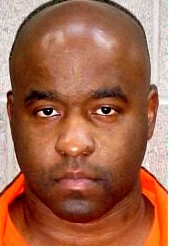
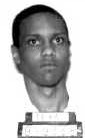
Aryon Williams
Murderer Brian Kevin Rosenfeld
Murderer · USA · 1985
Brian Kevin Rosenfeld Brian Kevin Rosenfeld was sentenced to three concurrent l…
23 victims
Brian Kevin Rosenfeld
Murderer · USA · 1985
Brian Kevin Rosenfeld Brian Kevin Rosenfeld was sentenced to three concurrent l…
23 victims
 Yahweh ben Yahweh
Murderer · USA · 1980
Yahweh ben Yahweh was born and legally named Hulon Mitchell Jr. (October 27, 19…
23 victims
Yahweh ben Yahweh
Murderer · USA · 1980
Yahweh ben Yahweh was born and legally named Hulon Mitchell Jr. (October 27, 19…
23 victims
 Russell Ellwood
Murderer · USA · 1991
Russell Ellwood was a former taxi driver. Authorities suspected him of killing…
20 victims
Russell Ellwood
Murderer · USA · 1991
Russell Ellwood was a former taxi driver. Authorities suspected him of killing…
20 victims
 Robert Martines Perez
Murderer · USA · 1994
Name: Robert Martines Perez · Other name used in proceedings: Robert Martinez P…
15 victims
Robert Martines Perez
Murderer · USA · 1994
Name: Robert Martines Perez · Other name used in proceedings: Robert Martinez P…
15 victims
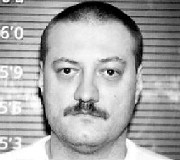 Thomas Schiro
Murderer · USA · 1981
Thomas Schiro was sentenced to death on October 2, 1981. Schiro was serving a 3…
1 victim
Thomas Schiro
Murderer · USA · 1981
Thomas Schiro was sentenced to death on October 2, 1981. Schiro was serving a 3…
1 victim
 Dayva Cross
Murderer · USA · 1999
Dayva Michael Cross was sentenced to death for the stabbing deaths of his wife,…
3 victims
Dayva Cross
Murderer · USA · 1999
Dayva Michael Cross was sentenced to death for the stabbing deaths of his wife,…
3 victims
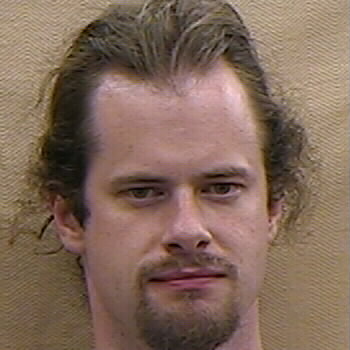 James Upchurch
Murderer · USA · 1988
James Bartlett Upchurch III (born August 17, 1968) was an American man convicte…
1 victim
James Upchurch
Murderer · USA · 1988
James Bartlett Upchurch III (born August 17, 1968) was an American man convicte…
1 victim
- Gender
- male
- Country
- USA
- Location
- Pinal County, Arizona, USA
- Date of birth
- August 24, 1966
- Age at first offence
- 24
- Characteristics
- abuser
- Victim profile
- His former girlfriend Rita DeLao
- Method of murder
- S hot three times, beat on the head with a sharp instrument, and repeatedly run over with a car
- Date(s) of murder
- January 27, 1990
- Years active
- 1990
- Date of arrest
- —
- Status
-
Sentenced to death
Sentenced to death on April 7, 1993
Case record: Aryon Williams
Background
Aryon Williams was convicted in Superior Court (Pinal) of first-degree murder, attempted first-degree murder, and armed robbery, and was sentenced to death for the murder. This was his automatic, direct appeal to the Arizona Supreme Court.
The defendant was convicted for the first degree murder of his former girlfriend, Rita DeLao.
The offence
On January 28, 1990, the Pinal County Sheriff's Office was dispatched to Ellis Road, approximately 1 mile west of Sunland Gin Road, after a hunter discovered a body.
The victim’s Arizona’s driver’s license was found in the dirt near her body, and she was identified as Rita DeLao.
Examination of the crime scene indicated that a struggle took place near the west side of the road. The victim fell over a berm down to a pond. Drag marks indicated that the victim was dragged from the pond to where her body was discovered.
The victim was shot three times, beaten on the head with a sharp instrument, and repeatedly run over with a car. Her body was broken, crushed, torn, scraped, shot, dragged, beaten, bruised, and she suffered internal injuries consisting of pierced and torn organs. One gunshot completely fractured her right femur, her ribs were fractured in at least thirty-one places, and she suffered a broken nose, a fractured breast bone, fractured collar bones, and massive fractures of the pelvic bone. She was run over by an automobile at least twice.
Her helplessness was found. The Court found that after the victim was shot and beaten, she was helpless and unable to defend herself against further attack.
The victim’s car was found parked in the Casa Grande High School maintenance yard. Blood was found on the left rear wheel cover, rear tire whitewall, side molding, the front wheel cover, and the left side front spoiler.
There was also a later robbery and attempted murder involving Norma Soto. Soto survived and identified Williams as her attacker. Soto testified at trial that she was shot several times during a robbery of the store, and that she had been shot after telling her to stop spreading the story that he had killed DeLao. Williams was convicted in a consolidated trial for the murder of DeLao, the armed robbery of Soto, and the attempted murder of Soto.
Investigation
During evidence securing from the victim’s car, an officer noticed someone writing down the license number of the vehicle. This person identified himself as Aryon Williams. Williams told the officer he wanted to assist them in finding his lost girlfriend.
Williams became a suspect after the Phoenix Police Department reported that several of the victim’s friends related that Williams was abusive toward the victim.
Arrest
Police soon arrested Williams for both the murder of DeLao and the robbery/attempted murder of Soto.
Trial
Parties and roles
Presiding Judge: Robert R. Bean Prosecutor: Dwight Callahan
Start of trial and verdict
Start of Trial: May 4, 1992 Verdict: June 23, 1992
Convictions
The defendant was convicted in 1992 of the murder of DeLao, armed robbery, and the attempted murder of Soto.
Evidence at trial (murder of DeLao)
Michelle Deloney, Williams’ then girlfriend, testified that Williams confessed to her he murdered DeLao. Deloney testified about Williams’ confessions. According to Deloney, Williams confessed on Monday that he was with several friends who killed DeLao, and said he had only kicked DeLao while his friends killed her.
Williams denied ever confessing involvement in DeLao’s death.
Also on Monday, Williams drove Deloney to the place where DeLao’s car had been abandoned, less than a mile from Williams’ apartment in Casa Grande. As Williams approached the car, a police officer processing the car stopped them, and Williams told the officer he thought it was DeLao’s car.
Deloney testified that two weeks after the murder Williams told her he had killed DeLao, admitting that he shot her, hit her with an iron, and ran over her repeatedly with his car. Deloney further testified that Williams told her that if she ever told anyone, he would kill her.
The State also presented evidence that, prior to the murder, Williams had burned DeLao’s car, shot at her apartment, and slashed her tires.
Williams testified in his own defense and denied any involvement in either criminal episode.
Williams did not have a criminal record. The State introduced evidence that he had abused crack cocaine and become physically abusive to Deloney. On the stand, Williams denied using drugs on the day of the murder.
Evidence at trial (robbery/attempted murder of Norma Soto)
Norma Soto, a Circle-K convenience store clerk, testified at trial and identified Williams as her attacker. Soto testified that she was shot several times during a robbery of the store and survived. She testified that Williams shot her after telling her to stop spreading the story that he had killed DeLao.
Sentencing
Sentencing: April 7, 1993
Aggravating circumstances
The Court found:
- (F)(2) Prior Violent Felony — upheld in part, reversed in part.
- (F)(6) Especially heinous, cruel, and depraved — upheld.
For (F)(2), the trial court used the defendant’s convictions of armed robbery and attempted murder, in connection with the current case, as factors. The Court affirmed use of the armed robbery conviction because armed robbery, by its terms, was held to be a felony that involved the use or threat of violence on another person. The Court concluded that the attempted murder conviction could not support an (F)(2) finding because attempted first degree murder did not necessarily involve the use or threat of violence on another person under the terms of the statute. The Court stated the attempted murder charge was irrelevant because the armed robbery conviction supported the (F)(2) finding. The Court cited cases stating that convictions entered prior to a sentencing hearing may be considered regardless of the order in which underlying crimes occurred or the order in which convictions were entered. (F)(2) was properly applied for the armed robbery conviction.
For (F)(6), the Court upheld:
- Heinous or Depraved: Upheld.
- Gratuitous Violence: Found.
- Helplessness: Found.
The Court stated:
“Unquestionably, this murder involved gratuitous violence. Rita's body was broken, crushed, torn, scraped, shot, dragged, beaten, and bruised. In addition to being shot three times, Rita suffered a savage beating with a hard object, resulting in blunt force injuries covering virtually her entire upper body. Her internal injuries, consisting of pierced and torn organs, were numerous and severe. One of the gunshots completely fractured Rita's right femur, her ribs were fractured in at least thirty-one places and she suffered a broken nose, a fractured breast bone, fractured collar bones, and massive fractures of the pelvic bone. She was run over by an automobile at least twice. The number and nature of Rita's injuries belie any claim that defendant did not inflict violence in excess of that necessary to kill.”
The Court found helplessness. It found that after the victim was shot and beaten, she was helpless and unable to defend herself against further attack.
Mitigating circumstances
The Court found the following mitigating circumstances existed but were insufficiently substantial to call for leniency:
- Family Ties
- Lack of Criminal History
- Good Character
The Court found that the defendant failed to prove by a preponderance of the evidence the existence of the following mitigating circumstances:
- (G)(1) Significant Impairment
- (G)(2) Duress
- Age [23 years old at time of murder]
- Victim's Actions
- Recommendation for leniency from victim's sister [not related to the defendant, his character, or the circumstances of the murder]
- Race
Motion for mental health expert
At sentencing, Williams sought to have the state provide a mental health expert to explore whether his drug usage had affected his mental state when he killed DeLao. The trial court denied this motion, and the Arizona Supreme Court upheld the decision without discussion at that time.
Appeals
This case proceeded to the Arizona Supreme Court on direct appeal, and the convictions and sentences were affirmed.
Procedural posture in federal habeas proceeding
Williams later pursued federal habeas proceedings. He challenged:
- concealment of partially exculpatory evidence in violation of Brady v. Maryland, 373 U.S. 83 (1963),
- failure of the state court to consider mitigating evidence at sentencing in violation of Lockett v. Ohio, 438 U.S. 586 (1978) and Eddings v. Oklahoma, 455 U.S. 104 (1982).
Published opinions
State v. Williams (Aryon), 183 Ariz. 368, 904 P.2d 437 (1995). State v. Aryon Williams, 183 Ariz. 368, 904 P.2d 437 (1995).
Brady-related factual development
In 1997, while Williams’ federal petition was pending, an Assistant Attorney General for Arizona turned over a packet of jailhouse letters written before trial that suggested that Williams was not the actual murderer. The district court stayed proceedings so that Williams could exhaust a Brady claim based on the jailhouse letters.
The state court refused to grant a request for a first extension of time to prepare a postconviction petition. Williams was therefore unable to exhaust state remedies. The district court later denied the Brady claim on the merits.
The letters purported to have been written from jail in 1991 by a woman named Beverly Sweat, to Detective Tom Solis, the lead investigator in the DeLao murder. Solis denied ever having seen the letters but had not testified or provided an oath statement in the text provided.
In the letters, Sweat expressed the desire to provide information about a murder in return for early release from jail. Sweat’s letters alleged information obtained from a fellow inmate, Yolanda McKaney, and suggested that Williams had paid another man, Patrick Fields, to do the job. The jailhouse letters suggested that McKaney had seen a bloodied Fields on a morning around the time of the murder.
According to the letters, Sweat said:
- she would have Yolanda McKaney “tell [her] the story about Rita and Patrick Fields,”
- “Aaron” (apparently a reference to petitioner Aryon Williams) was “going to get” Fields and Milton Barnett,
- McKaney told Sweat that the day of the DeLao murder in Casa Grande, she saw Fields “all bloody” who stated that “Aaron” had paid him a thousand dollars to kill DeLao,
- Fields told McKaney that he had cut DeLao’s eyes out and run over her with a moped,
- Fields burned the cloths,
- Sweat stated she knew “Aaron is guilty of some part of it,” and promised additional information if she obtained early release.
Counsel for Williams investigated based on the Sweat letters and in 1999 obtained declarations from three people mentioned in the letters: McKaney, Barnett, and Fields.
- McKaney’s declaration stated that around the time of DeLao’s murder, she saw Fields in a park in Casa Grande, less than a mile from where police discovered DeLao’s abandoned car the morning after the murder, and she saw a bloodied Fields throw a bloody shirt into a dumpster and burn it.
- Barnett’s declaration stated that around this same time, and a few blocks from where McKaney saw Fields, Barnett saw a shirtless Fields throw something into a dumpster. Barnett reported that he shared a cigarette with Fields, noticed blood on Fields’ clothing, asked Fields about the blood, and Fields fled. Barnett said he learned of DeLao’s murder the next day.
- Fields’ declaration stated he was in county jail at the time of DeLao’s murder, but the State later conceded Fields was not in custody at that time.
In the district court, Fields was described as having a history of sexual assaults against women. Williams admitted he knew Sweat, McKaney, Barnett, and Fields.
The Arizona courts never considered the merits of the Brady claim because the Superior Court denied Williams an extension of time to file his state petition, finding he failed to show good cause under Arizona Rule of Criminal Procedure 32.4(c). The Arizona Supreme Court then summarily denied review.
The district court granted discovery related to the Sweat letters and declined to order an in-court hearing, finding it appropriate to consider documentation and review written evidence rather than hear witnesses. The district court then denied the Brady claim on the merits, holding Williams was not prejudiced because the letters did not contain material information and because none of the new information directly impeached or undercut evidence sufficient to convict.
The district court noted that the letters provided further evidence that Williams was culpable by suggesting he had paid Fields to kill DeLao, and it pointed to inconsistencies in the declarations and that the information originated in jailhouse discussions.
A certificate of appealability (“COA”) was issued on the Brady claim and the claim regarding a mental health expert at sentencing. The analysis also addressed issues regarding whether Brady claim was procedurally barred and whether de novo review applied because the state court denial was on an inadequate procedural ground.
Outcome on Brady claim (federal appellate)
The appellate disposition included:
- remand of the Brady claim for an in-court evidentiary hearing (as part of the panel’s remand instructions),
- and other relief tied to sentencing mitigation.
The federal appellate disposition described a remand for the district court to decide, on the basis of an appropriate record, whether witnesses could provide material evidence favorable to Williams at trial and to determine whether suppressed Brady material violated due process rights.
Other details
Timeline
- January 28, 1990 — Pinal County Sheriff's Office was dispatched to Ellis Road after a hunter discovered a body; the victim’s body showed a struggle, was shot three times, beaten, and repeatedly run over, with the victim’s car later found parked in the Casa Grande High School maintenance yard.
- May 4, 1992 — Start of trial.
- June 23, 1992 — Verdict.
- April 7, 1993 — Sentencing to death.
- 1997 — While federal proceedings were pending, an Assistant Attorney General for Arizona turned over jailhouse letters to defense counsel.
- 2002 — Federal proceedings were placed in abeyance to allow exhaustion of a Brady claim based on the Sweat letters.
- 1999 — Declarations were obtained from McKaney, Barnett, and Fields as part of investigation based on the Sweat letters.
- 2009 — Argued and submitted in the United States Court of Appeals for the Ninth Circuit under No. 07-99013 (Nov. 5, 2009).
- October 26, 2010 — Date shown for the proceeding “Before MARY M. SCHROEDER, MARSHA S. BERZON and SANDRA S. IKUTA, Circuit Judges.”
Parties named in federal proceeding (as described)
- Aryon Williams (petitioner-appellant)
- Charles L. Ryan (respondent-appellee)
- Mary M. Schroeder (Circuit Judge)
- Marsha S. Berzon (Circuit Judge)
- Sandra S. Ikuta (Circuit Judge)
- Julie Hall (Oracle, AZ) for petitioner-appellant, Aryon Williams
- Jeffrey A. Zick (Phoenix, AZ) for respondent-appellee, Charles L. Ryan
Sentencing mitigation and mental health expert issues (federal appellate discussion)
At sentencing, Williams sought a mental health expert to explore whether drug usage affected his mental state when he killed DeLao. The district court found no Ake violation on a mental health expert request.
Williams also offered crack cocaine addiction as a mitigating factor at sentencing. The Arizona Supreme Court refused to consider it as a mitigating factor unless Williams showed he was under the influence of drugs at the time of the murder, applying the rule that “Without a showing of some impairment at the time of the offense, drug use cannot be a mitigating circumstance of any kind.” The appellate discussion addressed whether that refusal violated Lockett, Eddings, and related Supreme Court precedent.
The appellate disposition included vacating the death sentence and remanding for further sentencing in conformance with applicable law.
Williams’ drug use and character evidence at trial (as described)
The State introduced evidence that Williams abused crack cocaine and became physically abusive to Deloney. The text also described that Williams denied using drugs on the day of the murder, and that at sentencing he presented testimony from Deloney and a friend Raymundo Mendez that he had been nonviolent until he started to abuse crack.
Admission of relationships
The text stated that Williams admitted he knew Sweat, McKaney, Barnett, and Fields.
Video of related content omitted
No additional media content appeared as factual detail beyond the legal record described.
Spotted an error, or have more information about this case?