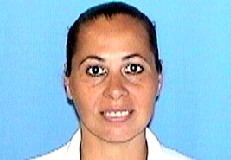
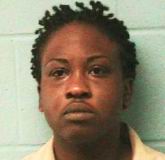
Marilyn Mulero
Murderer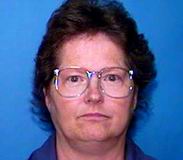 Bobbie Sue Terrell
Murderer · USA · 1984
Bobbie Sue Dudley Terrell was a Pinellas County nurse and worked as the night s…
12 victims
Bobbie Sue Terrell
Murderer · USA · 1984
Bobbie Sue Dudley Terrell was a Pinellas County nurse and worked as the night s…
12 victims
 Megan Huntsman
Murderer · USA · 1996
Megan Huntsman was 40 at sentencing. She was a mother of three children who wer…
6 victims
Megan Huntsman
Murderer · USA · 1996
Megan Huntsman was 40 at sentencing. She was a mother of three children who wer…
6 victims
 Angela Johnson
Murderer · USA · 1993
Angela Jane Johnson was convicted in federal court of aiding and abetting the m…
5 victims
Angela Johnson
Murderer · USA · 1993
Angela Jane Johnson was convicted in federal court of aiding and abetting the m…
5 victims
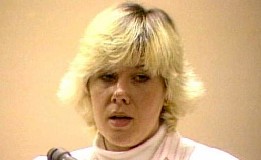 Catherine May Wood
Murderer · USA · 1987
Catherine May Wood was an American caregiver who worked at the Alpine Manor Nur…
5 victims
Catherine May Wood
Murderer · USA · 1987
Catherine May Wood was an American caregiver who worked at the Alpine Manor Nur…
5 victims
 Michele Kalina
Murderer · USA · 1996
Michele Kalina pleaded guilty to murder for one of five infants she initially w…
5 victims
Michele Kalina
Murderer · USA · 1996
Michele Kalina pleaded guilty to murder for one of five infants she initially w…
5 victims
 Amy Bishop
Murderer · USA · 1986
Amy Bishop — biology professor and perpetrator · James Anderson — Bishop’s husb…
4 victims
Amy Bishop
Murderer · USA · 1986
Amy Bishop — biology professor and perpetrator · James Anderson — Bishop’s husb…
4 victims
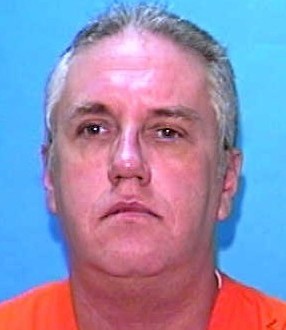 Jim Eric Chandler
Murderer
Jim Eric Chandler was convicted in the Nineteenth Judicial Circuit, Indian Rive…
1980 victims
Jim Eric Chandler
Murderer
Jim Eric Chandler was convicted in the Nineteenth Judicial Circuit, Indian Rive…
1980 victims
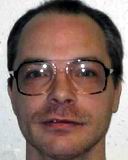 Michael Sonner
Murderer · USA · 1993
Michael Sonner was convicted of first-degree murder and other offenses and was…
3 victims
Michael Sonner
Murderer · USA · 1993
Michael Sonner was convicted of first-degree murder and other offenses and was…
3 victims
 Melissa Webb
Murderer · USA · 2011
Melissa Webb was a Lee County woman who later admitted to the murder of her ex-…
1 victim
Melissa Webb
Murderer · USA · 2011
Melissa Webb was a Lee County woman who later admitted to the murder of her ex-…
1 victim
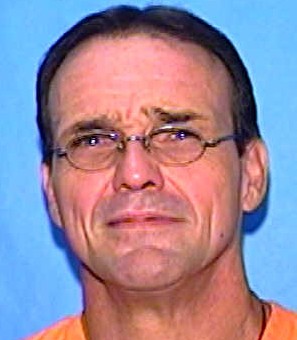 Michael Gordon Reynolds
Murderer · USA · 1998
Michael Gordon Reynolds had a prior dispute with Danny Ray Privett over a trail…
3 victims
Michael Gordon Reynolds
Murderer · USA · 1998
Michael Gordon Reynolds had a prior dispute with Danny Ray Privett over a trail…
3 victims
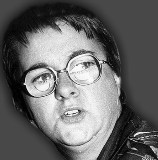 Carol Bundy
Murderer · USA · 1980
Carol Bundy was an American serial killer. She was known as Carol M. Bundy and…
2 victims
Carol Bundy
Murderer · USA · 1980
Carol Bundy was an American serial killer. She was known as Carol M. Bundy and…
2 victims
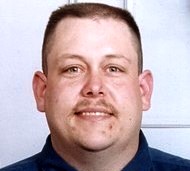 Charles Dalton
Murderer · USA · 2009
Charles L. Dalton Sr. (38) killed his wife, his teenage son, and his young daug…
3 victims
Charles Dalton
Murderer · USA · 2009
Charles L. Dalton Sr. (38) killed his wife, his teenage son, and his young daug…
3 victims
- Gender
- female
- Country
- USA
- Location
- Chicago, Cook County, Illinois, USA
- Date of birth
- September 2, 1970
- Age at first offence
- 22
- Characteristics
- revenge, member of the "texas seven
- Victim profile
- Hector Reyes, 21, and Jimmy Cruz, 22
- Method of murder
- Shooting
- Date(s) of murder
- May 12, 1992
- Years active
- 1992
- Date of arrest
- Next day
- Status
-
Sentenced to death
Resentenced to life in prison without the possibility of parole on November 24, 1998 after death sentence on November 12, 1993 was vacated; convictions affirmed
Case identification
Marilyn Mulero was charged in Cook County, Illinois, with four counts of murder, two counts of conspiracy to commit murder, and one count of unlawful use of a firearm by a felon.
Background
Marilyn Mulero belonged to the Maniac Latin Disciples street gang. She stated she became angry about the murder of a friend named Mudo, who was described as “a deaf mute from her neighborhood,” and she agreed to join Jackie Montanez and Madeline Mendoza to kill some Latin Kings.
The offence
On May 12, 1992, Jimmy Cruz and Hector Reyes were murdered in Humboldt Park, Chicago, Illinois, at approximately 12:15 a.m.
In defendant’s statement, she indicated that she and Jacqueline Montanez and Madeline Mendoza decided to shoot some members of the Latin Kings, a rival gang, to avenge the death of Mudo, who was killed by Latin Kings a couple of days earlier. Defendant stated that she obtained a small silver automatic gun to carry out the shootings, borrowed her brother’s car, and drove Montanez and Mendoza to look for some Latin Kings. She said they encountered Cruz and Reyes, who were Latin Kings, in another car. Defendant stated that the group agreed to go to Humboldt Park and that she intended to kill Cruz and Reyes in the park.
At the park, the group walked to the area of a public bathroom. Defendant stated that Montanez went into the bathroom and shot Reyes with the gun defendant had provided while defendant remained outside. Defendant stated that Montanez left the bathroom and gave the gun to Mulero, and defendant then shot Cruz in the back of the head. Defendant stated that defendant, Montanez, and Mendoza then drove away. Both victims died of gunshot wounds.
The deaths were also described at the capital sentencing eligibility phase. John Dolan, a Chicago police detective, testified that he was dispatched to Humboldt Park on May 12, 1992, to respond to a report of a shooting and found Cruz and Reyes shot to death. Dolan observed Cruz lying on the sidewalk with a .25-caliber cartridge casing lying within two feet of his body. Reyes was lying on the floor of a restroom and a bullet was located three feet from his head. Dr. Nancy Jones, a forensic pathologist and assistant medical examiner for Cook County, testified that Jimmy Cruz and Hector Reyes both died as a result of gunshot wounds to the back of the head. She determined that Reyes was killed by a bullet that entered the center part of the back of his head and exited through his left eye lid, opining that the muzzle of the gun was held directly in contact with Reyes’ head at the time the bullet was fired. Regarding Cruz, Dr. Jones found that he was killed by a bullet that entered the lower part of the back of his head and opined that the gun was probably held within one or two inches of Cruz’s head at the time it was fired.
Ivette Rodriguez testified about events before and after the murders. She testified that on May 11, 1992, at about 11 or 11:30 p.m., she saw defendant driving a white car with Montanez and Mendoza inside and that they invited her to go “make a hit with them and roll on some flakes,” meaning to kill or fight a rival gang, the Latin Kings; she testified she refused. Approximately 90 minutes later, she again saw defendant, Montanez, and Mendoza and testified that defendant told her “we got 'em, we got 'em ... we got the Kings.” When Rodriguez called defendant a liar, Montanez pointed to the back of her head and said “yeah we did ... I shot him in the back of the head.” Rodriguez testified that late in the evening on May 12, 1992, she informed police about the murders following her arrest for possession of a controlled substance.
Investigation
John Dolan testified that he responded to a shooting report and found Cruz and Reyes shot to death. Dr. Nancy Jones provided forensic testimony about the gunshot wounds, including gun placement described by entrance wound shape and likely distance.
Ivette Rodriguez testified that on May 13, 1992, she accompanied police in an undercover surveillance of a funeral home, where defendant, Montanez, and Mendoza were attending a wake for Mudo. Rodriguez identified defendant and Montanez, and police then arrested defendant and Montanez.
Detective Ernest Halvorsen testified about events after defendant’s arrest. Halvorsen stated he took part in the arrest of defendant and Montanez after Rodriguez identified them. He testified that Mendoza was arrested two days later and that he placed Montanez and defendant in separate interview rooms, giving defendant Miranda warnings following his interview with Montanez. Halvorsen testified that defendant agreed to speak and initially denied knowing anything about the murders. Halvorsen testified that he informed defendant that Montanez gave a complete statement describing defendant’s involvement, after which defendant agreed to give a statement. Halvorsen testified that defendant told him she was a member of the Maniac Latin Disciples street gang and that she, Montanez, and Mendoza talked about obtaining revenge against the Latin Kings for murdering Mudo. He testified that they decided to “go on a mission ... and shoot some Kings,” obtained a small silver automatic pistol, borrowed a white car from her brother, and drove to the Latin Kings neighborhood to shoot any Latin King they saw. Halvorsen testified that Cruz and Reyes were invited to “party” in Humboldt Park, and defendant told him she and the others knew they were going to kill Cruz and Reyes when they arrived. Halvorsen testified that Montanez walked into the bathroom with Reyes and shot him in the back of the head, Montanez handed the gun to defendant, and defendant then walked up behind Cruz and shot him in the back of the head. Halvorsen testified about defendant’s demeanor during her statement as arrogant and cocky, proud of herself for performing a mission for her “nation,” and that he did not find defendant remorseful.
John Dillon, an assistant State’s Attorney for Cook County, testified about the statement process. He stated that when he arrived at the police station on May 14, 1992, he spoke first with Montanez, then spoke with defendant after advising Miranda warnings. Dillon testified defendant agreed to give a court-reported statement. He testified defendant indicated there was a celebration after the murders and that her demeanor was very calm, in control, and without indication of remorse; he testified it appeared defendant was very proud of what she had done.
At the eligibility phase, it was stipulated that James Tracy, a firearms examiner with the Chicago police department crime laboratory, would testify that the bullet taken from Cruz’s body and the bullet found next to Reyes’s body were .25-caliber bullets, and that the cartridge casing found near Cruz’s body was a .25-caliber cartridge. A certified copy of defendant’s indictment and conviction following her guilty plea was also admitted into evidence.
Arrest
Defendant was arrested on May 13, 1992, after Rodriguez identified her and Montanez during the undercover surveillance of a funeral home.
Trial
Charges and plea
The Illinois Supreme Court opinion described that defendant was charged by indictment in Cook County with four counts of murder (720 ILCS 5/9--1(a)(1), (a)(2) (West 1992)), two counts of conspiracy to commit murder (720 ILCS 5/8--2, 9--1 (West 1992)), and one count of unlawful use of a firearm by a felon (720 ILCS 5/24--1.1(a) (West 1992)). The charges arose out of the May 12, 1992 shooting deaths of Jimmy Cruz and Hector Reyes.
Defendant subsequently pled guilty to the four counts of murder. The trial court accepted the guilty pleas and entered findings of guilt on all four counts of murder. Finding that certain counts merged with others, the trial court entered judgment on two counts of intentional murder.
Motion to suppress and its denial
On February 26, 1993, defendant filed a motion to suppress her May 14, 1992 statement to the police. Defendant alleged she was not properly informed of her Miranda rights, did not understand those rights, was not provided with an attorney after requesting to speak with one, and that the police psychologically coerced her into making a statement.
At the suppression hearing, defendant testified she told the police she did not know anything about the murders after she was arrested and asked what happened in Humboldt Park, and that she confessed only after the police “coerced” her to do so. After considering the evidence, the trial court denied the motion to suppress.
On September 27, 1993, defendant entered a plea of guilty for the murders of Jimmy Cruz and Hector Reyes. After admonishment, the trial court accepted the plea as voluntary, knowing and intelligent, and entered a judgment of guilty on two counts of intentional murder. The case then proceeded to a capital sentencing hearing before a jury.
Sentencing
Capital sentencing eligibility phase
The sentencing jury found defendant eligible for the death penalty based upon two statutory aggravating factors: (1) the murder was committed in a cold, calculated, and premeditated manner pursuant to a preconceived plan (720 ILCS 5/9--1(b)(11) (West 1992)) and (2) defendant had been convicted of murdering two or more persons (720 ILCS 5/9--1(b)(3) (West 1992)).
John Dolan testified about the crime scene observations. Dr. Nancy Jones testified about gunshot wound mechanisms and likely gun placement distances.
Capital sentencing aggravation phase
In the second phase of the sentencing hearing, the State presented evidence in aggravation including testimony from Cook County assistant State’s Attorneys David Lavin and Sandra Stavropoulos regarding prior prosecutions of defendant. Lavin testified that defendant pled guilty on March 28, 1990, to two charges of delivery of a controlled substance, receiving two years’ probation and serving 30 days in the county jail. Lavin testified that on March 2, 1991, while on probation, defendant was arrested for selling cocaine to an undercover officer. Stavropoulos testified that on July 1, 1991, defendant pled guilty to delivery of a controlled substance and received a three-year prison term, and that defendant was paroled on February 28, 1992.
Joanne Roberts testified about encounters with defendant in jail. Roberts stated that on March 27, 1993, Roberts had been arrested for armed robbery. Roberts testified she met defendant in Cook County jail and that she knew defendant as a Maniac Latin Disciple. Roberts testified that in June of 1993 while in jail together, defendant asked her to kill Jackie Montanez because Montanez was going to testify against her. Roberts testified she refused and that defendant informed her that “she would take care of it herself.” Roberts testified she relayed this information to prosecutors, after which Roberts was released from jail and placed on electronic home monitoring for her own safety. Roberts testified that no promises were made to her regarding pending charges in exchange for her testimony. Roberts also testified about threatening phone calls she received from defendant and an unknown male member of the Maniac Latin Disciples prior to Roberts’ testimony.
Anthony Riccio, a detective for the Chicago police department gang crimes unit, familiar with street gangs in the Humboldt Park area, testified for the State. Riccio explained a news videotape taken of defendant after her confession. He testified that as he escorted defendant through the police station after her confession, television news cameras captured her shouting gang slogans and flashing gang signals with her hands. He testified the videotape showed defendant took her hand and placed it over her heart, meaning what she was about to say and do was “from her heart.” Riccio testified defendant’s hand then pointed five fingers downward, representing a disrespectful gesture to the Latin Kings, and then flipped her hand upright like a pitchfork to show allegiance to the Maniac Latin Disciples. Riccio testified defendant stated “KK,” which he stated meant “king killers” and was a form of disrespect to the Latin Kings.
Capital sentencing mitigation phase
The defense presented evidence in mitigation including testimony from Joseph Widdington, a teacher in the PACE program (Program Active for Correctional Education), who testified defendant was a tutor and described her as quiet and writing poetry. Widdington testified defendant had talent but never used it.
Gloria Brookins, a social worker and counselor for the PACE program, testified defendant helped her with other women in peer tutoring, organizing socials, and monthly activities, and that Brookins never saw defendant threaten anyone in the program; she testified defendant was friendly and well-liked.
Sergeant Sharon Smith, a correctional officer in Cook County jail, testified defendant was quiet, nice, respectful, and affable, with an easygoing disposition and positive attitude, and that Smith never witnessed defendant engage in gang-related behavior.
Martin Lowery, another correctional officer, testified there were no threats or disturbances between defendant and Montanez.
Defendant’s mother, Angelina Gonzalez, testified on behalf of defendant. Gonzalez testified she brought defendant’s two children to visit her in jail every week, that defendant behaved well with her children, frequently called to ask about them, and frequently exchanged letters.
Defendant testified in mitigation. She testified she was a former member of the Maniac Latin Disciples. She testified that in 1992 she did not hate the Latin Kings because she had never had any problems with them. She testified she became angry about the murder of Mudo and agreed to join Montanez and Mendoza to kill some Latin Kings. She testified that Montanez obtained a .25-caliber automatic gun and she borrowed her brother’s car to drive Montanez and Mendoza to look for some Latin Kings. She testified they eventually encountered Jimmy Cruz and Hector Reyes, who asked the girls to meet them in Humboldt Park. She testified Montanez told her Cruz and Reyes were Latin Kings, that she knew Montanez had a loaded gun but did not know Montanez would shoot Reyes, and after Reyes’ shooting Montanez handed defendant the gun. Defendant testified she placed the gun approximately five inches away from Cruz’s head and shot him, began to cry after she shot Cruz, and that she admitted going back to the neighborhood with Montanez and Mendoza and bragging to Ivette Rodriguez about what they had done. She admitted knowing Joanne Roberts in Cook County jail but denied asking Roberts to have Montanez killed. She refuted Roberts’ allegation that she was mad at Montanez. She acknowledged obtaining Roberts’ telephone number from Roberts, stating Roberts gave it to her so they could keep in touch. She testified she called Roberts once and asked how she was doing and how she was able to go on an electric home monitoring system; she testified Roberts informed her the State made a deal with her in exchange for Roberts turning State’s evidence against Mendoza.
Death sentence and vacatur
The jury unanimously found there were no mitigating factors sufficient to preclude a sentence of death. The trial court sentenced defendant to death. Defendant’s death sentence was stayed pending direct review by the Illinois Supreme Court.
The Illinois Supreme Court affirmed defendant’s convictions for murder but vacated defendant’s sentence of death and remanded for a new sentencing hearing. The court held the prosecutor’s use of defendant’s motion to suppress at the sentencing hearing and related comments were improper and prejudicial and vacated the death sentence, remanding for a new sentencing hearing.
New sentencing and resentencing
In the new sentencing hearing, a jury found defendant should be sentenced to life without the possibility of parole for her role in the killings of Hector Reyes and Jimmy Cruz in Humboldt Park in May 1992. The jury ruled the sentence after resentencing, and defendant served life in prison instead of death.
The status was recorded as: Sentenced to death on November 12, 1993; resentenced to life in prison without the possibility of parole on November 24, 1998.
Appeals
Illinois Supreme Court
In the appeal, defendant raised issues including whether prosecutor questions and remarks during cross-examination and closing arguments regarding defendant’s filing of a pretrial motion to suppress her confession deprived her of the right against self-incrimination and due process, errors regarding admission of Joanne Roberts’ testimony about threats, errors regarding refusal to allow the defense to bring defendant’s two young children before the jury during mitigation, and other issues including constitutionality of Illinois death penalty statute.
The Illinois Supreme Court agreed with defendant that the prosecutor’s use of the motion to suppress at the sentencing hearing was improper and prejudicial and required vacatur of the death sentence and remand for a new sentencing hearing. The opinion stated that the prosecutor’s comments and questions about defendant’s filing of the motion to suppress violated constitutional rights, and described it as improper use of defendant’s exercise of the right to remain silent.
The Illinois Supreme Court also addressed jury selection and other issues likely to arise again on remand, concluding the trial court erred in allotting defendant only 10 peremptory challenges instead of the proper number.
The Illinois Supreme Court also held that the sentencing eligibility factor challenged by defendant under section 9--1(b)(11) was constitutionally valid, and it addressed the admission of Joanne Roberts’ testimony about threats received from an unknown male, concluding the testimony was relevant and reliable and the trial court did not abuse discretion.
The Illinois Supreme Court found that the trial court did not abuse discretion in refusing to allow defendant’s children to be displayed to the jurors.
Federal appeal (habeas)
In Mulero v. Thompson, 668 F.3d 529 (7th Cir. 2012), the Seventh Circuit considered a habeas petition alleging ineffective assistance of counsel and reviewed issues preserved through one complete round of state court review. The Seventh Circuit concluded Mulero preserved only three ineffective-assistance arguments and that those arguments failed on the merits. The Seventh Circuit affirmed.
Outcome
Convictions were affirmed, and defendant’s death sentence was vacated with remand for a new sentencing hearing.
At resentencing, defendant received life imprisonment without the possibility of parole.
Other details
Victims
Jimmy Cruz was described as 21 years old in the resentencing jury ruling and as a 22-year-old male in Dr. Nancy Jones’ testimony at eligibility. Hector Reyes was described as 21 years old in the resentencing jury ruling and as a 21-year-old male in Dr. Nancy Jones’ testimony.
Co-defendants and other proceedings referenced in the record
Jacqueline Montanez was sentenced to life in prison without parole after a jury trial, and the record described that Montanez was too young to be eligible for a death sentence. Madeline Mendoza pleaded guilty to one count of murder and one count of conspiracy to commit murder and was sentenced to 35 years in prison in 1993.
Joanne Roberts testified that on March 27, 1993, she had been arrested for armed robbery.
Verbatim quotations from the record
Assistant Public Defender Allan Sincox said in his closing argument: “I'm sure there are a lot of people who would choose a death sentence over natural life in prison without the possibility of parole,” and “Marilyn isn't one of them. She wants to live.”
Detective Riccio testified a videotape showed defendant shouting and making gestures and that defendant stated “KK,” which Riccio stated meant “king killers.”
In the prosecutor’s cross-examination of defendant at the sentencing hearing, the prosecutor asked: “When did you first decide that you were going to plead guilty on this case?” and defendant answered: “Months ago, before Jackie came to trial.” The prosecutor continued with: “That's because in that hearing before Judge Mannion, you know, when you had all this remorse in your heart and everything else, you tried to get the Judge to throw out your confession, isn't that correct?” and defendant answered: “No.” The prosecutor continued with multiple questions, including: “Well, you know then that your confession would be admissible in your case if you went to trial, isn't that correct?” and defendant answered: “What [do] you mean by admissible?” and “Well, you knew that the People of the State of Illinois could use that confession that you have in front of you if you went to trial, isn't that correct?” and defendant answered: “Yes.”
The Illinois Supreme Court opinion quoted the prosecutor’s remarks during closing and rebuttal:
“If she wanted to plead guilty, she could have come in court. And you saw the indictment when she was indicted back in the spring of 1992. She could have come to court and pled guilty. But no, she tried some legal maneuver to try to get her confession thrown out of court. That didn't work, she saw what happened to her co-defendants, that didn't work. You figure out why she pled guilty. She is cutting her losses. What else is she going to do. Is that mitigation. * * * And what are the facts of the guilty plea. The guilty plea is an out and out sham and we know it. She is trying to maneuver her way through the legal system to tell you she is remorseful. You saw her up on the stand when she took the stand. Was she remorseful or was she trying to figure out a way how to get out of this mess she's got herself into. She is trying to beat this case absolutely one hundred percent. She is like a trapped rat in a corner that has no way out. And how do we know that. We know that because at the time she decides to become remorseful two months ago, she is trying to get the statement thrown out saying the police tricked her, they tricked her. I didn't confess, but yet she tells you I was remorseful. I'm sorry you can't have it both ways, folks. Mr. Gamboney [Assistant State's Attorney] specifically asked her, you supported the contents of this motion and she swore that the police tried to trick her, and that's why she confessed, not because she was remorseful.”
Roberts testified defendant said: “she would take care of it herself.”
Roberts testified another telephone caller said: “he was going to have me killed for turning states on them for telling them--for telling on them.”
Roberts testified the caller said he was “one of the chiefs from the Disciples and that if I testified against Muneca [defendant], that he was going to have me killed.”

Spotted an error, or have more information about this case?