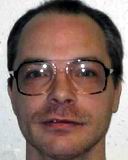
Michael Sonner
Murderer Brian Kevin Rosenfeld
Murderer · USA · 1985
Brian Kevin Rosenfeld Brian Kevin Rosenfeld was sentenced to three concurrent l…
23 victims
Brian Kevin Rosenfeld
Murderer · USA · 1985
Brian Kevin Rosenfeld Brian Kevin Rosenfeld was sentenced to three concurrent l…
23 victims
 Russell Ellwood
Murderer · USA · 1991
Russell Ellwood was a former taxi driver. Authorities suspected him of killing…
20 victims
Russell Ellwood
Murderer · USA · 1991
Russell Ellwood was a former taxi driver. Authorities suspected him of killing…
20 victims
 Robert Martines Perez
Murderer · USA · 1994
Name: Robert Martines Perez · Other name used in proceedings: Robert Martinez P…
15 victims
Robert Martines Perez
Murderer · USA · 1994
Name: Robert Martines Perez · Other name used in proceedings: Robert Martinez P…
15 victims
 Billy Frank Vickers
Murderer · USA · 1993
Billy Frank Vickers Vickers was executed by lethal injection in Texas on Januar…
14 victims
Billy Frank Vickers
Murderer · USA · 1993
Billy Frank Vickers Vickers was executed by lethal injection in Texas on Januar…
14 victims
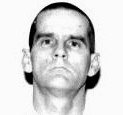 Benjamin Stone
Murderer · USA · 1995
Benjamin Stone was executed by lethal injection in Texas on September 25, 1997.…
2 victims
Benjamin Stone
Murderer · USA · 1995
Benjamin Stone was executed by lethal injection in Texas on September 25, 1997.…
2 victims
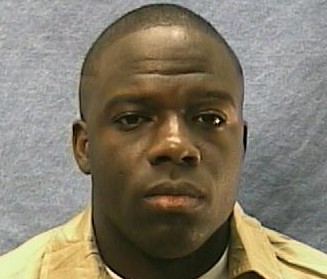 David Cooper
Murderer · USA · 1993
July 18, 1993 — After church, Latasha Goodman and her family had Sunday dinner…
1 victim
David Cooper
Murderer · USA · 1993
July 18, 1993 — After church, Latasha Goodman and her family had Sunday dinner…
1 victim
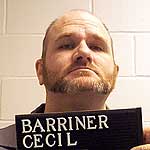 Cecil Barriner
Murderer · USA · 1996
Cecil Barriner was tried for the homicides of Irene Sisk and her granddaughter…
2 victims
Cecil Barriner
Murderer · USA · 1996
Cecil Barriner was tried for the homicides of Irene Sisk and her granddaughter…
2 victims
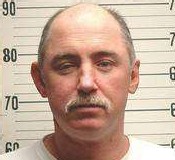 John Michael Bane
Murderer · USA · 1988
John Michael Bane was convicted of felony murder in the perpetration of a robbe…
1 victim
John Michael Bane
Murderer · USA · 1988
John Michael Bane was convicted of felony murder in the perpetration of a robbe…
1 victim
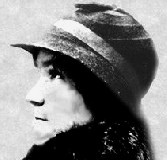 Charlotte Bryant
Murderer · United Kingdom · 1935
Charlotte Bryant, also known as Charlotte McHugh, was born in Londonderry in 19…
1 victim
Charlotte Bryant
Murderer · United Kingdom · 1935
Charlotte Bryant, also known as Charlotte McHugh, was born in Londonderry in 19…
1 victim
- Gender
- male
- Country
- USA
- Location
- Texas/Nevada, USA
- Date of birth
- 1968
- Age at first offence
- 25
- Characteristics
- fugitive, to avoid arrest
- Victim profile
- Two people in a robbery attempt / Carlos J. Borland, 25 ( Nevada Highway Patrol trooper )
- Method of murder
- Shooting ( .38 caliber revolver)
- Date(s) of murder
- November 1993
- Years active
- 1993
- Date of arrest
- December 1, 1993
- Status
-
Sentenced to death
Sentenced to death in Nevada on October 28, 1994
Parties and identities
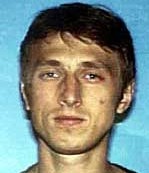
Michael Sonner was convicted of first-degree murder and other offenses and was sentenced to death in Nevada. Michael Sonner was 25 at the time described in the case summary.
Carlos J. Borland was a Nevada Highway Patrol Trooper who was killed.
Background
Michael Sonner was a jail escapee and a fugitive. He pumped $22.00 worth of gasoline into his vehicle at a truck stop on Interstate 80 twenty-three miles west of Lovelock and drove away without paying. The killing occurred after Sonner was stopped near Lovelock. Sonner later told investigators that he had already made the decision upon seeing the red and blue lights that he would murder the trooper who approached him.
At the penalty hearing, the state presented evidence that Sonner had been convicted of robbery and assault with a deadly weapon on a peace officer in North Carolina, was a fugitive from North Carolina, had robbed and raped a woman in Virginia, and had shot to death two people in Texas. Sonner’s presentence report showed that he had eleven prior felony convictions.
In addition to the death sentence, Sonner received other prison terms for his nonmurder counts, and the district court also adjudicated him a habitual criminal.
The offence
On the evening of November 30, 1993, Sonner pumped $22.00 worth of gasoline into his vehicle at a truck stop on Interstate 80 twenty-three miles west of Lovelock and drove away without paying.
Sonner shot Nevada State Highway Patrol Trooper Carlos Borland to death after Borland stopped Sonner’s vehicle near Lovelock. Police reports and trial-related facts described the trooper as being stopped on Interstate 80 just east of Lovelock in November 1993 for failing to pay for gasoline at a truck stop.
A description in the case narrative stated that Carlos J. Borland was killed with a single shot to the head from a .38 caliber revolver at about 9 p.m. on Nov. 30, 1993. The officer had just pulled Sonner over near Lovelock, Nev., on suspicion of having bolted from a gas station without paying for $22 worth of fuel. Sonner was captured after a 25-hour manhunt and was convicted of the murder and sentenced to death.
In the narrative of the immediate confrontation, when officers demanded his surrender, Sonner fired two shots into the air. He then put the gun to his head but “didn't have the guts” to take his own life.
“I shot him for the death penalty; I'm going to ask for a speedy trial,” he said (Omer, 1993). “didn't have the guts” to take his own life. “Why is it that we are the only country in the industrialized world” with the death penalty, Sonner said. “I think it is a relic of the 19th century.” “nothing in here has changed and the same goes for me,” Sonner read. “I think we should be tough on criminals,” Sonner said. “But we ought to do it in a cost-effective way.”
Investigation
An early case narrative included a call: “6432... attempt to locate gas skip from Trinity truck stop.” The vehicle was described as a red Chevrolet Blazer with unknown license plates traveling eastbound on Interstate 80 from Trinity. The suspect driver was described as a fugitive who previously escaped from a North Carolina prison and who had allegedly murdered two people in a robbery attempt in Texas only four days prior.
The narrative described that Trooper Borland requested a registration check on the Tennessee plates. Because of the lack of an NCIC entry, he was not given any information that would arouse additional suspicion. Sonner stole a set of Tennessee license plates from another vehicle that closely matched the Blazer that Sonner had previously stolen, and the stolen license plates had yet to be entered into NCIC.
The narrative described that Sonner sped off as Trooper Borland fell on the highway. A tractor trailer driver saw what had occurred and stopped to assist.
Reno NHP communications then heard a message from an unrecognizable voice: one of their own lay critically injured on the highway, despite heroic attempts to save the life of the rookie trooper, at 3:05 a.m. on December 1, 1993. The narrative described that Trooper Carlos J. Borland, at 25 years of age, became the fourth NHP trooper to die in the line of duty.
The narrative described that the most intensive manhunt in the history of the NHP followed the shooting of Trooper Borland. The 25 hour search included officers from nine law enforcement agencies, police dogs, SWAT teams and heat sensitive helicopters. At approximately 10 p.m. the same day, Sonner was located and confronted by officers, including SWAT team members of the Reno Police Department; the brief standoff ended with the capture of the man.
Arrest / custody
Sonner fired two shots into the air when officers demanded his surrender. He was then captured after the manhunt described in the case narrative and confronted by officers including SWAT team members of the Reno Police Department.
A brief standoff ended with the capture of the man.
Trial
Sonner was tried in September 1994.
The jury found him guilty of one count each of first-degree murder with use of a deadly weapon, ex-felon in possession of a firearm, possession of a stolen vehicle, and resisting a public officer.
At the penalty hearing, the jury found five aggravating circumstances:
- Sonner was under sentence of imprisonment.
- Sonner had previously been convicted of two felonies involving the use or threat of violence (each prior conviction was listed as a separate aggravating circumstance).
- The murder was committed to avoid or prevent a lawful arrest or to effect an escape from custody.
- The victim was a peace officer, which Sonner knew or reasonably should have known, killed while engaged in the performance of his official duty.
The jury found four mitigating circumstances:
- The murder was committed while Sonner was under the influence of extreme mental or emotional disturbance.
- He was subject to neglect as a child.
- He was subject to abuse as a child.
- He had never denied culpability for his criminal conduct.
The jury returned a sentence of death.
The district court also adjudicated Sonner a habitual criminal.
Sentencing
On October 28, 1994, the district court entered a judgment of conviction and sentenced Sonner to death for the murder. The district court imposed additional consecutive prison terms: a consecutive prison term of six years for ex-felon in possession of a firearm, a consecutive term of life in prison without possibility of parole for possession of a stolen vehicle and habitual criminality, and a consecutive prison term of six years for resisting a public officer.
Appeals / rehearing
Michael Sonner’s appeal reached the Supreme Court of Nevada and the court issued an opinion on rehearing.
The opinion on rehearing described that:
- The court affirmed his judgment of conviction and sentence.
- Rehearing was warranted in part, but the court reaffirmed Sonner’s judgment of conviction and sentence.
Rehearing and the nonmurder counts
In footnote one of the prior opinion, the court had concluded that Sonner failed to address on appeal the counts of ex-felon in possession of a firearm, possession of a stolen vehicle, and resisting a public officer and had therefore abandoned any issues on appeal relating to these counts. In the rehearing opinion, the state conceded that some claims applied to all the counts; as a result, the court retracted its earlier conclusion. The court nevertheless reiterated that none of Sonner’s claims relevant to the nonmurder counts had merit.
Jury instruction on the authority of the Pardons Board to modify sentences
During the penalty phase, the jury was instructed:
“Life imprisonment with the possibility of parole is a sentence to life imprisonment which provides that the defendant would be eligible for parole after a period of 10 years. This does not mean that he would be paroled after ten years but only that he would be eligible after that period of time.[[[[1] Life imprisonment without the possibility of parole means exactly what it says, that the defendant shall not be eligible for parole. If you sentence the defendant to death you must assume that the sentence will be carried out. Although under certain circumstances and conditions the State Board of Pardons Commissioners has the power to modify sentences, you are instructed that you may not speculate as to whether the sentence you impose may or may not be changed at a later date. Sonner, 112 Nev. at 1333 n. 2, 930 P.2d at 711 n. 2. This instruction was first set forth in Petrocelli v. State, 101 Nev. 46, 56, 692 P.2d 503, 511 (1985).”
Sonner contended that the Petrocelli instruction implied that if he received a sentence of life imprisonment without possibility of parole, it could be modified to a life sentence with the possibility of parole. He argued that this was misleading because NRS 213.1099(4) prevented him from receiving parole even if he received a sentence of life imprisonment without possibility of parole and it was modified to a life sentence with the possibility of parole. He asserted that the court misapprehended a material point of law.
The court analyzed Geary v. State and Gallego v. McDaniel, and it compared factual distinctions in Sonner’s case with those cases. The court concluded that the Petrocelli instruction did not mislead the jury and did not prejudice Sonner. The court also discussed Simmons v. South Carolina and concluded that Simmons was inapposite to Sonner’s case because the prosecutor did not argue future dangerousness and the jury was not presented with a false choice between a death sentence or a limited term of incarceration.
The court also directed changes to jury instructions in the future:
- In regard to offenses committed on or after July 1, 1995, the Pardons Board no longer had the power to commute a sentence of death or life imprisonment without possibility of parole to a sentence allowing parole.
- Because of this limit and the possibility that a jury can occasionally be misled in circumstances like those in Geary, the court concluded that it was best to eliminate all language in the Petrocelli instruction that discussed modification of sentences by the Pardons Board.
- The court directed district courts to no longer give the final paragraph of the Petrocelli instruction to juries in capital penalty phases.
- The court further directed that, unless and until statutory amendment requires otherwise, district courts should give the following jury instruction explaining possible penalties when a defendant is charged with murder and the death penalty is sought:
“A prison term of fifty years with eligibility for parole beginning when a minimum of twenty years has been served does not mean that the defendant would be paroled after twenty years but only that he or she would be eligible for parole after that period of time. Life imprisonment with the possibility of parole is a sentence to life imprisonment which provides that the defendant would be eligible for parole after a period of twenty years. This does not mean that he or she would be paroled after twenty years but only that he or she would be eligible for parole after that period of time.[4] Life imprisonment without the possibility of parole means exactly what it says, that the defendant shall not be eligible for parole. If you sentence the defendant to death, you must assume that the sentence will be carried out.”
Other issues raised for the first time on rehearing
Sonner claimed that the jury instructions unconstitutionally failed to instruct the jury to find each aggravating circumstance unanimously and that the jury instruction on reasonable doubt was improper. The court concluded that Sonner improperly raised these issues for the first time in his petition for rehearing under NRAP 40(c)(1) and that the claims lacked merit.
Sonner also contended that the court overlooked precedent in determining that the district judge did not err when he refused to recuse himself. The court concluded that Sonner failed to show that it misapprehended a material matter in deciding this issue.
Outcome
The Supreme Court of Nevada denied rehearing on the issue of the jury instruction on the power of the Pardons Board to modify sentences, concluding it did not mislead the jury or prejudice Sonner. The court granted rehearing in two matters:
- The court recognized that Sonner did not abandon certain issues on appeal relating to the nonmurder counts, but none of Sonner’s claims relevant to the nonmurder counts had merit.
- The court directed the district courts to no longer instruct juries on sentence modification by the Pardons Board.
In all other respects, rehearing was denied, and the court reaffirmed Sonner’s judgment of conviction and sentence.
Aftermath / subsequent developments
An account described that an appeal from a North Carolina jail escapee convicted of killing a Nevada Highway Patrol trooper was rejected by the Nevada Supreme Court. The account stated that the high court modified its earlier ruling against Michael Sonner, 30, convicted of killing Trooper Carlos Borland, but said that modification did not change his sentence of death by lethal injection. It also described Sonner as having insisted earlier that his execution take place as soon as possible and having argued that death would be a cure for psychological problems that had tortured him most of his life.
The account described that besides the death penalty, Sonner was sentenced to life in prison without parole for being a habitual criminal and to 6 years each on his convictions of being an ex-felon in possession of a firearm and for resisting an officer. It also described that the high court was asked by Sonner’s public defender to review its earlier ruling holding he abandoned some appeal rights involving the nonmurder counts; the court retracted that conclusion but said none of Sonner’s claims relevant to the nonmurder counts had merit.
A later narrative described that Michael Sonner had been on death row since October 28, 1994 and that attorneys pursued habeas appeals in federal court while Nevada had lawyers pursuing efforts to ensure he was put to death.
A separate account included material about a correspondence between Michael Sonner and Judge Andrew L. Sonner (the judge who contacted a Nevada anti-death-penalty group). It stated that Judge Andrew L. Sonner was retired, that he had been named to the Court of Special Appeals in 1996, and that he retired from the Court of Special Appeals in July 2004 upon reaching mandatory retirement age of 70. The narrative described that he occasionally presided over cases by special assignment on the Montgomery County Circuit Court, and that his Rockville home included his dog Buddy, described as a black, eight-year-old, mixed-breed Dalmatian and Weimaraner. It also described his opposition to capital punishment, including testimony before a Maryland commission and an editorial in The Daily Record. The narrative stated that his condolence card was sent after Sonner’s wife, Sandra, died of colon cancer on July 1, 2005. It stated that Sonner received the most recent letter about a month prior to an October 27, 2008 account and described that the correspondence contained small talk mostly with the convict replying that nothing had changed.
It included additional statements attributed to Judge Andrew L. Sonner about death penalty resources and about how society has no way to “grade murderers,” including the statement: “There's no calculus in society for determining who are the very worst.”
Timeline
- November 30, 1993 — Sonner pumped $22.00 worth of gasoline at a truck stop on Interstate 80 and drove away without paying; Trooper Carlos Borland stopped Sonner near Lovelock and Sonner shot him to death.
- December 1, 1993 — Despite heroic attempts to save his life, Trooper Carlos J. Borland died at 3:05 a.m. after the manhunt.
- September 1994 — Sonner was tried; the jury found him guilty of first-degree murder with use of a deadly weapon, ex-felon in possession of a firearm, possession of a stolen vehicle, and resisting a public officer.
- October 28, 1994 — The district court entered judgment of conviction and sentenced Sonner to death for the murder.
- April 02, 1998 — The Supreme Court of Nevada issued an opinion on rehearing in Michael Hampton Sonner v. The State of Nevada (No. 26485).
- October 27, 2008 — An account described correspondence involving Michael Sonner and Judge Andrew L. Sonner.
Other details
Sonner sought rehearing on a number of issues, including jury instruction matters and other claims. The Supreme Court of Nevada discussed NRAP 40(a), NRAP 40(c)(1), and NRAP 40(c)(2).
Footnotes in the opinion addressed amendments to first-degree murder penalties in 1995 affecting the Petrocelli instruction’s future correctness for offenses committed on or after July 1, 1995, and discussed NRS 213.1099(4), including the statute’s conditions for parole eligibility for prisoners whose sentences to death or life without possibility of parole were commuted to a lesser penalty.
The opinion also listed motions filed to supplement the petition for rehearing on February 24, 1997, September 17, 1997, and February 20, 1998, and the court granted those motions.
The killing was described as involving the murder of a peace officer while engaged in the performance of official duty, and the jury found an aggravating circumstance that Sonner committed the murder to avoid or prevent a lawful arrest or to effect an escape from custody.
The narrative described that Sonner had escaped from a North Carolina prison and had allegedly murdered two people in a robbery attempt in Texas only four days prior to the Nevada killing; it also described that he had robbed and raped a woman in Virginia, and had shot to death two people in Texas.
The narrative described that Sonner stole a set of Tennessee license plates from another vehicle that closely matched the Blazer Sonner had previously stolen, and that the stolen license plates had yet to be entered into NCIC.

Spotted an error, or have more information about this case?