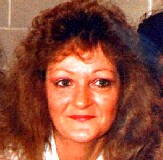
Pamela Lynn Perillo
Murderer Bobbie Sue Terrell
Murderer · USA · 1984
Bobbie Sue Dudley Terrell was a Pinellas County nurse and worked as the night s…
12 victims
Bobbie Sue Terrell
Murderer · USA · 1984
Bobbie Sue Dudley Terrell was a Pinellas County nurse and worked as the night s…
12 victims
 Marybeth Tinning
Murderer · USA · 1972
Marybeth Tinning (née Roe, born on September 11, 1942) was an American prisoner…
9 victims
Marybeth Tinning
Murderer · USA · 1972
Marybeth Tinning (née Roe, born on September 11, 1942) was an American prisoner…
9 victims
 Debbie Fornuto
Murderer · USA · 1972
Deborah Fornuto was the mother of six children whose deaths were initially rule…
7 victims
Debbie Fornuto
Murderer · USA · 1972
Deborah Fornuto was the mother of six children whose deaths were initially rule…
7 victims
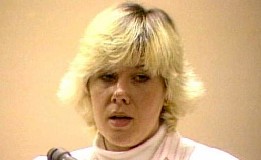 Catherine May Wood
Murderer · USA · 1987
Catherine May Wood was an American caregiver who worked at the Alpine Manor Nur…
5 victims
Catherine May Wood
Murderer · USA · 1987
Catherine May Wood was an American caregiver who worked at the Alpine Manor Nur…
5 victims
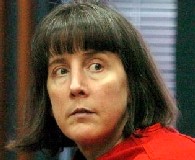 Amy Bishop
Murderer · USA · 1986
Amy Bishop — biology professor and perpetrator · James Anderson — Bishop’s husb…
4 victims
Amy Bishop
Murderer · USA · 1986
Amy Bishop — biology professor and perpetrator · James Anderson — Bishop’s husb…
4 victims
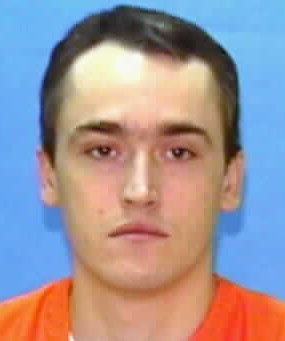 Guy Richard Gamble
Murderer · USA · 1991
Guy Richard Gamble was sentenced to death on August 10, 1993. Gamble and Michae…
1 victim
Guy Richard Gamble
Murderer · USA · 1991
Guy Richard Gamble was sentenced to death on August 10, 1993. Gamble and Michae…
1 victim
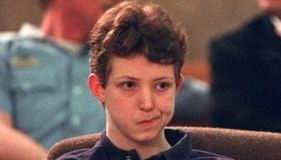 Charles Jason Baldwin
Homicide · USA · 1993
Charles Jason Baldwin was born April 11, 1977. At the time of his arrests, Jaso…
3 victims
Charles Jason Baldwin
Homicide · USA · 1993
Charles Jason Baldwin was born April 11, 1977. At the time of his arrests, Jaso…
3 victims
 Anibal Gonzalez Igonet
—
Aníbal González Igonet, apodado “El Loco del Martillo”, fue encarcelado tras un…
Anibal Gonzalez Igonet
—
Aníbal González Igonet, apodado “El Loco del Martillo”, fue encarcelado tras un…
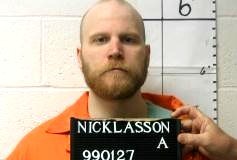 Allen Nicklasson
Murderer · USA · 1994
Allen Nicklasson · late August 1994 — Dennis Skillicorn, Allen Nicklasson, and…
3 victims
Allen Nicklasson
Murderer · USA · 1994
Allen Nicklasson · late August 1994 — Dennis Skillicorn, Allen Nicklasson, and…
3 victims
- Gender
- female
- Country
- USA
- Location
- Harris County, Texas, USA
- Date of birth
- December 3, 1955
- Age at first offence
- 25
- Characteristics
- robbery, hitchhiking
- Victim profile
- Robert Banks, 30, and Bob Skeens, 26
- Method of murder
- Strangulation with a rope
- Date(s) of murder
- February 23, 1980
- Years active
- 1980
- Date of arrest
- March 3, 1980 (turned herself in to the Denver police)
- Status
-
Life imprisonment
Sentenced to death on September 2, 1980; resentenced to life in prison plus 30 years on July 12, 2000
Case information
Name: Pamela Lynn Perillo
Status
Sentenced to death on September 2, 1980; resentenced to life in prison plus 30 years on July 12, 2000
Background
Pamela Perillo met Mike Briddle and his wife, Linda Fletcher, in early 1980 through a mutual friend in California. During this time they met Perillo through a mutual friend.
Shortly thereafter, Perillo, Briddle, and another unidentified man robbed a gentleman who was a customer at the topless bar where Perillo worked in California.
Briddle and Fletcher fled California on Feb 14th 1980 in order to avoid apprehension for robbery. A few days later Perillo learned there was a warrant for her arrest and joined the couple in Tucson Arizona.
The trio found transportation with various truck drivers and eventually ended up in Houston, Texas.
The offence
Robbery leading to the murders
On the evening of Friday Feb 21, 1980, Briddle, Perillo and Fletcher were hitchhiking in the area of the Houston Astrodome. Bob Banks, who was in the process of moving, stopped and offered them a ride, saying he would compensate them if they would help him move. Briddle, Perillo and Fletcher agreed.
They assisted Banks in moving belongings to his newly rented house and Banks treated them to dinner at a local restaurant. When Banks paid for the meal, Fletcher and Perillo observed that he had several hundred dollars in his wallet, and Perillo told Briddle about the money. That night they spent the night at Banks’ new house as his guests, and the next day they helped him move some of his belongings.
In the process Briddle observed that Banks owned some guns. When Banks went to take a shower, Briddle telephoned a friend in California and invited him to come to Texas as he “had a pigeon out here with lots of money and guns.” Briddle proposed a robbery but the California friend declined.
That same night Banks invited his guests to a rodeo at the Astrodome and they accompanied him there. While at the Astrodome, Perillo told Briddle she wanted to kill Banks and he answered “ok”. Briddle then went off to do some planning and told Perillo to relax but she agitated “do it tonight”.
After the rodeo Banks invited his guests to a local restaurant for dinner and then returned to his house. When they pulled up in front of the house they found Bob Skeens, a friend of Banks’ who had arrived in his Volkswagen to help his friend move.
The next morning Banks and Skeens went to buy coffee and donuts. While they were gone, Briddle armed himself with a shotgun and Perillo armed herself with a handgun. Banks owned the guns.
Killing of Robert Banks
Briddle jumped up and down with excitement while waiting for the two men to return. When Banks and Skeens returned, Perillo hid in the bedroom and Briddle got inside a closet. He began to make a tapping sound.
When Banks reached to open the closet door, Briddle jumped out announcing, “This is a robbery”. Skeens got down on the floor and pleaded for mercy. Banks came towards Briddle thinking it was a joke and Briddle struck him on the side of the head with the shotgun, knocking him to the ground and causing him to bleed. Perillo then came out of her hiding place and told Banks to get on the floor, “that it wasn’t a joke”.
Perillo obtained a machete, cut up some rope, and then she and Briddle tied Banks and Skeens with rope. After they were bound, Briddle and Perillo took the wallets from the two men. Briddle took $800.00 from Banks’ wallet and waved it around saying “he had it”.
Briddle ransacked the bedroom, taking clothes and a backpack. Perillo found a cassette recorder and a camera. This cassette recorder was used to record the murders and later sold at a pawnshop in Denver. When the pawnbroker listened to the recording on the tape that had been left in the recorder, it was turned over to the Denver police and helped in obtaining a conviction.
Briddle took Skeens into the bedroom and told Skeens that he had killed five people and two more didn’t matter.
A little while later, a piece of rope was wrapped twice around Banks’ neck which Fletcher witnessed. Fletcher claims at this point she was ordered by Briddle to wait in Skeen’s Volkswagen; later on in Perillo’s statements, Perillo would say that Fletcher was just as guilty as everyone else.
Perillo also stated under oath that Briddle said “Ya’ll are goanna be part of this”.
A further statement attributed to Perillo included: “I don’t like looking at you, your face is turning blue.”
Killing of Bob Skeens
After Banks was killed, Briddle and Perillo and Fletcher took the wallets and other items and loaded Skeens’ Volkswagen with property taken from the house, including the cassette recorder and other items. Briddle and Perillo then strangled Skeens in the same manner.
Skeens was in the next room and heard what was happening and knew he was going to be next. Briddle and Perillo took a break, ate the donuts, and drank the coffee that Banks and Skeens had bought for their guests. After the break, they strangled Skeens in the same manner.
Flight and disposal of evidence
Perillo came to the Volkswagen with the shotgun wrapped in a blanket about 20 minutes later. She also brought out the machete, handgun and other items. Briddle brought out the backpack and a rife.
They drove Skeens’ Volkswagen to Dallas where they abandoned it in a parking garage and took a bus to Denver. When the Dallas police recovered the Volkswagen, it contained the machete and a contact lens case with Briddle’s fingerprints on it.
When Banks failed to appear for work for two days, his supervisor went to Banks’ house to investigate. The man with the supervisor looked in a window and saw a body. The police who arrived at the scene found the bodies of Banks and Skeens, each bound with a rope around the neck.
Medical cause of death
Dr. Joseph Jachimezyk, the Chief Medical Examiner, determined each had died from asphyxia due to strangulation with a rope.
Investigation
More than nineteen years after the crimes, Sergeant Harold McMillian of the Denver Police Department was “hailed” by Perillo on a downtown street in Denver, Colorado, and Perillo told McMillian that “[she] and Mike killed two Bobs in Texas.” Perillo was transported to police headquarters where she elaborated upon this statement in a full confession.
Arrest and statements
Perillo turned herself in to the Denver police on the evening of March 3, about one week after the crimes.
Early the next morning, Perillo voluntarily gave her statement to the Denver police. In that statement, Perillo claimed that she and her traveling companions “Arthur Day,” later identified as Mike Briddle, and “Sheila Davis,” later identified as Linda Fletcher, planned to rob and then kill the two victims for money. Perillo also stated that she and Briddle actually strangled the two victims, and that Fletcher was not in the room when the two victims were finally murdered.
The next day, Perillo gave a second statement to Houston police. In her second statement, Perillo claimed that she committed both murders alone, and that Briddle and Fletcher did not stumble upon the crime scene until she had successfully subdued, tied, and strangled both Banks and Skeens. Perillo did not ever sign the second statement.
Fletcher also gave a statement to police indicating that the last time she saw Banks was when he dropped them off on the interstate, and that she saw Briddle place the rope around Banks’ neck. Court records also showed Fletcher had blood on her jeans when she was arrested in Denver.
Trial
Charges and jury submissions
Briddle, Fletcher, and Perillo were charged with capital murder. Perillo’s confession made hers the state’s strongest capital case and she was called to trial first.
Although Perillo was indicted for both murders, only Skeens’ murder was submitted to the jury.
Perillo was convicted and sentenced to death.
Confession and physical evidence
Perillo’s confession was taken verbatim, stenographically, in question and answer form, and later reduced to writing and signed by Perillo. The confession was admitted into evidence.
The trial court found this statement was an oral statement “which contains assertions of facts or circumstances that are found to be true and which conduce to establish the guilt of the accused,” after a Jackson v. Denno hearing. The trial court’s findings included that Perillo’s statements led to the recovery of stolen property, including a Volkswagen automobile owned by Robert Skeens and a shotgun owned by Robert Banks.
First conviction reversed on appeal
Appellant’s first conviction for the offense of capital murder as proscribed under V.T.C.A. Penal Code, § 19.03(a)(2), was reversed by the Texas Court of Criminal Appeals for error committed during voir dire. Perillo v. State, 656 S.W.2d 78 (Tex.Cr.App. 1983).
Second trial and death sentence
Perillo was tried and convicted a second time. Once again the jury answered special issues affirmatively and the trial court assessed her punishment at death.
The case was affirmed on automatic appeal by the Court of Criminal Appeals of Texas, delivered September 14, 1988.
Sentencing
A death sentence was assessed at Perillo’s second trial. The judgment of the trial court was affirmed.
Perillo was sentenced to death on September 2, 1980, and later resentenced to life in prison plus 30 years on July 12, 2000.
Appeals
Texas Court of Criminal Appeals (automatic appeal)
The Court of Criminal Appeals of Texas, en banc, stated that the cause was before it again on automatic appeal and that it would affirm.
The court addressed five points of error:
- A claim of denial of effective assistance of counsel based on an alleged conflict of interest involving lead defense counsel James Skelton’s earlier representation of Linda Fletcher, who testified as an accomplice witness. The Court of Criminal Appeals concluded there was no actual conflict and overruled the first point of error.
- An objection to the jury charge not authorizing conviction of the lesser included offense of aggravated robbery. The Court of Criminal Appeals found the evidence did not raise the lesser included offense and overruled the second point of error.
- A complaint that the trial court erred in admitting Perillo’s confession. The Court of Criminal Appeals overruled the third point of error.
- A complaint that the trial court erred in sustaining the State’s challenge for cause against venireman Griggs. The Court of Criminal Appeals held that no error occurred and overruled the fourth point of error.
- A complaint that the trial court erred in failing adequately to instruct the jury to consider mitigating evidence bearing on its deliberations at the punishment stage. The Court of Criminal Appeals overruled the fifth point of error.
The Court of Criminal Appeals affirmed the trial court’s judgment and noted Teague, J., dissented to disposition of point of error two. The opinion was delivered September 14, 1988.
Federal habeas proceedings
In 1998, Perillo filed a federal habeas corpus petition stating that her attorney had been disbarred for lying to a client and that she did not receive proper representation during her second murder trial.
The United States Court of Appeals for the Fifth Circuit considered an appeal from a final judgment granting the 28 U.S.C. § 2254 petition for habeas corpus relief. The district court had vacated the criminal judgment as to conviction and death sentence, and ordered that Perillo be released unless the State of Texas elected to retry her within 120 days of the date upon which the district court’s decision became final.
The Fifth Circuit affirmed the district court’s judgment. The Fifth Circuit held that Skelton’s representation of Perillo was burdened by an actual conflict that adversely affected his performance throughout Perillo’s trial.
The Fifth Circuit’s conclusion was that the district court’s judgment granting habeas relief was affirmed and remanded for further proceedings consistent with its opinion.
Outcome
The state did not retry the case and instead made a deal with Perillo. Perillo accepted 1 life sentence plus 30 years for aggravated robbery.
Aftermath
Briddle was executed in 1995.
Fletcher was given 5 years probation.
Perillo was tried twice for murder and both juries sentenced her to death.
The cassette recorder recording was later used to help obtain a conviction.
Perillo’s resentencing resulted in life in prison plus 30 years.
Spotted an error, or have more information about this case?