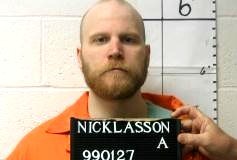
Allen Nicklasson
Murderer Brian Kevin Rosenfeld
Murderer · USA · 1985
Brian Kevin Rosenfeld Brian Kevin Rosenfeld was sentenced to three concurrent l…
23 victims
Brian Kevin Rosenfeld
Murderer · USA · 1985
Brian Kevin Rosenfeld Brian Kevin Rosenfeld was sentenced to three concurrent l…
23 victims
 Russell Ellwood
Murderer · USA · 1991
Russell Ellwood was a former taxi driver. Authorities suspected him of killing…
20 victims
Russell Ellwood
Murderer · USA · 1991
Russell Ellwood was a former taxi driver. Authorities suspected him of killing…
20 victims
 Robert Martines Perez
Murderer · USA · 1994
Name: Robert Martines Perez · Other name used in proceedings: Robert Martinez P…
15 victims
Robert Martines Perez
Murderer · USA · 1994
Name: Robert Martines Perez · Other name used in proceedings: Robert Martinez P…
15 victims
 Billy Frank Vickers
Murderer · USA · 1993
Billy Frank Vickers Vickers was executed by lethal injection in Texas on Januar…
14 victims
Billy Frank Vickers
Murderer · USA · 1993
Billy Frank Vickers Vickers was executed by lethal injection in Texas on Januar…
14 victims
 Ponchai Wilkerson
Murderer · USA · 1990
Ponchai Wilkerson was executed by lethal injection in Texas on March 14, 2000.…
1 victim
Ponchai Wilkerson
Murderer · USA · 1990
Ponchai Wilkerson was executed by lethal injection in Texas on March 14, 2000.…
1 victim
 Dipendra Bir Bikram Shah
Mass murderer · Nepal · 2001
Name: Dipendra Bir Bikram Shah · Lifespan: 27 June 1971 – 4 June 2001 · Role: M…
9 victims
Dipendra Bir Bikram Shah
Mass murderer · Nepal · 2001
Name: Dipendra Bir Bikram Shah · Lifespan: 27 June 1971 – 4 June 2001 · Role: M…
9 victims
 Elmo Patrick Sonnier
Murderer · USA · 1977
Elmo Patrick Sonnier (February 21, 1951 - April 5, 1984) was executed by electr…
2 victims
Elmo Patrick Sonnier
Murderer · USA · 1977
Elmo Patrick Sonnier (February 21, 1951 - April 5, 1984) was executed by electr…
2 victims
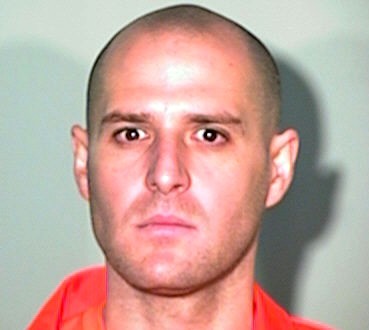 Christopher Spreitz
Murderer · USA · 1989
Christopher John Spreitz was Caucasian. On the night in question, Ruby Reid spe…
1 victim
Christopher Spreitz
Murderer · USA · 1989
Christopher John Spreitz was Caucasian. On the night in question, Ruby Reid spe…
1 victim
 Anibal Gonzalez Igonet
—
Aníbal González Igonet, apodado “El Loco del Martillo”, fue encarcelado tras un…
Anibal Gonzalez Igonet
—
Aníbal González Igonet, apodado “El Loco del Martillo”, fue encarcelado tras un…
- Gender
- male
- Country
- USA
- Location
- Missouri/Arizona, USA
- Date of birth
- J uly 25, 1972
- Age at first offence
- 22
- Characteristics
- murder for hire, robbery, kidnapping, drug addict
- Victim profile
- Richard Drummond, 47 / Joseph Babcock, 47, and his wife, Charlene, 38
- Method of murder
- Shooting (.22 caliber pistol)
- Date(s) of murder
- August 23/25, 1994
- Years active
- 1994
- Date of arrest
- —
- Status
-
Executed
Sentenced to death in Missouri on June 28, 1996; executed by lethal injection in Missouri on December 11, 2013
Case identification
Allen Nicklasson
Timeline
- late August 1994 — Dennis Skillicorn, Allen Nicklasson, and Tim DeGraffenreid headed east from Kansas City to obtain illegal drugs.
- August 23, 1994 — During their return trip to Kansas City, their 1983 Chevrolet Caprice broke down twenty-two miles east of the Kingdom City exit on I-70. An offer of assistance by a state trooper was refused.
- the next day (after August 23, 1994) — They traveled 17 miles to the JJ overpass, burglarized the nearby home of Merlin Smith, stole some guns and money, and used the stolen money to pay for a tow to Kingdom City.
- between 4 and 5 p.m. (after the car stalled again toward the site of the robbery) — Richard Drummond offered to take the stranded motorists to use a phone.
- eight days later — Drummond’s remains were found.
- Monday (prior to the execution date in 2013) — An appeals court panel granted a stay of execution, citing concerns about counsel at trial and sentencing in 1996.
- Tuesday (prior to the execution date in 2013) — The full appeals court refused to take up the case.
- Wednesday (prior to the execution date in 2013) — The U.S. Supreme Court did not return its 5-4 decision to vacate the stay until 10:07 p.m.
- June 28, 1996 — Nicklasson was sentenced to death in Missouri.
- May 13, 2009 — A reporter’s notebook entry dated May 13, 2009 included a statement by Allen Nicklasson.
- January 10, 2007 — Submission date for the federal appellate matter described in the record.
- June 21, 2007 — Filing date for the federal appellate matter described in the record.
- May 20, 2009 — Skillicorn was executed by lethal injection in Missouri.
- December 11, 2013 — Nicklasson was executed by lethal injection in Missouri at 10:52 p.m.
Background
Allen Nicklasson grew up in Kansas City, Missouri, in a fatherless home. His mother was described as a mentally ill stripper who brought home an assortment of men, many of whom abused Nicklasson. Nicklasson died bearing the scar from where one of the men burned him.
Nicklasson had a childhood marked by abuse and mental illness. In a 2009 interview, he recalled trauma including eating Alpo dog food for dinner and watching his mother shoot up heroin. He also recalled his mother making him fight a Doberman for money, and the constant torrent of abuse from his mother’s male friends. He suffered from bipolar disorder and lived on and off in boys’ homes for petty crimes and in institutions for his mental illness. By his 20s, Nicklasson was homeless and a drug addict.
During his time in rehab in 1994, he met Dennis Skillicorn at a drug rehab center in Kansas City. In August 1994, Nicklasson, Skillicorn, and Tim DeGraffenreid decided to make the trip from Kansas City across I-70 to St. Louis to buy drugs.
The offence
Burglaries and movement leading to kidnapping
Their vehicle broke down multiple times along I-70. On August 23, 1994, their 1983 Chevrolet Caprice broke down twenty-two miles east of the Kingdom City exit on I-70. A state trooper offered assistance, but it was refused.
The next day, the group traveled 17 miles to the JJ overpass. They burglarized the nearby home of Merlin Smith and stole guns and money. They used the stolen money to pay for a tow to Kingdom City. A garage in Kingdom City was unable to repair extensive mechanical problems, and the group drove back toward the robbery site where the car stalled again.
In the version describing what was stolen, the burglary included four guns, ammunition, a skinning knife, money, a pillow case, some change, and a cracker box. After stashing the stolen property in bushes, they called a tow truck and used change-filled cracker box contents to pay a mechanic to restart the car. Once restarted, they returned to recover the stolen property, and the car broke down again.
Richard Drummond’s abduction at gunpoint and killing
Richard Drummond, age 47, saw the stranded motorists and offered to take them to use a phone. He was driving a white company car, and later descriptions stated he was a technical support supervisor for AT&T.
The group loaded the stolen property from the Smith burglary into the trunk of Drummond’s car. They kept a .22 caliber handgun and a shot-gun when they entered Drummond’s vehicle. Nicklasson then sat behind Drummond, pressed a pistol against the back of Drummond’s head, and said, “[y]ou’re going to take us to where we want to go.”
While driving east, Skillicorn asked Drummond questions to calm him down, including whether Drummond’s “old lady” was going to miss him. As Drummond drove east, Skillicorn “got to thinking...if we let this guy off, he’s got this car phone.” They disabled the car phone.
Skillicorn stated that he later determined they would have to “lose” Drummond in the woods. At some point during this time, Nicklasson and Skillicorn discussed what they should do with Drummond. They disabled the car phone and decided on killing him. They directed Drummond to exit I-70 at the Highway T exit and then proceeded four miles on to County Road 202 to a secluded area where they ordered Drummond to stop his vehicle.
Nicklasson prepared to take Drummond through a field toward a wooded area. Skillicorn demanded Drummond’s wallet. Knowing Nicklasson carried a loaded .22 caliber pistol and had no rope or other means by which to restrain Drummond, Skillicorn watched as Nicklasson led Drummond toward a wooded area.
In the woods, Nicklasson shot Drummond twice in the head. Nicklasson walked Drummond into the woods, ordered him to kneel, told him to say his prayers, and shot him in the head twice. Drummond’s remains were found eight days later. Skillicorn acknowledged hearing two shots from the woods and that Nicklasson returned having “already done what he had to do.”
In a 2009 interview excerpt included in the record, Nicklasson said:
“I'm laughing, pacing,” Nicklasson said, recalling the moment. “I started losing it. I wouldn't want this out, but I felt a euphoria. I finally got back for all the beatings I took" as a child.
Discussion of debate and ordering Drummond to pray
The record described debate between Nicklasson and Skillicorn about what to do with Drummond before ordering him off the highway and into a secluded area in Lafayette County in western Missouri. Nicklasson recalled leaving the other two behind and walking Drummond to a wooded area. He said he had intended to tie Drummond up to buy time for the trio to get away. Nicklasson ordered Drummond to kneel, told him to say his prayers, and shot him twice in the head.
Investigation and arrest
Richard Drummond’s body was found eight days later.
Nicklasson and Skillicorn were later arrested while hitchhiking in California.
Trial
Charges and verdict
Allen Nicklasson was found guilty by a jury in a Missouri state court of first-degree murder and was sentenced to death.
Skillicorn and Nicklasson were convicted of first-degree murder. The record also stated that both Nicklasson and Skillicorn were sentenced to life in prison for Arizona killings and also sentenced to death in Missouri for Drummond’s death.
Additional homicide accounts referenced in the appeal material
The appeal material described additional murders in Arizona involving Joseph and Charlene Babcock. It stated that when the vehicle broke down in the desert, the group approached the home of Joseph and Charlene Babcock. Nicklasson killed Joseph Babcock after the man drove the group back to their vehicle, and Charlene Babcock was killed at the couple’s home. The record also stated that Skillicorn and Nicklasson were sentenced to life in prison for the Arizona killings.
DeGraffenreid was described as 17 when the crime took place, and it stated that he served time for second-degree murder. The record also stated that DeGraffenreid pleaded guilty to second-degree murder and did not receive a death sentence.
Sentencing
Nicklasson was sentenced to death in Missouri on June 28, 1996.
Appeals and federal habeas proceedings
Missouri Supreme Court issues and federal certificate of appealability
Following his sentence, Nicklasson appealed his conviction to the Supreme Court of Missouri, arguing issues including:
- A confusing and inadequate death qualification voir dire without defense participation.
- Prohibiting the defense from conducting follow-up voir dire after asking the jury about their ability to follow Missouri’s diminished capacity instruction.
- Barring voir dire of jurors concerning their potential reaction to the introduction of evidence of Nicklasson’s involvement in two other Good Samaritan murders.
- Finding that the prosecution did not commit a racially-motivated Batson violation for striking two black jurors.
A divided court held the voir dire was constitutionally sufficient and found no error in the trial court’s determination that jury strikes were for legitimate reasons. Nicklasson’s motion for post-conviction relief was denied.
After the district court denied a petition for a writ of habeas corpus, the Eighth Circuit granted a certificate of appealability on the issues mentioned above.
U.S. Court of Appeals for the Eighth Circuit decision
The record included the appellate matter Allen L. Nicklasson v. Don Roper, Warden, with the federal panel described as WOLLMAN, BEAM, and MELLOY, Circuit Judges. The court stated that it affirmed the district court’s judgment denying Nicklasson’s petition for a writ of habeas corpus.
It stated that:
- Nicklasson was found guilty and sentenced to death.
- The appeal challenged the denial of habeas corpus and the judgment was affirmed.
The decision addressed:
- the death penalty voir dire sufficiency arguments,
- the procedural default of certain jury instruction claims,
- restrictions on questioning about diminished capacity and psychological testimony,
- a claim involving barring defense counsel from questioning the jury about additional homicides in Arizona,
- and alleged Batson violations regarding peremptory challenges to Katy Yokley and Karen McNeil.
Procedural default described in the decision
The court indicated that it did not address certain jury instruction claims because the Missouri Supreme Court concluded those claims lacked merit, stating there was “nothing for the Court to review.” The record included the relevant quote:
Absent such argument, there is nothing for the Court to review . . . .
The record also included the Missouri Supreme Court discussion quoted within the federal decision, stating the claims lacked merit because Nicklasson offered “nothing for the Court to review.”
Batson challenges and juror selection rationale
The federal decision described a three-step process for Batson analysis and noted that the factual findings of state courts are presumed correct absent procedural error.
It stated that Nicklasson failed to meet his burden and that the record supported the trial court’s finding of a race-neutral motivation.
For Katy Yokley, it described that she responded “probably” to whether she would automatically impose a life sentence if convicted of first-degree murder. It compared that response with a Caucasian venireperson, Janice Floyd, who responded “I believe so” and was not excused. It concluded that the prosecutor could make judgments about commitment to the life-without-parole option and that excusing a juror whose responses suggested more commitment to life imprisonment was a reasonable trial strategy.
For Karen McNeil, it described her job as a child protection investigator for the Illinois Division of Family Services and that the prosecution struck her to avoid her relating work-related experiences in the jury room. It compared McNeil to Stark, described as a white clinical nurse specialist in child psychology. The decision stated that the trial court was persuaded there “are quantum differences between the two jobs,” and that the Missouri Supreme Court elaborated on those differences, including that family services investigators deal with physical and familial aspects of a child’s life and attempts to stop or prevent abuse, while a clinical nurse specialist in child psychology attempts rehabilitation after abuse occurred.
Supreme Court stay and vacatur timing referenced
The record described that an appeals court panel granted a stay of execution Monday and that the full appeals court refused to take up the case Tuesday. It stated that Missouri Attorney General Chris Koster appealed to the U.S. Supreme Court and that it returned its 5-4 decision to vacate the stay at 10:07 p.m. on Wednesday, after it had been scheduled earlier.
Outcome
Nicklasson was executed by lethal injection in Missouri on December 11, 2013.
It stated that he was pronounced dead at 10:52 p.m., eight minutes after the process began. It stated that his eyes remained closed throughout and he showed little reaction to the drug, briefly breathing heavily about 2 minutes into the process. It stated that he offered no final words.
It stated that Missouri Department of Public Safety spokesman Mike O’Connell said Nicklasson prayed briefly with the prison chaplain about 20 minutes before the execution. It stated that no one from Nicklasson’s family or the victim’s family attended.
It also stated that the execution was nearly 23 hours after he was originally scheduled to die. The record described it as the second execution in Missouri in three weeks after a nearly three-year hiatus, and it described that Missouri switched from a three-drug protocol to a single drug, pentobarbital. It stated that pentobarbital used in Missouri executions came from an undisclosed compounding pharmacy, and that the Missouri Department of Corrections declined to say who made the drug or where.
Last meal
The record stated that Nicklasson’s last meal included meat pizza, orange juice, gummy bears and M&Ms.
Other details
Original execution scheduling and later timing
The record stated that Nicklasson’s execution was originally scheduled for 12:01 a.m. Wednesday, but that an appeals court panel granted a stay of execution Monday. It then described the sequence of the stay and its vacatur by the U.S. Supreme Court on Wednesday night.
Sexual and mental health related details included in the record
The record included a reporter’s notebook entry quoting Dennis Skillicorn’s lawyer, Jenny Merrigan, describing him as “fascinating” and “truly mentally ill.” It also described claims that at age four he stabbed a man he saw raping his mother, who worked as a prostitute and kept Nicklasson in a closet while meeting johns, and that at age nine he attacked his stepfather, who pressed charges.
Statement presented for clemency petition
The record stated that Nicklasson was asked to write a statement to be included in Skillicorn’s clemency petition. It included the appellate framing and procedural details, including submission and filing dates.
Names, relationships, and ages stated
- Richard Drummond — age 47; described as a technical support supervisor for AT&T; victim.
- Joseph Babcock — referenced as killed.
- Charlene Babcock — age 38; killed at the couple’s home.
- Tim DeGraffenreid — 17 when the crime took place.
- Dennis Skillicorn — co-defendant; executed by lethal injection in Missouri on May 20, 2009.
Where Drummond was taken
The record stated that Drummond was led into the woods off I-70 and later into a secluded area in Lafayette County in western Missouri, with exit directed at the Highway T exit and then four miles on County Road 202.
Property stolen in the burglary
The record stated stolen items from Merlin Smith’s home included four guns, ammunition, a skinning knife, money, a pillow case, some change, and a cracker box; it also described using change from the cracker box to pay for a mechanic to restart the car.
Quotes included in the record beyond the main interview excerpt
The record included the following quote attributed to Nicklasson when he pressed the pistol:
- “[y]ou’re going to take us to where we want to go.”
The record also included the following statement attributed to Skillicorn regarding disablement and planning:
- “got to thinking...if we let this guy off, he’s got this car phone.”
- “lose” Drummond in the woods.
- “old lady” referenced in a question to calm Drummond.
- “already done what he had to do.”
Affidavit and sworn statement references
The record described that Skillicorn, in his sworn statement, claimed that Nicklasson said:
“he was going to, you know, do something to this guy. I tell him -you know, now, we’re trying to talk on the pretenses that-that, uh, this guy in the front seat don’t hear us too. Right? Right. ‘Cause, uh, I didn’t want him panicking.”
Spotted an error, or have more information about this case?