Richard Herr
Murderer Russell Ellwood
Murderer · USA · 1991
Russell Ellwood was a former taxi driver. Authorities suspected him of killing…
20 victims
Russell Ellwood
Murderer · USA · 1991
Russell Ellwood was a former taxi driver. Authorities suspected him of killing…
20 victims
 Robert Martines Perez
Murderer · USA · 1994
Name: Robert Martines Perez · Other name used in proceedings: Robert Martinez P…
15 victims
Robert Martines Perez
Murderer · USA · 1994
Name: Robert Martines Perez · Other name used in proceedings: Robert Martinez P…
15 victims
 Billy Frank Vickers
Murderer · USA · 1993
Billy Frank Vickers Vickers was executed by lethal injection in Texas on Januar…
14 victims
Billy Frank Vickers
Murderer · USA · 1993
Billy Frank Vickers Vickers was executed by lethal injection in Texas on Januar…
14 victims
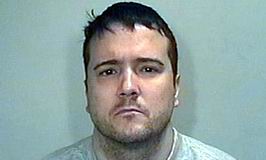 Stephen Shaun Griffiths
Serial killer · United Kingdom · 2009
Stephen Shaun Griffiths was convicted after pleading guilty to killing three wo…
3 victims
Stephen Shaun Griffiths
Serial killer · United Kingdom · 2009
Stephen Shaun Griffiths was convicted after pleading guilty to killing three wo…
3 victims
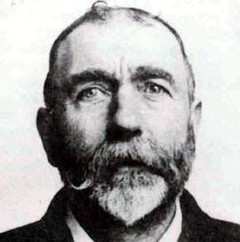 Samuel Herbert Dougal
Murderer · United Kingdom · 1898
Samuel Herbert Dougal was tried for the murder of Camille Cecile Holland, a qui…
1 victim
Samuel Herbert Dougal
Murderer · United Kingdom · 1898
Samuel Herbert Dougal was tried for the murder of Camille Cecile Holland, a qui…
1 victim
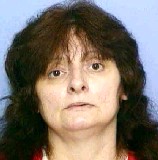 Michelle Byrom
Murderer · USA · 1999
Name: Michelle Byrom · Offender data (as stated): White; age 43 at crime (DOB 1…
1 victim
Michelle Byrom
Murderer · USA · 1999
Name: Michelle Byrom · Offender data (as stated): White; age 43 at crime (DOB 1…
1 victim
 Edward Lionel Terry
Murderer · New Zealand · 1905
Edward Lionel Terry was a white supremacist and murderer. He was born at Sandwi…
1 victim
Edward Lionel Terry
Murderer · New Zealand · 1905
Edward Lionel Terry was a white supremacist and murderer. He was born at Sandwi…
1 victim
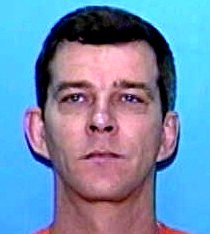 Victor Marcus Farr
Murderer · USA · 1990
Victor Marcus Farr (born 07/03/61) was convicted in the Third Judicial Circuit,…
1 victim
Victor Marcus Farr
Murderer · USA · 1990
Victor Marcus Farr (born 07/03/61) was convicted in the Third Judicial Circuit,…
1 victim
- Gender
- male
- Country
- USA
- Location
- Wilmington, Delaware, USA
- Date of birth
- 1956
- Age at first offence
- 41
- Characteristics
- mentally ill, motive unclear, shooting spree
- Victim profile
- John J. Jensen, 41 (his foreman)
- Method of murder
- Shooting
- Date(s) of murder
- April 10, 1997
- Years active
- 1997
- Date of arrest
- —
- Status
-
Died in custody
Shot and killed by Wilmington police on 10 April 1997
Overview
Richard Herr was an Amtrak machinist in Wilmington, Delaware, known as the "pigeon man" because he talked to birds. On 10 April 1997, he killed his foreman, John J. Jensen, 41, and seriously wounded two other Amtrak employees at the locomotive repair yard. Herr believed pigeons sent him messages. He fired at least 15 shots from a 9 mm handgun during a rampage through the Wilmington, Delaware, 450-employee Amtrak repair shop before Wilmington police shot him to death.
Background
Herr was described as someone who "he'd talk to the walls. He'd apparently talk to the sky. He wasn't stable," according to union official James Riley. Another characterization of Herr was that he "must have snapped."
Herr was also described as a loner who became increasingly confrontational. Coworkers testified that he had been twice reprimanded by Jensen for insubordination before the shootings. One worker testified that Herr threatened to kill coworkers if they did not stop teasing him. Another said Jensen himself told colleagues he believed Herr would "blow me away one day."
The Jensens' lawyers contended that Herr demonstrated increasingly bizarre and threatening behavior in the year before the incident. They said his conduct led the Wilmington yard's on-site occupational nurse, Loretta Burton, to recommend a psychological evaluation as a condition of Herr's continued employment. Burton was overruled by Amtrak medical officials in Washington. Witnesses testified that Burton repeatedly apologized to the victims on the day of the shooting, saying: "I knew that this was going to happen."
Herr complained to Burton about hearing ultrasonic noises that he said penetrated his skin. Herr told a supervisor that pigeons communicated with him and gave him instructions.
The offence
On 10 April 1997, Herr fired at least 15 shots from a 9 mm handgun as he rampaged through the Wilmington, Delaware, 450-employee Amtrak repair shop. Amtrak said their train schedules would not be affected by the deaths.
Herr killed his foreman, John J. The two Amtrak workers wounded by Herr were manager John Fedora, 41, of Secane, and electrician John Morrison Jr., 37, of Newark, Del.
Investigation
Amtrak managers investigated the shop where Herr worked and eliminated workplace and physical causes for Herr's complaints.
Arrest / Police action
Two police officers found Herr climbing to an elevated catwalk above them. One officer shot and killed him when Herr pointed a gun at them. Herr fell 25 feet to the shop floor. Herr was shot and killed by Wilmington police on the same day as the shootings.
Trial
The Jensens brought a civil lawsuit against Amtrak. A federal jury later cleared Amtrak of any liability in the 1997 murder of a company foreman slain by a mentally ill worker who had been taunted and dubbed "pigeon man" by his coworkers in Wilmington.
The eight-member U.S. District Court jury deliberated for about three hours before determining that Amtrak managers could not have predicted the April 10, 1997, rampage by Richard Herr, who shot and killed his foreman and seriously wounded two other Amtrak employees at the locomotive repair yard. Their verdict was foreshadowed by the first trial of the Jensens' suit, a proceeding that ended in a mistrial in August.
At a time when incidents of workplace and public violence continued to fuel the debate over gun control, the Amtrak case raised the issue of to what extent corporations can be held responsible for protecting employees from potentially violent coworkers.
Statements and quotes
Mark T. Wade, an attorney for Bonnie Jensen and her daughter Virginia, said: "What's to say? The jury has spoken."
Wade also said: "We always knew that the hard part of this trial was believing that Richard Herr was violent because of the lack of any prior criminal behavior or criminal record."
Wade said the Jensens would consider filing an appeal for a new trial, saying: "This jury's verdict speaks much louder than anything we could say, and it was clearly based upon the evidence of no prior criminal acts."
Amtrak lawyer Mark Landman said: "Obviously, we also regret what happened to Mr. Jensen and the other workers." Landman also said of the verdict: "This jury's verdict speaks much louder than anything we could say, and it was clearly based upon the evidence of no prior criminal acts." (The quote appears as part of the narrative attached to Wade’s remarks; Landman’s separate defense statements are quoted below.)
Amtrak lawyer Mark Landman said of yesterday's verdict: "Obviously, we also regret what happened to Mr. Jensen and the other workers." He also said: "We always knew that the hard part of this trial was believing that Richard Herr was violent because of the lack of any prior criminal behavior or criminal record." (Quoted language was included in the narrative.)
On the division at the time of the mistrial, the jurors in the first trial told the lawyers in an unusual trial post-mortem that they were divided 7-1 in favor of Amtrak at the time of the mistrial.
In closing arguments, Landman maintained: "Is that what we're going to start doing? Start profiling everyone?"
The eight jurors declined to comment. The Jensens declined to comment after the verdict.
During the earlier testimony referenced in the narrative, a plaintiff’s lawyer mentioned, while questioning a witness, that Amtrak had settled another lawsuit arising from the shootings.
Sentencing
No criminal sentencing was described in the provided material because Herr was killed by Wilmington police during the incident.
Appeals
An appeal for a new trial was described as being considered by Wade for Bonnie Jensen and her daughter Virginia.
Outcome
A federal jury cleared Amtrak of any liability in the 1997 murder of John J. Jensen, and the serious wounding of John Fedora and John Morrison Jr. The jury determined that Amtrak managers could not have predicted the April 10, 1997, rampage by Richard Herr.
Amtrak announced that their train schedules would not be affected by the deaths. Amtrak was cleared of liability in the 'pigeon man' case on March 7, 2000.
Civil settlements referenced
The two Amtrak workers wounded by Herr—manager John Fedora, 41, of Secane, and electrician John Morrison Jr., 37, of Newark, Del.—settled their suit against Amtrak in August 1998 for about $1.5 million.
Timeline
- 10 April 1997 — Herr killed his foreman, John J. Jensen, 41, and seriously wounded two other Amtrak employees at the locomotive repair yard; Herr fired at least 15 shots from a 9 mm handgun and was later shot and killed by Wilmington police.
- August 1998 — John Morrison Jr. and John Fedora settled their suit against Amtrak for about $1.5 million.
- August — The first trial of the Jensens' suit ended in a mistrial after four days of testimony.
- March 7, 2000 — A federal jury cleared Amtrak of any liability in the 1997 murder case.
Other details
Herr was described as believing pigeons sent him messages and gave him instructions. Amtrak managers investigated the shop where he worked and eliminated workplace and physical causes for his complaints.
The narrative stated that the union official James Riley described Herr as someone who "he'd talk to the walls. He wasn't stable," and said "He must have snapped."
Spotted an error, or have more information about this case?