
Pamela Smart
Murderer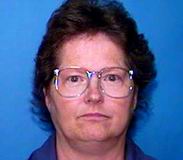 Bobbie Sue Terrell
Murderer · USA · 1984
Bobbie Sue Dudley Terrell was a Pinellas County nurse and worked as the night s…
12 victims
Bobbie Sue Terrell
Murderer · USA · 1984
Bobbie Sue Dudley Terrell was a Pinellas County nurse and worked as the night s…
12 victims
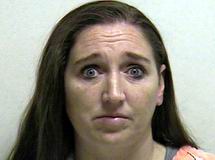 Megan Huntsman
Murderer · USA · 1996
Megan Huntsman was 40 at sentencing. She was a mother of three children who wer…
6 victims
Megan Huntsman
Murderer · USA · 1996
Megan Huntsman was 40 at sentencing. She was a mother of three children who wer…
6 victims
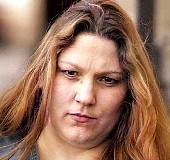 Angela Johnson
Murderer · USA · 1993
Angela Jane Johnson was convicted in federal court of aiding and abetting the m…
5 victims
Angela Johnson
Murderer · USA · 1993
Angela Jane Johnson was convicted in federal court of aiding and abetting the m…
5 victims
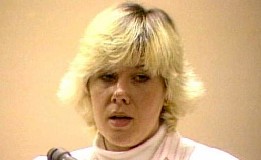 Catherine May Wood
Murderer · USA · 1987
Catherine May Wood was an American caregiver who worked at the Alpine Manor Nur…
5 victims
Catherine May Wood
Murderer · USA · 1987
Catherine May Wood was an American caregiver who worked at the Alpine Manor Nur…
5 victims
 Michele Kalina
Murderer · USA · 1996
Michele Kalina pleaded guilty to murder for one of five infants she initially w…
5 victims
Michele Kalina
Murderer · USA · 1996
Michele Kalina pleaded guilty to murder for one of five infants she initially w…
5 victims
 Amy Bishop
Murderer · USA · 1986
Amy Bishop — biology professor and perpetrator · James Anderson — Bishop’s husb…
4 victims
Amy Bishop
Murderer · USA · 1986
Amy Bishop — biology professor and perpetrator · James Anderson — Bishop’s husb…
4 victims
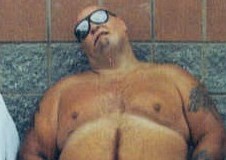 Joe Metheny
Serial killer · USA · 1976
Joe Roy Metheny was sentenced to death on November 13, 1998. The death sentence…
10 victims
Joe Metheny
Serial killer · USA · 1976
Joe Roy Metheny was sentenced to death on November 13, 1998. The death sentence…
10 victims
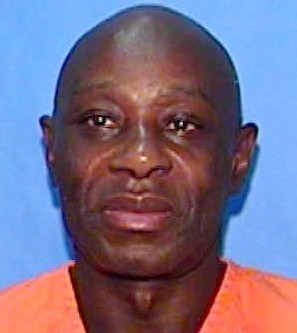 Joe Elton Nixon
Murderer · USA · 1984
Joe Elton Nixon (born August 23, 1961) was an American convicted murderer on De…
1 victim
Joe Elton Nixon
Murderer · USA · 1984
Joe Elton Nixon (born August 23, 1961) was an American convicted murderer on De…
1 victim
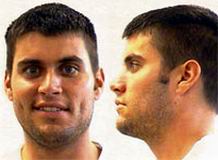 Andrew Paul Witt
Murderer · USA · 2004
Andrew Paul Witt (born 1982) was a former Senior Airman in the United States Ai…
2 victims
Andrew Paul Witt
Murderer · USA · 2004
Andrew Paul Witt (born 1982) was a former Senior Airman in the United States Ai…
2 victims
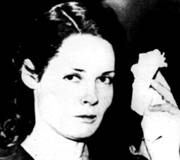 Nina Housden
Murderer · USA · 1944
Nina Housden lived near Detroit. She was described as a passionate, violent and…
1 victim
Nina Housden
Murderer · USA · 1944
Nina Housden lived near Detroit. She was described as a passionate, violent and…
1 victim
- Gender
- female
- Country
- USA
- Location
- Derry, Rockingham County, New Hampshire , USA
- Date of birth
- August 16, 1967
- Age at first offence
- 23
- Characteristics
- —
- Victim profile
- Gregory Smart, 24 (her husband)
- Method of murder
- Shooting
- Date(s) of murder
- May 1, 1990
- Years active
- 1990
- Date of arrest
- August 1, 1990
- Status
-
Life imprisonment
Sentenced to life in prison without the possibility for parole on March 22, 1991
Case summary
Pamela Ann Smart (née Wojas) (born August 16, 1967) was convicted in New Hampshire of first-degree murder, conspiracy to commit murder, and witness tampering. She served a life sentence without the possibility for parole and was incarcerated at the Bedford Hills Correctional Facility for Women in New York State under an interstate compact between New York and New Hampshire.
Smart was convicted in March 1991 in Rockingham County Superior Court after a 14-day trial. The jury returned guilty verdicts for “being an accomplice to first-degree murder, conspiracy to commit murder and witness tampering.” Her conviction was largely based on testimony from the conspirators and secretly taped conversations in which Smart appeared to contradict her claims about reconciliation and her lack of knowledge of the boys’ plot.
Smart was convicted for conspiring with her teen lover and his three friends to kill her 24-year-old husband, Gregory Smart, in Derry, New Hampshire. Smart was accused of seducing 15-year-old William “Billy” Flynn and threatening to stop having sex with him unless he killed her husband. Flynn did so with the help of three friends—Patrick “Pete” Randall, Vance “J.R.” Lattime Jr., and Raymond Fowler—on May 1, 1990.
Smart met Flynn at “Project Self-Esteem” at Winnacunnet High School in Hampton, New Hampshire, where Smart and Flynn were both volunteers. Smart worked as a media services coordinator at Winnacunnet, and Flynn was a sophomore. Smart and Flynn later had an affair. Smart maintained her innocence, and she continued to proclaim that she had no involvement in the murder plot and had no foreknowledge of it. She later claimed indirect responsibility by admitting that if she had not had an affair with Flynn, Flynn would not have committed the crime.
Timeline
- February 26, 1993 — The Supreme Court of New Hampshire affirmed Smart’s conviction, rejecting multiple arguments including claims about pretrial publicity, trial atmosphere, juror misconduct procedures, jury instructions, suppression of taped recordings, and limits on recalling witnesses.
- March 22, 1991 — Smart was found guilty on counts of being an accomplice to first-degree murder, conspiracy to commit murder, and witness tampering; she received a mandatory sentence of life in prison without the possibility for parole.
The offence
On the night of May 1, 1990, Pamela Smart entered her Derry home and observed the body of her husband, Gregory Smart, apparently the victim of a homicide. The police arrived shortly thereafter and commenced a murder investigation that culminated in Smart’s arrest.
Smart and Flynn planned the murder. According to the plan described in the Supreme Court of New Hampshire’s opinion, Smart told Flynn that in order for them to continue their relationship they would have to kill her husband. The perpetrators were to stage the killing as if committed in the course of a burglary of Smart’s home. The plan included leaving open the bulkhead door to provide entry for Flynn and the others before Gregory returned home. The perpetrators were to park their car in a shopping center behind the residence, change into dark clothes before approaching the apartment, wear gloves to avoid leaving fingerprints, and ransack the apartment, taking items as compensation.
Gregory was killed with a gun upon entering his home as if he had surprised burglars. In the Supreme Court’s description, Flynn shot Gregory once in the head. The assailants forced Gregory to his knees, with Randall holding Gregory’s head down and holding a knife in front of his face while Flynn shot him. After the shooting, Flynn and Randall fled to meet Fowler and Lattime, and then drove back to Seabrook. The next day, Lattime replaced the gun among the rest of his father’s collection.
Investigation
Police officials characterized the crime scene as looking like a disrupted burglary and described multiple “red flags” that left unanswered questions. During the investigation, J.R. Lattime’s father brought a .38 caliber pistol he had found in his house to police, believing it might have been the murder weapon.
An anonymous tip indicated that a teenager named Cecilia Pierce was aware of the plan. Police talked to Cecilia Pierce and she agreed to wear a wire and record some conversations with Smart, in hopes that Smart would say something incriminating. The recordings led to further investigation.
The Supreme Court of New Hampshire described that Ralph Welch told Lattime’s parents that Randall and Lattime admitted to him their participation in the murder. Lattime’s parents took the gun to the Seabrook Police Department and subsequent ballistics tests confirmed that the gun had been used in the murder. The Supreme Court also described that the defendant spoke with Cecelia Pierce about the plan, and that Pierce denied knowledge until she met with police again and agreed to a phone tap and body wire.
In Smart’s arrest-related procedure, Detective Daniel Pelletier entered Smart’s office unannounced on August 1, 1990, at 1:05 p.m. Smart recognized Pelletier and asked, “What’s up?” Pelletier said, “Well, Pam, …I have some good news and I have some bad news. The good news is that we’ve solved the murder of your husband. The bad news is, you’re under arrest.” Smart asked, “What for?” Pelletier said, “First-degree murder. Stand up and face the wall.” Smart was then handcuffed and arraigned into the Derry District Court and jailed at the Rockingham County Jail.
Arrest
Pamela Smart was arrested in connection with the murder of her husband. The Supreme Court of New Hampshire stated that on August 1, 1990, Smart was arrested in connection with the murder of her husband. The Supreme Court also described that she was arraigned in Derry District Court and jailed at the Rockingham County Jail.
Smart was incarcerated at the Rockingham County Jail following arrest.
Trial
Smart’s trial attracted extensive media attention and lasted 14 days.
At oral argument commencing March 4, 1991, Assistant Attorney General Diane Nicolosi portrayed the teenagers as naive victims of an “evil woman bent on murder.” The prosecution portrayed Smart as the cold-blooded mastermind who controlled her young lover. The prosecution argued that Smart seduced Flynn to get him to murder her husband so she could avoid an expensive divorce and benefit from a $140,000 life insurance policy.
Smart acknowledged that she had had an affair with Flynn but testified that the murder of her husband was solely the doing of Flynn and his friends. Smart claimed she did not participate in the murder plot and had no foreknowledge of it.
The Supreme Court of New Hampshire described additional witnesses, including Cindy Butt, a co-worker of Pierce, who testified that Pierce told her a month prior to the murder that she had a “friend named Pam who wanted to find somebody to kill her husband.” The Supreme Court also described testimony by George Moses, who said Smart asked him to lie by claiming he had overheard Pierce admit to lying to police about Smart’s involvement.
The jury returned guilty verdicts on March 22, 1991 in Rockingham County Superior Court for being an accomplice to first-degree murder, conspiracy to commit murder, and witness tampering. The sentence was life in prison without the possibility for parole.
During deliberations, the jury asked a question about accomplice element language. The trial court instructed:
“Madame Forelady and Members, the burden is on the State to prove the elements of the charge. You may consider all the evidence before you whether the act was specifically alleged or not. The answer to your specific question is no.”
Sentencing
On March 22, 1991, Smart was sentenced to life in prison without the possibility for parole. The sentence was mandatory and applied following guilty verdicts on accomplice to first-degree murder, conspiracy to commit murder, and witness tampering.
Appeals
Smart appealed her conviction to the Supreme Court of New Hampshire. The court delivered its opinion on February 26, 1993, affirming the conviction.
In the Supreme Court’s February 26, 1993 opinion, Smart argued:
- that pretrial publicity deprived her of an impartial jury,
- that the trial court failed to adequately safeguard the trial proceedings,
- that she should have been permitted post-verdict voir dire for alleged juror misconduct,
- that the trial court erred in its supplemental instruction,
- that the trial court erred in denying her motion to suppress tape recordings of her intercepted conversations,
- that the court erred in submitting transcripts of taped conversations to the jury,
- and that the court erred in refusing to allow Smart to recall two witnesses for renewed cross-examination.
The Supreme Court affirmed.
The Supreme Court’s opinion addressed the legal issues including pretrial publicity, the trial atmosphere, juror misconduct procedures, supplemental jury instructions, admissibility and suppression challenges relating to recorded conversations, and limits on recalling witnesses after testimony. The Supreme Court held that there was no manifest error in the trial court’s determination that an impartial jury was selected and that no abuse of discretion occurred in denying the claims raised on appeal.
The Supreme Court’s opinion also described arguments about consent for intercepted conversations and concluded the evidence supported that Pierce’s consent was voluntary. It further addressed challenges related to the right to counsel and professional conduct rule arguments, and it rejected suppression arguments and found no abuse of discretion regarding transcripts and refusal to allow witnesses to be recalled.
Outcome
Smart’s conviction remained affirmed by the Supreme Court of New Hampshire, and she continued to serve a life sentence without parole.
Imprisonment and other legal events
Smart was incarcerated at the Bedford Hills Correctional Facility for Women in New York State. The Supreme Court of New Hampshire described her arrest, conviction, and later appeals, and other case events placed her in New York custody under an interstate compact between New York and New Hampshire. Smart was transferred to Bedford Hills from the New Hampshire State Prison for Women in Goffstown in 1993.
Smart later pursued federal habeas proceedings, and the First U.S. Court of Appeals upheld a 2002 ruling by a federal judge who rejected her federal habeas petition in April 2004. Prior to her federal appeal, Smart had exhausted all judicial appeals at the state level.
In July 2005, the New Hampshire Executive Council unanimously denied a pardon request for “any conditions the governor may seek to impose.”
Smart sought a financial settlement from the state of New York, related to a lawsuit in which she accused prison officials of unfair treatment after photographs of her in a jail cell were published in 2003. A U.S. District Court judge countenanced $23,875 to Smart from the state of New York on November 5, 2009.
Smart also filed suit with fellow inmate Carolyn Warmus, claiming sexual harassment and sexual assault by a guard, whom they claimed coerced them into posing for suggestive pictures published in 2003.
In October 1996, Smart was severely beaten by inmates M. Graves and G. Miller, resulting in a metal plate being placed in the left side of her face. The two inmates beat her after accusing her of snitching on them about their prison relationship. Smart’s later assault-related litigation included a conviction of second-degree assault for the inmates in an attack at Bedford Hills Correctional Facility.
Smart took part in tutoring other inmates and completed two master’s degrees. One of her literature and legal studies master’s degrees was paid for with private funds from Mercy College.
Smart participated in a writer’s workshop facilitated by playwright Eve Ensler during her sentence. Her writing was exhibited in the 2003 PBS documentary What I Want My Words to Do to You.
At a later point, Smart was allowed a radio, a typewriter, and 25 books in her jail cell.
Smart described taking medication for chronic pain sometimes and thinking of suicide after the severe beating.
Related people and sentencing outcomes (other case participants)
William Flynn and Patrick Randall were serving their sentences at the Maine State Prison in Warren, Maine. Raymond Fowler was paroled in 2003 but was sent back to prison for violating his parole terms in 2004 and was paroled again in June 2005. Vance Lattime had his 30-year sentence reduced by 12 years, with reductions continuing and he was paroled in 2005.
The Supreme Court of New Hampshire’s opinion stated that in January 1991 Flynn, Randall, and Lattime agreed to plead guilty to reduced charges and testified for the State at Smart’s trial. It also described that the defendant’s accomplices were arrested and that Welch’s actions and subsequent evidence connected the defendants to the murder. The opinion described a separate ballistics confirmation and subsequent arrest timing for Lattime, Randall, Flynn, and Fowler.
Personal background and education (as stated in the case narrative)
Pamela Ann Wojas was born in Coral Gables, Florida, and moved with her family to Windham, New Hampshire when she was in elementary school. She was the second of three children. Her father worked as a commercial airline pilot and her mother worked part-time as a legal secretary.
Smart went to high school at Pinkerton Academy in Derry, where she was a cheerleader. She went to college at Florida State University and graduated with honors with a communications degree. She completed her BA in communications in 1988 in a little more than three years with an accomplished 3.85 grade point average. She hosted a one-night-a-week radio show at WVFS called “Metal Madness,” using the alias “Maiden of Metal.”
Smart married Gregory Smart; they formed a serious relationship in February 1987 and married two years later, according to the narrative provided in the case record.
Smart met Gregory Smart at a 1986 New Year’s Eve party.
The narrative also described that Greg bought her a Shih Tzu named “Halen” after Van Halen. The case record states that she volunteered as an adult facilitator with Project Self-Esteem, a local drug awareness program at Winnacunnet High School, where all freshmen were expected to participate.
Smart met Billy Flynn at “Project Self-Esteem,” and it described her being employed as a media services coordinator at Winnacunnet High School. The case record describes Flynn as a sophomore and states that Smart and Flynn were both volunteers.
The narrative described other individuals including Cecelia Pierce and other teenage participants in South Seabrook, including J.R. Lattime Jr., Patrick Randall, and Raymond Fowler.
Media and cultural references
The case was the basis for a television movie starring Helen Hunt and Chad Allen. It inspired the Joyce Maynard novel To Die For and a 1995 film adaptation starring Nicole Kidman and Matt Dillon as fictional leads. The case was also the subject of several true crime books, including Teach Me To Kill and Deadly Lessons. The case was also mentioned as the basis for an episode of Law & Order and an Investigation Discovery series episode titled “Scorned: Love Kills.”

Spotted an error, or have more information about this case?