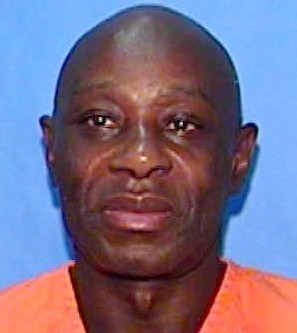
Joe Elton Nixon
Murderer Brian Kevin Rosenfeld
Murderer · USA · 1985
Brian Kevin Rosenfeld Brian Kevin Rosenfeld was sentenced to three concurrent l…
23 victims
Brian Kevin Rosenfeld
Murderer · USA · 1985
Brian Kevin Rosenfeld Brian Kevin Rosenfeld was sentenced to three concurrent l…
23 victims
 Marvin Gray
Murderer · USA · 1975
Marvin Gray was convicted killer who claimed responsibility for 23 slayings and…
23 victims
Marvin Gray
Murderer · USA · 1975
Marvin Gray was convicted killer who claimed responsibility for 23 slayings and…
23 victims
 Yahweh ben Yahweh
Murderer · USA · 1980
Yahweh ben Yahweh was born and legally named Hulon Mitchell Jr. (October 27, 19…
23 victims
Yahweh ben Yahweh
Murderer · USA · 1980
Yahweh ben Yahweh was born and legally named Hulon Mitchell Jr. (October 27, 19…
23 victims
 Russell Ellwood
Murderer · USA · 1991
Russell Ellwood was a former taxi driver. Authorities suspected him of killing…
20 victims
Russell Ellwood
Murderer · USA · 1991
Russell Ellwood was a former taxi driver. Authorities suspected him of killing…
20 victims
 Christopher Spreitz
Murderer · USA · 1989
Christopher John Spreitz was Caucasian. On the night in question, Ruby Reid spe…
1 victim
Christopher Spreitz
Murderer · USA · 1989
Christopher John Spreitz was Caucasian. On the night in question, Ruby Reid spe…
1 victim
 William Dean Wickline
Murderer · USA · 1979
William D. Wickline was executed by lethal injection on March 30, 2004, at the…
3 victims
William Dean Wickline
Murderer · USA · 1979
William D. Wickline was executed by lethal injection on March 30, 2004, at the…
3 victims
 Matej Curko
Murderer · Slovakia · 2010
Matej Curko was an alleged cannibal. · May 10, 2011 — Matej Curko died in a fir…
2 victims
Matej Curko
Murderer · Slovakia · 2010
Matej Curko was an alleged cannibal. · May 10, 2011 — Matej Curko died in a fir…
2 victims
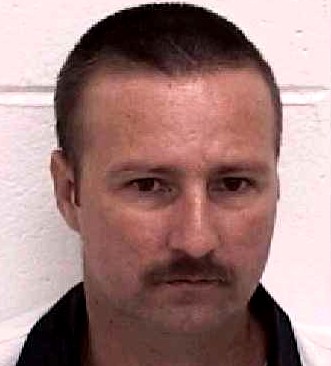 Jimmy Meders
Murderer · USA · 1997
Jimmy Fletcher Meders, 36, was convicted in Glynn County of malice murder and a…
1 victim
Jimmy Meders
Murderer · USA · 1997
Jimmy Fletcher Meders, 36, was convicted in Glynn County of malice murder and a…
1 victim
 Jeyavani Vageswaran
Murderer · United Kingdom · 2014
Jeyavani Vageswaran committed suicide by hanging herself the same day. Jeyavani…
2 victims
Jeyavani Vageswaran
Murderer · United Kingdom · 2014
Jeyavani Vageswaran committed suicide by hanging herself the same day. Jeyavani…
2 victims
- Gender
- male
- Country
- USA
- Location
- Leon County, Florida, USA
- Date of birth
- August 23, 1961
- Age at first offence
- 23
- Characteristics
- kidnapping, robbery
- Victim profile
- Jeanne Bickner
- Method of murder
- Tied the victim to a tree with jumper cables, and set her on fire
- Date(s) of murder
- August 12, 1984
- Years active
- 1984
- Date of arrest
- 2 days after
- Status
-
Sentenced to death
Sentenced to death on July 30, 1985
Case information
Joe Elton Nixon (born August 23, 1961) was an American convicted murderer on Death Row in Florida. He was convicted in the kidnapping and murder of Jeanne Bickner, whose charred body was located by joggers in a wooded area in southern Leon County, Florida.
Joe Elton Nixon DC# 910610 DOB: 08/23/61 Second Judicial Circuit, Leon County Case# 84-2324-CF Sentencing Judge: The Honorable J. Lewis Hall, Jr. Trial Attorneys: Michael M. Corin – Assistant Public Defender Direct Appeal: Whitney T. Strickland – Assistant Public Defender Collateral Appeals: Eric M. Freedman – Private
Timeline
- 08/12/84 — Nixon approached Jeanne Bickner in the parking lot of the Governor’s Square Mall in Tallahassee, Florida, asked if she could help with jump-starting his car, and then accepted her offer for a ride home.
- 08/13/84 — Jeanne Bickner’s charred body was located by a couple of joggers passing through the wooded area.
- 08/14/84 — Bickner’s car was found in a drainage ditch.
- 08/14/84 — Nixon was arrested after information from Wanda Robinson and Nixon’s brother, John, to police.
- 08/29/84 — The grand jury indicted Nixon: Count I First-Degree Murder; Count II Felony Kidnapping; Count III Robbery with no Firearm or Deadly Weapon; Count IV Arson Willfully Damaging a Dwelling.
- 09/10/84 — Nixon entered a plea of not guilty.
- 07/22/85 — A jury returned guilty verdicts on all counts of the indictment.
- 07/25/85 — The jury recommended death by a vote of 10-2.
- 07/30/85 — Nixon was sentenced: Count I death; Count II life; Count III 15 years; Count IV 15 years.
- 09/03/85 — Nixon filed his Direct Appeal to the Florida Supreme Court.
- 06/20/91 — A Petition for Writ for Certiorari was filed to the United States Supreme Court.
- 10/07/91 — The United States Supreme Court denied the Petition for Writ for Certiorari.
- 10/07/93 — A 3.850 Motion was filed to the Circuit Court.
- 10/22/97 — The Circuit Court denied the 3.850 Motion without an evidentiary hearing.
- 12/15/97 — Nixon filed a 3.850 Appeal to the Florida Supreme Court.
- 01/27/00 — An opinion was issued consolidating two cases and remanding both cases back to the trial court for an evidentiary hearing on Nixon’s ineffective counsel claim, specifically whether Nixon consented to defense strategy to concede.
- 06/09/00 — A rehearing on the consolidated opinion was denied, and a mandate was issued on 07/31/00.
- 05/11/01 — The evidentiary hearing was held.
- 09/20/01 — The trial court denied the 3.850 Motion by finding that Michael M. Corin did provide Nixon with effective counsel.
- 11/08/01 — An appeal of the trial court’s denial of the 3.850 Motion was filed to the Florida Supreme Court.
- 10/04/88 — The Florida Supreme Court clarified the procedure for the evidentiary hearing: the evidentiary hearing should be conducted with the rights of examination and cross-examination by the defendant and the State, and the defendant was allowed to present witnesses but not the State.
- 01/15/88 — The trial court relinquished jurisdiction to seek clarification from the Florida Supreme Court on an evidentiary-hearing order.
- 02/01/89 — The Florida Supreme Court remanded the case to the trial court after the trial court did not interpret the prior order in a manner that required findings and conclusions.
- 10/04/89 — The trial court found that Nixon had not sustained his burden of proof.
- 11/29/89 — The Court declined to dispose of Nixon’s ineffective counsel claim without prejudice to raise it in a later 3.850 Motion.
- 07/10/03 — The Florida Supreme Court remanded the case for a new trial.
- 06/09/98 — A Petition for Writ of Habeas Corpus was filed to the Florida Supreme Court.
- 03/01/04 — The United States Supreme Court granted certiorari.
- 12/22/03 — Nixon filed a Petition for Writ of Certiorari to the United States Supreme Court.
- 12/13/04 — The United States Supreme Court reversed the Florida Supreme Court decision and remanded the case for reconsideration.
- 04/20/06 — The Florida Supreme Court readdressed the ineffective assistance of counsel claim on concession of guilt without Nixon’s consent, and affirmed denial of Nixon’s 3.850 Motion; the Court also denied habeas relief on the issues raised in Nixon’s Petition for Writ of Habeas Corpus.
- 06/16/06 — Rehearing was denied.
- 07/05/06 — The mandate was issued.
Background
On August 12, 1984, Nixon was described as a career criminal and convicted murderer. He was convicted of kidnapping and murder of Jeanne Bickner.
The offence
On August 12, 1984, Nixon approached Jeanne Bickner in the parking lot of the Governor’s Square Mall in Tallahassee, Florida. Nixon asked Bickner if she could help with jump-starting his car. Bickner offered Nixon a ride home, and Nixon accepted.
Once on the road in Bickner’s 1973 MG sports car, Nixon ordered the woman to drive to a remote location. Nixon eventually overpowered Bickner and stopped the car. Nixon placed Bickner into the trunk of the car and drove to a wooded area in southern Leon County, Florida. Nixon removed Bickner from the trunk and tied her to a tree with jumper cables, then set her on fire, which eventually led to her death.
During the period while the two talked about their lives, Bickner offered to give Nixon money or sign over her car to him, and she begged him not to kill her. Nixon began to burn some of Bickner’s personal belongings and proceeded to add the convertible top of the car to the burning pile. Nixon then placed a paper bag over Bickner’s head. Before driving away, Nixon threw the burning top of the car onto Bickner, setting her on fire.
The medical examiner testified that Bickner was alive at the time she was set on fire, and that the fire was the cause of her death.
Discovery and location of the victim
On August 13, 1984, a couple that was passing through the woods found Bickner’s remains and reported the scene to police. Bickner was located in a seated position by a pine tree. She had been secured to the tree by jumper cables tied around her waist, and her left arm was tied to another tree.
On August 14, 1984, Bickner’s car was found in a drainage ditch. The interior and trunk were gutted by fire.
Investigation
After Nixon learned that Bickner’s body was located, he became nervous. He then burned Bickner’s personal belongings and the MG.
Nixon later confessed to family members that he had committed a murder, and those family members called police. Nixon was arrested a short time later.
Wanda Robinson, Nixon’s girlfriend, and Nixon’s brother, John, had given information to police that resulted in the arrest. John told police that Nixon had admitted killing a white woman by tying her to a tree with jumper cables and burning her. John and Robinson also stated that they had seen Nixon driving the victim’s car the previous day and on the morning of 8/14/01. They also said that Nixon showed them two of Bickner’s rings and later stated that he had pawned the rings.
Testimony at trial revealed that Nixon had attempted to sell the MG prior to burning it. A pawnshop receipt was found signed by Nixon for both rings, and Nixon’s palm print was found on the lid of the trunk of the MG.
Arrest
Nixon was arrested on August 14, 1984.
Trial
On August 29, 1984, Nixon was indicted as follows:
- Count I: First-Degree Murder
- Count II: Felony Kidnapping
- Count III: Robbery with no Firearm or Deadly Weapon
- Count IV: Arson Willfully Damaging a Dwelling
On September 10, 1984, Nixon pled not guilty.
On July 22, 1985, a jury returned guilty verdicts on all counts of the indictment.
On July 25, 1985, the jury recommended death by a vote of 10-2.
Sentencing
On July 30, 1985, Nixon was sentenced as follows:
- Count I: First-Degree Murder — Death
- Count II: Felony Kidnapping — Life
- Count III: Robbery with no Firearm or Deadly Weapon — 15 years
- Count IV: Arson Willfully Damaging a Dwelling — 15 years
Nixon was awaiting his sentence to be carried out at the Union Correctional Institution.
Appeals
Direct appeal
Nixon filed his Direct Appeal on September 3, 1985 to the Florida Supreme Court. His main claim was ineffective counsel based on comments made by trial counsel during opening statements and closing arguments that conceded guilt without record approval of Nixon. Nixon stated that the position taken by trial counsel was the equivalent of a guilty plea.
The Florida Supreme Court remanded the case to the trial court on October 27, 1987 for an evidentiary hearing to decide if Nixon was informed of and voluntarily consented to this strategy. The trial court relinquished jurisdiction on January 15, 1988 to seek clarification from the Florida Supreme Court on the above order. On October 4, 1988, the Florida Supreme Court clarified the procedure for the evidentiary hearing: the evidentiary hearing should be conducted with the rights of examination and cross-examination by the defendant and the State, and the defendant was allowed to present witnesses but not the State. The trial court did not interpret the order to require findings and conclusions; therefore, the Florida Supreme Court remanded the case on February 1, 1989.
At that time, the State was allowed to present witnesses; however, the State’s examination of Corin was limited only to the issues addressed during his testimony for the defense due to Nixon’s refusal to waive attorney-client privilege. On October 4, 1989, the trial court found that Nixon had not sustained his burden of proof. On November 29, 1989, the Court declined to dispose of the claim without prejudice in order to have it raised in a later 3.850 Motion.
Nixon also raised three other issues on his Direct Appeal:
- the prosecutor made an impermissible “Golden Rule” argument;
- Nixon’s absence during critical proceedings during the trial; and
- the trial court allowing seven photographs of the victim entered into evidence.
The Florida Supreme Court ruled that the comments during the State’s closing argument did not amount to a Golden Rule argument, that it was not an error to proceed with the trial in Nixon’s absence, and that the trial court did not abuse its discretion by admitting the photographs. The remaining claims were rejected, found to have no merit, or properly ruled on by the trial court, and the Florida Supreme Court subsequently affirmed Nixon’s conviction and sentence.
A Petition for Writ for Certiorari was filed to the United States Supreme Court on June 20, 1991 and was denied on October 7, 1991.
3.850 and subsequent remands
A 3.850 Motion was filed to the Circuit Court on October 7, 1993 and was denied on October 22, 1997 without an evidentiary hearing. On December 15, 1997, Nixon filed a 3.850 Appeal to the Florida Supreme Court.
On January 27, 2000, an opinion was issued consolidating the two cases and remanding both cases back to the trial court for an evidentiary hearing on Nixon’s ineffective counsel claim—specifically whether Nixon consented to defense strategy to concede. A rehearing on this opinion was denied on June 9, 2000, and a mandate was issued on July 31, 2000.
The evidentiary hearing was held on May 11, 2001. An order was issued on September 20, 2001; the trial court denied the 3.850 Motion by finding that Corin did provide Nixon with effective counsel. An appeal of that denial was filed to the Florida Supreme Court on November 8, 2001.
The main issue in this appeal was whether Nixon agreed to Corin’s strategy to concede guilt although he pled not guilty. Corin testified that he did consult Nixon about the concession, but he did not verbally agree or disagree with the decision. The Florida Supreme Court found that silence was not enough to prove that Nixon agreed to Corin’s decision, resulting in ineffective counsel and remanded the case for a new trial on July 10, 2003.
The Petition for Writ of Habeas Corpus filed on June 9, 1998 was dismissed as moot due to the order that remanded the case for a new trial on July 10, 2003.
United States Supreme Court certiorari and remand
On December 22, 2003, Nixon filed a Petition for Writ of Certiorari to the United States Supreme Court, which was granted on March 1, 2004. The Court would hear issues on the effectiveness standards of counsel, and held that claims of ineffective assistance of counsel based on counsel’s concession of guilt to the crime charged, even without the defendant’s consent, were to be analyzed under Strickland v. Washington.
On December 13, 2004, the United States Supreme Court reversed the Florida Supreme Court decision and remanded the case for reconsideration.
Florida Supreme Court after remand and habeas relief
On April 20, 2006, the Florida Supreme Court readdressed the ineffective assistance of counsel claim on the issue of concession of guilt without Nixon’s consent, and addressed other issues raised in Nixon’s 3.850 Appeal. The Florida Supreme Court affirmed the trial court’s denial of Nixon’s 3.850 Motion. The Court concluded that trial counsel, Corin, was not ineffective conceding guilt to first-degree murder. The Court also found no error in the trial court’s summary denial of six other claims raised in Nixon’s 3.850 Motion.
On June 16, 2006, the rehearing was denied, and the mandate was issued on July 5, 2006.
On April 20, 2006, the Florida Supreme Court also addressed the issues raised in Nixon’s Petition for Writ of Habeas Corpus and denied habeas relief. Nixon raised three claims:
- ineffective counsel;
- death sentence is unconstitutional based on Ring and Apprendi issues; and
- mental incompetence to stand trial.
The Court concluded that counsel ineffectiveness had not been demonstrated, the Ring case was not applicable because Nixon’s case became final before Ring was decided, and the record did not demonstrate that Nixon was mentally retarded.
Outcome
Nixon remained convicted and was sentenced to death on July 30, 1985. He was on Death Row in Florida awaiting his sentence to be carried out at the Union Correctional Institution.
Other details
Nixon’s defense counsel was Michael M. Corin (Assistant Public Defender). Nixon’s Direct Appeal was handled by Whitney T. Strickland (Assistant Public Defender). Collateral Appeals were handled by Eric M. Freedman (Private).
The indictment included First-Degree Murder, Felony Kidnapping, Robbery with no Firearm or Deadly Weapon, and Arson Willfully Damaging a Dwelling. The jury returned guilty verdicts on all counts and recommended death by a vote of 10-2.
The record included a pawnshop receipt found signed by Nixon for both of Bickner’s rings, and Nixon’s palm print was found on the lid of the trunk of the MG.
Bickner was described as a woman from the Tallahassee, Florida shopping mall parking lot. Nixon’s actions involved placing Bickner into the trunk, tying her to a tree with jumper cables, and setting her on fire, with the medical examiner testifying that Bickner was alive when set on fire and that fire caused her death.
Nixon’s girlfriend was Wanda Robinson, and his brother was John.
Spotted an error, or have more information about this case?