
Karla Tucker
Murderer Bobbie Sue Terrell
Murderer · USA · 1984
Bobbie Sue Dudley Terrell was a Pinellas County nurse and worked as the night s…
12 victims
Bobbie Sue Terrell
Murderer · USA · 1984
Bobbie Sue Dudley Terrell was a Pinellas County nurse and worked as the night s…
12 victims
 Angela Johnson
Murderer · USA · 1993
Angela Jane Johnson was convicted in federal court of aiding and abetting the m…
5 victims
Angela Johnson
Murderer · USA · 1993
Angela Jane Johnson was convicted in federal court of aiding and abetting the m…
5 victims
 Catherine May Wood
Murderer · USA · 1987
Catherine May Wood was an American caregiver who worked at the Alpine Manor Nur…
5 victims
Catherine May Wood
Murderer · USA · 1987
Catherine May Wood was an American caregiver who worked at the Alpine Manor Nur…
5 victims
 Amy Bishop
Murderer · USA · 1986
Amy Bishop — biology professor and perpetrator · James Anderson — Bishop’s husb…
4 victims
Amy Bishop
Murderer · USA · 1986
Amy Bishop — biology professor and perpetrator · James Anderson — Bishop’s husb…
4 victims
 Debra Sue Tuggle
Murderer · USA · 1974
Debra Sue Tuggle was an African American woman born in Arkansas. She had a hist…
4 victims
Debra Sue Tuggle
Murderer · USA · 1974
Debra Sue Tuggle was an African American woman born in Arkansas. She had a hist…
4 victims
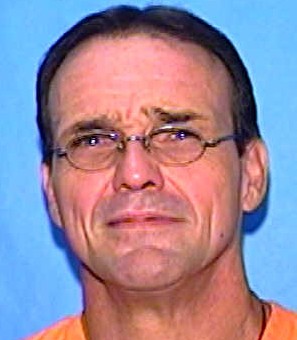 Michael Gordon Reynolds
Murderer · USA · 1998
Michael Gordon Reynolds had a prior dispute with Danny Ray Privett over a trail…
3 victims
Michael Gordon Reynolds
Murderer · USA · 1998
Michael Gordon Reynolds had a prior dispute with Danny Ray Privett over a trail…
3 victims
 Sarah Dutra
Murderer · USA · 2001
Sarah Dutra (defendant) · Larry McNabney (victim; Sacramento, California attorn…
1 victim
Sarah Dutra
Murderer · USA · 2001
Sarah Dutra (defendant) · Larry McNabney (victim; Sacramento, California attorn…
1 victim
 Carlos Eduardo Robledo Puch
Serial killer · Argentina · 1971
Carlos Eduardo Robledo Puch, also known as "The Death Angel" or "The Black Ange…
11 victims
Carlos Eduardo Robledo Puch
Serial killer · Argentina · 1971
Carlos Eduardo Robledo Puch, also known as "The Death Angel" or "The Black Ange…
11 victims
 Eric Smith
Homicide · USA · 1993
Eric M. Smith was an incarcerated American criminal. Derrick Robie was a four-y…
1 victim
Eric Smith
Homicide · USA · 1993
Eric M. Smith was an incarcerated American criminal. Derrick Robie was a four-y…
1 victim
 Jonathan Arce
Homicide · USA · 1998
Jonathan Arce was 14 when he fatally stabbed a neighbor, retired University of…
1 victim
Jonathan Arce
Homicide · USA · 1998
Jonathan Arce was 14 when he fatally stabbed a neighbor, retired University of…
1 victim
- Gender
- female
- Country
- USA
- Location
- Harris County, Texas, USA
- Date of birth
- November 18, 1959
- Age at first offence
- 24
- Characteristics
- burglary, alcohol, drugs, robbery
- Victim profile
- Jerry Lynn Dean (male, 27) and Deborah Thornton (female, 32)
- Method of murder
- Beating with a pickax 28 times
- Date(s) of murder
- June 13, 1983
- Years active
- 1983
- Date of arrest
- J uly 20, 1983
- Status
-
Executed
Executed by lethal injection in Texas on February 3, 1998
Case details
Karla Tucker was convicted in Texas of capital murder during the commission of and attempt to commit robbery. The trial court sentenced her to death by lethal injection. She was executed by lethal injection in Texas on February 3, 1998.
Timeline
- June 13, 1983 — Tucker, Danny Garrett, and James Leibrant left Tucker’s residence after some “partying,” then went to Jerry Lynn Dean’s apartment to collect some money and intimidate him.
- June 13, 1983 — The bodies were discovered by a co-worker of Dean’s, Gregory Scott Traver.
- April 19, 1984 — A jury found Tucker guilty of capital murder.
- April 25, 1984 — After a separate punishment hearing, the jury answered affirmatively the special issues submitted under Article 37.071 (repealed effective September 1, 1991); the trial court sentenced Tucker to death by lethal injection.
- June 29 — The 180th District Court overruled Tucker’s motion for a new trial.
- 1988 — The Texas Court of Criminal Appeals affirmed the conviction and sentence on direct appeal (Tucker v. State, 771 S.W.2d 523).
- January 11, 1989 — Tucker’s motion for rehearing was denied.
- April 11, 1989 — The Court of Criminal Appeals stayed issuance of the mandate until this date.
- June 26, 1989 — Tucker’s petition for writ of certiorari in the U.S. Supreme Court was denied along with her application for stay of mandate.
- July 6, 1989 — The mandate of the Court of Criminal Appeals was issued.
- December 15, 1989 — Tucker filed an application for state habeas relief.
- January 24, 1992 — Tucker filed an amended petition.
- April 29, 1992 — The convicting court entered findings of fact and conclusions of law.
- May 29, 1992 — The convicting court set Tucker’s execution date for June 30, 1992.
- June 22, 1992 — The Court of Criminal Appeals granted a stay of execution pending an evidentiary hearing on three of Tucker’s claims.
- January 27, 1995 — The Court of Criminal Appeals denied relief (Ex parte Tucker, Application no. 21,159-01).
- August 1, 1995 — Tucker’s original federal habeas petition was filed.
- February 5, 1996 — The Director responded to the original habeas petition with a motion for summary judgment and answer with brief in support.
- April 15, 1996 — Tucker filed a traverse and opposition to summary judgment.
- July 31, 1996 — The district court granted the Director’s motion for summary judgment and entered its final order denying relief.
- December 20, 1996 — Tucker’s motion to amend judgment was denied.
- January 17, 1997 — Tucker filed a notice of appeal and application for a certificate of probable cause (CPC).
- January 24, 1997 — The district court denied the CPC.
- March 17, 1997 — Tucker filed an application for certificate of appealability and supporting memorandum.
- June 3, 1997 — The court of appeals issued an opinion order denying the application.
- December 8, 1997 — The Court denied certiorari (Tucker v. Johnson, 118 S.Ct. 605).
- December 18, 1997 — The convicting court scheduled Tucker’s execution for February 3, 1998.
- January 20, 1998 — Tucker filed a successive state writ application and request for stay of execution in the Texas Court of Criminal Appeals.
- February 3, 1998 — Tucker’s petition for writ of certiorari in the U.S. Supreme Court was denied.
- January 22, 1998 — Tucker’s request for clemency was filed with the Board of Pardons and Paroles.
- February 2, 1998 — Tucker’s request for clemency was denied.
- February 2, 1998 — Tucker filed a 21 U.S.C. §1983 action and request for stay of execution in federal district court and moved in the U.S. 5th Circuit for leave to file a successive federal habeas petition.
- February 3, 1998 — Tucker filed a third writ of certiorari in the U.S. Supreme Court, which was pending at the time described; she was executed that day by lethal injection at 6:45pm CST, after being pronounced dead about eight minutes after injection.
The offence
Between 2:30 and 4:30 a.m. on June 13, 1983, Tucker, Danny Garrett, and James Leibrant left Tucker’s residence after some “partying.” The “partying” included ingestion of pills, marijuana, speed, and alcohol. Tucker told accomplice Leibrant she wanted to go over to Jerry Lynn Dean’s apartment to collect some money and intimidate him a little. Tucker also convinced Shawn Dean that the keys were lost, having secretly taken the keys from Dean’s wife, Shawn.
Tucker had talked about “offing” Dean about two weeks before the offense.
The men entered Dean’s apartment using keys Tucker had obtained, and in the apartment bedroom Tucker and Garrett found Dean and killed him. Tucker later related to her sister Kari Dean Garrett that when she and Garrett entered the apartment bedroom she put a pickax to Dean’s head and “told him not to move, m______ucker, or you’re dead.” Dean began begging for his life. Tucker struck him with the pickax 28 times and expressed that every time she struck Dean she received sexual gratification.
Deborah Thornton was hiding under sheets in the bedroom. Because the lights were on and Dean had said Tucker’s name several times, Tucker and Garrett decided to kill her as well. Leibrant testified that after he was called into the apartment by Garrett, he heard a gurgling noise in the bedroom, walked back into the bedroom, and witnessed Tucker pull the pickax out of a body, smile, and hit it again. Tucker then continued to strike Thornton with the pickax; Thornton’s pickax wounds included a pickax found lodged in the chest. Thornton also died from multiple stab wounds to the chest and stab wounds and blunt trauma to the back.
After the killings, Leibrant left the scene and walked for about an hour before calling Ronnie Burrell to come pick him up. Leibrant later helped Garrett dispose of Dean’s car later that evening. In a separate account, both Garrett and Tucker took property from Dean including Dean’s truck, wallet, and motorcycle, stored the stolen property with Danny’s brother Doug Garrett, and Tucker and Garrett later expressed pleasure while watching a television news report about the murders.
Investigation
The bodies were discovered by a co-worker of Dean’s, Gregory Scott Traver, on June 13 after Dean did not arrive to drive Traver to work. Traver found Dean’s body in the spare bedroom along with the body of a girl with a pickax “in her heart.” Traver noticed that Dean’s motorcycle was missing and the television had been moved.
Examination of the bodies revealed that Dean had been struck in the head and had several stab wounds. There were a total of 28 stab wounds, 20 of which could have been fatal, along with the fatal skull fracture. Deborah Ruth Thornton died from multiple stab wounds to the chest and stab wounds and blunt trauma to the back. A pickax like the one recovered at the scene could have caused the wounds that killed both decedents.
After the incident, Tucker showed up at the home of Douglas McAndrew Garrett (Doug), at approximately 6:30 a.m. in a blue El Camino. After unloading a motorcycle frame, she said, “We offed Jerry Dean last night.” She told Doug that Garrett had hit Dean with a hammer but that she had picked him and received sexual gratification with every stroke. She handed Doug Dean’s wallet, which Doug immediately burned in an ashtray. Doug later called J.C. Mosier, a family friend and detective in the homicide division, and gave him Leibrant’s name. Doug subsequently assisted the police in obtaining a taped conversation of Tucker and Garrett discussing the murders.
Arrest
No arrest date is stated in the provided material.
Trial
Tucker was indicted in Harris County, Texas, for the murder of Jerry Lynn Dean while in the course of committing and attempting to commit robbery. After Tucker entered a plea of not guilty in the 180th District Court, the jury found her guilty of capital murder on April 19, 1984.
At the punishment phase, a separate hearing was held and the jury answered affirmatively the special issues submitted pursuant to former Article 37.071 of the Texas Code of Criminal Procedure (repealed effective September 1, 1991). In accordance with state law, the trial court sentenced Tucker to death by lethal injection.
The 180th District Court overruled Tucker’s motion for a new trial on June 29.
At sentencing, the jury was instructed to consider the two statutorily-mandated special issues:
- whether the conduct of the defendant that caused the death of the deceased was committed deliberately and with the reasonable expectation that the death of the deceased or another would result;
- whether there is a probability that the defendant would commit criminal acts of violence that would constitute a continuing threat to society.
In the punishment phase, the state presented evidence of Tucker’s prior violent acts, including an altercation with Dean in which she punched him in the face while he had glasses on, forcing him to go to the hospital to have glass removed from his eye. The state also presented evidence that Tucker admitted a history of drug use and prostitution.
Tucker became a Christian in October 1983. She took a Bible from a prison ministry program and read it in her cell after being imprisoned, later recalling: “I didn’t know what I was reading. Before I knew it, I was in the middle of my cell floor on my knees. I was just asking God to forgive me.” Tucker later married her prison minister, Reverend Dana Lane Brown, and held her Christian wedding ceremony inside the prison.
Sentencing
Tucker was sentenced to death by lethal injection following the jury’s affirmative answers to the special issues.
The subsequent 180th District Court action overruled her motion for a new trial on June 29.
Appeals
- Direct appeal: The Texas Court of Criminal Appeals affirmed the conviction and sentence upon direct appeal (Tucker v. State, 771 S.W.2d 523). Tucker’s motion for rehearing was denied on January 11, 1989, and the Court of Criminal Appeals stayed issuance of the mandate until April 11, 1989. Tucker’s petition for writ of certiorari in the U.S. Supreme Court was denied on June 26, 1989, along with her application for stay of mandate. The mandate was issued on July 6, 1989.
- State habeas: Tucker filed an application for state habeas relief on December 15, 1989, and filed an amended petition on January 24, 1992. On April 29, 1992, the convicting court entered findings of fact and conclusions of law, and on May 29, 1992, set an execution date for June 30, 1992. The Court of Criminal Appeals granted a stay of execution on June 22, 1992, pending an evidentiary hearing on three of Tucker’s claims. On January 27, 1995, the Court of Criminal Appeals denied relief (Ex parte Tucker, Application no. 21,159-01).
- Federal habeas: Tucker’s original federal habeas petition was filed on August 1, 1995. The Director responded with a motion for summary judgment and answer on February 5, 1996. Tucker filed a traverse and opposition to summary judgment on April 15, 1996. On July 31, 1996, the district court granted summary judgment and entered its final order denying relief. Tucker’s motion to amend judgment was denied on December 20, 1996.
- Certificates and appeal issues: Tucker filed a notice of appeal and application for a CPC on January 17, 1997; the district court denied the CPC on January 24, 1997. Tucker filed an application for certificate of appealability and supporting memorandum on March 17, 1997. On June 3, 1997, the court of appeals denied the application without requiring a response from the state. The court withdrew its prior opinion and issued an opinion denying a certificate of “appealability” or CPC under pre-AEDPA standards.
- Certiorari: The Court denied certiorari on December 8, 1997 (Tucker v. Johnson, 118 S.Ct. 605). On February 3, 1998, Tucker’s petition for writ of certiorari in the U.S. Supreme Court was denied.
- Successive state writ: On January 20, 1998, Tucker filed a successive state writ application and request for stay of execution in the Texas Court of Criminal Appeals. The Court of Criminal Appeals dismissed the application as an abuse of the writ pursuant to Article 11.071 § 5.
Outcome
Tucker’s conviction and sentence of death by lethal injection were affirmed. After unsuccessful clemency and final legal challenges, she was executed by lethal injection in Texas on February 3, 1998.
At her execution:
- She was incarcerated in the Mountain View Unit in Gatesville, Texas and was designated TDCJ Death Row #777.
- On February 2, 1998, state authorities took Tucker from the unit in Gatesville and flew her on a TDCJ aircraft to the Huntsville Unit in Huntsville.
- Her last meal request consisted of a banana, a peach, and a garden salad with ranch dressing.
- She selected five people to watch her die, including Thornton’s husband Richard and his two stepchildren, and Thornton’s brother Ronald Carlson, who opposed the execution.
- Her last words were:
“Yes sir, I would like to say to all of you — the Thornton family and Jerry Dean’s family — that I am so sorry. I hope God will give you peace with this.(She looked at her husband) Baby, I love you. (She looked at Ronald Carlson) Ron, give Peggy a hug for me. (She looked at all present weeping and smiling) Everybody has been so good to me. I love all of you very much. I am going to be face to face with Jesus now. Warden Baggett, thank all of you so much. You have been so good to me. I love all of you very much. I will see you all when you get there. I will wait for you.”
- She was executed the next day, February 3, 1998. She was pronounced dead at 6:45pm CST after receiving lethal chemicals; the administered injection was followed by sighs and a groan, and she was praising Jesus Christ as the chemicals were administered.
Other details
People named in connection with the offence and investigation
- Jerry Lynn Dean — victim; his motorcycle was missing and his television had been moved.
- Deborah Ruth Thornton — victim; hiding under sheets; pickax lodged in her chest; multiple stab wounds and blunt trauma.
- Shawn Dean — Dean’s wife; had keys stolen by Tucker.
- Danny Garrett — accomplice; struck Dean with a hammer and was sentenced to death.
- James Leibrant — accomplice; testified at trial; heard gurgling noise and witnessed Tucker.
- Kari Dean Garrett (Kari) — Tucker’s sister; Tucker told her about events.
- Ronnie Burrell — called to pick up Leibrant after Leibrant left the scene.
- Douglas McAndrew Garrett (Doug) — Garrett’s brother; Tucker told him “We offed Jerry Dean last night.”
- J.C. Mosier — detective in the homicide division; Doug called him and gave Leibrant’s name.
- Gregory Scott Traver — co-worker of Dean; discovered bodies.
- Richard “Tony” Thornton — husband of Deborah Thornton.
- Ronald Carlson (Ron Carlson) — brother of Deborah Thornton; opposed the execution.
- Peggy — referenced by Tucker in her final words through “Ron, give Peggy a hug for me.”
- Reverend Dana Lane Brown — Tucker’s prison minister and later husband.
Drug and alcohol use
Evidence indicated Tucker ingested pills, marijuana, speed, and alcohol immediately prior to the offense, and Tucker was described as intoxicated due to the use of alcohol and drugs.
Prior criminal history
Tucker had no prior convictions. The state introduced evidence at the punishment phase concerning a prior altercation with Dean in which Tucker punched him in the face while he had glasses on, forcing him to go to the hospital to have glass removed from his eye. The state also presented evidence of drug use and prostitution.
Family, incarceration, and post-execution cultural material
Tucker was incarcerated in the Mountain View Unit at Gatesville, Texas and later transported to Huntsville for execution. After the execution, the provided material described media attention, international attention, and cultural responses including a film released in 2004 entitled “Forevermore” starring actress Karen Jezek. The provided material also described conservative commentator Tucker Carlson questioning Governor George W. Bush about how the Board of Pardons and Paroles determined her clemency plea, and Bush’s denial.
Competing factual descriptions within the provided material
The provided material included competing narrative versions about certain trial and execution details, including descriptions of wounds, the conduct during the killing, and descriptions of additional procedural claims and witnesses. These versions were not reconciled in the provided material; each was presented as part of the overall account.
Verbatim quotations included
- Tucker’s instruction to Dean (as related to her sister Kari): “told him not to move, m______ucker, or you’re dead.”
- Tucker’s recollection after reading the Bible in her cell: “I didn’t know what I was reading. I was just asking God to forgive me.”

Spotted an error, or have more information about this case?