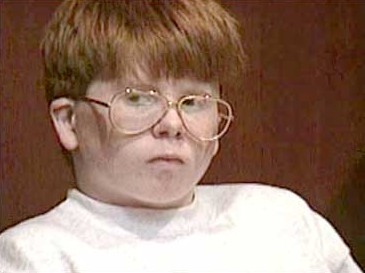
Eric Smith
Homicide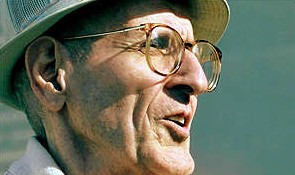 Jack Kevorkian
Homicide · USA · 1990
Jack Kevorkian (born May 26, 1928) was a controversial American pathologist. He…
130 victims
Jack Kevorkian
Homicide · USA · 1990
Jack Kevorkian (born May 26, 1928) was a controversial American pathologist. He…
130 victims
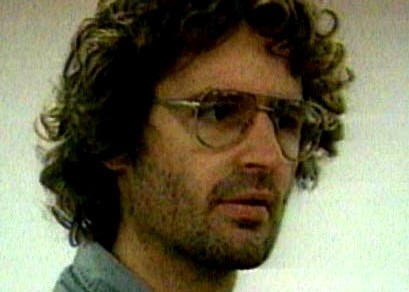 David Koresh
Homicide · USA · 1993
David Koresh (born Vernon Wayne Howell; August 17, 1959 – April 19, 1993) led t…
79 victims
David Koresh
Homicide · USA · 1993
David Koresh (born Vernon Wayne Howell; August 17, 1959 – April 19, 1993) led t…
79 victims
 Todd Hall
Homicide · USA · 1996
Todd Hall was described by neighbors as "mentally slow" and was said to have su…
9 victims
Todd Hall
Homicide · USA · 1996
Todd Hall was described by neighbors as "mentally slow" and was said to have su…
9 victims
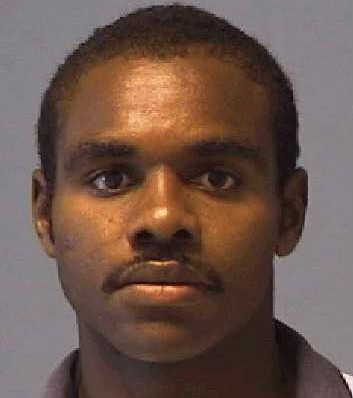 Clinton Bankston
Homicide · USA · 1987
15 August 1987 — Ann Morris (63), her sister Sally Nicholson (59), and Sally’s…
5 victims
Clinton Bankston
Homicide · USA · 1987
15 August 1987 — Ann Morris (63), her sister Sally Nicholson (59), and Sally’s…
5 victims
 Joshua Jenkins
Homicide · USA · 1996
Joshua Jenkins was a 15-year-old American killer who killed five members of his…
5 victims
Joshua Jenkins
Homicide · USA · 1996
Joshua Jenkins was a 15-year-old American killer who killed five members of his…
5 victims
 Willie Bosket
Homicide · USA · 1978
Willie Bosket was a juvenile who committed robberies and related violent attack…
2 victims
Willie Bosket
Homicide · USA · 1978
Willie Bosket was a juvenile who committed robberies and related violent attack…
2 victims
 Frederick Patrick McWilliams
Murderer · USA · 1996
Frederick Patrick McWilliams McWilliams was executed by lethal injection in Tex…
1 victim
Frederick Patrick McWilliams
Murderer · USA · 1996
Frederick Patrick McWilliams McWilliams was executed by lethal injection in Tex…
1 victim
 Lonnie Pursley
Murderer · USA · 1997
Aug. 7, 1997 — A Polk County grand jury indicted Pursley for capital murder. ·…
1 victim
Lonnie Pursley
Murderer · USA · 1997
Aug. 7, 1997 — A Polk County grand jury indicted Pursley for capital murder. ·…
1 victim
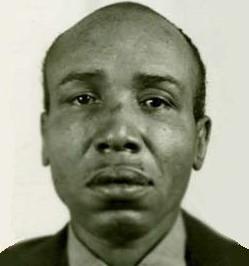 Jake Bird
Serial killer · USA · 1930
October 30, 1947 — Jake Bird broke into the home of Bertha Kludt and her daught…
44 victims
Jake Bird
Serial killer · USA · 1930
October 30, 1947 — Jake Bird broke into the home of Bertha Kludt and her daught…
44 victims
- Gender
- male
- Country
- USA
- Location
- Savona, Steuben County, New York, USA
- Date of birth
- January 22, 1980
- Age at first offence
- 13
- Characteristics
- juvenile (13), sexual abuse
- Victim profile
- Derrick Robie, 4
- Method of murder
- Strangulation - Dropped a pair of large rocks on the boy’s head
- Date(s) of murder
- August 2, 1993
- Years active
- 1993
- Date of arrest
- 7 days after
- Status
-
Life imprisonment
Sentenced to the maximum term then available for juvenile murderers — a minimum of nine years to life in prison in 1994; parole denied five times since 2002, most recently in April 2010; next parole eligibility April 2012; release denied
Parties and identities
Eric M. Smith was an incarcerated American criminal.
Derrick Robie was a four-year-old victim. Derrick Robie was born October 2, 1988.
Smith’s parents were Ted Smith and Tammy.
Derrick Robie’s parents were Dale Robie and Doreen Robie.
Dalton Robie was Derrick Robie’s sibling and was 12 years old.
Smith’s grandfather was Red Wilson.
Smith’s grandmother was Edie Wilson.
Smith’s neighbors and friends of the Smith family were John Heskell and Marlene Heskell.
Lead investigator was Charles Wood.
Investigator was John Hibsch.
Prosecutor John Tunney convicted Smith.
Defense attorney was Kevin Bradley.
Defense psychiatrist was Dr. Stephen Herman.
Smith’s adoptive father was Ted Smith.
Smith’s older sister was Stacy.
Smith’s new attorney was Susan Betzjitomir.
Timeline
- August 2, 1993 — Eric M. Smith strangled Derrick Robie, dropped a pair of large rocks on the boy’s head, undressed his body, and sodomized him with a tree limb in Steuben County, New York; Derrick’s body was later found in a small patch of woods.
- August 1993 — Derrick Robie was buried in his baseball uniform.
- Two days after Derrick Robie’s funeral — Smith admitted to Robie’s killing.
- 1994 — Smith was convicted of second-degree murder and sentenced to the maximum term then available for juvenile murderers — a minimum of nine years to life in prison; jury unanimously found Smith guilty of murder in the second degree.
- June 8, 2004 — Smith’s parole hearing took place behind closed doors at Clinton Correctional Facility in Dannemora, New York.
- Since 2002 — Smith was denied parole five times, most recently in April 2010.
- April 2010 — Smith’s parole was denied most recently.
- April 2012 — Smith was next eligible for parole.
- After April 2010 — Smith was still at Clinton Correctional Facility (as of April 9, 2010).
- 18 months after April 2010 — Smith would be up for parole again.
- Every two years — Smith’s case would be reviewed.
Background
Eric M. Smith was a loner and was often tormented by bullies for his protruding low-set ears, thick glasses, red hair and freckles.
Smith’s parents, Ted and Tammy, were devastated by the verdict and were convinced that their child was sick.
Tammy said she took a drug to control her epilepsy while she was pregnant with Eric; the drug was Tridione, and Herman said it can cause birth defects.
Doreen Robie described Derrick as “unofficial mayor of Savona” and recalled he “sat on the corner on his bike and waved to cars that went by,” with a population of 970.
Smith grew up just across town and liked to spend time with his grandparents, Red and Edie Wilson; Red Wilson recalled: “He'd always come in and give us hugs and kisses,” and “He liked being a clown.”
Edie Wilson added: “He definitely wanted to be paid attention to.”
Smith’s bright red hair and freckles made him a target at school for years.
The jury heard that as a toddler, Smith threw temper tantrums and banged his head on the floor.
The jury heard that Smith had speech problems, was held back at school, and was relentlessly bullied.
Ted Smith described Smith telling him: “Dad, I need help,” and said he answered: “Hold it. When I got angry when I was your age, I just grabbed a bag in our barn and started beating on it until I was too tired to do anything else.”
Ted Smith said he heard a door shut and “turned around and he was gone,” and then he described: “he was coming back in the door and he was calm. And I looked down and I noticed his knuckles and his hands were kind of skinned up and bloody. I asked him what happened, and he said, 'I hit the tree a couple of times.' Seemed to be OK.”
Defense psychiatrist Dr. Stephen Herman diagnosed Smith with intermittent explosive disorder, uncontrollable rage, described as “Literally deadly rage and anger,” and said that “After the episodic rage, the child may appear to be normal.”
The prosecution’s expert said it was a rare disorder that was rarely seen at Smith's age.
Extensive medical testing examined brain function and hormone levels and found nothing to explain Smith’s violent behavior.
Herman still believed there was something wrong, saying: “Something happened to his brain, but we can't measure it.”
Tunney described “Poor Eric” trial stage as: “This stage of the trial is all 'Poor Eric.' Are there issues? Are there problems? Sure, but it doesn't regularly produce killers,” and argued that the law still held Smith responsible, saying:
“Did he know when he was strangling Derrick, that he was strangling a child, a person? If he knew what he was doing was wrong, that he shouldn't have been doing it, then he can have every psychological, psychiatric problem in the world, and he's still responsible for what he did, under the law.”
The offence
On August 2, 1993, Derrick Robie was ready to head out to a recreation program held a block from the Robie home; Doreen Robie was not ready to take him that morning because Dalton was very fussy. Derrick told her: “It’s OK, mom. I’ll go by myself.” Doreen said goodbye, recalling she said: “I love you,” and he replied: “I love you, Mom,” and he “went hopping off the sidewalk.”
Doreen Robie said it was the first time she had ever let him go anywhere alone, and that the park was on a dead-end street and was on a route with “only a block” and “no streets” to cross.
Doreen Robie recalled the moment she felt panic as storm clouds moved in, saying: “I swear that was the moment he died. I think he was letting us know.”
Dale Robie added: “If there was any way he could have told us he was leaving, he would have tried.”
A prosecutor stated Derrick was lured to a remote location in a park, and the murder involved strangling, dropping large rocks on Derrick’s head, undressing Derrick’s body, and sodomizing him with a tree limb.
The cause of death was determined to be blunt trauma to the head with contributing asphyxia.
Evidence showed Derrick was lured from the sidewalk and strangled.
The lead investigator Charles Wood described discovery and actions as:
“He discovered and dug up one very large rock and one smaller rock. And he battered Derrick with those rocks,”
Wood also described activity involving lunch items and tools:
“He went into Derrick's lunch bag and he smashed a banana and took Derrick's Kool Aid, and he actually poured that Kool-Aid into the – that had been made by the large rocks. And he sodomized Derrick with a small stick that he had found.”
Wood described body arrangement and removal of footwear, stating:
“The left sneaker had been removed and was lying near Derrick's right hand. And his right sneaker had been removed and was lying near Derrick's left hand. It almost looked like the body had been posed in that position.”
Tunney described Smith continuing to deal with Derrick’s body because he chose to and enjoyed it, saying:
“Eric continued to deal with Derrick’s body because he wanted to,”
“Because he chose to. And most frighteningly, because he enjoyed it.”
Smith’s identity as the killer was unknown at the time initially.
On Aug. 2, 1993, Derrick’s body was found in a small patch of woods halfway between the park where he was headed and his home.
Investigation
Lead investigator Charles Wood and investigator John Hibsch worked on the case.
Four days after the murder, Smith walked into the police command center to see if he could be of help in solving the crime, and investigator Hibsch said Smith “totally enjoyed it,” adding:
“[He] totally enjoyed it. Totally enjoyed it. Didn't want it to end,”
Hibsch described Smith as upbeat and happy and liking being talked to:
“He's looking right at me. He's very upbeat, very happy. He likes the fact that he's being talked to.”
At first, Smith denied seeing Derrick, then changed his story, telling Hibsch:
“Right across the street from the open field. And that's when I saw Derrick.”
Hibsch recalled being shocked by where Smith put the sighting.
Hibsch said Smith described what Derrick was wearing and that he had a lunch bag in his hand.
Hibsch described Smith as happy and bouncing around, saying:
“He said it was kind of cool, really,”
“He's bouncing around again. He's happy and he's telling us something.”
Hibsch said Smith became emotional when asked where he had last seen Derrick, with his voice cracking:
“His voice started cracking. He put his head down,”
“He brings his fists up and his fists were vibrating a little bit and he goes, 'You think I killed him, don't you?'”
Smith asked to take a break and his father brought him a glass of Kool Aid.
When Hibsch continued the discussion, Hibsch said Smith:
“grabs the red Kool Aid and just throws it on the ground.”
Hibsch explained that they already knew Derrick had red Kool Aid spilled on him.
The next day, investigators asked Smith to get his bike and show them where he was when he saw Robie; Wood described Smith as calm, stating:
“I would have to say that he enjoyed it. He was having a good time.”
Smith’s grandfather Red Wilson said the family knew Smith was hiding something:
“In no way did we feel he had done it. So we felt that he knew something, maybe somebody had threatened him. That's why he wouldn't tell.”
Smith’s neighbors John and Marlene Heskell also believed he was hiding something.
Marlene Heskell quoted Smith asking about possibility of identifying him as a kid:
“Eric asked me 'What would happen if it turned out to be a kid?' And I said, 'I seriously think they would need some psychiatric help.' Oh, OK, and he walked away,”
Marlene Heskell added that he wanted to know about DNA testing and said:
“And DNA testing. He wanted to know what that would show.”
Marlene Heskell said a friend suggested a theory about the murder, saying:
“We think it’s a kid and they don’t like bananas,' because whoever killed Derrick had squashed the banana,”
She said an adult would have discarded the banana rather than squashing it.
Marlene Heskell described an investigation involving sundae ingredients and said she brought home ice cream and nuts and syrup and bananas, telling everyone about sundaes, and added:
“Eric was going to have the nuts and syrup, but he didn't want banana. … 'No! I don't like bananas.' And I called Nancy and I said, 'Eric doesn't like bananas, and I'm scared.'”
Arrest and confession
Two days after Derrick Robie’s funeral, Smith admitted to Robie’s killing.
Family members sat Smith down and begged him to tell what he knew.
Trial
The jury unanimously found Smith guilty of murder in the second degree.
At the heart of the trial, Tunney asked “Why did Eric kill?” and Tunney said:
“The fact is, Eric chose to do something horrible.”
Defense attorney Kevin Bradley said there was no choice, and stated:
“Eric Smith suffers from a very serious mental disease,”
Bradley argued:
“The fact that he seemed normal afterwards shows he is not normal.”
Smith’s mother Tammy testified that at one point Smith turned to her and he said he did it, stating:
“At one point, he turned to me and he said he did it. I lost control,”
Tammy said she asked why and he cried:
“I asked him why, and why he did it. And he was just saying, 'I don't know. I don't know.' And he cried.”
Tunney argued Smith had admitted luring Derrick into the woods for the killing so no one could see.
Ted Smith said he did not recall Smith expressing remorse:
“I don't ever recall him saying he was sorry that he killed the boy,”
The ultimate question of why Smith killed Derrick remained unanswered at the trial, and the trial did not establish a complete explanation.
Sentencing
In 1994, Smith was convicted of second-degree murder and sentenced to the maximum term then available for juvenile murderers — a minimum of nine years to life in prison.
Smith’s sentence matched the maximum then available for juvenile murderers, described as “a minimum of nine years to life in prison.”
Parole proceedings and incarceration
Smith was held in a juvenile facility for six years.
In 2001, Smith was transferred to the Clinton Correctional Facility in Dannemora, New York, described as a maximum security prison.
As of April 9, 2010, Smith was still at Clinton Correctional Facility.
Smith’s request for release was denied by the parole board.
The Robie family struggled to keep fear in check at parole, and Dale Robie said:
“Some people have said we need to forgive, but I can’t yet,”
He said the parole hearing was condemned to “an agonizing wait,” and that the parole hearing was closed to the public.
Doreen Robie described the situation and stated:
“It upsets me that we have to beg for them to keep this killer behind bars,”
She said:
“My biggest worry is that I still have a 12-year-old. There’s certainly enough things to worry about with an adolescent, other than the fact that there could be a killer running loose. I don’t like to say that very often, because I don’t want to scare Dalton. But that’s the way I look at that.”
Tunney said uncertainty was like having the trial all over again:
“In a lot of ways, it's like having the trial all over again – the uncertainty of the outcome,”
Tunney asked whether release would be too soon and whether punishment had been enough:
“Let's assume he’s not a threat anymore. OK. Should we release him? There’s a lot more to talk about. That is, has he been punished enough?”
Smith’s parole hearing took place behind closed doors on June 8, 2004.
Smith’s parole was denied five times since 2002, most recently in April 2010.
Smith was next eligible for parole in April 2012.
If granted parole, Smith stated an intent to return to Savona.
Smith’s case would be reviewed every two years, and Smith would be up for parole again in 18 months.
Statements, letters, and quoted interviews
While in jail, Smith wrote an apology letter to Robie’s family; he read it on public television, stating:
“I know my actions have caused a terrible loss in the Robie family, and for that, I am truly sorry. I've tried to think as much as possible about what Derrick will never experience: his 16th birthday, Christmas, anytime, owning his own house, graduating, going to college, getting married, his first child. If I could go back in time, I would switch places with Derrick and endure all the pain I've caused him. If it meant that he would go on living, I'd switch places, but I can't.”
Smith added that he could not bear the thought of:
“walls, razor wire, and steel metal bars”
Smith later prepared a statement read in parole context; Betzjitomir allowed him to read but did not permit him to answer questions.
Smith described bullying and turning down feelings, saying:
“So after quite a few years of verbal abuse, and having been told that I’m nothing, I shut down my feelings. So I wouldn’t feel the emotional pain, which made me vulnerable and weak. But the damage was done.”
Smith said:
“I began to believe that I was nothing and a nobody. And my outlook on life was dark. I felt that when I went to school, I was going to hell because that’s what it was for me.”
Betzjitomir said Smith had no friends at school:
“Nobody liked him.”
Smith gave an explanation about abuse building up and leading to horrific coping, stating:
“However minor or major each abuse situation, it all adds up. Until it gets to the point where the individual cannot take anymore,”
He said:
“After a while, they may cope in a horrific way or take their emotional anger or rage out on someone who had done nothing to bring on such violence like Derrick. Not because they’re evil or satanic little kids. It’s because they want the abuse to stop. And it’s the only way they know how to.”
In a transcript of an interview, Smith said:
“At the moment, it did, yes.”
When asked why he did it, Smith said:
“Because instead of me being hurt, I was hurting someone else.”
Smith discussed why children might kill and suggested he had issues at home, saying:
“Although each case is different, there is always the underlying fact that the kids who did, who do these unthinkable crimes, endure years of abuse. Whether at school, at home, or both. I had issues at home. But I’m not going to talk about that.”
Smith argued that he was uniquely qualified to counsel bullied children and described his intention to research children who kill, saying:
“You may think I'm a threat to the well-being of society,”
and added:
“And I can understand why you would feel that way. The fact is that I'm not. I'd be an asset to society.”
Betzjitomir’s view included:
“I think society might be safer if he were allowed out to do that kind of research,”
and she stated:
“Because nothing will change what happened to Derrick. But maybe something can prevent what might happen to someone else’s child.”
Smith told parole board there was no abuse.
Mental health and medical issues
Dr. Stephen Herman diagnosed Smith with intermittent explosive disorder and described it as “Literally deadly rage and anger,” and said that after episodic rage, “the child may appear to be normal.”
The prosecution argued that it was a rare disorder rarely seen at Smith’s age, and medical testing did not find a reason for violent behavior after examining brain function and hormone levels.
Herman believed something happened to Smith’s brain but said it could not be measured:
“Something happened to his brain, but we can't measure it.”
Tammy said she took Tridione while pregnant with Eric; Herman said Tridione can cause birth defects, and Herman said that it caused Smith’s ears to be low set and caused developmental delays that affected self-esteem.
Herman said pain and rage overwhelmed Smith:
“He says Smith's pain and rage overwhelmed him.”
Tunney argued that even if Smith had psychological or psychiatric problems, responsibility applied under law.
Victim family perspectives and aftermath
Dale and Doreen Robie cried with relief at the verdict.
Doreen Robie described the hardest thing being asked how many children they had and said:
“The hardest thing for me is when somebody asks me, 'How many children do you have,'”
and added:
“Most of the time I simply say, 'I have one boy, here at home. And I have one boy waiting in heaven for me.'”
Dalton Robie, who was 12, said:
“All I really know is that I had a brother,”
and that:
“Sometimes I just think about him and just start to cry.”
Red Wilson described the belief that something must have happened to Smith because it wasn’t his grandson, saying:
“It's still hard to believe,”
and:
“Something must have happened to him. Because that wasn't my grandson.”
After the murder, Derrick was buried in his baseball uniform.
A decade later, Smith’s case was discussed with fear that the killer could be set free, and the Robie family wanted the whole story told.
Dale Robie said he could not leave Savona and described living on Robie Road:
“I live on Robie Road,”
and:
“And it's all family up through there. And without that support, I think it would have been harder to be away – especially raising Dalton.”
The Robie family moved to a new house in Savona a few months after the murder, and it had fewer memories for Dalton.
Volunteers bulldozed the scene of the crime and put in a new ball field “in memory of the little T-ball player.”
Doreen Robie said:
“A lot of people don’t understand. They say that maybe we should just move on, which we have. We move on,”
and:
“But, as life evolves, we also carry with us this huge burden of making sure that people don’t forget him.”
The Robie family wanted the parole board not to forget Derrick.
They fought to pass Penny's Law, which lengthens the prison sentence for children who kill.
Dale Robie said:
“Supporting Penny's Law was a proud moment,”
and:
“It gave us a little meaning, more meaning. …He was here for a short time. But now look at the impact his five years have had.”
Other details
Smith attracted national attention largely due to Smith being 13 and Derrick being 4 years old.
The case made national headlines.
Smith’s prison uniform was described as one size too big.
Smith’s attorney Susan Betzjitomir was described as a mother of five and a former college professor who graduated four years earlier from Cornell Law School.
Betzjitomir said Smith should be released, saying:
“The issue isn't what kind of disturbed child was he then,”
and:
“The question now is what kind of young man is he now? Because that's the question the parole board faces.”
Betzjitomir credited intensive counseling he received during the six years he was held at Brookwood Juvenile Detention Center.
Smith transferred to Clinton Correctional Facility when he turned 21.
Smith stated his inability to answer questions during parole context.
Smith said he would be up for parole again in 18 months and the case would be reviewed every two years.
A discussion about whether Smith was abused occurred because of the sexual nature of his crime.
It was raised at trial whether Smith was abused, but it was denied and there was testimony that Smith’s older sister Stacy was sexually abused by their stepfather.
There was absolutely no evidence that anyone sexually abused Eric.
Despite repeated raising, Smith told the parole board there was no abuse.
Betzjitomir said nothing will change what happened to Derrick but it might prevent what might happen to someone else’s child.
Families involved had not exchanged words over the years until being face to face.
Doreen Robie said the Robie family had a burden of ensuring people didn’t forget him.
Spotted an error, or have more information about this case?