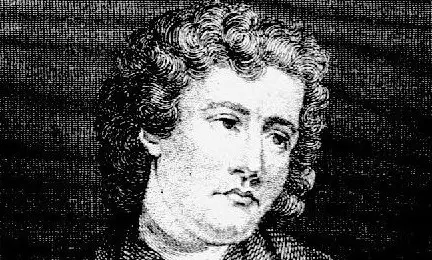
Eugene Aram
Murderer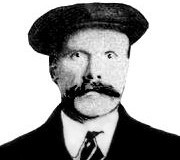 Albert Burrows
Murderer · United Kingdom · 1920
Albert Burrows (also named Albert Edward Burrows): married farm labourer who to…
4 victims
Albert Burrows
Murderer · United Kingdom · 1920
Albert Burrows (also named Albert Edward Burrows): married farm labourer who to…
4 victims
 Dale Cregan
Murderer · United Kingdom · 2012
Dale Christopher Cregan (born 6 June 1983) was convicted in the United Kingdom…
4 victims
Dale Cregan
Murderer · United Kingdom · 2012
Dale Christopher Cregan (born 6 June 1983) was convicted in the United Kingdom…
4 victims
 John Cooper
Murderer · United Kingdom · 1985
John Cooper was a serial killer from Milford Haven, Pembrokeshire. Cooper was c…
4 victims
John Cooper
Murderer · United Kingdom · 1985
John Cooper was a serial killer from Milford Haven, Pembrokeshire. Cooper was c…
4 victims
 Rahan Arshad
Murderer · United Kingdom · 2006
Rahan Arshad (born 1970) was a taxi driver. He lived at Turves Road, Cheadle Hu…
4 victims
Rahan Arshad
Murderer · United Kingdom · 2006
Rahan Arshad (born 1970) was a taxi driver. He lived at Turves Road, Cheadle Hu…
4 victims
 Gregory Paul Wilson
Murderer · USA · 1992
Gregory Paul Wilson was born on 5/10/67. Wilson maintained his innocence. The v…
1 victim
Gregory Paul Wilson
Murderer · USA · 1992
Gregory Paul Wilson was born on 5/10/67. Wilson maintained his innocence. The v…
1 victim
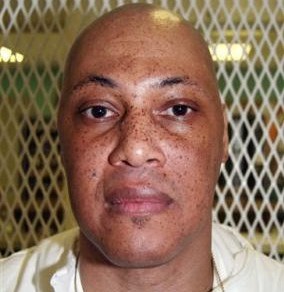 Frank Moore
Murderer · USA · 1994
Frank Moore became involved in a confrontation with Samuel Boyd and Patrick Cla…
2 victims
Frank Moore
Murderer · USA · 1994
Frank Moore became involved in a confrontation with Samuel Boyd and Patrick Cla…
2 victims
 Yvette Taylor
Murderer · USA · 2012
Yvette Taylor was a Martinez, Georgia woman. She was the roommate of Theodore C…
1 victim
Yvette Taylor
Murderer · USA · 2012
Yvette Taylor was a Martinez, Georgia woman. She was the roommate of Theodore C…
1 victim
- Gender
- male
- Country
- United Kingdom
- Location
- Yorkshire, United Kingdom
- Date of birth
- 1704
- Age at first offence
- 40
- Characteristics
- robbery
- Victim profile
- Daniel Clark (an intimate friend)
- Method of murder
- Beating
- Date(s) of murder
- February 7, 1744
- Years active
- 1744
- Date of arrest
- August 21, 1758 (fourteen years after)
- Status
-
Executed
Executed by hanging on August 6, 1759
Case record: Eugene Aram
Background
Eugene Aram (1704 - August 6, 1759) was an English philologist who also became known for a murder celebrated by Hood in his ballad, The Dream of Eugene Aram, and by Bulwer Lytton in his romance of Eugene Aram. He was born of humble parents at Ramsgill, Yorkshire. He received little education at school but manifested an intense desire for learning.
While still young, he married and settled as a schoolmaster at Netherdale. During the years he spent there, he taught himself both Latin and Greek. In 1734 he removed to Knaresborough, where he remained as schoolmaster until 1745.
Eugene Aram was employed as usher and tutor in several different parts of England during his travels. He eventually settled as an usher and later tutor at the Grammar School at King’s Lynn, Norfolk.
He projected a work on etymology titled A Comparative Lexicon of the English, Latin, Greek, Hebrew and Celtic Languages. He believed in the affinity of the Celtic language to other languages in Europe, and he could dispute the then accepted belief that Latin was derived from Greek.
Aram was born in a village called Netherdale in the year 1704. His father was a gardener. After Aram’s parents removed to Shelton near Newby in Yorkshire, his father purchased a little cottage in Bondgate near Ripon. At about sixteen years of age Aram was sent to London to serve Mr Christopher Blackett as a book-keeper. He was taken with smallpox and suffered severely, then returned to Yorkshire to continue his studies. He applied himself to poetry, history and antiquities. He was employed in a school at Netherdale and then married, and he later attributed later misfortunes to the misconduct of his wife. He learned Latin and Greek and read the Latin classics, historians and poets. He went through the Greek Testament and then ventured on Hesiod, Homer, Theocritus, Herodotus and Thucydides, and the Greek tragedians. William Norton, Esq. invited him to Knaresborough in 1734, where he acquired a knowledge of Hebrew and read the Pentateuch in that language. In 1744 he returned to London and served the Rev. Mr Plainblanc as usher in Latin and writing in Piccadilly, and with assistance acquired a knowledge of French. He later became acquainted with heraldry and botany. He ventured on Chaldee and Arabic, and he investigated the Celtic as far as possible in its dialects, making collections and comparisons between the Celtic, the English, the Latin, the Greek and the Hebrew, leading him to resolve to proceed through these languages and form a comparative lexicon.
The offence
In February 1745, a man named Daniel Clarke, a shoemaker at Knaresborough, suddenly disappeared. Suspicion fell upon Eugene Aram that he had been concerned in a swindling transaction connected to Clarke.
Eugene Aram and a man named Richard Houseman persuaded Clarke to make an ostentatious show of his riches so that his wife’s relations would grant him the fortune he had boasted of. Clarke borrowed and bought on credit a large quantity of silver plate with jewels, watches, rings, etc. He told sellers that a merchant in London had sent him an order to buy such plate for exportation.
When Clarke disappeared in February 1745, Aram and Houseman determined to murder Clarke in order to share the booty. On the night of the 8th of February, 1745, they persuaded Clarke to walk with them in the fields to consult on the proper method to dispose of the effects. They walked into a field near St Robert’s Cave, well-known near Knaresborough. When they were within six or seven yards of the cave, Houseman saw Aram strike Clarke several times, and then Aram’s victim fell, but Houseman never saw him afterwards. After the murder, Houseman and Aram went home and shared Clarke’s ill-gotten treasure. Houseman concealed half in his garden for a twelvemonth and then took it to Scotland where he sold it. Aram carried his share to London where he sold it to a Jew.
While Aram was later in custody, he confessed his guilt and threw new light on the motives for his crime by asserting that he had uncovered a criminal intimacy between Clark and his own wife.
Investigation
In the year 1758, a skeleton was dug up at Knaresborough. In February 1758 a skeleton was dug up at Knaresborough and suspicion arose that it might be Clark’s. Aram’s wife had more than once hinted that her husband and a man named Houseman knew the secret of Clark’s disappearance.
Houseman was arrested and confronted with bones that had been found. He affirmed his innocence and, taking up one of the bones, said: "This is no more Dan Clarke's bone than it is mine." His manner in saying this roused suspicion that he knew more of Clarke’s disappearance than he claimed, and it was contended that he had been present at the murder of Clark by him and another man, Terry, of whom nothing further is heard. Houseman gave information about the place where the body had been buried in St Roberts Cave, a well-known spot near Knaresborough.
A skeleton was dug up at St Robert’s Cave. Eugene Aram was immediately arrested and sent to York for trial.
After Houseman’s evidence led to a search for Aram, he was discovered in his situation as usher to an academy at Lynn, Norfolk. He was brought from there to York Castle and brought to trial at the county assizes.
Arrest
Eugene Aram was arrested after a skeleton was dug up at St Robert’s Cave. He was discovered as an usher to an academy at Lynn, in Norfolk, and was brought from thence to York Castle.
Trial
Eugene Aram was brought to trial at the county assizes on the 13th of August, 1759. He conducted his own defense. Houseman was admitted as evidence against Aram and was arraigned and acquitted, and he became an evidence against Aram. Houseman’s testimony was corroborated by Mrs Aram and by strong circumstantial evidence.
The plunder Aram was supposed to have derived from the murder was estimated at not more than one hundred and sixty pounds.
Aram challenged the fallibility of circumstantial evidence in general and particularly evidence drawn from the discovery bones. He brought forward several instances where bones had been found in caves, and he tried to show that bones found at St Robert’s Cave were probably those of a hermit who had taken up abode there.
Aram was found guilty and condemned to be executed. Sentence of death was passed on him and he received the intimation of his fate with resignation.
Aram’s address to the Court
Eugene Aram addressed the Court and said:
"My Lord, I know not whether it is of right or through some indulgence of your Lordship that I am allowed the liberty at this bar, and at this time, to attempt a defence, incapable and uninstructed as I am to speak; since, while I see so many eyes upon me, so numerous and awful a concourse fixed with attention and filled with I know not what expectancy, I labour not with guilt, my Lord, but with perplexity; for, having never seen a court but this, being wholly unacquainted with law, the customs of the Bar, and all judiciary proceedings, I fear I shall be so little capable of speaking with propriety in this place that it exceeds my hope if I shall be able to speak at all. " "I have heard, my Lord, the indictment read, wherein I find myself charged with the highest crime, with an enormity I am altogether incapable of -- a fact, to the commission of which there goes far more insensibility of heart, more profligacy of morals, than ever fell to my lot; and nothing possibly could have admitted a presumption of this nature but a depravity not inferior to that imputed to me. However, as I stand indicted at your Lordship's bar, and have heard what is called evidence adduced in support of such a charge, I very humbly solicit your Lordship's patience, and beg the hearing of this respectable audience, while I, single and unskilful, destitute of friends and unassisted by counsel, say something, perhaps like argument, in my defence. I shall consume but little of your Lordship's time. What I have to say will be short; and this brevity, probably, will be the best part of it. However it is offered with all possible regard and the greatest submission to your Lordship's consideration and that of this honourable Court. " "First, my Lord, the whole tenor of my conduct in life contradicts every particular of the indictment: yet had I never said this, did not my present circumstances extort it from me, and seem to make it necessary? Permit me here, my Lord, to call upon malignity itself, so long and cruelly busied in this prosecution, to charge upon me any immorality of which prejudice was not the author. No, my Lord, I concerted no schemes of fraud, projected no violence, injured no man's person or property. My days were honestly laborious, my nights intensely studious; and I humbly conceive my notice of this, especially at this time, will not be thought impertinent or unseasonable, but at least deserving of some attention; because, my Lord, that any person, after a temperate use of life, a series of thinking and acting regularly,and without one single deviation from sobriety, should plunge into the very depth of profligacy precipitately and at once, is altogether improbable and unprecedented, absolutely inconsistent with the course of things. Mankind is never corrupted at once. Villainy is always progressive, and declines from right step by step, till every regard of probity is lost, and every sense of all moral obligation totally perishes. " "'Again, my Lord, a suspicion of this kind, which nothing but malevolence could entertain and ignorance propagate, is violently opposed by my very situation at that time with respect to health; for, but a little space before, I had been confined to my bed, and suffered under a very long and severe disorder, and was not able, for half-a-year together, so much as to walk. The distemper left me indeed, yet slowly, and in part, but so macerated, so enfeebled, that I was reduced to crutches; and so far from being well about the time I am charged with this fact, I have never to this day perfectly recovered. Could then a person in this condition take anything into his head so unlikely, so extravagant? -- I, past the vigour of my age, feeble and valetudinary, with no inducement to engage, no ability to accomplish, no weapon wherewith to perpetrate such a deed, without interest, without power, without motive, without means. Besides, it must needs occur to everyone that an action of this atrocious nature is never heard of but when its springs are laid open. It appears that it was to support some indolence or supply some luxury; to satisfy some avarice or oblige some malice; to prevent some real or some imaginary want: yet I lay not under the influence of these. Surely, my Lord, I may, consistently with both truth and modesty, affirm thus much; and none who have any veracity and knew me will ever question this. " "In the second place, the disappearance of Clarke is suggested as an argument of his being dead; but the uncertainty of such an inference from that, and the fallibility of all conclusions of such a sort from such a circumstance, are too obvious and too notorious to require instances; yet superseding many, permit me to produce a very recent one, and that afforded by this Castle. " "In June, 1757, William Thompson, for all the vigilance of this place, in open daylight and double-ironed, made his escape, and, notwithstanding an immediate inquiry set on foot, the strictest search, and all advertisement, was never heard of since. If, then, Thompson got off unseen, through all these difficulties, how very easy it was for Clarke, when none of them opposed him! But what would be thought of a prosecution commenced against anyone seen last with Thompson? " "Permit me next, my Lord, to observe a little upon the bones which have been discovered. It is said (which perhaps is saying very far) that these are the skeleton of a man. It is possible, indeed, it may be; but is there any certain known criterion which incontestably distinguishes the sex in human bones? Let it be considered, my Lord, whether the ascertaining of this point ought not to precede any attempt to identify them. " "The place of their depositum, too, claims much more attention than is commonly bestowed upon it; for, of all places in the world, none could have mentioned any one wherein there was greater certainty of finding human bones than a hermitage, except he should point out a churchyard; hermitages, in time past, being not only places of religious retirement, but of burial too: and it has scarce or never been heard of, but that every cell now known contains or contained these relics of humanity, some mutilated and some entire. I do not inform, but give me leave to remind your Lordship that here sat solitary Sanctity, and here the hermit or the anchoress hoped that repose for their bones when dead they here enjoyed when living. " "As to the circumstances that have been raked together, I have nothing to observe but that all circumstances whatever are precarious, and have been but too frequently found lamentably fallible; even the strongest have failed. They may rise to the utmost degree of probability, yet they are but probability still. Why need I name to your Lordship the two Harrisons recorded by Dr Howel, who both suffered upon circumstances because of the sudden disappearance of their lodger, who was in credit, had contracted debts, borrowed money, and went off unseen, and returned a great many years after their execution? Why name the intricate affair of Jacques de Moulin, under King Charles II., related by a gentleman who was counsel for the Crown? And why the unhappy Coleman, who suffered innocently, though convicted upon positive evidence, and whose children perished for want, because the world uncharitably believed the father guilty? " "Now, my Lord, having endeavoured to show that the whole of this process is altogether repugnant to every part of my life; that it is inconsistent with my condition of health about that time; that no rational inference can be drawn that a person is dead who suddenly disappears; that hermitages are the constant depositories of the bones of a recluse; that the proofs of this are well authenticated; that the revolutions in religion or the fortunes of war have mangled or buried the dead -- the conclusion remains, perhaps, no less reasonable than impatiently wished for. I, at last, after a year's confinement, equal to either fortune, put myself upon the justice, the candour and the humanity of your Lordship; and upon yours, my countrymen, gentlemen of the jury."
After his conviction, he confessed the justice of his sentence to two clergymen who were directed to attend him.
Evidence regarding bones
In the trial proceedings, Aram’s defense attacked the reliability of bones as evidence. Houseman earlier had been asked to take up one of the bones. Houseman said: "This is no more Dan Clarke's bone than it is mine."
In the narrative of the evidence process, Houseman was said to have added that Clarke was murdered by Eugene Aram and that the body was buried in St Robert's Cave, near Knaresborough, and that Clarke’s head lay to the right, in the turn at the entrance of the cave. A skeleton was accordingly found in that posture.
Disposition of verdict
The learned judge summed up the evidence and observed on Aram’s defense, which he declared to be one of the most ingenious pieces of reasoning that had ever fallen under his notice. The jury returned a verdict of guilty and sentence of death was passed.
Sentencing
Aram was condemned to be executed on the August 6, 1759, three days after his trial. Sentence of death was passed after the verdict of guilty. He received the intimation of his fate with resignation.
Appeals
No appeal information appeared.
Outcome
Eugene Aram was executed by hanging on August 6, 1759. He was executed at York. In one account, he was executed at York on the 16th of August, 1759, and his body was afterwards hung in chains in Knaresborough Forest.
Aftermath
While in his cell he confessed his guilt and asserted that he had uncovered a criminal intimacy between Clark and his own wife.
On the night before his execution he made an unsuccessful attempt at suicide by opening the veins in his arm. He attempted to commit suicide by cutting his arm in two places with a razor concealed for that purpose. The attempt was not discovered until the morning, when the jailer came to lead him forth to the place of execution, and he was then found almost expiring from loss of blood. A surgeon found he had wounded himself severely on the left arm above the elbow and near the wrist, but he had missed the artery, and his life was prolonged so it might be taken away on the scaffold. When he was placed on the drop he was perfectly sensible but too weak to join in devotion with the clergyman who attended him.
The following papers were later found in his handwriting on the table in his cell.
Paper 1 (reasons for attempt upon his life)
"What am I better than my fathers? To die is natural and necessary. Perfectly sensible of this, I fear no more to die than I did to be born. But the manner of it is something which should, in my opinion, be decent and manly. I think I have regarded both these points. Certainly no man has a better right to dispose of a man's life than himself; and he, not others, should determine how. As for any indignities offered to my body, or silly reflections on my faith and morals, they are, as they always were, things indifferent to me. I think, though contrary to the common way of thinking, I wrong no man by this, and hope it is not offensive to that eternal Being that formed me and the world: and as by this I injure no man, no man can be reasonably offended. I solicitously recommend myself to that eternal and almighty Being, the God of Nature, if I have done amiss. But perhaps I have not; and I hope this thing will never be imputed to me. Though I am now stained by malevolence and suffer by prejudice, I hope to rise fair and unblemished. My life was not polluted, my morals irreproachable, and my opinions orthodox. I slept sound till three o'clock, awoke, and then wrote these lines: Come, pleasing rest! eternal slumbers, fall! Seal mine, that once must seal the eyes of all. Calm and composed my soul her journey takes; No guilt that troubles, and no heart that aches. Adieu, thou sun! all bright, like her, arise! Adieu, fair friends, and all that's good and wise!"
Paper 2 (letter)
"My DEAR FRIEND,-- Before this reaches you I shall be no more a living man in this world, though at present in perfect bodily health; but who can describe the horrors of mind which I suffer at this instant? Guilt -- the guilt of blood shed without any provocation, without any cause but that of filthy lucre -- pierces my conscience with wounds that give the most poignant pains! 'Tis true the consciousness of my horrid guilt has given me frequent interruptions in the midst of my business or pleasures, but yet I have found means to stifle its clamours, and contrived a momentary remedy for the disturbance it gave me by applying to the bottle or the bowl, or diversions, or company, or business; sometimes one and sometimes the other, as opportunity offered. But now all these and all other amusements are at an end, and I am left forlorn, helpless and destitute of every comfort; for I have nothing now in view but the certain destruction both of my soul and body. My conscience will now no longer suffer itself to be hoodwinked or browbeat; it has now got the mastery: it is my accuser, judge and executioner, and the sentence it pronounceth against me is more dreadful than that I heard from the Bench, which only condemned my body to the pains of death, which are soon over. But Conscience tells me plainly that she will summon me before another tribunal, where I shall have neither power nor means to stifle the evidence she will there bring against me; and that the sentence which will then be denounced will not only be irreversible, but will condemn my soul to torments that will know no end. Oh! had I but hearkened to the advice which dear-bought experience has enabled me to give, I should not now have been plunged into that dreadful gulf of despair which I find it impossible to extricate myself from; and therefore my soul is filled with horror inconceivable. I see both God and man my enemies, and in a few hours shall be exposed a public spectacle for the world to gaze at. Can you conceive any condition more horrible than mine? Oh, no, it cannot be! I am determined, therefore, to put a short end to trouble I am no longer able to bear, and prevent the executioner by doing his business with my own hand, and shall by this means at least prevent the shame and disgrace of a public exposure, and leave the care of my soul in the hands of eternal mercy. Wishing you all health, happiness and prosperity, I am, to the last moment of my life, yours, with the sincerest regard, EUGENE ARAM."
Other details
A separate narrative described Aram as a self-educated man with remarkable linguistic attainments who was executed at York on 6th of August, 1759, for a murder discovered fourteen years after its commission.
Spotted an error, or have more information about this case?