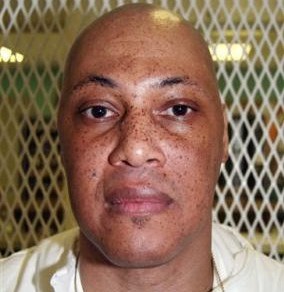
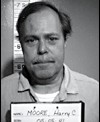
Frank Moore
Murderer Brian Kevin Rosenfeld
Murderer · USA · 1985
Brian Kevin Rosenfeld Brian Kevin Rosenfeld was sentenced to three concurrent l…
23 victims
Brian Kevin Rosenfeld
Murderer · USA · 1985
Brian Kevin Rosenfeld Brian Kevin Rosenfeld was sentenced to three concurrent l…
23 victims
 Russell Ellwood
Murderer · USA · 1991
Russell Ellwood was a former taxi driver. Authorities suspected him of killing…
20 victims
Russell Ellwood
Murderer · USA · 1991
Russell Ellwood was a former taxi driver. Authorities suspected him of killing…
20 victims
 Robert Martines Perez
Murderer · USA · 1994
Name: Robert Martines Perez · Other name used in proceedings: Robert Martinez P…
15 victims
Robert Martines Perez
Murderer · USA · 1994
Name: Robert Martines Perez · Other name used in proceedings: Robert Martinez P…
15 victims
 Billy Frank Vickers
Murderer · USA · 1993
Billy Frank Vickers Vickers was executed by lethal injection in Texas on Januar…
14 victims
Billy Frank Vickers
Murderer · USA · 1993
Billy Frank Vickers Vickers was executed by lethal injection in Texas on Januar…
14 victims
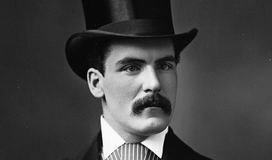 Dr. Thomas Neill Cream
Serial killer · USA / United Kingdom · 1881
Dr. Thomas Neill Cream (May 27, 1850 – November 16, 1892) was a serial killer w…
5 victims
Dr. Thomas Neill Cream
Serial killer · USA / United Kingdom · 1881
Dr. Thomas Neill Cream (May 27, 1850 – November 16, 1892) was a serial killer w…
5 victims
 Deidra Lane
Murderer · USA · 2000
Deidra Lane pleaded guilty to voluntary manslaughter in 2003 after her estrange…
1 victim
Deidra Lane
Murderer · USA · 2000
Deidra Lane pleaded guilty to voluntary manslaughter in 2003 after her estrange…
1 victim
 Debra Jeter
Murderer · USA · 2009
Debra Janelle Jeter was 33 at the time she pleaded guilty in Hillsboro. She was…
1 victim
Debra Jeter
Murderer · USA · 2009
Debra Janelle Jeter was 33 at the time she pleaded guilty in Hillsboro. She was…
1 victim
 Michael Angelo Morales
Murderer · USA · 1981
Michael Angelo Morales (born October 17, 1959) was a convicted murderer schedul…
1 victim
Michael Angelo Morales
Murderer · USA · 1981
Michael Angelo Morales (born October 17, 1959) was a convicted murderer schedul…
1 victim
 Larissa Schuster
Murderer · USA · 2003
Larissa Schuster was an American woman who was convicted of first-degree murder…
1 victim
Larissa Schuster
Murderer · USA · 2003
Larissa Schuster was an American woman who was convicted of first-degree murder…
1 victim
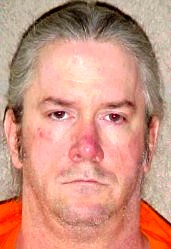 Todd Lee Smith
Murderer · USA · 1995
Todd Lee Smith was sentenced to death on September 24, 1997. His convictions an…
2 victims
Todd Lee Smith
Murderer · USA · 1995
Todd Lee Smith was sentenced to death on September 24, 1997. His convictions an…
2 victims
- Gender
- male
- Country
- USA
- Location
- Bexar County, Texas, USA
- Date of birth
- May 16, 1959
- Age at first offence
- 35
- Characteristics
- gang, drug dealer
- Victim profile
- Samuel Boyd, 23, and Patrick Clark, 15
- Method of murder
- Shooting ( .30-caliber rifle)
- Date(s) of murder
- January 21, 1994
- Years active
- 1994
- Date of arrest
- —
- Status
-
Executed
Executed by lethal injection in Texas on January 21, 2009
Case record: Frank Moore
Background
Frank Moore became involved in a confrontation with Samuel Boyd and Patrick Clark at the Wheels of Joy nightclub in San Antonio in the early morning of January 21, 1994. The case involved capital murder for the shooting deaths of Samuel Boyd and Patrick Clark.
Moore was scheduled for execution after 6 p.m. on Wednesday, January 21, 2009.
The offence
In the early morning of January 21, 1994, Moore, then 34, confronted Samuel Boyd, 23, and Patrick Clark, 15, at the Wheels of Joy nightclub in San Antonio.
After a shoving match, Boyd and Clark left the club. They returned in a car, stopping next to Moore in the club parking lot. Someone handed Moore a rifle. Moore fired six to ten shots into the car, killing Boyd and Clark. Moore fled in his own car.
Moore claimed that he shot Boyd and Clark in self-defense as they were trying to run him over. Prosecutors contended that Moore killed the victims because they were in a rival gang.
Testimony showed Boyd and Clark got into a fight with Moore and his half-brother. Boyd and Clark then got into a car and tried to run them over. One of Moore’s friends tossed him a rifle from the trunk of a nearby car and he opened fire.
Wallace testified that she and a friend had gone to an icehouse across from the Wheels of Joy Club. Her friend was Boyd’s girlfriend, and Boyd met her at the icehouse. Wallace and Boyd verbally argued before the night of the shootings. Wallace left her friend and walked to the Wheels of Joy, spending several hours in the nightclub. Boyd entered the club after Wallace and told her that Lisa had gone home. Wallace saw Moore in the club and testified that Moore and Boyd shook hands and spoke. Wallace also saw Clark in the club but did not see him have any contact with Moore.
Wallace testified that Moore flirted with her and that at one point two women with Moore looked at her strangely. Wallace momentarily left the club to deposit her jewelry in her car. As the club prepared to close, Moore asked Wallace to save him the last dance and to give him her telephone number. Wallace refused to give Moore her number, but Moore offered to give his to her. As the club was closing, Wallace testified that Moore was interrupted by a man who stopped and whispered to him; Moore and the man then left the club. Wallace identified the other man from photographs as Ivory Sheffield.
Wallace testified that, after the club closed, she left for the parking lot. She testified that Moore, Boyd, Clark, and another man “had a confrontation . . . an exchange of words and someone pushed somebody. . . . It just broke up. Just everybody started scattering a little bit.” Wallace testified that Clark’s car came into the parking lot and stopped, that the car did not come close to striking Moore, and that the car did not back up. Wallace testified that, while Boyd must have at some point gotten into Clark’s car, she did not see him do so. She testified that she saw Moore walk towards the back of Clark’s car.
Wallace testified that Sheffield got a rifle from the trunk of a Cadillac and tossed it to Moore, who started shooting into Clark’s car. Wallace testified that Moore handed the gun back to Sheffield and left in a Cadillac. Wallace testified that Sheffield said, “Who else wants some of this?” and walked around with the gun. Wallace left the crime scene with an individual named Edmond to notify the family of Boyd and Clark.
A second trial witness contradicted Wallace’s testimony. Moore called Robert Mays, Jr., who testified that he was at the Wheels of Joy Club on the night of the shootings. Mays testified that he observed a scuffle outside the club around closing time. Mays testified that someone yelled they were going to get their stuff (meaning guns) and that two or three males ran across the street and got into a white car. Mays testified that the car driver tried more than once to run over Mays, Moore, and others, and that they had guns in the car, including a rifle. Mays testified that if Moore tried to get out of the altercation, they were going to shoot him. Mays testified that he made a quick getaway and heard shots as he fled the scene.
The medical examiner testified that Boyd and Clark died from multiple gunshot wounds. An investigator found shell casings in a location that suggested that the shots were fired from the left rear of the vehicle. The tracks of the bullet wounds were generally from back to front and left to right. Boyd had been wounded by six bullets and Clark by five. Boyd’s blood contained 0.28 grams per deciliter of ethanol alcohol. Clark’s blood contained 0.15 grams per deciliter of ethanol, as well as 0.25 milligrams per liter of diazepam and 0.33 milligrams per liter of nordiazepam. The latter two controlled substances were identified as muscle relaxants. The evidence established that both victims were acutely intoxicated at the times of their deaths.
Barbara Boyd, Clark’s older sister and Boyd’s sister-in-law, testified that she was told of the shooting and arrived at the scene, tried to wake up Boyd, then called for medical help and the police. She testified that she did not see anyone going through the white car or touching the bodies.
Investigation
Shell casings were found in a location that suggested that the shots were fired from the left rear of the vehicle.
In later proceedings, a security-company owner and operator, Warren Huel, provided an affidavit. In the affidavit, Huel stated that he had “professional contact[s]” with Moore, Boyd, Clark, and Ernest Bedford, and that he had heard they were involved in the sale of crack cocaine. Huel stated that Bedford “bragged to all who would listen that he and his crew were going to rob or kill” Moore. Huel stated that Boyd, Clark, and Bedford were dangerous and that Bedford had beaten a man to death “several month [ sic] prior to the incident of 21 Jan 1994,” an event “witnessed by 40-50 youths [of whom] none would stand as witness against Bedford and associates.”
Huel stated that, on the night of the killings, before police arrived but after the shooting was over, security-company employees interviewed witnesses and learned that, in the hours leading up to the killings, Boyd, Clark, and others tried to murder Moore in a drive-by shooting. Huel also stated that Bedford “let the crowd know that he was armed and continued to menace Moore.” Huel stated that employees allegedly reported that Boyd and Clark had handguns in the white car and that before Moore started shooting, Bedford exited the car with a handgun. Huel stated that, after Sheffield brought an M-1 rifle to Moore, Moore did not begin firing until after Bedford fired a shot. Huel further stated that his employees learned that instead of firing first, “Moore [merely] returned fire and silenced the gunfire coming from the vehicle.” Huel stated that bystanders removed the handguns used by Boyd and Clark after the shooting ended, and that Huel speculated about the pistol Bedford allegedly hid under a pool table in the club but which was not found despite attempts to locate it.
Huel stated that, after he learned a warrant had been issued for Moore, he informed police that Boyd, Clark, and Bedford had fired at Moore, and that bullet holes in the building behind Moore confirmed that account but that he was told the matter did not matter because “Moore was a dope dealer and had to go to jail.”
The federal appellate court assumed that Huel told police what he claimed in the affidavit for purposes of a certificate of appealability request, while noting that whether Huel spoke with the police appeared unanswered in the record.
Arrest
The record stated that, when Moore was arrested three days after the slayings, he had been arrested for an unrelated crime and was found carrying a revolver in his waistband.
The record also stated that less than a month before the killings, Moore was arrested for selling crack cocaine to an undercover officer.
Shortly before the capital murder, Moore was arrested on a traffic warrant and was found to have a revolver in his waistband.
Trial
A confrontation occurred at the Wheels of Joy nightclub in San Antonio in the early morning of January 21, 1994. Moore was later tried for capital murder and sentenced to death.
Jury findings and capital-murder conviction
The record stated that a Bexar County grand jury indicted Moore for capital murder on April 13, 1994.
The Texas Court of Criminal Appeals reversed the conviction and remanded for a new trial on June 10, 1998.
After a new trial in the 226th District Court of Bexar County, jurors again found Moore guilty on July 8, 1999.
After a separate punishment hearing on July 13, 1999, the trial court sentenced Moore to death.
The Texas Court of Criminal Appeals affirmed the conviction and sentence on January 9, 2002.
Trial court rulings related to lesser-included offenses
The Texas Court of Criminal Appeals set aside Moore’s first conviction in 1998 because jurors weren’t allowed to consider lesser charges of voluntary manslaughter and murder. In Moore v. State, 969 S.W.2d 4 (Tex.Crim.App. 1998), the Court of Criminal Appeals held that Moore was entitled to jury charge on voluntary manslaughter as a lesser included offense of capital murder, overruling Bradley v. State, and Ojeda v. State, and that Moore was entitled to jury charge on murder as a lesser included offense of capital murder. The decision resulted in reversal and remand.
Sentencing phase evidence and testimony
At the second trial’s sentencing phase, the state offered evidence that Moore had been convicted in the past of negligent homicide, attempted murder, and drug possession and delivery.
A police officer testified that Moore had been arrested for an unrelated matter shortly before he was arrested for the murders of Boyd and Clark and that, during the first arrest, Moore was carrying a revolver in his waistband. The officer also testified that he personally had arrested Moore for being a felon in possession of a firearm on yet another occasion.
Evidence established that Moore was a member of the East Terrace Gangsters, a “sergeant-at-arms” for the Black Panthers responsible for obtaining, hiding, and distributing weapons, and that he had been a member of the Crips gang since he was 14 in California. Moore denied being an active member of several violent gangs.
Testimony indicated that, in prison, Moore was responsible for obtaining, distributing, and hiding weapons and was an active participant in a prison race riot.
At sentencing, Moore offered the testimony of Frederick Buhler, who testified outside the jury’s presence that Moore did not provoke the incident and that Boyd and Clark had a chance to leave “a long time” before being killed but did not.
Appeals
Direct appeal
The Texas Court of Criminal Appeals reversed Moore’s conviction and remanded for a new trial on June 10, 1998.
After retrial, the Texas Court of Criminal Appeals affirmed the conviction and sentence on January 9, 2002.
State habeas corpus
Moore filed his first state application for habeas corpus relief on February 28, 2001. The Texas Court of Criminal Appeals denied his application on May 14, 2003.
Moore filed his second state application for habeas corpus relief on March 13, 2006. The Texas Court of Criminal Appeals dismissed that second application as abusive on September 13, 2006.
Moore filed his third application for habeas corpus relief, which the Texas Court of Criminal Appeals dismissed as abusive on December 18, 2008.
Federal habeas corpus and certificate of appealability
Moore filed his petition for habeas corpus relief in federal court for the Western District of Texas on March 31, 2004. The federal district court denied the petition on December 20, 2007. The federal district court denied permission to appeal on January 7, 2008.
The Fifth U.S. Circuit Court of Appeals denied permission to appeal on July 14, 2008.
The Fifth Circuit Court of Appeals denied to rehear the appeal on August 4, 2008.
The federal appellate court addressed requests for a certificate of appealability in Moore v. Quarterman, 534 F.3d 454 (5th Cir. 2008). The application was denied. The court held that it denied Moore’s request for a certificate of appealability based on findings including that no reasonable jurist would find that a Brady violation occurred, that a Brady claim was procedurally defaulted, that a certificate would not issue on issues concerning references during the second trial and that a certificate would not issue on whether Moore received constitutionally effective assistance of counsel. The decision included discussion of prior-trial references and an analysis of evidence from an affidavit by Warren Huel.
The court also addressed comments during the second trial that referred to Moore’s first trial. The trial court instructed jurors “not to consider for any purpose whatsoever the matter concerning any previous hearing or any previous proceeding in this case,” and the appellate court concluded no reasonable jurist could debate constitutional rights were violated.
The appellate decision included verbatim cross-examination testimony and the trial court’s instruction to the jury:
Ladies and gentlemen of the jury, I ask you not to consider, for any purpose whatsoever, any reference or remark that you have heard concerning a prior hearing in this case. It has absolutely nothing to do with this case. You are to concern yourself with the evidence in this case and only in this case and arrive at at [ sic] fair and impartial verdict based strictly on the evidence that you hear here.
During the punishment phase, Mark Hicks testified under cross-examination:
Q. And then I think you had mentioned something about the gangs and prostitution and all this kind of stuff and everything. And actually, the records are contained in those exhibits, that have already been introduced, show that on several different occasions, Mr. Moore has been evaluated, as far as sexual orientation, and has always been found to be appropriate by the sociologist who interviewed him, hasn't he?
A. As far as I know, yes, sir.
Hicks also testified:
Q. Now, this-well, this exhibit here, number-if I have it. Did you help in putting this exhibit together?
A. Yes, sir, I did, at the last trial.
The appellate decision included verbatim cross-examination by police officer testimony:
Q. Now, you have no idea what Officer Glen testified to in front of this jury about what the scene looked like when he arrived, do you? Because you were outside and you were under the Rule; is that right?
A. Yes, sir.
Q. So then whatever he told the jury about what the scene was like when arrived, you have no idea what he told them, correct?
A. Other than what I've heard over the past five years.
Q. But as far as today?
A. No, sir.
Q. And you are aware, are you not, that Officer Glenn has never testified in any court proceeding or anything involving this case?
A. I wouldn't-I wasn't sure if he testified in the last trial, or not.
Q. Now, do you know an Officer Reyes, probationary Officer Reyes, who was there that night?
A. I just-I couldn't pick him out today. I haven't seen him probably since then, a person [ sic] since that last trial.
The appellate court concluded the application for a COA was DENIED.
Outcome
Moore’s execution was scheduled after 6 p.m. on Wednesday, January 21, 2009.
Moore was executed by lethal injection in Texas on January 21, 2009. He was pronounced dead at 6:21 p.m. CDT in one report and at 6:21 p.m. in another report. In a separate report, he was pronounced dead at 7:21 p.m. ET.
Moore made statements from the death chamber. He said: “Self-defense is not capital murder,”
He also said:
“Self defense is not capital murder,”
Moore addressed his wife and relatives, thanking them for their support and expressing his love. He did not address relatives of his victims.
Moore also made the following statement:
“He’s free,”
Moore insisted he shot Samuel Boyd, 23, and Patrick Clark, 15, in self-defense as they were trying to run him down outside a bar where they had been involved in an earlier altercation.
He also said:
“That’s the whole thing — the whole basis of this,”
He stated:
“It had nothing to do with gangs or drugs. They were trying to rob and kill me.”
In a later last statement reported as occurring before the lethal injection began, Moore said:
“I would like to say that capital self-defense is not capital murder,”
He then said:
“To my wife and family, thank you for your support. I appreciate you and thank you.”
Other details
Prior convictions and prison history
The record stated that Moore had prior convictions for negligent homicide in 1982, attempted murder in 1983, and drug possession in 1990 and 1991.
Additional details in the record stated:
- In 1984, Moore was sentenced to five years for attempted murder and released on mandatory supervision less than two years later.
- After release, he returned to prison as a violator within nine months and was discharged in 1989.
- In 1991, he received an eight-year term for cocaine possession and was paroled after four months.
- He returned to prison in five months with a 20-year sentence for delivery of cocaine and was paroled after serving just over two years.
The record stated he had been in and out of prison four times in the preceding seven years prior to the murders.
Threats and gang membership
Testimony indicated that prior to his arrest, Moore threatened to kill family members of witnesses if they cooperated with police investigation.
The record stated that Moore was linked to gangs including the East Terrace Gangsters, the Black Panthers, and the Crips. The record included statements about Moore denying active membership.
Letters and clemency request
A letter was written to the Board of Pardons and Paroles by Danielle Moore, Moore’s Belgian wife by proxy, requesting commutation and clemency or a new trial. The letter was addressed to: Rissie Owens, Presiding Officer, Board of Pardons and Paroles, Executive Clemency Section, 8610 Shoal Creek Boulevard, Austin, TX 78757 USA.
The letter stated:
Re: Frank Moore (TDCJ # 999210) January 13, 2009
The letter stated:
I am requesting by this letter that you commute Frank Moore's death sentence and recommend either clemency or a new trial. He has an execution date of January 21.
The letter also stated:
Frank Moore's actions in 1994 were in self defense.
The letter stated that:
Testimony against Mr. Moore by key witness Ms. Wallace was inconsistent with other testimony and concealed the whereabouts and relationship to other witness. Knowles Ray, who had key information as to the lead up to Mr. Moore's act of self defense was never called to testify.
The letter stated:
Also, evidence of the criminal history of the witnesses was not allowed in the trial by the trial judge in violation of his right to a fair trial.
The letter included claims that several affidavits and evidence supported self-defense, and it stated:
Justice allows for mercy and I ask for mercy for Frank Moore.
The letter stated:
Sincerely,
The letter included a request that the death sentence be commuted.
Related case references and appellate summaries included in the record
The record included a direct appeal citation and habeas-related description:
- Moore v. State, 969 S.W.2d 4 (Tex.Crim.App. 1998) (Direct Appeal - Reversed).
- Moore v. 2008) (Habeas), including that the application for a certificate of appealability was denied.
Timeline of dated events
- 21 January 1994 — Moore confronted Samuel Boyd and Patrick Clark at the Wheels of Joy nightclub in San Antonio; Moore fired six to ten shots into a car and killed both.
- 13 April 1994 — A Bexar County grand jury indicted Moore for capital murder.
- 10 June 1998 — The Texas Court of Criminal Appeals reversed Moore’s conviction and remanded for a new trial.
- 8 July 1999 — After a new trial in the 226th District Court of Bexar County, jurors found Moore guilty again.
- 13 July 1999 — After a separate punishment hearing, the trial court sentenced Moore to death.
- 28 February 2001 — Moore filed his first state application for habeas corpus relief.
- 9 January 2002 — The Texas Court of Criminal Appeals affirmed Moore’s conviction and sentence.
- 14 May 2003 — The Texas Court of Criminal Appeals denied Moore’s first habeas application.
- 31 March 2004 — Moore filed his petition for habeas corpus relief in federal court for the Western District, San Antonio.
- 13 March 2006 — Moore filed his second state application for habeas corpus relief.
- 13 September 2006 — The Texas Court of Criminal Appeals dismissed the second state application as abusive.
- 20 December 2007 — The federal district court denied Moore’s petition for habeas corpus relief.
- 7 January 2008 — The federal district court denied permission to appeal.
- 14 July 2008 — The Fifth U.S. Circuit Court of Appeals denied permission to appeal.
- 4 August 2008 — The Fifth Circuit Court denied to rehear the appeal.
- 18 December 2008 — The Texas Court of Criminal Appeals dismissed as abusive Moore’s third application for habeas corpus relief.
- 21 January 2009 — Moore was executed by lethal injection in Texas.
Individuals named in the record
- Samuel Boyd (23) — victim.
- Patrick Clark (15) — victim.
- Angela Wallace — prosecution witness.
- Ivory Sheffield — identified by Wallace from photographs; handed Moore a rifle from a Cadillac trunk and later walked around with the gun.
- Edmond — Wallace left with him to notify the family of Boyd and Clark.
- Robert Mays, Jr. — defence witness at the second trial.
- Frederick Buhler — witness offered by Moore during sentencing.
- Jim Wheat — one of Moore’s prosecutors.
- Pat Moran — Moore’s trial lawyer.
- David Sergi — counsel discussed in later proceedings.
- Mark Hicks — employee of the state jail who testified during punishment phase.
- Barbara Boyd — Clark’s older sister and Boyd’s sister-in-law.
- Letisha Clark — Patrick Clark’s twin sister.
- Danielle Rubens Moore — Moore’s wife by proxy; reported as watching his execution and making a statement.
- Peggy — reported as saying “Justice has been served.”
- Rissie Owens — addressee on the clemency letter.
- Warren Huel — security-company owner and operator whose affidavit was presented in habeas-related proceedings.
- Ernest Bedford — named in the Huel affidavit.
Quotes and statements included verbatim
Moore made the following statement from death row as reported in the record:
In one last statement reported before lethal injection:
Wallace testified to the following description of the confrontation: “had a confrontation . . . . . . It just broke up. Just everybody started scattering a little bit.”
Wallace testified that Sheffield said: “Who else wants some of this?”
Wallace testified about confrontation events and also reported the car’s behavior, stating: “The car did not come close to striking the Moore and it did not back up.”
Frederick Buhler testified that Boyd and Clark had a chance to leave: “a long time”
Spotted an error, or have more information about this case?