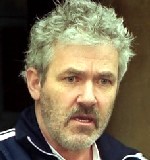
John Cooper
Murderer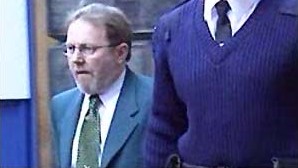 Andrew Walker
Murderer · United Kingdom · 1985
Royal Scots corporal Andrew Walker killed three Army colleagues in a payroll ro…
3 victims
Andrew Walker
Murderer · United Kingdom · 1985
Royal Scots corporal Andrew Walker killed three Army colleagues in a payroll ro…
3 victims
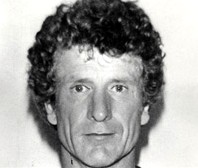 Arthur Hutchinson
Murderer · United Kingdom · 1983
Arthur Hutchinson was an English murderer and rapist who committed three murder…
3 victims
Arthur Hutchinson
Murderer · United Kingdom · 1983
Arthur Hutchinson was an English murderer and rapist who committed three murder…
3 victims
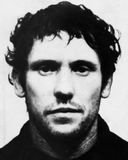 Barry Prudom
Murderer · United Kingdom · 1982
Barry Prudom was the prime suspect in the killings of police officers after pol…
3 victims
Barry Prudom
Murderer · United Kingdom · 1982
Barry Prudom was the prime suspect in the killings of police officers after pol…
3 victims
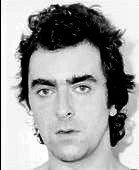 John Cannan
Murderer · United Kingdom · 1986
John Cannan Susannah “Suzy” Lamplugh was a British estate agent reported missin…
3 victims
John Cannan
Murderer · United Kingdom · 1986
John Cannan Susannah “Suzy” Lamplugh was a British estate agent reported missin…
3 victims
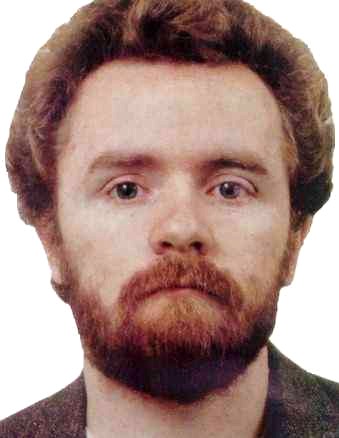 John Duffy
Murderer · United Kingdom · 1985
John Duffy was convicted of two murders and four rapes and was sentenced to lif…
3 victims
John Duffy
Murderer · United Kingdom · 1985
John Duffy was convicted of two murders and four rapes and was sentenced to lif…
3 victims
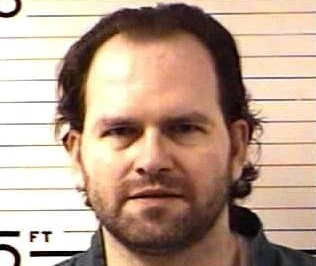 James Genrich
Murderer · USA · 1991
James Genrich was a Colorado man who was convicted of killing two people in 199…
2 victims
James Genrich
Murderer · USA · 1991
James Genrich was a Colorado man who was convicted of killing two people in 199…
2 victims
 Michael Wayne Hall
Murderer · USA · 1998
Michael Wayne Hall was tried in Texas state court for the murder of Amy Robinso…
1 victim
Michael Wayne Hall
Murderer · USA · 1998
Michael Wayne Hall was tried in Texas state court for the murder of Amy Robinso…
1 victim
 Adrian Bayley
Murderer · Australia · 2012
Adrian Ernest Bayley was convicted for the rape and murder of Jill Meagher. · S…
1 victim
Adrian Bayley
Murderer · Australia · 2012
Adrian Ernest Bayley was convicted for the rape and murder of Jill Meagher. · S…
1 victim
 John B. Taylor
Mass murderer · USA · 2000
John B. Taylor was 36 years old at the time of the Wendy's Massacre. The killin…
5 victims
John B. Taylor
Mass murderer · USA · 2000
John B. Taylor was 36 years old at the time of the Wendy's Massacre. The killin…
5 victims
- Gender
- male
- Country
- United Kingdom
- Location
- Pembrokeshire, Wales, United Kingdom
- Date of birth
- September 3, 1944
- Age at first offence
- 41
- Characteristics
- rape, robbery
- Victim profile
- Richard Thomas, 58, and his sister Helen, 54 / Peter Dixon, 51, and his wife Gwenda, 52
- Method of murder
- Shooting
- Date(s) of murder
- December 22, 1985 / June 29, 1989
- Years active
- 1985–1989
- Date of arrest
- May 13, 2009
- Status
-
Life imprisonment
Sentenced to life imprisonment on May 26, 2011
Case details
John Cooper was a serial killer from Milford Haven, Pembrokeshire.
Background
Cooper was convicted of murders involving brother and sister Richard Thomas and Helen Thomas in 1985, and of murders involving Peter Dixon and Gwenda Dixon in 1989. Cooper was also convicted of rape and sexual assault on a 16-year-old girl and a 15-year-old girl in March 1996, committed at gun point, in woodland behind the Mount Estate, Milford Haven. Cooper was further convicted for robbing a group of 15 and 16-year-olds in a field at nearby Milford Haven in 1996.
Cooper had a history of crime including 30 robberies and violent assault. He had appeared on the TV game show Bullseye in May 1989. He was imprisoned for 14 years in 1998 for burglary and robbery, enabling the police to collect further evidence against him. He was released from prison in January 2009. Through cold case review and subsequent developments in DNA and forensic science, in April 2009 the police identified Cooper’s shotgun as the murder weapon. Cooper was arrested in May 2009 and was convicted in May 2011 for the double murders and sexual assaults.
In September 2011, he launched an appeal against his convictions. Unless the appeals were successful, he had no possibility of parole.
People
- John Cooper — defendant and serial killer
- Richard Thomas — victim (brother); died 1985
- Helen Thomas — victim (sister); died 1985
- Peter Dixon — victim; died 1989
- Gwenda Dixon — victim; died 1989
- Tim Dixon — son of Peter and Gwenda Dixon; provided information to the jury
- Julie Ann Pratley — child of Peter and Gwenda Dixon; paid tribute to her parents
- Richard and Helen Thomas’s family — made statements and issued a loss-related statement
- Gareth Elias QC — prosecutor
- John Griffith Williams — judge
- Steve Wilkins — Detective Chief Superintendent of Dyfed Powys Police
- Clive Jones — Det Chief Supt who led elements of the 1989 investigation and appeared at press conferences
- Raymond White — Chief Constable who led the investigation at press conferences
- Aldwyn Jones — senior investigating officer for the 1996 incident room
- Paul Kemp — NPIA adviser quoted on Cooper
- Jim Bowen — host of Bullseye
- National Trust — Cooper had been working for it (background detail in trial reporting)
- Julie (referenced in DNA detail) — DNA found on shorts; Julie is identified as Mr Dixon’s daughter in the DNA evidence description
Timeline
- 22 December 1985 — Cooper targeted a three-storey farmhouse at Scoveston Park, killing brother and sister Richard and Helen Thomas; he later burned down the house.
- 5 July 1989 — The bodies of Peter Dixon (51) and Gwenda Dixon (52) were found concealed close to the coastal path near Little Haven at 1530 BST.
- 6 July 1989 — A press conference was called at Haverfordwest to announce the murders of Peter and Gwenda Dixon.
- 10 July 1989 — At a second press conference, Timothy Dixon and Det Ch Supt Clive Jones gave interviews and made a public appeal; an artist’s impression of a man seen in the area was released.
- 18 July 1989 — Police confirmed more than 1,700 calls had been received from the public over the investigation.
- 18 June 1990 — On the first anniversary of the murders, an operation was launched concentrating on areas Peter and Gwenda Dixon visited in 1989.
- 6 March 1996 — In a field near Mount Estate, Milford Haven, five teenagers were confronted by a man wearing a balaclava and brandishing a sawn-off shotgun; after demanding money, two girls were subjected to serious sexual assaults.
- 2 December 1997 — BBC’s Crimewatch Still Unsolved featured a reconstruction of the 1989 murders and repeated some footage used in the first Crimewatch appeal and an interview with the Dixons’ son Tim.
- 21 January 1998 — Cooper was charged with a number of burglaries and an armed robbery (collectively known as Operation Huntsman) in north Pembrokeshire.
- 29 January 1998 — Forensic and ballistics officers examined Cooper’s home and surrounding grounds.
- 10 December 1998 — Cooper was sentenced to 16 years for armed robbery and 30 burglaries.
- February 2006 — Operation Ottawa was formed to carry out a review of material from outstanding undetected serious crime in Pembrokeshire, including the double murders and also the robbery and rape offences at Milford Haven in 1996.
- 8 November 2007 — A press conference was called at Haverfordwest to outline the aim of Operation Ottawa and provide an overview of the current situation; a renewed public appeal was also made for witnesses.
- June 2008 — Cooper was produced from prison to be questioned about the two double murders and offences in the 1990s; he was interviewed over a four-day period at Ammanford.
- 23 April 2009 — Detectives received the first phone call from LGC Forensics about significant forensic findings.
- 13-15 May 2009 — Cooper was arrested, charged and remanded in custody for the four 1980s murders, a serious sexual assault and five attempted robberies in Milford Haven in 1996, after appearing in Haverfordwest Magistrates Court.
- 27 May 2009 — Cooper appeared before Swansea Crown Court.
- 21 March 2011 — Start of Cooper trial at Swansea Crown Court (trial was postponed to October 2010 and then to 21 March 2011).
- 26 May 2011 — Cooper was convicted on all charges and jailed for life; four life sentences were imposed.
The offence
1985 double murder at Scoveston Park
On the evening of 22 December 1985, Cooper targeted a three-storey farmhouse at Scoveston Park. Cooper killed brother and sister Richard and Helen Thomas during the incident. The court was told that it possibly involved knowing that Mrs Thomas, aged 54, was home alone. The prosecution told the court that Cooper shot the Thomases; it was claimed he then poured diesel around the house and set fire to it.
A murder investigation was launched and an incident room was set up. At its peak in 1986, there were 150 officers involved. During interviews conducted by police in June 2008, Cooper denied having been anywhere near the house.
1989 double murder on the coastal path
In 1989, Peter Dixon and Gwenda Dixon were on an outing to an isolated coastal path beauty spot. Tim Dixon reported that his parents had not returned home following a camping trip in Pembrokeshire. Their bodies were later found concealed close to the coastal path near Little Haven at 1530 BST.
The prosecution said Cooper intercepted the couple in daylight, took them to a nearby hideaway and demanded details about their bank cards. Again using a shotgun, the prosecution said Cooper silenced them. Mr Dixon’s hands were tied behind his back. Mr Dixon was shot three times and his wife was shot twice. Their bank card was taken and money was accessed from his account using the correct pin number following his death.
Gerard Elias QC described the killings as “merciless executions” and the prosecution told the jury that each of these crimes involved the use of cold and calculating violence.
March 1996 sexual assaults and robbery
In March 1996, a group of five 15 and 16-year-olds were playing in a field at nearby Milford Haven when Cooper confronted them. The man wore a balaclava and brandished a sawn-off shotgun. The teenagers were ordered to lie face down under threat of death, and the two girls were taken away.
The court heard that Cooper dragged one 16-year-old girl by the hair and raped her at knifepoint. He then indecently assaulted a 15-year-old girl before threatening the teenagers and firing the shotgun in the air.
Cooper was also found guilty of robbing a group of 15 and 16-year-olds in a field at nearby Milford Haven in 1996, as well as raping one of the two girls and indecently assaulting the other.
Investigation
A cold case review was set-up in early 2006. The case was reviewed under Operation Ottawa; a small team of officers recovered, catalogued and recorded material from the investigations over two years. A press conference was called at Haverfordwest on 8 November 2007 to outline the aim of Operation Ottawa and to provide an overview, and the police made a renewed public appeal for witnesses.
In June 2008, Cooper was produced from prison to be questioned about the two double murders and offences in the 1990s; he was interviewed over a four-day period at Ammanford.
In April 2009, the police were able to identify Cooper’s shotgun as the murder weapon. Detectives received the first phone call from LGC Forensics about significant forensic findings on 23 April 2009.
Forensic techniques linked items and provided evidence including DNA:
- DNA from the Dixon family was found on a pair of Mrs Dixon’s shorts that Cooper had kept in his room.
- A drop of Mr Dixon’s blood was found under paint on a shotgun Cooper had stashed in a hedge near his home.
- Cooper’s bedroom shorts had Mr Dixon’s DNA on them, along with that of his daughter Julie.
- Fibres were used to link Cooper to all three crime scenes.
- A trace of Mr Dixon’s blood was found underneath paint on the gun Cooper used in the robbery.
During the 1996 incident, an incident room was set up at Haverfordwest police station. The senior investigating officer was Det Supt Aldwyn Jones.
During the 1989 investigation, Chief Constable Raymond White and Det Chief Supt Clive Jones led the investigation at press conferences, and Timothy Dixon and Det Ch Supt Clive Jones gave interviews and made a public appeal at a second press conference.
Arrest and court proceedings
Cooper was charged with murders and related offences in May 2009 after appearing in Haverfordwest Magistrates Court. He was arrested, charged and remanded in custody for the four 1980s’ murders, a serious sexual assault and five attempted robberies in Milford Haven in 1996 on 13-15 May 2009. Cooper appeared before Swansea Crown Court on 27 May 2009.
Trial
The trial at Swansea Crown Court began on 21 March 2011.
During sentencing remarks and proceedings:
- After the judge’s statement, Cooper interrupted and shouted, “This is utter rubbish, it's rubbish. That jury's been on the internet. I don't blame them - evidence has been kept from that jury.”
- The judge warned Cooper he would be taken downstairs if he did not keep quiet.
- Cooper remained in court as the judge completed his statement before passing a life sentence.
Prosecutor Gerard Elias QC read out victim impact statements; Cooper’s family walked out of court, many in tears. As they left, Cooper’s brother shouted, “We're here for you, John.”
Before sentencing, the court heard impact-related and descriptive accounts of the crimes and evidence.
Quotes during investigation narrative at trial
Detective Chief Superintendent Steve Wilkins said:
“John Cooper is a dangerous and evil man. He killed people for little financial gain.”
Judge John Griffith Williams said:
“Life for these murders will mean just that. You are a very dangerous man and a significant risk. You are very predatory and, were it not for advances in DNA techniques, may well have continued to evade capture.'
He also stated:
“You are a very dangerous man, highly predatory who, but for advances in forensic science, may well have continued to evade capture.”
And:
“The murders were of such evil wickedness that the mandatory sentence of life will mean just that.”
Prosecutor Gerard Elias QC said:
“Each of these crimes involved the use of cold and calculating violence.”
And he also said:
“All the victims were subjected to the most terrifying of ordeals.”
Gerard Elias QC said:
“Each incident was “linked by a large number of common threads”.
He added:
“It was “obvious” the crimes were the work of someone “who knew the area like the back of his hand”.”
NPIA adviser Paul Kemp said:
“He [Cooper] was a compulsive type of person, very persistent in his approach to things and I think another factor was he had lost a lot of money through gambling.”
He also said:
“He had gone from owning quite a valuable paddock and house to living in rented accommodation and that had a major impact on the way he thought.”
And:
“If you look at the Thomases they owned a small farm and he may well have viewed that with envy.”
Paul Kemp said:
“We get involved in lots of high profile cases - the Cumbria shootings, the investigation of the Sian O'Callaghan murder over in Wiltshire, the murder of Joanna Yates,” he said.
He also said:
“They are all serious cases in their own right . . . but you don't get much more serious than this.”
He continued:
“If you look at the absolute brutality of the offending, the possibility he could have offended again, the fact he committed two double murders and abducted and raped a young girl - this is a really really dangerous individual.”
And:
“In any community this would have enormous impact but because of the nature of this community - it's quite rural, quite a low population, crime is low in this area - the impact would be absolutely enormous.”
Steve Wilkins said:
“In the 1998 investigation he clearly was someone who was suspected of having involvement in those crimes but he demonstrated then, even faced with the strongest of connecting evidence to the offences, he still would not admit his guilt,” he said.
He added:
“Certainly in discussions I've had with the senior investigating officers it was quite clear to them that they would need to have what we call the forensic golden nugget to connect him to those offences.”
Detective Chief Superintendent Steve Wilkins also said:
“A number of the forensic techniques are destructive so you only get one chance,” said DCS Wilkins.
He stated:
“Our case is essentially a forensic case though there is a lot of very interesting circumstantial and other physical evidence,” said DCS Wilkins.
On control in interviews, Steve Wilkins said:
“What came across very strongly was John Cooper is someone who thrives on control.”
He added:
“Certainly in the early interviews we had episodes of him facing the wall, lying on the floor in a foetal position or exploding with anger.”
And:
“That [change] worked very well. We were very much able to get inside his mind and in doing so he effectively pointed us in the direction of places we needed to go.”
He stated:
“He is an individual who I believes thinks his capabilities are far above what they actually are.”
And:
“That was a feature in his life where he had ideas. Unfortunately those ideas failed and that failure led him into the spiral of offending which started off with quite low level criminality, into burglary and escalated to robberies and ultimately into murdering his victims.”
On earlier investigations, Steve Wilkins said:
“I don't think there was anything that would have led the senior investigating officer at that time to believe he was a suspect or person of interest.”
He also said:
“Certainly he gave quite a plausible explanation which at that time was backed up by his family.”
And:
“In relation to the ring inquiry again, as is his nature, he gave a very plausible explanation. I can understand why he did not come in to the inquiry then.”
Finally:
“I am confident that nobody has been incompetent in relation to these investigations.”
Sentencing
On 26 May 2011, Cooper was given four life sentences for the 1985 double murder of brother and sister Richard and Helen Thomas, and the 1989 double murder of Peter and Gwenda Dixon. Cooper was also sentenced for the rape of a 16 year old girl and a sexual assault on a 15 year old girl, both carried out at gun point, in March 1996, in woodland behind the Mount Estate, Milford Haven.
The sentencing included a warning that he would be a significant risk of serious harm. The mandatory sentence of life applied.
Appeals and outcome
In September 2011, Cooper launched an appeal against his convictions.
Aftermath
After the hearing, the Dixons’ children, Tim Dixon and Julie Ann Pratley, paid tribute to their parents, calling them “loving, gentle and charismatic”. They also paid tribute to the work of the police, saying the people of Pembrokeshire owed them a “debt of gratitude”.
They said:
“They had wisdom, humour and were compassionate. Even after two decades their absence is immense and still painful,”
The Thomas family said their loss had “deepened” over the years. In a statement issued through police, they said:
“As a family, we would wish that justice is done for Richard and Helen. Memories will remain with us all forever but we hope that we will now be able to remember the happier times more than the very sad ones.”
After appearing at the court in connection with the May 2009 events, Cooper shouted at waiting photographers and television crews: “You must judge me after the trial and not before.”
Other details
- The jury convicted Cooper of the four murders after an eight-week trial at Swansea Crown Court.
- Cooper was convicted of separate charges of rape, sexual assault and attempted robbery.
- Cooper shot the Thomases at their remote mansion near Milford Haven, Pembrokeshire, and later set fire to their three-storey house.
- The court was previously told that on 29 June 1989, Mr and Mrs Dixon were shot at close range while taking a final walk along the Pembrokeshire coastal path near Little Haven before returning to their Witney home.
- In 1996, Cooper confronted five teenagers near the Mount Estate School, Milford Haven.
- In 1997, BBC’s Crimewatch Still Unsolved featured a reconstruction of the 1989 murders and repeated footage used in the first Crimewatch appeal.
- In December 1998, Cooper was jailed for 16 years at Swansea Crown Court for 30 counts of burglary and a robbery, serving 10 years.
- Cooper had been unemployed for years in trial reporting; he had worked as a welder’s mate at the old Gulf oil refinery at Milford Haven in 1978 and won £90,000 and a new car on a spot the ball competition.
- Cooper married his late wife Patricia in 1966 and they had two children: a boy and a girl.
- The court heard Cooper was born in September 1944 and left school at 15.
- Trial reporting said he kept a copy of the SAS handbook and stored items including coins, jewellery, silverware and photograph frames under lock and key.
- Trial reporting said it was put to Cooper that he regularly had bonfires in his back garden on which he would burn jewellery as a means of identifying any valuable stones and metal he had stolen.
- Trial reporting described speculation about a theory that the Dixons were killed because they came across a cache of IRA weapons.
Spotted an error, or have more information about this case?