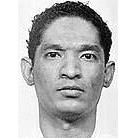
Willis Jay Barnes
Murderer Brian Kevin Rosenfeld
Murderer · USA · 1985
Brian Kevin Rosenfeld Brian Kevin Rosenfeld was sentenced to three concurrent l…
23 victims
Brian Kevin Rosenfeld
Murderer · USA · 1985
Brian Kevin Rosenfeld Brian Kevin Rosenfeld was sentenced to three concurrent l…
23 victims
 Yahweh ben Yahweh
Murderer · USA · 1980
Yahweh ben Yahweh was born and legally named Hulon Mitchell Jr. (October 27, 19…
23 victims
Yahweh ben Yahweh
Murderer · USA · 1980
Yahweh ben Yahweh was born and legally named Hulon Mitchell Jr. (October 27, 19…
23 victims
 Russell Ellwood
Murderer · USA · 1991
Russell Ellwood was a former taxi driver. Authorities suspected him of killing…
20 victims
Russell Ellwood
Murderer · USA · 1991
Russell Ellwood was a former taxi driver. Authorities suspected him of killing…
20 victims
 Robert Martines Perez
Murderer · USA · 1994
Name: Robert Martines Perez · Other name used in proceedings: Robert Martinez P…
15 victims
Robert Martines Perez
Murderer · USA · 1994
Name: Robert Martines Perez · Other name used in proceedings: Robert Martinez P…
15 victims
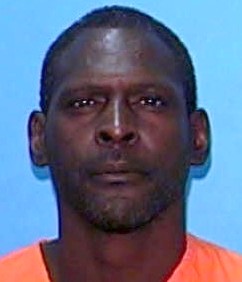 Crosley Green
Murderer · USA · 1989
Crosley Green was sentenced to death on February 8, 1981. Late in the evening o…
1 victim
Crosley Green
Murderer · USA · 1989
Crosley Green was sentenced to death on February 8, 1981. Late in the evening o…
1 victim
 Ronald Bernard Bennett
Murderer · USA · 1985
Ronald Bernard Bennett was executed by lethal injection in Virginia on November…
1 victim
Ronald Bernard Bennett
Murderer · USA · 1985
Ronald Bernard Bennett was executed by lethal injection in Virginia on November…
1 victim
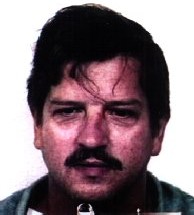 William George Bonin
Serial killer · USA · 1972
William George Bonin was executed by lethal injection in California on February…
44 victims
William George Bonin
Serial killer · USA · 1972
William George Bonin was executed by lethal injection in California on February…
44 victims
 Sanna Sillanpää
Homicide · Finland · 1999
Sanna Riitta Liisa Sillanpää (born April 15, 1968) was a Finnish woman who shot…
3 victims
Sanna Sillanpää
Homicide · Finland · 1999
Sanna Riitta Liisa Sillanpää (born April 15, 1968) was a Finnish woman who shot…
3 victims
 Christopher Speight
Spree killer · USA · 2010
Christopher Speight was the suspect in the Appomattox shootings, a spree shooti…
8 victims
Christopher Speight
Spree killer · USA · 2010
Christopher Speight was the suspect in the Appomattox shootings, a spree shooti…
8 victims
- Gender
- male
- Country
- USA
- Location
- Harris County, Texas, USA
- Date of birth
- August 13, 1948
- Age at first offence
- 40
- Characteristics
- rape, robbery
- Victim profile
- Helen Greb (female, 84)
- Method of murder
- Strangulation
- Date(s) of murder
- February 11, 1988
- Years active
- 1988
- Date of arrest
- —
- Status
-
Executed
Executed by lethal injection on September 10, 1999 in Texas
Case record: Willis Jay Barnes
Timeline
- 1982 — Barnes began using cocaine.
- 1984 — Barnes was charged with burglarizing four residences and raping an elderly woman; he pleaded guilty to the burglaries and accepted four 30-year sentences; the rape charge was dropped.
- 1987 (October) — Barnes was released from prison on parole after serving approximately three years of his thirty-year sentence.
- Feb. 11, 1988 — Barnes broke into the Montrose-area home of Helen Greb and committed the rape, beating, and strangling.
- Feb. 14, 1988 — Helen Greb’s nude body was found in her home in Houston, Texas.
- Feb. 17, 1988 — An arrest warrant for Barnes was issued charging him with theft by receiving, a misdemeanor offense.
- Feb. 17, 1988 — Barnes was arrested by Sergeant David E. Calhoun of the City of Houston Police Department; the arrest warrant process included reading Miranda rights.
- Feb. 18, 1988 (around 6:00 p.m.) — Barnes was brought before Judge Michael McSpadden and informed he was charged with "burglary of a habitation with intent to commit murder," a first-degree felony charge.
- Feb. 18, 1988 — Barnes made multiple written and a videotaped statement regarding entering the home and stealing a television set and two firearms, while denying killing Greb in the statements.
- June 22, 1988 — Barnes was indicted for capital murder.
- March 16, 1989 — A jury convicted Willis Jay Barnes of capital murder.
- March 23, 1989 (a week later, after March 16, 1989) — Barnes was sentenced to death.
- Sept. 22, 1993 — Barnes’s conviction and sentence were upheld on direct appeal by the Texas Court of Criminal Appeals.
- November 1993 — The Texas Court of Criminal Appeals denied Barnes’s motion for a rehearing.
- 1994 (April) — The United States Supreme Court denied Barnes’s petition for a writ of certiorari.
- July 1995 — Barnes filed an application for a post-conviction writ of habeas corpus in state court.
- Feb. 14, 1996 — The Texas Court of Criminal Appeals entered an order stating that the trial court's findings of fact and conclusions of law were "supported by the record and upon such basis the relief sought by the petitioner is denied."
- April 1997 — Barnes filed a petition for writ of habeas corpus in federal district court.
- Apr. 30, 1998 — The district court granted Respondent’s motion for summary judgment and entered final judgment denying Barnes’s petition for a writ of habeas corpus and denying a COA.
- Nov. 9, 1998 — The United States Court of Appeals for the Fifth Circuit denied Barnes’s application for a COA.
- Sept. 10, 1999 — Barnes was executed by lethal injection in Texas.
Background
Willis Jay Barnes was a Texas death row inmate. He was executed in Texas on September 10, 1999.
Barnes was a burglar on parole after serving three years of a 30-year sentence. At the time of the murder of Helen Greb, Barnes was 39. Barnes later was described as 51 at the time of his execution.
Barnes’s history included arrests for trespassing and breaking and entering. He began using cocaine in 1982 and later blamed his burglary spree on cocaine addiction described as costing him $350 a day.
In 1984, Barnes was charged with burglarizing four residences and raping an elderly woman. He pleaded guilty to the burglaries and accepted four 30-year sentences, and the rape charge was dropped. He served approximately three years of his thirty-year sentence and was released from prison in October 1987 on parole. Less than four months after his release, Barnes broke into the home where Helen Greb lived since 1937.
The offence
On February 11, 1988, Barnes broke into the Montrose-area home of Helen Greb, 84. Greb’s body was found in her home in Houston, Texas on February 14, 1988.
Barnes cut the telephone line. He broke the lock off the kitchen window and removed the screen. He then entered the residence. Once inside, Barnes beat Greb, raped her, and strangled her with his hands. Afterward, he stole two guns and a television set and left.
Family members found Greb’s nude body in her ransacked home and became concerned about unanswered telephone calls.
Injuries and cause of death were described as including abrasions on numerous portions of Helen’s body; her backbone and every rib being fractured; her chest being crushed; numerous lacerations; and manual strangulation. The cause of death was described as "asphyxia due to manual strangulation and compression of the chest." The autopsy description included that Greb suffered 20 broken ribs, a broken back, and a crushed chest, along with numerous cuts. A kitchen window had been pried open and a footprint from a tennis shoe was found in the kitchen sink below the kitchen window. A second window at the back of the house had been opened and the screen pried loose. Police determined the television set and two firearms were missing from the house.
Barnes’s trial testimony included a claim of self-defense. He said Greb confronted him with a rifle; he pushed her back; she struck her head; and that his version did not explain the injuries found. The jury did not buy the self-defense account. Evidence described that Greb was strangled with hands and had been sexually assaulted.
Investigation
Police received information that Barnes sold the guns and television to his fence, Robert Davis. Evidence located the missing items in the possession of Robert Glenn "Pokey" Davis, described as a known dealer in stolen property and a police informant. Davis identified Barnes to police.
The Houston Police located the missing items in Davis’s possession. Police determined that a television set and two firearms were missing from Greb’s home.
Arrest
An arrest warrant for Barnes was issued on February 17, 1988 charging theft by receiving, a misdemeanor offense. Barnes was arrested the same day by Sergeant David E. Calhoun of the City of Houston Police Department. Sergeant Robert Parish also participated in the arrest.
Barnes was handcuffed and had his Miranda rights read to him. He indicated that he understood his rights and had no questions. Barnes was told only that he was under arrest for possession of stolen property and was not told he was a capital murder suspect.
At approximately 6 p.m., Calhoun brought Barnes into a police interview room where he was again read his Miranda rights. At approximately 8 p.m., after two hours of interrogation, Barnes agreed to give a written statement (the "first statement") that he entered Ms. Greb’s house through an open door, found the house already ransacked, and stole the television and two firearms. The statement was made on a "statement of a person in custody" form including Miranda warnings. Calhoun reviewed the warnings with Barnes; Barnes placed his initials next to each warning and waived his Miranda rights, initialing the waiver on the statement form.
After the first statement was signed around 10 p.m., Sergeant J.W. Belk witnessed the signing and remained alone with Barnes. Belk had participated in a 1984 investigation of Barnes for burglary involving the aggravated sexual assault of an elderly woman, resulting in Barnes pleading guilty to burglary of four homes and serving approximately three years of the 30-year sentence before release in October 1987.
At approximately 10:30 p.m., Sergeant Parish entered the interview room to get permission to search Barnes’s car. Barnes gave permission. Barnes removed his shirt upon request. He had scratches on his chest, both arms, and under his left eye. Police took Barnes’s clothes and provided him with a trusty uniform and took his shoes as evidence. Police were unable to find socks or shoes at that time. Calhoun testified that the next morning he brought in a pair of his own shoes and a pair of socks for Barnes.
Around midnight, Calhoun showed Barnes one stolen firearm and a picture of the television set. Calhoun asked Barnes to give a written statement identifying the items. Barnes agreed. Calhoun reviewed Miranda warnings again; Barnes said he understood them. Calhoun began typing the "second statement" at approximately half past midnight. Around 1 a.m., Barnes read the statement, made and initialed changes, and signed it in the presence of Belk and Parish.
In the second statement, Barnes admitted entering the house and stealing the firearms and television but denied killing Greb. After signing, Barnes was taken to the city jail, placed in a holding cell, talked to a bailbondsman, and slept from approximately 2:30 a.m. to 4:30 a.m. and then again from approximately 5:10 a.m. to 8:00 a.m.
Statements and procedural steps at court
At approximately 8:30 a.m. on February 18, 1988, Sergeant R.L. Doyle and Sergeant Sharon Durham brought Barnes to court. Barnes was dressed in a jail uniform and was still barefoot when he appeared before Judge Michael McSpadden.
Judge McSpadden informed Barnes that he was charged with "burglary of a habitation with intent to commit murder," a first-degree felony charge. Judge McSpadden also informed Barnes of his Miranda rights, asked if he understood each right, and Barnes stated "Yes." Judge McSpadden questioned Barnes about his education. Barnes stated that he had received his G.E.D. and had twenty-nine hours of college credit, failed high school English, and had taken college English and received a D. Judge McSpadden noted Barnes appeared to understand everything.
After the hearing, Barnes was returned to the city jail, given shoes and socks, and during both the journey to court and the return trip Barnes was briefly outside barefoot in rainy and chilly weather.
Beginning at approximately 9:45 a.m., Calhoun interrogated Barnes further, having read Miranda rights before commencing the interrogation. Barnes stated he had already been given his rights by Judge McSpadden and understood them. Barnes again told Calhoun he had stolen the television and firearms but continued to deny seeing anyone in the house.
At approximately 11:45 a.m., Calhoun ceased the interrogation and left the interview room. Sergeant Belk asked Barnes if he needed anything, and accompanied Barnes to the restroom. While returning from the restroom, Barnes indicated he wanted to talk to Belk. In the interview room, Barnes read out loud the charge listed on the Miranda warnings copied from Judge McSpadden: "burglary of a habitation with intent to commit murder." Barnes told Belk, "I didn't intend to commit a murder. It was an accident."
Barnes explained he entered the house through the kitchen window intending to take property and money; Greb confronted him with mace and a rifle; they struggled; he overcame Greb and left her lying on the floor; after he grabbed cash, the television, and the firearms, he realized Greb was not breathing; he attempted "mouth to mouth resperation"; when that was unsuccessful, he covered her body and fled the scene.
Belk repeated Miranda rights; Barnes waived them again. Belk then typed the "third statement" just after noon. Barnes made and initialed two minor changes and signed the statement.
At the pretrial suppression hearing, Barnes testified that his interrogators did not promise anything and did not force, coerce, or compel him to make the statements.
After Barnes made his third written statement, Calhoun obtained a warrant for capital murder.
Around 2 p.m., Belk asked Barnes if he would repeat his third statement on videotape. Barnes agreed. Barnes, Belk, and the camera operator were present when Barnes gave his videotaped "fourth statement." Belk read questions from a video statement checklist that included Miranda rights. With one exception discussed in depth later, Barnes stated he understood and waived each right.
In the videotaped statement, Barnes gave a version consistent with the third statement.
Trial
Barnes was indicted for capital murder on June 22, 1988.
Barnes’s trial counsel moved to suppress all of Barnes’s statements, arguing they were not voluntary and were obtained in violation of Barnes’s right to counsel. The trial court conducted a four-day evidentiary hearing on the suppression motion. Barnes, Belk, Calhoun, Doyle, and Judge McSpadden testified. The trial court entered extensive findings of fact and conclusions of law holding that Barnes’s statements were voluntary. The court found Barnes had mental capacity and education needed to understand the warnings and found no evidence of police misconduct during interrogation. The court found "all waivers of constitutional rights involved in each and every statement" were voluntarily and intelligently made, and it admitted all written statements and the fourth, videotaped statement.
A jury convicted Willis Jay Barnes of capital murder on March 16, 1989. A week later, Barnes was sentenced to death.
Barnes v. State, No. 70,858, slip op. (Tex.Crim.App. Sept. 22, 1993) upheld the conviction and sentence. The Texas Court of Criminal Appeals denied a motion for rehearing in November 1993. The United States Supreme Court denied Barnes’s petition for a writ of certiorari in April 1994.
Sentencing
Barnes was sentenced to death a week after his capital murder conviction on March 16, 1989.
Appeals
Barnes filed an application for post-conviction habeas corpus in state court in July 1995. A limited evidentiary hearing was held on Barnes’s allegation of ineffective assistance of counsel. The Texas Court of Criminal Appeals entered an order in February 1996 stating that the relief sought by Barnes was denied.
In April 1997, Barnes filed a petition for writ of habeas corpus in federal district court. Respondent answered and filed a motion for summary judgment. The district court granted Respondent’s motion for summary judgment and entered final judgment denying Barnes’s petition for a writ of habeas corpus and denying a COA (Barnes v. Johnson, No. H-97-400 (S.D.Tex. Apr. 30, 1998)).
Barnes then challenged the denial of a COA. On Nov. 9, 1998, the United States Court of Appeals for the Fifth Circuit denied Barnes’s application for a COA.
Barnes argued that his third written statement and fourth videotaped statement were not voluntary and that their admission at trial violated his constitutional rights to counsel and to remain silent under the Fifth, Sixth, and Fourteenth Amendments.
Barnes provided six allegations of police coercion, fraud, and deceit:
- Police deliberately and fraudulently misled him as to the charges they intended to press.
- Police did not cease interrogation after Barnes invoked his right to remain silent.
- Police coerced him by interrogating him for ten hours and holding him in custody for over nineteen hours.
- Police left Barnes without footwear for an extended period of time, during which he was outside at points.
- Police prevented Barnes from sleeping for more than two or three hours at a time.
- Police treatment, viewed in its entirety, was fundamentally unfair.
The court addressed Barnes’s arguments, including the claim regarding an intentionally fraudulent charge, the claim about invocation of the right to remain silent, and the other factual arguments. The court determined that Barnes failed to make a substantial showing of the denial of a constitutional right and denied the application for a COA.
The Fifth Circuit included verbatim exchange recorded on videotape:
Q: I'm Sergeant J.W. Belk.
A: I'm Willis Jay Barnes.
Q: Okay, Willis. That's B-A-R-N-E-S.
A: B-A-R-N-E-S.
Q: Okay. I'm going to read you your warnings, and if at any point you don't understand, stop me and we will go through it.
A: Okay.
Q: You have the right to remain silent and not make any statement at all and that statement you make may be used against you and probably will be used against you at trial. Do you understand that right?
A: I understand it.
Q: Do you waive this right?
A: No.
Q: Okay, do you understand what "waive" means?
A: It mean, uh, do I waive rights for you to do it, right?
Q: Well, it's explained.... you have the right to remain silent....
A: Right.
Q: And you can remain silent and not say anything at all, or you can waive that right....
A: Right, that's what I'm saying. I waive what I'm saying, it's okay, what I'm saying is I'm giving you the right to put me that ... to ask me these questions. All right?
Q: Okay, and so you're waiving your right to remain silent and you are talking.
A: I am talking.
Q: Okay. so you understand that right ...
A: I understand that right.
Q: And you are waiving that right?
Barnes’s statement in the interview room was also quoted:
- "I didn't intend to commit a murder. It was an accident."
- "I think that this man had something to do with the old womans death."
- "They're putting to death an innocent man," and "God knows the truth."
- "This is the truth: I did not kill Mrs. Greb. The record will reflect that, if they would just look at it."
- "If I die, they will never know the truth. If I die, they will think until it's time for them to die that I was the person that committed this crime, only because they were influenced by the state to hear false testimony."
- "To the victim's family, I hope you will find it in your heart to forgive me as I have forgiven you. I'm ready, Warden."
- "It's partly my fault," he said.
- "I had no business walking into that house."
- "They was in the devil's workshop."
- "God has been good to me, even in this place,"
- "The only thing I am afraid of is the pain for my family ... that they might have to endure. That worries me the most."
- I'm ready, Warden."
Outcome
Willis Jay Barnes was executed by lethal injection in Texas on September 10, 1999.
Barnes’s conviction was for capital murder; the Fifth Circuit denied Barnes’s application for a COA on Nov. 9, 1998.
At the execution, witnesses were led into viewing rooms. Barnes chuckled to prison officials, saying:
"They said one guy was shaking so bad he had the whole building shaking. I'm not doing that, am I?"
Barnes expressed love to his family and asked for forgiveness from the survivors of his victim. His last statement began with:
- "Yes, I would like to give love to my mother, sisters and brothers and let them know that I am thinking of them right now and I want to thank God for giving me such a loving family." He then said to the victim’s family:
- "I hope you will find it in your heart to forgive me as I have forgiven you." He concluded with:
- "I'm ready, Warden."
The lethal injection was started, and Barnes was pronounced dead at 6:19 p.m.
Aftermath
Five members of Mrs. Greb’s family stood in the death chamber and watched the execution through a window. They declined to speak with reporters.
Robert Glenn "Pokey" Davis identified Barnes to police as the person who provided him with the stolen items.
Barnes was described as blaming a $350-a-day cocaine addiction for a string of Houston burglaries that had put him in prison in 1984 with four 30-year terms. After a later description of parole practices and records, he was freed because records showed his first prison stint and that the offense was a property crime, even though the burglary conviction was described as a plea bargain that included dropping a sexual assault charge involving an elderly woman. Less than 4 months after his release, Helen Greb was murdered in her home.
Spotted an error, or have more information about this case?