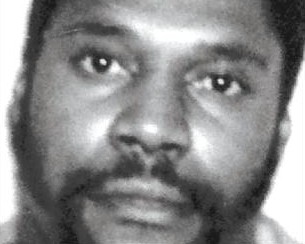
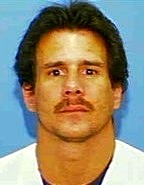
Ronald Bernard Bennett
Murderer Brian Kevin Rosenfeld
Murderer · USA · 1985
Brian Kevin Rosenfeld Brian Kevin Rosenfeld was sentenced to three concurrent l…
23 victims
Brian Kevin Rosenfeld
Murderer · USA · 1985
Brian Kevin Rosenfeld Brian Kevin Rosenfeld was sentenced to three concurrent l…
23 victims
 Marvin Gray
Murderer · USA · 1975
Marvin Gray was convicted killer who claimed responsibility for 23 slayings and…
23 victims
Marvin Gray
Murderer · USA · 1975
Marvin Gray was convicted killer who claimed responsibility for 23 slayings and…
23 victims
 Yahweh ben Yahweh
Murderer · USA · 1980
Yahweh ben Yahweh was born and legally named Hulon Mitchell Jr. (October 27, 19…
23 victims
Yahweh ben Yahweh
Murderer · USA · 1980
Yahweh ben Yahweh was born and legally named Hulon Mitchell Jr. (October 27, 19…
23 victims
 Russell Ellwood
Murderer · USA · 1991
Russell Ellwood was a former taxi driver. Authorities suspected him of killing…
20 victims
Russell Ellwood
Murderer · USA · 1991
Russell Ellwood was a former taxi driver. Authorities suspected him of killing…
20 victims
 Steven Truscott
Homicide ? · Canada · 1959
Steven Murray Truscott (born January 1945) was a Canadian who was convicted of…
1 victim
Steven Truscott
Homicide ? · Canada · 1959
Steven Murray Truscott (born January 1945) was a Canadian who was convicted of…
1 victim
 Julio Gonzalez
Mass murderer · USA · 1990
Julio Gonzalez was sentenced to 174 twenty-five-year sentences (a total of 4,35…
87 victims
Julio Gonzalez
Mass murderer · USA · 1990
Julio Gonzalez was sentenced to 174 twenty-five-year sentences (a total of 4,35…
87 victims
 Mary Bateman
Murderer · United Kingdom · 1807
Mary Bateman (1768–1809) was known as the Yorkshire Witch. She was associated w…
1 victim
Mary Bateman
Murderer · United Kingdom · 1807
Mary Bateman (1768–1809) was known as the Yorkshire Witch. She was associated w…
1 victim
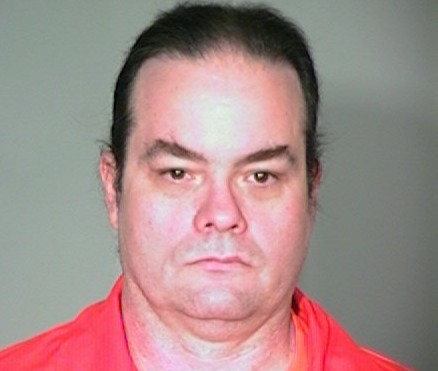 Jasper McMurtrey
Murderer · USA · 1979
Jasper Newton McMurtrey (also identified as Jasper McMurtrey). McMurtrey was a…
2 victims
Jasper McMurtrey
Murderer · USA · 1979
Jasper Newton McMurtrey (also identified as Jasper McMurtrey). McMurtrey was a…
2 victims
 Diego Pillco
Murderer · USA · 2006
Diego Pillco pleaded guilty to manslaughter for the killing of Adrienne Shelly…
1 victim
Diego Pillco
Murderer · USA · 2006
Diego Pillco pleaded guilty to manslaughter for the killing of Adrienne Shelly…
1 victim
- Gender
- male
- Country
- USA
- Location
- Chesterfield County, Virginia, USA
- Date of birth
- 1944
- Age at first offence
- 41
- Characteristics
- robbery
- Victim profile
- Anne Keller Vaden, 28
- Method of murder
- Blows to the head, strangulation, and multiple stab wounds
- Date(s) of murder
- November 16, 1985
- Years active
- 1985
- Date of arrest
- December 1986
- Status
-
Executed
Executed by lethal injection in Virginia on November 21, 1996
Case overview
Ronald Bernard Bennett was executed by lethal injection in Virginia on November 21, 1996. He was convicted of capital murder and sentenced to death by a Virginia jury.
Timeline
- November 1985 — Anne Keller Vaden was murdered in her apartment.
- November 21, 1996 — Bennett was executed by lethal injection in Virginia.
- November 24, 1996 — The New York Times reported on the clemency petition and the execution.
- August 20, 1996 — The United States Court of Appeals for the Fourth Circuit affirmed by published opinion in Bennett v. Angelone.
The victim and the offence
Anne Keller Vaden was murdered in her apartment in November 1985.
Her attacker inflicted three types of wounds: blows to the head, strangulation, and multiple stab wounds. The coroner concluded that she had actually survived the attack, which he estimated lasted at least thirty minutes, but ultimately died from loss of blood.
Ms. Vaden was white. Hairs “of Negroid origin” were found at the crime scene, and Bennett was African-American.
The attack occurred at Ms. Vaden’s home in Chesterfield County, just south of Richmond.
Bennett was indicted for murder in the course of robbery with a deadly weapon—a capital offense, robbery, and burglary.
At trial, Bennett was convicted of the murder, robbery, and burglary charges. The jury deliberated for less than an hour and returned a death sentence based on the “vileness” of Vaden’s murder.
Investigation and pre-trial events
The police investigated the murder without success for about a year.
In December 1986, Virginia police received a call from California police notifying them of new evidence received from Bennett’s putative wife. The Bennetts had separated during the year, and Bennett’s former wife, Mary, had moved to California. After staying out late and drinking with her friend, Sharon O’Shaughnessy, Mary Bennett told O’Shaughnessy that the ring she was wearing had been taken from a woman Bennett had murdered. Mary Bennett then gave the ring to O’Shaughnessy for safekeeping.
O’Shaughnessy told her ex-husband, a former California parole officer, about the ring, and he convinced her to tell California police about it.
After Virginia police were contacted, they flew to California, interviewed Mary Bennett, and soon thereafter arrested Bennett in Virginia. In post-arrest searches, police found an opal ring and a suitcase, both of which had belonged to Vaden.
Bennett worked as a maintenance man in the apartment complex where Ms. Vaden lived.
At trial, the Commonwealth presented testimony from Mary Bennett and Bennett’s cousin, Kenneth Harris. Both testified that on the night of the murder they had been at a party with Bennett, but that he had later left by himself. They explained that when Bennett returned to his apartment the next morning, he was “covered in blood” and, at some point, had acknowledged killing Anne Vaden.
There was also evidence that Bennett duplicated a master key that would let him into her apartment, and that he had once met Vaden while doing maintenance work in her apartment.
Bennett’s lawyers put on no evidence.
Evidence about witness recantations
Mary Bennett testified at Bennett’s trial in 1987 that she, Bennett, and Bennett’s cousin had been drinking and using cocaine the night Ms. Vaden was killed. She said Bennett then left home and, when he returned the next day, he was covered in blood and said he had killed a woman in the apartment complex.
In a 1994 videotaped affidavit, Mrs. Bennett recanted her testimony, saying she had lied to protect herself, and stating that she had been present at the murder and that it was the cousin who had killed Ms. Vaden.
A year after that, Mrs. Bennett recanted again, saying she had lied in the affidavit to save her former husband.
Trial
Jury findings
The jury convicted Bennett of murder, robbery, and burglary.
The capital sentencing hearing took place the next day.
At sentencing, the Commonwealth presented no further evidence, but the defense called Bennett’s mother and brother. They testified about Bennett’s good personal characteristics, including his filial piety, service in the Army, and activities at church. They also noted that Bennett’s father had died about a week before the murder and that his death had deeply affected Bennett.
Commonwealth’s statements and closing arguments
During the guilt phase, the Commonwealth’s opening statement described in moderate detail Anne Vaden’s good qualities.
At sentencing, in his closing argument and rebuttal, the prosecutor made several religiously loaded statements, apparently in an effort to square the death penalty with biblical passages. The prosecutor also alluded to Lee Harvey Oswald, Jack Ruby, and a series of gruesome murders committed by Muslim sects in 1977.
Verbatim statements from the Commonwealth’s sentencing arguments included:
“Some will say that society shouldn't take a life because that's murder also. That's not true. Vengeance is mine saith the Lord, but later when he covered the Earth with water and left only Noah and his family and some animals to survive, when he saw the damage what [sic] had been done to the Earth, God said "I'll never do that again" and handed that sword of justice to Noah. Noah is now the Government. Noah will make the decision who dies. "Thou shall [sic] not kill" is a prescription [sic] against an individual; it is not against Government. Because Government has a duty to protect its citizens. JA 799.”
“Our Government has decided that the death penalty is legitimate and is morally right. The law says for a wantonly, outrageous, or vile murder, a person may be put to death. When Jesus was being tormented by the Roman soldiers before his death, they asked him jokingly, is it lawful to pay tribute unto Caesar? Jesus said give those things that are Caesar's unto Caesar, and those things that are God's to God. The moral being follow the law and leave the rest to Heaven. JA 806-07.”
Verbatim statement from the Commonwealth’s guilt-phase opening included:
“Now, that's the Defendant sitting right over there. This is the victim Anne Keller Vaden, attractive, intelligent, successful, and dead. Who was she? Well, in 1975 she graduated from Clover Hill High School as class valedictorian. Two years later she married; she married Joey Vaden. In 1979, she went to college, William and Mary, and had a 3.8 grade average--an intelligent girl. She was also a guest minister at Tomahawk Church in Chesterfield--a guest minister. I said she was successful. She had a type of real estate venture. She was voted outstanding businesswoman of the year. She finished second in the national oratory contest; that was Anne Vaden. JA 548-49.”
Defense counsel sought to respond in kind with:
“Mr. Watson [the Commonwealth's attorney] has told you that vengeance is mine saith the Lord, and I submit to you that is true because Ronnie will answer for this to someone far greater than this jury, and I would submit to you that the ultimate power of punishment belongs not with this jury, and the concept we have long since discarded of an eye for an eye or tooth for a tooth, that has been replaced since the Sermon on the Mount, and the message we as Christians have been brought up with is even as the only perfect person in the world, as I understand it, hung on the cross between other murderers. The message then, as it still was [sic], was "Father forgive them," do not punish these people for what they do to me. That is the message of a faith. JA 804.”
Jury instruction defining “vileness”
The instruction given included:
“Before the penalty can be fixed at death, the Commonwealth must prove beyond a reasonable doubt ... 2) That [the defendant's] conduct in committing the offense was outrageously or wantonly vile, horrible or inhuman, in that it involved torture, depravity of mind or aggravated battery to the victim beyond the minimum necessary to accomplish the act of murder.” JA 794
Jury decision
Sentencing
Bennett received a death sentence by a Virginia jury.
Bennett’s capital sentencing hearing occurred the next day after conviction.
The “vileness” instruction was the basis for the death sentence.
Appeals and federal habeas proceedings
Direct appeals and certiorari
Bennett appealed to the Virginia Supreme Court, alleging evidentiary errors and prosecutorial misconduct; none of those were contested on the appeal that resulted in the federal decision.
The Virginia Supreme Court denied his appeal in a published opinion:
- Bennett v. Commonwealth, 236 Va. 448, 374 S.E.2d 303 (1988).
Bennett petitioned for certiorari to the Supreme Court of the United States, but the petition was denied:
- Bennett v. Virginia, 490 U.S. 1028, 109 S.Ct. 1765, 104 L.Ed.2d 200 (1989).
State habeas proceedings
Bennett filed a petition for habeas relief in state court. The state trial court dismissed substantive claims as procedurally defaulted and dismissed ineffective assistance claims on their merits. The state trial court concluded Bennett had failed to raise the substantive claims on direct appeal.
On habeas appeal to the Virginia Supreme Court, Bennett raised only his present ineffective assistance claims. The Virginia Supreme Court refused Bennett’s petitions for appeal.
Bennett again petitioned for certiorari to the Supreme Court of the United States, which denied:
- Bennett v. Director of the Virginia Dep’t of Corrections, 506 U.S. 855, 113 S.Ct. 164, 121 L.Ed.2d 112 (1992).
Federal habeas petition and appeal
After filing with the district court for the Eastern District of Virginia a federal habeas petition, the Commonwealth moved to dismiss. The district court granted the motion without an evidentiary hearing and dismissed the remainder on the merits after finding that most claims were procedurally barred. The district court also denied a motion to reconsider the dismissal of two ineffective assistance claims.
Bennett appealed to the Fourth Circuit, alleging the district court had erred in dismissing the substantive and ineffective assistance claims.
The Fourth Circuit affirmed the district court’s denial of Bennett’s habeas petition. The case citation was:
- 92 F.3d 1336 (4th Cir. Aug. 20, 1996)
- Ronald Bernard Bennett v. Ronald J. Angelone, Director, Virginia Department of Corrections.
Arguments Bennett raised on appeal
Bennett raised claims based on four aspects of trial and sentencing:
- Commonwealth’s improper opening remarks during the guilt phase.
- Commonwealth’s improper arguments at sentencing.
- Jury instructions and verdict forms used at sentencing were defective.
- Constitutional adequacy of Virginia’s “vileness” aggravating factor.
Bennett also raised ineffective assistance claims based on counsel’s failures related to those issues, and he argued that trial counsel failed to:
- object to the Commonwealth’s allegedly improper guilt-phase opening argument,
- object to the Commonwealth’s sentencing arguments,
- object to the sentencing instructions or jury forms, and
- properly explain mitigation to the jury at sentencing.
The Fourth Circuit held:
- Challenges to the guilt-phase opening statement and to jury instructions were procedurally barred.
- The constitutional challenge to the “vileness” instruction failed on the merits, citing that the Fourth Circuit had upheld the constitutionality of the precise instruction given in this case in Tuggle v. Thompson, 57 F.3d 1356, 1371-74 (4th Cir.), reversed on other grounds, --- U.S. ----, 116 S.Ct. 283, 133 L.Ed.2d 251 (1995).
- The Commonwealth’s religiously loaded sentencing arguments were highly improper, but they did not render the sentencing proceeding constitutionally unfair under the due process standard applied.
- The ineffective assistance claims were meritless, including claims about failure to object to victim impact remarks, failure to object to sentencing arguments, and alleged deficiencies related to mitigation.
The Fourth Circuit described the prosecutor’s religiously loaded statements and then stated:
- “Such statements, worthy of the profoundest respect in proper contexts, have no place in our non-ecclesiastical courts and may not be tolerated there.”
- It also concluded that, “viewed in the total context of the trial, it was not sufficiently egregious to render Bennett's trial fundamentally unfair.”
The Fourth Circuit concluded the district court properly denied Bennett’s habeas petition and affirmed.
Motions and execution stay proceedings
After the Fourth Circuit proceedings, there were additional motions and orders in federal court relating to a stay of execution.
Supreme Court proceedings on stay of execution
An application to vacate the stay of execution was addressed by the Supreme Court. The application to vacate the stay of execution was granted. The published opinions included a dissent and noted procedural issues relating to timing and certiorari.
Fourth Circuit motion to stay execution denied
The Fourth Circuit considered a motion to stay Bennett’s execution set for November 21, 1996. The motion was filed November 5, 1996.
The Fourth Circuit had entered an order staying execution until the final disposition of a timely filed petition for certiorari in the Supreme Court of the United States on October 23, 1996. That stay was vacated by order of the Supreme Court on November 4, 1996.
The Fourth Circuit noted that, with the Supreme Court’s vacatur, the only open question was whether there was “a significant possibility of reversal,” relying on Netherland v. Tuggle. It concluded there was not a significant possibility of reversal and denied the motion to stay execution. The Fourth Circuit’s decision adhered to its conclusions that the sentencing argument was not sufficiently egregious to make the proceeding fundamentally unfair and that the failure to object was not constitutionally ineffective.
Other details
Bennett’s age and location at execution
Bennett was 42 when he was executed.
The execution occurred in Virginia, and the article described the execution as taking place on a Thursday night in Jarratt, Va.
Bennett’s putative wife and marriage detail
The Bennetts had gone through a marriage ceremony in California, but Mary Bennett had never actually been divorced from her previous husband. The validity of the Bennett marriage became a pivotal issue at trial because if they were not married, Mary Bennett, the Commonwealth’s most damning witness, could be required to testify. After battles in the California courts, the Virginia trial court ultimately allowed the Commonwealth to call Mary Bennett.
Trial and mitigation remarks
Defense counsel’s mitigation efforts were described as reminding the jury of all mitigating evidence and reminding it that even if it found an aggravating factor beyond a reasonable doubt, it still could decide not to give Bennett the death sentence.
Handling of witness recantation and evidence of guilt
The Commonwealth’s evidence included testimony from Mary Bennett and Kenneth Harris and physical evidence found after arrest, including an opal ring and a suitcase that had belonged to Vaden.
Dissenting opinions (quotations preserved)
The Supreme Court included dissenting opinions authored by Justice Stevens and Justice Breyer (joined by Justice Ginsburg). Verbatim language included:
Justice Stevens dissent:
“A procedural issue of greater importance than the timing of respondent's execution is presented by the application to vacate the stay entered by the Court of Appeals.”
“Even-handed administration of our rules counsels against action that affords such special treatment to the Director.”
“Given the irreparable consequences of error in a capital case, I believe we should steadfastly resist the temptation to endorse procedural shortcuts that can only increase the risk of error.”
Justice Breyer dissent:
“Our cases make clear that a Court of Appeals should grant a stay (to permit application for a writ of certiorari) only in a special case - a case presenting a significant likelihood of a grant.”
“There is no reason to believe that the Court of Appeals was unaware of the Tuggle standard when it granted the motion to stay Bennett's execution.”
“Even if it mispredicted this Court's eventual view of the case, it did not act unreasonably in doing so.”
“Further, the Court's decision to vacate the stay creates a precedent that will invite wardens generally to ask us routinely to expedite our processing of certiorari petitions in similar cases.”
(Additional dissent discussion preserved in the record included comparison of Court rules and Virginia’s statutory maximum period before execution.)

Spotted an error, or have more information about this case?