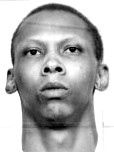
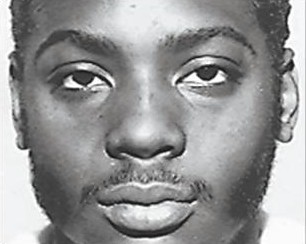
Odell Barnes
Murderer Brian Kevin Rosenfeld
Murderer · USA · 1985
Brian Kevin Rosenfeld Brian Kevin Rosenfeld was sentenced to three concurrent l…
23 victims
Brian Kevin Rosenfeld
Murderer · USA · 1985
Brian Kevin Rosenfeld Brian Kevin Rosenfeld was sentenced to three concurrent l…
23 victims
 Yahweh ben Yahweh
Murderer · USA · 1980
Yahweh ben Yahweh was born and legally named Hulon Mitchell Jr. (October 27, 19…
23 victims
Yahweh ben Yahweh
Murderer · USA · 1980
Yahweh ben Yahweh was born and legally named Hulon Mitchell Jr. (October 27, 19…
23 victims
 Russell Ellwood
Murderer · USA · 1991
Russell Ellwood was a former taxi driver. Authorities suspected him of killing…
20 victims
Russell Ellwood
Murderer · USA · 1991
Russell Ellwood was a former taxi driver. Authorities suspected him of killing…
20 victims
 Robert Martines Perez
Murderer · USA · 1994
Name: Robert Martines Perez · Other name used in proceedings: Robert Martinez P…
15 victims
Robert Martines Perez
Murderer · USA · 1994
Name: Robert Martines Perez · Other name used in proceedings: Robert Martinez P…
15 victims
 J. C. Levice
Murderer · USA · 1942
J. C. Levice · Charles Sanders · Grady B. COLE · Coy Collier Qualls (deceased)…
1 victim
J. C. Levice
Murderer · USA · 1942
J. C. Levice · Charles Sanders · Grady B. COLE · Coy Collier Qualls (deceased)…
1 victim
 William Satele
Murderer · USA · 1998
William Satele was 20 years old. He was in jail for possession of an illegal as…
2 victims
William Satele
Murderer · USA · 1998
William Satele was 20 years old. He was in jail for possession of an illegal as…
2 victims
 David Earl Miller
Murderer · USA · 1981
David Earl Miller was convicted of first-degree murder for the May 1981 killing…
1 victim
David Earl Miller
Murderer · USA · 1981
David Earl Miller was convicted of first-degree murder for the May 1981 killing…
1 victim
 Chelsea Huggett
Murderer · USA · 2013
Chelsea Huggett was the mother of 2-year-old Aliyah Marie Branum. She was arres…
1 victim
Chelsea Huggett
Murderer · USA · 2013
Chelsea Huggett was the mother of 2-year-old Aliyah Marie Branum. She was arres…
1 victim
 Oscar Ray Bolin
Serial killer · USA · 1986
Oscar Ray Bolin was convicted in Florida of first-degree murder and false impri…
3 victims
Oscar Ray Bolin
Serial killer · USA · 1986
Oscar Ray Bolin was convicted in Florida of first-degree murder and false impri…
3 victims
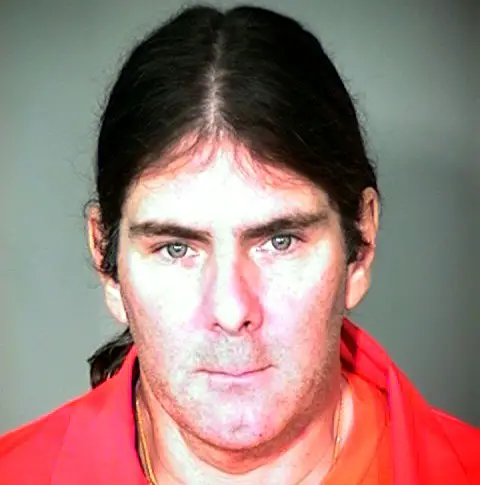 Frank Jarvis Atwood
Murderer · USA · 1984
Frank Jarvis Atwood was a 28-year-old pedophile, a drifter from California who…
1 victim
Frank Jarvis Atwood
Murderer · USA · 1984
Frank Jarvis Atwood was a 28-year-old pedophile, a drifter from California who…
1 victim
- Gender
- male
- Country
- USA
- Location
- Wichita County, Texas, USA
- Date of birth
- March 22, 1968
- Age at first offence
- 21
- Characteristics
- rape, robbery, drug addict
- Victim profile
- Helen Bass (female, 44)
- Method of murder
- Shooting ( .32-caliber handgun)
- Date(s) of murder
- November 30, 1989
- Years active
- 1989
- Date of arrest
- January 1990
- Status
-
Executed
Executed by lethal injection in Texas on March 1, 2000
Case information
- Defendant: Odell Barnes (also referred to as Odell Barnes Jr.)
- Date of birth: 1971
- Age at time of crime: 18
- Age at execution: 29
- Race: Black
- TDC number: TDC Number
- County of crime: Wichita
- County where tried: Lubbock
- Victim: Helen Bass
- Victim age: 44
- Victim race: Black
- Relationship to defendant: Barnes’s mother was friends with her; Barnes had worked on her house previously; Barnes had a consensual sexual relationship with her
- Date of death / crime date (as given): November 29 or 30, 1989
- Offense alleged: Capital murder
- Allegations (as given): Raped, shot, stabbed, beat, robbed victim
Timeline
- April 1988 — Willie Bass Jr. purchased a .32-caliber handgun for Helen Bass; the purchase receipt listed the serial number as NB003602.
- November 29, 1989 — At approximately 11:30 p.m., Helen Bass returned to her home in Wichita Falls, Texas.
- November 30, 1989 — The body of 44-year-old Helen Bass was discovered in her home; the back door had been forcibly kicked in; her bedroom was found in disarray; she was found naked, bloodied, and beaten; she died from a .32-caliber gunshot wound to the head.
- January 1990 — Barnes was indicted in Wichita County, Texas, for the capital murder of Helen Bass.
- March 1991 — A re-indictment was returned in Wichita County, Texas, charging Barnes with the capital offense of the murder of Helen Bass while in the course of committing and attempting to commit the offenses of burglary of a habitation, robbery, and aggravated sexual assault.
- April 29, 1991 — Testimony began (as given) in Barnes’s trial.
- May 6, 1991 — The jury found Barnes guilty of capital murder.
- May 14, 1991 — Sentencing date (as given).
- Feb. 9, 1994 — The Texas Court of Criminal Appeals affirmed the conviction and sentence.
- Oct. 3, 1994 — The United States Supreme Court denied certiorari review.
- April 15, 1997 — Barnes filed an application for habeas corpus relief with the convicting court.
- Nov. 26, 1997 — The Court of Criminal Appeals agreed with the trial court and relief was denied.
- Dec. 18, 1997 — Barnes filed a petition for federal habeas corpus relief in the United States District Court for the Northern District of Texas, Wichita Falls Division.
- June 15, 1998 — The federal district court denied relief; the case had been transferred to the United States District Court for the Northern District of Texas, Lubbock Division.
- June 15, 1999 — The United States Court of Appeals for the Fifth Circuit denied Barnes permission to appeal.
- Nov. 1, 1999 — The United States Supreme Court denied certiorari review.
- Jan. 24, 2000 — Barnes filed a second application for state writ of habeas corpus with the convicting court.
- Feb. 16, 2000 — The Court of Criminal Appeals dismissed that application under state law as an abuse of the writ.
- Feb. 28, 2000 — Texas Attorney General media advisory stated Barnes was scheduled to be executed after 6 p.m. on Wednesday, March 1, 2000.
- March 1, 2000 — Barnes was executed by lethal injection in Texas.
Background
- Helen Bass was murdered in her home.
- Barnes had previously had a consensual sexual relationship with Helen Bass and had worked on her house previously.
- Barnes was convicted of capital murder (rape, robbery and murder) and was sentenced to death.
The offence
- On Nov. 29, 1989, Helen Bass returned to her home in Wichita Falls, Texas, at approximately 11:30 p.m.
- On Nov. 30, 1989, after Mary Barnes went to pick up Bass for work and no one answered the door, Mary Barnes telephoned Sharon Mergerson, Bass’s neighbor and ex-sister-in-law, to check on her.
- Mergerson immediately went to Bass’s home and noticed that the back door had been forcibly kicked in.
- Mergerson found Bass’s body inside the home and telephoned the police.
- Bass’s bedroom was found in disarray:
- dresser drawers had been moved and some pulled out,
- the contents of two purses had been dumped out onto the bed,
- Bass’s checkbook was on the floor,
- a coin purse was found open,
- a jewelry box was open and appeared to have been gone through,
- an identification card and personal papers belonging to Bass were found outside her home near her chain-link fence,
- approximately $200 cash was found in the home.
- Bass was found naked, bloodied, and beaten in her bedroom.
- Bass died from a .32-caliber gunshot wound to the head.
- Aside from the gunshot wound, Bass had been:
- stabbed twice,
- struck with a .22-caliber rifle,
- struck in the head with a blunt object.
- A knife covered with blood was discovered in Bass’s kitchen.
- A bloody lamp with a dent in the base was found in Bass’s bedroom.
- A .22-caliber rifle was found broken in half.
- A rape examination was performed:
- sperm was found,
- the quantity was insufficient to determine characteristics of the donor.
Investigation and forensic evidence
- Willie Bass had purchased a .32-caliber handgun for his mother and showed her how to use it on November 29; he suggested she keep the gun in her bedroom.
- The gun was not found at the scene of the murder.
- Scientific evidence and expert testimony included:
- Fingerprint evidence:
- James Cron testified Barnes’s fingerprint was on the lamp.
- Cron admitted that millions of shoes with the shoe pattern found on the back of Bass’s checkbook had been produced.
- Shoeprint evidence:
- the shoeprint pattern found on the back of Bass’s checkbook matched the shoe pattern on Barnes’s shoes.
- Firearms evidence:
- Larry Fletcher, a firearms examiner, testified the bullet removed from Bass’s head was the same type that would be fired from the .32-caliber revolver recovered by police.
- Fletcher could not make a positive determination whether the fatal bullet was fired from the exact pistol due to damage sustained on impact with Bass.
- Fletcher testified there were consistencies between the test bullet and the fatal bullet.
- Autopsy:
- Dr. Jeffrey Barnard, Chief Medical Examiner of Dallas County, performed the autopsy and testified Bass’s injuries were consistent with having been caused by the handgun, lamp, broken rifle, and knife recovered by police.
- DNA testing during habeas proceedings:
- In 1998, DNA testing during habeas proceedings positively identified Barnes using DNA testing of a washcloth found at the crime scene and the vaginal swab taken from the victim.
- After DNA testing, the State’s frequency of the genetic typing excluded 54 billion persons as having the DNA qualities as samples obtained from Barnes, the washcloth, and the vaginal swab, with each sample having the same characteristics.
- Fingerprint evidence:
- Barnes, following the DNA tests, for the first time said he:
- knew the woman,
- had been in her house previously,
- and the couple had sex more than a day earlier, accounting for the presence of his semen.
- Barnes also said he could have left his fingerprint on the lamp during his earlier visits.
- Fingerprint and coveralls-related evidence described:
- the police recovered dark green coveralls from Joseph Barnes’s car,
- Joseph told officers the coveralls belonged to Barnes,
- Joseph testified he believed the coveralls actually belonged to his father but Barnes “wore them all the time,”
- Humphrey testified the coveralls were the same coveralls he had seen Barnes wearing on the evening of Nov. 29.
- Blood stains on the coveralls were determined to be type O blood, the same as Bass’s.
- Barnes had type A blood.
- The blood on the coveralls had additional genetic markers consistent with Bass’s blood.
Arrival at the scene and discovery of the victim
- On Nov. 30, Mary Barnes, Sharon Mergerson, and others discovered Bass’s body after forced entry.
- The back door had been forcibly kicked in.
- Bass’s body was found inside the home.
- Bass was discovered naked, bloodied, and beaten.
- The room was described as in disarray and the home was ransacked.
Arrest and related conduct
- On the evening of Nov. 29, 1989, at approximately 10:30 p.m., Robert Brooks saw Barnes in Bass’s yard.
- Brooks testified Barnes hurdled Bass’s wooden fence, fell down, and rolled into the street.
- Brooks testified Barnes then got up and went back over Bass’s chain-link fence.
- Bass had both a wooden and a chain-link fence on different parts of her property.
- Brooks testified Barnes was wearing dark green or blue coveralls and a stocking cap.
- Later, between 2:00 a.m. and 3:00 a.m. on Nov. 30, Patrick Williams saw Barnes with a gun and wearing coveralls at an apartment complex near Bass’s home.
- After work on Nov. 30, Humphrey, Barnes, and Joseph Barnes (Barnes’s brother) stopped by the Barnes’s home.
- Barnes stated he had “confiscated” a gun from his father and wished to sell it.
- Barnes went to his bedroom, retrieved the gun from under his bed, and gave it to Humphrey.
- Humphrey later sold the gun to Williams.
- When Williams learned of the murder, he returned the gun to Humphrey’s sister, Deborah Ann, and Deborah Ann turned the gun over to police.
- The gun bears the same serial number as the .32-caliber handgun purchased by Willie Bass for Bass in April 1988.
- Humphrey identified the gun as the one he had obtained from Barnes.
- Williams identified the gun as:
- the same one he had bought from Humphrey on the afternoon of Nov. 30,
- the same one he had seen Barnes with earlier on the same day.
- Williams stated a bullet was missing from the gun when he purchased it.
People involved
- Odell Barnes — defendant
- Helen Bass — victim; 44 years old; found naked, bloodied, and beaten; died from a .32-caliber gunshot wound to the head; also stabbed twice, struck with a .22-caliber rifle, and struck with a blunt object; sexually assaulted
- Mary Barnes — friend of Bass’s; attempted to pick Bass up for work
- Sharon Mergerson — Bass’s neighbor and ex-sister-in-law; discovered Bass’s body and telephoned police
- Willie Bass Jr. — Bass’s son; purchased a .32-caliber handgun for Bass and showed her how to use it
- Malrie Wilson — friend of Bass; saw the gun in Bass’s possession on the morning of Nov. 29 and showed Bass how to load the weapon
- Johnny Ray Humphrey — co-worker of Barnes; dropped Barnes off near his home at about 10:00 p.m. on Nov. 29; later obtained the gun from Barnes and sold it
- Joseph Barnes — Barnes’s brother; coveralls were recovered from his car; testified the coveralls belonged to Barnes in practice
- Robert Brooks — neighbor; testified seeing Barnes in Bass’s yard at about 10:30 p.m. on Nov. 29
- Patrick Williams — saw Barnes with a gun and coveralls between 2:00 a.m. and 3:00 a.m. on Nov. 30; later bought the gun from Humphrey
- Deborah Ann — Humphrey’s sister; received the gun back from Williams and turned it over to police
- Larry Fletcher — firearms examiner
- Dr. Jeffrey Barnard — Chief Medical Examiner of Dallas County; performed the autopsy
- James Cron — fingerprint and footprint expert
- Temple Driver — trial judge (as given)
- Barry Macha and John Brasher — prosecutors (trial and post conviction) (as given)
- Reginald Wilson and Marty Canedy — defense attorneys in Wichita Falls (as given)
- John Curry — habeas writ attorney (Wichita Co. Public Defender appointed) (as given)
- Robert Muhammed of the Nation of Islam — spiritual adviser among witnesses selected by Barnes to watch him die
Prior criminal history and extraneous offences (punishment phase)
- At the punishment phase of trial, the State introduced evidence of extraneous offences committed by Barnes.
- Barnes was convicted of:
- Feb. 1987 — broke into a home, hit the female resident over the head with an iron, threatened her with a gun, threatened to kill her daughter, sexually assaulted her, robbed her, and stole her car.
- May 18, 1987 — using a gun to threaten employees, robbed a Golden Fried Chicken restaurant.
- May 21, 1987 — again using a gun, robbed a McDonald's restaurant.
- Jan. 20, 1988 — while on probation for the previous offences, kicked in the back door of a Domino’s Pizza, then using what was later determined to be a toy gun, robbed, threatened, and tied up store employees.
- In each instance, Barnes threatened to kill his victims if they did not cooperate with him.
- Nov. 15, 1989 — in an unadjudicated offense, Barnes attempted to choke and sexually assault an acquaintance who was nine months pregnant.
- Barnes threatened to kill her if she would not stop screaming.
- The woman managed to get away.
Trial
- Barnes entered a plea of not guilty to a jury after a change of venue in Lubbock County, Texas.
- On May 6, 1991, the jury found Barnes guilty of capital murder.
- After a separate hearing on punishment:
- the jury returned affirmative answers to the punishment issues,
- the trial court assessed punishment at death in accordance with state law.
- Eyewitness testimony included:
- Robert Brooks testified he saw Barnes jump the fence and later return over the chain-link fence.
- Scientific evidence used to link Barnes included:
- prosecution evidence of blood and semen,
- Barnes’s fingerprint on the lamp,
- shoeprint pattern evidence.
- Confession: no confession at trial.
- Accomplices: none stated.
- Eyewitnesses: Robert Brooks (as testified) and Mary Barnes (as stated in a compiled listing).
Sentencing
- Because Barnes was sentenced to death, appeal to the Texas Court of Criminal Appeals was automatic.
- The trial court assessed punishment at death after the jury returned affirmative answers to punishment issues.
- Sentencing date: May 14, 1991 (as given).
Appeals and habeas corpus
Direct appeal
- The Court of Criminal Appeals affirmed the conviction and sentence on Feb. 9, 1994.
- The United States Supreme Court denied certiorari review on Oct. 3, 1994.
State habeas
- Barnes filed an application for habeas corpus relief with the convicting court on April 15, 1997.
- The trial court recommended relief be denied.
- The Court of Criminal Appeals agreed on Nov. 26, 1997.
Federal habeas
- On Dec. 18, 1997, Barnes filed a petition for federal habeas corpus relief in the United States District Court for the Northern District of Texas, Wichita Falls Division.
- The case was transferred to the United States District Court for the Northern District of Texas, Lubbock Division.
- The district court denied relief on June 15, 1998.
- The United States Court of Appeals for the Fifth Circuit denied Barnes permission to appeal on June 15, 1999.
- The United States Supreme Court denied certiorari review on Nov. 1, 1999.
Second state writ
- On Jan. 24, 2000, Barnes filed a second application for state writ of habeas corpus with the convicting court.
- On Feb. 16, 2000, the Court of Criminal Appeals dismissed that application under state law as an abuse of the writ.
Pending clemency
- A clemency petition was pending with the Texas Board of Pardons and Paroles.
Outcome
Barnes requested:
- Final Meal: “Justice, Equality, World Peace”.
Barnes’s final words included:
"I'd like to send great love to all my family members, my supporters, my attorneys. They have all supported me throughout this. I thank you for proving my innocence, although it has not been acknowledged by the courts. May you continue in the struggle and may you change all that's being done here today and in the past. Life has not been that good to me, but I believe that now, after meeting so many people who support me in this, that all things will come to an end, and may this be fruit of better judgements for the future. That's all I have to say."
Texas Attorney General media advisory stated:
- ODELL BARNES, JR. was scheduled to be executed after 6 p.m., Wednesday, March 1st.
On March 1, 2000, Barnes was executed by lethal injection in Texas.
Other details
- Barnes’s stated “Confession?” in a compiled listing was No.
- The compiled listing described no drug or alcohol evidence presented at trial that drug or alcohol was connected to the crime.
- Prosecution witnesses and procedures described in a compiled listing included:
- racial makeup of the jury,
- the trial judge Temple Driver (Wichita Falls),
- searches, admission of photos of victim, sufficiency of evidence, and other grounds raised on appeal,
- habeas grounds raised including denial of instruction on reasonable doubt, denial of reasonable appellate review by the CCA, mitigation instruction inadequacy, invalidity of search warrant, ineffective assistance of counsel.
- A clemency vote described included:
- a reported Texas Board of Pardons and Paroles vote of 18-0 against recommending sentence reduction.
- A report of an execution delay while authorities checked a report that someone else had confessed was included.
- Gov. George W. Bush’s office and prison spokesman Larry Todd were mentioned in connection with that delay and evaluation of the confession report.
- Barnes’s lawyer, Gary Taylor, said the confession report was a hoax.
- Barnes was described in compiled material as having a record that included robberies, rapes, and a burglary at the time of the Bass murder and as being on parole.
Spotted an error, or have more information about this case?