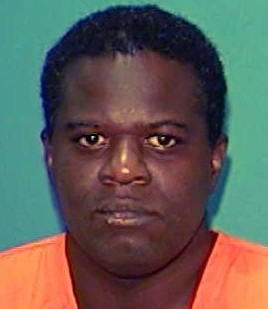
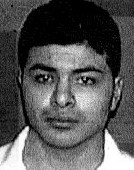
Gregory Capehart
Murderer Brian Kevin Rosenfeld
Murderer · USA · 1985
Brian Kevin Rosenfeld Brian Kevin Rosenfeld was sentenced to three concurrent l…
23 victims
Brian Kevin Rosenfeld
Murderer · USA · 1985
Brian Kevin Rosenfeld Brian Kevin Rosenfeld was sentenced to three concurrent l…
23 victims
 Yahweh ben Yahweh
Murderer · USA · 1980
Yahweh ben Yahweh was born and legally named Hulon Mitchell Jr. (October 27, 19…
23 victims
Yahweh ben Yahweh
Murderer · USA · 1980
Yahweh ben Yahweh was born and legally named Hulon Mitchell Jr. (October 27, 19…
23 victims
 Russell Ellwood
Murderer · USA · 1991
Russell Ellwood was a former taxi driver. Authorities suspected him of killing…
20 victims
Russell Ellwood
Murderer · USA · 1991
Russell Ellwood was a former taxi driver. Authorities suspected him of killing…
20 victims
 Robert Martines Perez
Murderer · USA · 1994
Name: Robert Martines Perez · Other name used in proceedings: Robert Martinez P…
15 victims
Robert Martines Perez
Murderer · USA · 1994
Name: Robert Martines Perez · Other name used in proceedings: Robert Martinez P…
15 victims
 Hastings Wise
Mass murderer · USA · 1997
Arthur Hastings Wise was the defendant. Wise worked for about four years at the…
4 victims
Hastings Wise
Mass murderer · USA · 1997
Arthur Hastings Wise was the defendant. Wise worked for about four years at the…
4 victims
 Horace Manton
Murderer · United Kingdom · 1943
Horace William Manton was convicted of the murder of his wife. He was arrested…
1 victim
Horace Manton
Murderer · United Kingdom · 1943
Horace William Manton was convicted of the murder of his wife. He was arrested…
1 victim
 Ronnie Ferrell
Murderer · USA · 1991
Ronnie Ferrell was sentenced to death on December 17, 1993. He was indicted in…
1 victim
Ronnie Ferrell
Murderer · USA · 1991
Ronnie Ferrell was sentenced to death on December 17, 1993. He was indicted in…
1 victim
 Timothy Alan Dunlap
Murderer · USA · 1991
Timothy Alan Dunlap was 35 and lived in Sellersburg, Indiana. He pleaded guilty…
2 victims
Timothy Alan Dunlap
Murderer · USA · 1991
Timothy Alan Dunlap was 35 and lived in Sellersburg, Indiana. He pleaded guilty…
2 victims
 Steen Christensen
Murderer · Finland · 1997
Steen Viktor Christensen (born 1964) was a Danish criminal. He was sentenced in…
2 victims
Steen Christensen
Murderer · Finland · 1997
Steen Viktor Christensen (born 1964) was a Danish criminal. He was sentenced in…
2 victims
- Gender
- male
- Country
- USA
- Location
- Pasco County, Florida, USA
- Date of birth
- August 9, 1967
- Age at first offence
- 21
- Characteristics
- rape, robbery, history of mental illness, mentally retarded
- Victim profile
- Marlene Reeves, 62 (s he was physically ill and also mentally retarded )
- Method of murder
- Smothered with a pillow
- Date(s) of murder
- February 3, 1988
- Years active
- 1988
- Date of arrest
- —
- Status
-
Sentenced to death
Sentenced to death on April 11, 1989
Case information
Defendant: Gregory Capehart (born 08/09/67) Sixth Judicial Circuit: Pasco County Case number: 88-00394 CF Florida Supreme Court opinion: 74231 D.C. #755994
Timeline
- 02/03/88 — Date of offense.
- 02/24/88 — Gregory Capehart was indicted on Count I and Count II.
- 04/20/88 — Gregory Capehart entered a plea of “not guilty” on both counts.
- 02/22/89 — The jury found the defendant guilty on both counts.
- 02/23/89 — Upon advisory sentencing, a 7 to 5 majority voted for the death penalty.
- 04/11/89 — The defendant was sentenced to death; Count II resulted in a 15-year sentence.
- 05/30/89 — Gregory Capehart filed his direct appeal in the Florida Supreme Court.
- 06/13/91 — The Florida Supreme Court affirmed the convictions and death sentence; vacated the 15-year burglary sentence and remanded for re-sentencing according to sentencing guidelines.
- 12/01/91 — Gregory Capehart filed a Petition for Writ of Habeas Corpus in the United States Supreme Court.
- 01/21/92 — The United States Supreme Court denied the petition.
- 04/19/93 — Gregory Capehart filed a Motion to Vacate Judgment and Sentence (3.850) in the State Circuit.
- 07/10/03 — The last amended motion was filed.
- 04/21/04 — An evidentiary hearing was held; the judge granted a new penalty phase.
- 01/21/92 — The United States Supreme Court denied the Petition for Writ of Habeas Corpus.
The offence
Gregory Capehart was convicted and sentenced to death for the murder of 62-year-old Marlene Reeves on 02/03/88.
Marlene Reeves lived independently in her own apartment in Dade City. Reeves was described as illiterate and unable to read or write or make change. A friend, Edith Snow, testified that many people took advantage of Reeves.
Investigators discovered Reeves’ body while investigating a reported break-in at her apartment complex. Deputy Sheriff Jeffrey Clark found Reeves’ apartment ransacked and her body lying on her bed, with a pillow covering her face. Reeves’ underwear was pulled down to her knees and her nightgown was pushed up to expose her breasts. Medical examiners concluded that Reeves’ sexual organs were injured, indicating a sexual assault prior to death. Reeves died as a result of asphyxia from being smothered with a pillow.
Investigation
A palm print was lifted from the scene. The palm print was later found to match Gregory Capehart’s.
The investigation included a reported break-in at another apartment: Deputy Sheriff Jeffrey Clark investigated Rebecca Henry’s apartment after she was awakened by an intruder at 5 a.m. Henry described the intruder as a black male, 5’9’’ tall and 165 lbs.
A neighbor of Reeves, R. Caruthers, testified that he saw a man wearing a yellow/orange trench-coat between 4.40 and 6.00 a.m. heading to Reeves’ apartment.
D. Harrison testified that she saw Capehart that night with a black trench-coat.
Deputy Sheriff Jeffrey Clark found Reeves’ apartment ransacked and the body lying on her bed with a pillow covering her face.
The investigation and evidence included a claim about the intruder’s entry and exit: the state argued the perpetrator entered the victim’s bedroom through the window, but investigators discovered that the perpetrator came through the door and left through the window, making the palm print “without conclusiveness.”
Arrest and statements
Gregory Capehart admitted to Walter Harrison, a longtime friend, that he killed Reeves, but said it was an accident. Capehart said he broke into Reeves’ apartment to steal some money. He told Harrison that Reeves woke up and, when he tried to knock her out with the pillow, he accidentally killed her.
After his arrest, Capehart made another statement to police. In that statement, he claimed he was with a couple of guys who were going to rob Reeves. He claimed he was outside during the robbery and that when he entered Reeves’ bedroom he saw one of the guys strangling her.
Trial
Charges and plea
02/24/88 — Defendant was indicted on:
- Count I: First-Degree Murder
- Count II: Burglary W/ Intent to Commit Assault
04/20/88 — Defendant entered a plea of “not guilty” on both counts.
Verdict
02/22/89 — The jury found the defendant guilty of:
- Count I: First-Degree Murder
- Count II: Burglary W/O Intent to Commit Assault
Advisory sentencing
02/23/89 — Upon advisory sentencing, the jury voted for the death penalty by a 7 to 5 majority.
People
Edith Snow testified for the state as a friend of the victim and described taking advantage of Reeves. Walter Harrison was a longtime friend who testified about Capehart’s admission. Rebecca Henry testified as the woman next door who was awakened by an intruder. R. Caruthers testified as a neighbor of Reeves. D. Harrison testified about seeing Capehart with a black trench-coat. Officer Muck was referenced in the direct appeal as one whose testimony negated Capehart’s claim that someone else killed Reeves. Medical examiner testimony was referenced in the direct appeal as having been permitted despite not performing the autopsy.
Trial summary (as presented)
02/24/88 — Gregory indicted on First Degree Murder and Burglary with intent to commit assault. 04/20/88 — Gregory entered a plea of “not guilty”. 02/22/89 — An all-white jury found Gregory guilty of First Degree Murder and Burglary Without Intent to Commit Assault. 02/23/89 — The jury voted for the death penalty by a 7 to 5 majority. 04/11/89 — Official sentencing.
Sentencing
04/11/89 — The defendant was sentenced:
- Count I: First-Degree Murder — Death
- Count II: Burglary W/O Intent to Commit Assault — 15 years
Capehart’s sentence on Count II was later reduced to seven years.
Sentencing Judge: The Honorable Maynard F. Swanson, Jr. Trial Attorney: A. J. Ivie, Esq. (Private Attorney) Direct Appeal: Robert F. Moeller (Assistant Public Defender Attorney) Collateral Appeals: Richard Kiley & James Viggiano (CCRC-M)
Appeals
Direct appeal
Capehart filed his direct appeal in the Florida Supreme Court on 05/30/89.
In the direct appeal, Capehart argued:
- there was insufficient evidence to prove he killed Marlene Reeves;
- the trial court erred in permitting testimony of a medical examiner who did not perform the autopsy;
- objection to the testimony of Officer Muck who negated Capehart’s claim that someone else killed Reeves;
- objection to the admission of character evidence of the victim;
- in reference to the penalty phase, the court did not adequately examine his claim of ineffective counsel and refusal to grant him new court-appointed counsel;
- the court erred in application of aggravating factors.
The Florida Supreme Court ruled that the cold, calculated, and premeditated (CCP) aggravating factor was falsely applied. With three other valid aggravating factors present, the Supreme Court deemed the inclusion of the CCP factor as harmless error.
On 06/13/91, the Florida Supreme Court:
- affirmed the convictions and sentence of death;
- vacated Capehart’s 15-year burglary sentence and remanded for re-sentencing according to sentencing guidelines.
United States Supreme Court
On 12/01/91, Capehart filed a Petition for Writ of Habeas Corpus in the United States Supreme Court. The petition was denied on 01/21/92.
State post-conviction
On 04/19/93, Capehart filed a Motion to Vacate Judgment and Sentence (3.850) in the State Circuit. He filed six amended motions, with the last filed on 07/10/03.
On 04/21/04, an evidentiary hearing was held and the judge granted a new penalty phase. Capehart was awaiting resentencing.
Other details
Victim description and circumstances
Marlene Reeves was described as:
- 62 years old;
- living independently in her own apartment;
- physically ill and also mentally retarded;
- unable to read nor write, and as unable to make change.
Deputy Sheriff Jeffrey Clark investigated a reported break-in at her apartment complex and found Reeves’ apartment ransacked. Reeves’ body was found on her bed with a pillow covering her face.
Rebecca Henry’s description at trial
Rebecca Henry was awakened by an intruder at 5 a.m. Henry described the intruder as a black male, 5’9’’ tall, 165 lbs, and the description was not similar to Gregory.
In trial, the state made the jury believe that Gregory also burglarized Henry’s apartment. It was stated that Henry had not identified him and her description did not fit Gregory.
Alternative suspect and evidentiary disputes described in the record
It was stated that there was another crime suspect whose name was known and who had access to that individual’s fingerprints, and that those fingerprints were never compared to those retrieved from the scene.
It was also stated that some statements attributed to Capehart were coerced and that later it was discovered that the initial interpretation of the evidence was wrong, so the coerced statements did not fit the evidence anymore. It was stated that the state asked the jury to ignore evidence inconsistent with the statements.
It was stated that mental health experts testified for the state and that their conclusions were based on the coerced statements being presented as the truth.
It was also stated that a partial palm print was found at the outer window-screen and that it fit Gregory’s, but that investigators’ determination that the perpetrator came through the door and left through the window made the palm print without conclusiveness.
Gregory Capehart’s background and mental health details (as presented)
Gregory Capehart was born on August 9, 1967, and lived in Dade City, Florida.
It was stated that his mother was an alcohol addicted and that during pregnancy, no more than two days passed without being completely drunk. It was stated that after a difficult delivery, when the mother arrived home with the baby, his father threw the baby through the window out into the rain. It was further stated that the parents rarely took care of Gregory, did not speak to him, and informed him that he was unwanted and unloved. It was stated that the parents fought all the time and did not stop being violent.
It was stated that Gregory had mental problems and later attended a school for mentally retarded children. After his parents separated, it was stated that he lived with his maternal grandmother in Orlando. It was stated that the grandmother’s favorite was Gregory’s older brother Raymond and that Raymond was described as intelligent and an athlete. It was stated that Gregory was beaten by his grandmother and that even then Raymond was described as the wrongdoer.
It was stated that Gregory started drinking at a young age and drank until completely drunk like his father and mother. It was stated that he was an angry young man and that even when attacked he would not fight back. It was stated that many times he was beaten by children in the neighborhood but he never fought back.
It was stated that his nonviolent behavior and open talks about his Christian beliefs earned him the nickname “Preacher.” It was stated that as a youth he went back to his father in Dade City and that it did not go well, and that Gregory lived on the streets. It was stated that he came into the wrong crowd and that he did what older children told him to do to get accepted, becoming a toy of drug-addicted and criminals.
It was stated that at age 15 he was transferred to a youth-center because of burglary and that he described that time as “the best in his life.” It was stated that during a time in jail in 1985 he tried several times to commit suicide.
The record includes a psychological report dated Feb. 2nd, 2002 by Dr. Bill E. Mosman, finding that Gregory was classified as mentally retarded after Florida’s law.
Drug-related description connected to his account of the crime
Gregory Capehart said he was selling drugs that day. He said someone wanted to buy drugs but told him he had no money. It was stated that the man then needed to get his money, that Gregory accompanied him, and that Gregory waited outside. It was stated that he looked through the window and saw the man on the woman pushing a pillow on her face, and that he panicked and ran.
Clothing and sightings described by witnesses
A neighbor, R. Caruthers, testified that he saw a man wearing a yellow/orange trench-coat between 4.40 and 6.00 a.m. heading to Reeves’ apartment. D.
Parties and roles
Defendant: Gregory Capehart Victim: Marlene Reeves (62-year-old) Witnesses named: Edith Snow; Walter Harrison; Deputy Sheriff Jeffrey Clark; R. Caruthers; D. Harrison; Rebecca Henry Officials referenced: The Honorable Maynard F. Swanson, Jr.; A. J. Ivie, Esq.; Robert F. Moeller; Richard Kiley; James Viggiano; Officer Muck Medical examiners: Medical examiners concluded that Reeves’ death resulted from being smothered with a pillow and that sexual organs were injured; the medical examiner testimony and autopsy issue were raised on direct appeal.

Spotted an error, or have more information about this case?