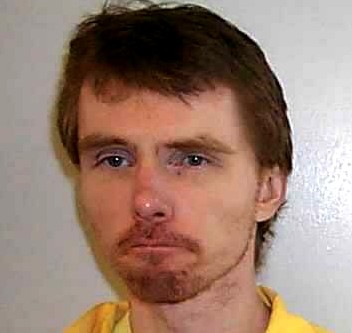
Timothy Alan Dunlap
Murderer Brian Kevin Rosenfeld
Murderer · USA · 1985
Brian Kevin Rosenfeld Brian Kevin Rosenfeld was sentenced to three concurrent l…
23 victims
Brian Kevin Rosenfeld
Murderer · USA · 1985
Brian Kevin Rosenfeld Brian Kevin Rosenfeld was sentenced to three concurrent l…
23 victims
 Russell Ellwood
Murderer · USA · 1991
Russell Ellwood was a former taxi driver. Authorities suspected him of killing…
20 victims
Russell Ellwood
Murderer · USA · 1991
Russell Ellwood was a former taxi driver. Authorities suspected him of killing…
20 victims
 Robert Martines Perez
Murderer · USA · 1994
Name: Robert Martines Perez · Other name used in proceedings: Robert Martinez P…
15 victims
Robert Martines Perez
Murderer · USA · 1994
Name: Robert Martines Perez · Other name used in proceedings: Robert Martinez P…
15 victims
 Billy Frank Vickers
Murderer · USA · 1993
Billy Frank Vickers Vickers was executed by lethal injection in Texas on Januar…
14 victims
Billy Frank Vickers
Murderer · USA · 1993
Billy Frank Vickers Vickers was executed by lethal injection in Texas on Januar…
14 victims
 George Jo Hennard
Mass murderer · USA · 1991
George Jo Hennard carried out a mass killing at a Luby’s Cafeteria in Killeen,…
23 victims
George Jo Hennard
Mass murderer · USA · 1991
George Jo Hennard carried out a mass killing at a Luby’s Cafeteria in Killeen,…
23 victims
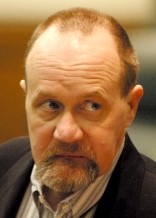 Rocky Barton
Murderer · USA · 2003
Defendant: Rocky Barton · Victim: Kimbirli Jo Barton (fourth wife) · The grand…
1 victim
Rocky Barton
Murderer · USA · 2003
Defendant: Rocky Barton · Victim: Kimbirli Jo Barton (fourth wife) · The grand…
1 victim
 Matthew Hoffman
Murderer · USA · 2010
Matthew Hoffman was an unemployed tree trimmer and had an obsession with trees…
3 victims
Matthew Hoffman
Murderer · USA · 2010
Matthew Hoffman was an unemployed tree trimmer and had an obsession with trees…
3 victims
 Mulalo Sivhidzho
Murderer · South Africa · 2006
Mulalo Sivhidzho was convicted of the murder of her husband, Avhatakali Netshis…
1 victim
Mulalo Sivhidzho
Murderer · South Africa · 2006
Mulalo Sivhidzho was convicted of the murder of her husband, Avhatakali Netshis…
1 victim
 Wilbert Coffin
Murderer · Canada · 1953
Wilbert Coffin (1913 – February 10, 1956) was a Canadian prospector from York C…
3 victims
Wilbert Coffin
Murderer · Canada · 1953
Wilbert Coffin (1913 – February 10, 1956) was a Canadian prospector from York C…
3 victims
- Gender
- male
- Country
- USA
- Location
- Ohio/Idaho, USA
- Date of birth
- August 22, 1968
- Age at first offence
- 23
- Characteristics
- robbery
- Victim profile
- Belinda Bolanos (his girlfriend) / Tonya Crane (bank teller)
- Method of murder
- Shooting two arrows with a crossbow / Shooting (sawed-off shotgun)
- Date(s) of murder
- October 6/16, 1991
- Years active
- 1991
- Date of arrest
- October 16, 1991
- Status
-
Sentenced to death
Sentenced to death in Ohio and Idaho; the Idaho Supreme Court affirmed on 124-2004
Case record: Timothy Alan Dunlap
Background
Timothy Alan Dunlap was 35 and lived in Sellersburg, Indiana. He pleaded guilty to the Oct. 16, 1991, shotgun slaying of Security State Bank teller Tonya Crane during an attempted bank robbery in Soda Springs. Dunlap was also under a death sentence in Ohio for killing his girlfriend earlier that year.
In June 1991, Dunlap traveled from Indiana to Cincinnati, where he found casual labor jobs and lived on the streets and in inexpensive motels. That summer, he met Bolanos in Cincinnati, where he worked as a temporary worker. They began dating, traveled to Florida, and in mid-September started living together in her early 1980s Chevette hatchback. In late September, Dunlap bought a crossbow and thought about killing Bolanos.
When Dunlap was arrested in Ohio, evidence described his background and mental health history. Dunlap had a stable home, loving parents, and education. He had an early marriage that lasted less than a year and he had a son. His mother said he “always had mental problems.” When he was twelve, his mother took him for counseling and therapy, but it stopped when he told her, “I just can't go anymore.” He reportedly had comprehension problems and a learning disability.
In January 1991, police arrested Dunlap for harassing his ex-wife. After some time in jail, he was admitted at a mental health facility. Those facility records reported that Dunlap was “manipulative” and prone to violence, and that he had a history of depression, temper outbursts, and possible hallucinations. The records listed diagnoses of disassociative disorder, intermittent explosive disorder, depressive disorder, and personality disorder with a possible partial complex seizure disorder. When released from that facility, Dunlap went back to jail and then to Madison State Hospital in Indiana. In June 1991, he escaped from Madison and went to Cincinnati. His family did not see him again until after his October 1991 arrest in Idaho.
After his October arrest, Dunlap’s mother, sister, and grandmother agreed that Dunlap, after time, showed remorse in jail. Dunlap told his grandmother he was sorry for what he had done and had asked God to forgive him. In an unsworn statement, Dunlap said:
“I am but a man who thought he was pushed to the edge of desperation, living in dire straights [sic].”
“sorry for what [he’s] done.”
“did not intend, calculate or design the death of the teller.”
“she set the alarm to the police and she didn't give me all the money.”
“anger and frustration turned to rage,” and he shot her.
“The 'same pent up anger and rage led to [his] crime here in Ohio.'”
“on the streets of Cincinnati, he lived 'on the razor's edge of sanity struggling every day to survive.'”
“He had nowhere to stay but in Bolanos's car.”
“very little money [and] wore the same clothes.***”
“The fear, anxiety, frustration and desperation ate at [him] more and more each day.”
“If any one of you can *** place yourself in my situation and state of mind, [and say] you would have done different, then you're simply dealing in lunacy and can't possibly say one way or the other.”
“I don't want you to think I'm trying to excuse what I've done, I am not, nor am I trying to lessen the fact that two women are dead. I'm sorry for what I've done.”
“I care about my family, my friends, and my son, and the people I hurt, and ask them to forgive me.”
“And though I took two lives, I do not deserve to die.”
“a chance to rehabilitate” himself in prison.
Dunlap also made remarks about remorse in communications to a reporter. A reporter testified that he had interviewed a Tim Dunlap by phone after his Ohio arraignment. The reporter satisfied himself the caller was Dunlap because of the caller's personal knowledge. When asked about remorse, Dunlap replied:
“Yeah, I've got to regret I didn't get away.”
In surrebuttal, Dunlap's mother testified that he was still agitated, upset, and confused when he first returned to Ohio, but he later changed and became truly sorry. More recently, Dunlap had told another reporter that he was sorry and “wished things could have turned out differently.”
The offence
On Oct. 6, 1991, at a Cincinnati park, Dunlap used a crossbow to shoot two arrows into his girlfriend, Belinda Bolanos. After Dunlap left Bolanos to die, he drove her Chevette across the country until he arrived on Oct. 16 at Soda Springs, Idaho. There, Dunlap used a sawed-off shotgun to rob a bank and kill bank teller Tonya Crane.
Dunlap’s later description of the shooting was included in the record. He described later how he “blind folded her, walked her into the woods, had the cross bow with me, shot her once in the neck, she fell to the ground, then I shot her once in the head.” He shot her in the neck so “she wouldn't be able to scream.” In the head, he chose “the closest place to the temple, softest part of the skull.” Dunlap killed her to “get her car, credit card and checks.”
When Dunlap left Bolanos, he drove her Chevette to Louisville, Kentucky. In Louisville, Dunlap purchased a 12-gauge shotgun. He then drove for several days through Kentucky, Missouri, Arkansas, Oklahoma, Kansas, Colorado, Utah, Wyoming, and Idaho until he arrived at Soda Springs, Idaho. Along the way, he sawed several inches off the shotgun barrel. During the journey, he assumed the fictitious name of Steve Bolanos and used Belinda's credit card to pay for gas, meals and lodging.
On Oct. 12, while Dunlap was driving across the country, Bolanos's body was discovered in the woods. The coroner found that Bolanos died as a result of wounds caused by two arrows: one arrow went through her throat almost five inches, and the other arrow, shot into the right side of her head, pierced her brain for six inches. Despite these injuries, Bolanos probably lived for fifteen to thirty minutes after she was shot.
Around 9:30 a.m., Oct. 16, Dunlap walked into a Soda Springs, Idaho bank with the sawed-off shotgun and asked teller Crane for all of her money. Dunlap told Crane:
“Give me all your money.”
Crane gave Dunlap approximately $32,00.00. Dunlap then fatally shot Crane with the sawed-off shotgun from less than two feet away. One teller described that Dunlap shot Crane “as quickly as he grabbed the money.” Dunlap was described as “very cool, very calm, and very collected,” with “the coldest eyes.” Another teller said Crane “did everything” Dunlap asked and “and he shot her for no reason.” Crane died as a result of the shotgun blast to her chest.
A bystander wrote down a description of Dunlap and the car, including the license number. Later that afternoon, Dunlap abandoned the Chevette after a chase and escaped into nearby woods, but was later apprehended.
Dunlap’s statements to police connected both offences. After being advised of his Miranda rights, Dunlap admitted he had robbed the Soda Springs bank and shot the teller. During interviews on Oct. 17 and Oct. 19, Dunlap again admitted to police that he robbed the bank and shot Crane because “she set the alarm to the police and she didn't give me all the money.” Dunlap asserted, however, he “never intended to kill her.” Because he had loaded the shotgun with bird shot, he thought she would just wind up in the hospital.
In the same interviews, Dunlap admitted he shot Bolanos with the crossbow in order to get her car, check book, and credit cards. Dunlap recognized:
“it didn't have to be done, it is just I was broke, I had no money. I was hardly working.”
He said he felt “a little bit of sadness” because “I liked her a little bit.” In the Oct. 19 interview, Dunlap also claimed that an ex-boyfriend of Bolanos gave him money to kill her, but no evidence at trial supported that assertion.
At the request of Caribou County Prosecuting Attorney S. Criss James, the Special Prosecutions Unit of the Attorney General’s Criminal Law Division served as special prosecutor for the resentencing hearing.
Investigation
On Oct. 16, Dunlap consented to a search of the car. On Oct. 18, police searched the Chevette and found the crossbow, the shotgun, numerous credit card receipts signed by Dunlap as “Steve Bolanos,” Belinda's personal belongings, and a large quantity of loose cash.
Arrest
Dunlap was arrested the same day as the bank robbery and killing of Tonya Crane.
At a pretrial hearing in Ohio, Dunlap testified that Idaho police officers manhandled and threatened him when they arrested him. He claimed he waived his Miranda rights “out of fear of what might happen” because “they were going to hurt me if I didn't say it was me.” He also claimed that he requested counsel several times before interrogation, but the police ignored those requests. He admitted he signed waivers of rights and submitted to interviews on Oct. 16, Oct. 17 and Oct. 19.
Trial
Idaho proceeding (guilty plea and sentencing)
Dunlap pleaded guilty to Crane’s first-degree murder on Dec. 30, 1991. On April 20, 1992, the Honorable William H. Woodland sentenced Dunlap to death.
The Idaho Supreme Court affirmed Dunlap’s conviction and death sentence on July 27, 1993. The United States Supreme Court declined to review the case on February 28, 2004.
After resentencing proceedings, a Sixth District Court jury in Soda Springs sentenced Dunlap to death for the 1991 murder of Tonya Crane during a bank robbery in Soda Springs. The jury reached its decision after seven days of trial and more than five hours of deliberations. Sixth District Judge Don L. Harding presided over the resentencing proceeding. Dunlap’s new sentence stemmed from appellate court review of his previous death sentence for the murder he committed while robbing the Security State Bank in Soda Springs.
At issue in resentencing was appellate court review after the state’s concession that his trial attorneys improperly provided confidential mental health information to the prosecutor and the court prior to his sentencing. On April 11, 2000, the state conceded Dunlap would have to be sentenced again because of that. On Jan. 11, 2002, Judge Woodland denied Dunlap’s request to withdraw his guilty plea, but ordered a new sentencing based on the concession. On Nov. 30, 2004, the Idaho Supreme Court affirmed Judge Woodland’s decision and ordered that Dunlap be sentenced again. The United States Supreme Court again declined to review the case on Oct. 31, 2005.
Dunlap filed a petition for post-conviction relief on May 12, 1994, contending his trial attorneys were ineffective and asking that he be permitted to withdraw his guilty plea. On March 23, 1995, Judge Woodland dismissed the petition because it was not filed within forty-two days of entry of judgment. On March 19, 1998, the Idaho Supreme Court reversed that decision and remanded Dunlap’s case for further proceedings.
At the request of S.
Ohio proceeding (trial and convictions)
Dunlap was charged with first-degree murder and robbery. The record included the Ohio capital counts and specifications relating to Bolanos. The grand jury indicted Dunlap for two aggravated murder counts relating to Bolanos: murder done with prior calculation and design (count I) and felony murder (count II), as well as aggravated robbery (count III). Each murder count included two death penalty specifications alleging murder as a “course of conduct” and murder during an aggravated robbery in violation of R.C. 2929.04(A)(5) and (7).
At trial, Dunlap asked his attorneys not to challenge the prosecution's guilt-phase evidence or to cross-examine prosecution witnesses. Defense did move to suppress Dunlap's pretrial statements to police and also contested Dunlap's guilt as to the “course of conduct” death penalty specification. The jury convicted Dunlap as charged.
At sentencing in Ohio, Dunlap’s mother testified that he was born in August 1968, and his stepfather adopted him in 1969. She testified about his youth and achievements, including playing sports, serving as an altar boy, a school crossing guard, and a cub scout, and being in plays and playing the school mascot. She testified that in two years of college, he studied business law, communications, and drama and had the lead in a college play. She testified that at twenty-one he married and had a son, but the marriage lasted less than a year.
John Dunlap, his stepfather, testified about Dunlap’s personality and development. Dunlap’s sister testified that he had few friends and started rebelling against his parents in high school. Dunlap’s grandmother spoke highly of him. Dunlap’s sister and grandmother provided additional testimony about his life.
Dunlap’s mother also testified about his mental health and family. She said he “always had mental problems.” When he was twelve, his mother took him for counseling and therapy, but it stopped when he told her, “I just can't go anymore.” She testified he reportedly had comprehension problems and a learning disability.
The facility’s records said Dunlap was “manipulative” and prone to violence and described diagnoses including disassociative disorder, intermittent explosive disorder, depressive disorder, and personality disorder with a possible partial complex seizure disorder.
Dr. Michael Estess, a board-certified psychiatrist, testified via videotape in rebuttal. In his view, Dunlap had “personality disorders,” including “passive-aggressive,” “histrionic” and “explosive” disorder. Estess testified these disorders did not constitute a mental disease or defect, and Dunlap understood right from wrong and could conform his actions to law. Estess agreed Dunlap might possibly have some level organic brain dysfunction, but even if that were true, it had no particular significance or relevance. Estess disbelieved Dunlap's claims of occasional blackouts or hallucinations and instead thought Dunlap was prone to “theater,” “embellishment,” and even “malingering.”
The jury recommended the death penalty on both aggravated murder counts. The trial court agreed and sentenced Dunlap to death on each murder count. The court of appeals affirmed Dunlap's convictions and death penalty.
In the Ohio appeal described, Dunlap presented fifteen propositions of law for consideration. The court considered them independently weighed statutory aggravating circumstances against the evidence presented in mitigation, and reviewed the death penalty for appropriateness and proportionality. The court affirmed the judgment of the court of appeals.
Sentencing
Idaho sentencing
Idaho sentenced Dunlap to death at sentencing on April 20, 1992, after Dunlap pleaded guilty on Dec. 30, 1991. Idaho affirmed the death sentence on July 27, 1993. After post-conviction and remand based on the state’s concession about improper disclosure of confidential mental health information, Idaho later imposed a new death sentence after a resentencing trial. A Sixth District Court jury sentenced Dunlap to death after seven days of trial and more than five hours of deliberations, with Sixth District Judge Don L. Harding presiding. The Idaho Supreme Court affirmed that new sentencing on Nov. 30, 2004 and ordered that Dunlap be sentenced again.
Ohio sentencing
In Ohio, the jury recommended death on both aggravated murder counts. The trial court sentenced Dunlap to death on each murder count.
The cause was State of Ohio, Appellee, v. Dunlap, Appellant, with citation State v. Dunlap (1995), Ohio St.3d . No. 94-1777. It was submitted June 6, 1995 and decided August 23, 1995. It was an appeal from the Court of Appeals for Hamilton County, No. C-930121. The court concluded the aggravating circumstances outweighed mitigating factors beyond any reasonable doubt and found the death penalty appropriate, neither excessive nor disproportionate, and proportionate compared with similar cases.
During its review, the court described mitigating and aggravating evidence. It concluded that the mitigating features were modest and that statutory mitigating factors of age and lack of a significant criminal history deserved modest weight, noting Dunlap had no criminal convictions prior to this offense and that age was twenty-three at the time of the offense. It concluded his “personality disorders” were not a mental disease or defect as Dr. Estess confirmed.
The court also described “other factors” in mitigation and concluded cooperation with police was mitigating evidence, but that no significant “other factors” were relevant beyond what was already considered. It assigned little weight to remorse under the circumstances.
The court’s statement included these findings: it described that Dunlap lured Bolanos to a secluded park, blindfolded her, promised her a surprise, led her into woods, and shot her twice with a crossbow, left her to die alone, and killed her to secure her possessions. It also described that Dunlap stole her car, assumed the identity of her fictitious husband Steve Bolanos, used her credit cards to travel across the country, and in Idaho killed another woman establishing the “course of conduct.”
Appeals
Supreme Court of Ohio
In State v. Dunlap (1995), the Supreme Court of Ohio affirmed. The court rejected Dunlap’s twelfth proposition related to suppression of his pretrial statements, concluding that the record supported a finding that Dunlap voluntarily waived his rights and never requested to consult counsel before agreeing to be interviewed by police or while being interviewed.
The court also addressed Dunlap’s first proposition about multiple charges and specifications and concluded there was an error related to submitting two aggravated murder charges involving the same victim for separate penalty determinations and imposing two death sentences; it stated the two charges merged and that “only a single death sentence remains,” though it otherwise rejected the proposition.
The court rejected other propositions including those involving exclusion of jurors, mercy instructions, sufficiency of evidence, admission of rebuttal testimony from reporter Hopkins, admission of photographs, and constitutional challenges to felony murder provisions in Ohio’s death penalty statute.
The court rejected Dunlap’s fifteenth proposition about reservation of issues and found no plain error.
Idaho Supreme Court
In Idaho, the Idaho Supreme Court affirmed the conviction and death sentence on July 27, 1993. After the initial post-conviction petition was dismissed, the Idaho Supreme Court reversed that dismissal and remanded on March 19, 1998. After further proceedings, the Idaho Supreme Court affirmed Judge Woodland’s decision and ordered Dunlap be sentenced again on Nov. 30, 2004.
Outcome
Dunlap received the death penalty in Idaho for the 1991 murder of Tonya Crane during a bank robbery in Soda Springs and received the death penalty in Ohio for the aggravated murder and robbery of Bolanos, with the Ohio Supreme Court affirming the death penalty on August 23, 1995.
The United States Supreme Court declined to review the Ohio case on February 28, 2004 and again declined to review the Idaho resentencing case on October 31, 2005.
Other details
At a pretrial hearing, Dunlap testified that he waived Miranda rights “out of fear of what might happen” because “they were going to hurt me if I didn't say it was me.” He also claimed he requested counsel several times before interrogation, but the police ignored those requests. The court found no unambiguous request to consult counsel.
Dunlap was described in the record as “very cool, very calm, and very collected,” with “the coldest eyes” during the bank robbery.
During police interviews, Dunlap asserted that he loaded the shotgun with bird shot so Crane “would just wind up in the hospital.”
During the Ohio proceedings, Elizabeth E. Agar appeared for appellant, and Joseph T. Deters and Philip R. Cummings appeared for appellee.
The Ohio opinion noted that Pfeifer, J., authored the decision and that Moyer, C.J., Douglas, Wright, Resnick, F.E. Sweeney and Cook, JJ. concurred.

Spotted an error, or have more information about this case?