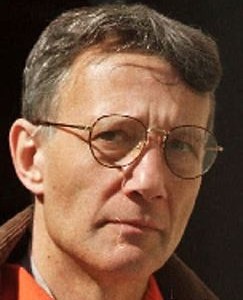
Thomas Capano
Murderer Russell Ellwood
Murderer · USA · 1991
Russell Ellwood was a former taxi driver. Authorities suspected him of killing…
20 victims
Russell Ellwood
Murderer · USA · 1991
Russell Ellwood was a former taxi driver. Authorities suspected him of killing…
20 victims
 Robert Martines Perez
Murderer · USA · 1994
Name: Robert Martines Perez · Other name used in proceedings: Robert Martinez P…
15 victims
Robert Martines Perez
Murderer · USA · 1994
Name: Robert Martines Perez · Other name used in proceedings: Robert Martinez P…
15 victims
 Billy Frank Vickers
Murderer · USA · 1993
Billy Frank Vickers Vickers was executed by lethal injection in Texas on Januar…
14 victims
Billy Frank Vickers
Murderer · USA · 1993
Billy Frank Vickers Vickers was executed by lethal injection in Texas on Januar…
14 victims
 Ervin Lupoe
Mass murderer · USA · 2009
Ervin Lupoe killed his wife, Ana Lupoe, and their five children, then killed hi…
6 victims
Ervin Lupoe
Mass murderer · USA · 2009
Ervin Lupoe killed his wife, Ana Lupoe, and their five children, then killed hi…
6 victims
 Robert Kosilek
Murderer · USA · 1990
Robert Kosilek was convicted of first-degree murder for the death of his wife,…
1 victim
Robert Kosilek
Murderer · USA · 1990
Robert Kosilek was convicted of first-degree murder for the death of his wife,…
1 victim
 Masumi Hayashi
Mass murderer · Japan · 1998
Masumi Hayashi (林 真須美, Hayashi Masumi, born July 22, 1961) was a Japanese woman…
4 victims
Masumi Hayashi
Mass murderer · Japan · 1998
Masumi Hayashi (林 真須美, Hayashi Masumi, born July 22, 1961) was a Japanese woman…
4 victims
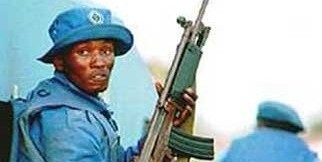 Bulelani Vukwana
Mass murderer · South Africa · 2002
Bulelani Vukwana was a South African security guard who worked for Gray Securit…
11 victims
Bulelani Vukwana
Mass murderer · South Africa · 2002
Bulelani Vukwana was a South African security guard who worked for Gray Securit…
11 victims
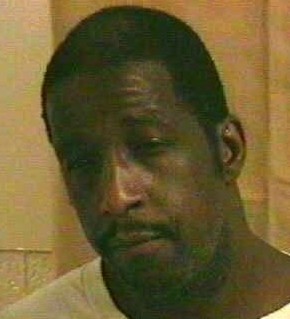 Larry Darnell Williams
Murderer · USA · 1979
Larry Darnell Williams was an inmate on death row. He was convicted in Gaston C…
2 victims
Larry Darnell Williams
Murderer · USA · 1979
Larry Darnell Williams was an inmate on death row. He was convicted in Gaston C…
2 victims
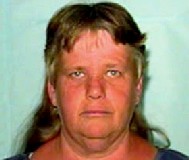 Christine Falling
Homicide · USA · 1980
Christine Falling (1980-1982) was a 17-year-old babysitter from Perry, Florida.…
5 victims
Christine Falling
Homicide · USA · 1980
Christine Falling (1980-1982) was a 17-year-old babysitter from Perry, Florida.…
5 victims
- Gender
- male
- Country
- USA
- Location
- Wilmington, Delaware, USA
- Date of birth
- October 11, 1949
- Age at first offence
- 47
- Characteristics
- former mental patient, the bodies were never found, domestic violence, drugs
- Victim profile
- H is mistress, Anne Marie Fahey, 28 ( the appointments secretary to then-Governor Thomas R. Carper )
- Method of murder
- ???
- Date(s) of murder
- June 27, 1996
- Years active
- 1996
- Date of arrest
- August 19, 1999
- Status
-
Sentenced to death
Died in prison on September 19, 2011; Resentenced to life in prison without parole in February 2006; Sentenced to death on March 15, 1999
Case details
Thomas J. Capano was a disbarred American lawyer from Wilmington, Delaware. He had been a former deputy attorney general of Delaware and was also described as being a wealthy, well-connected lawyer, state prosecutor, and political consultant known in Delaware’s political community.
Capano was convicted of the 1996 murder of Anne Marie Fahey. The case involved the disappearance of Fahey and the fact that her body was never recovered. The State was unable to establish the precise manner by which Fahey died.
Victim
Anne Marie Fahey was the scheduling secretary to Governor Thomas R. Carper. She was described as a 30-year-old member of another well-known family. She was last seen alive when she went to dinner with Capano in Philadelphia.
Background
Capano was described as a member of a prominent family of Delaware real estate developers and building contractors. He became involved with Fahey in 1994, when he was a partner at the Wilmington office of the law firm Saul Ewing LLP. Fahey was described as then being the 28-year-old appointments secretary to then-Governor Thomas R. Carper.
Fahey was attempting to end a romantic relationship with the married Capano. Fahey later met Michael Scanlon in September 1995, while she was still involved in the relationship with Capano. After a rocky beginning in her relationship with Scanlon, she fell in love with him.
The offence
Anne Marie Fahey was last seen alive on Thursday, June 27, 1996, when she went to dinner with Capano in Philadelphia. Her disappearance was investigated for a considerable time before Capano was charged with her murder.
Capano murdered Fahey at the house he rented. With the assistance of his brother, Gerry Capano, he dumped her body in the Atlantic Ocean. Investigators suspected the use of anchors to weigh down Fahey’s body.
A cooler that contained Fahey’s body was used and was pushed out to sea. The cooler floated even after they shot it. Capano retrieved the cooler, took the body out, and wrapped the anchor chains around it. Gerry was then asked to help dispose of a blood-stained sofa and carpet in a dumpster, which was managed by another brother, Louis. Thomas later ordered Louis to empty the dumpsters; Louis had them emptied out of their regular schedule.
A gun-related issue appeared in the investigation. Investigations into Capano’s records in buying guns were not revealing, and investigators did not have a murder weapon. Capano’s mistress, Debby MacIntyre, bought a gun and admitted to supplying the weapon to Capano when questioned by investigators.
Investigation
Fahey’s family reported on June 30, 1996, that she was missing. An extensive investigation concerning her disappearance ensued and culminated in November 1997, over sixteen months later, in Capano’s arrest for her murder.
Capano was the last known person to have seen Fahey alive on June 27, 1996 and was an early suspect in the investigation by the Wilmington Police. By mid-July 1996, the FBI actively joined in the investigation, and a federal grand jury heard evidence for over a year.
The investigation included an interview of Gerry Capano. On November 8, 1997, Gerry Capano was interviewed by detectives and told them that Thomas had asked for the boat and then admitted to Gerry that he had murdered someone who was attempting to extort him. The Capanos then went to Stone Harbor, New Jersey, with a large cooler that contained Fahey’s body. After disposal efforts, Thomas retrieved the cooler, removed the body, and wrapped the anchor chains around it. Gerry was asked to help dispose of a blood-stained sofa and carpet in a dumpster managed by Louis, and Thomas later ordered Louis to empty the dumpsters, which Louis did outside of their regular schedule.
The cooler was found on July 4, 1996, by fisherman Jay Chubb.
Arrest
The investigation culminated in November 1997, over sixteen months after Fahey was reported missing, in Capano’s arrest for her murder.
Trial
U.S. Attorney Colm Connolly and Delaware state prosecutor Ferris Wharton were the State’s prosecutors. William Swain Lee presided as the judge in the Superior Court trial.
The defense claimed that Debby MacIntyre had burst into Capano’s room and that, as Capano and MacIntyre were wrestling for the gun, it fired, killing Fahey.
On January 17, 1999, the trial resulted in Capano’s conviction and he was sentenced to death.
Sentencing
Judge William Swain Lee scheduled Capano’s execution to take place June 28. In Delaware, the average time for a death sentence to be carried out was described as 8 1/2 years.
During the sentencing, the jury recommended that Capano be put to death by lethal injection in a 10-to-2 vote.
Judge William Swain Lee did not overturn the jury’s recommendation and sentenced Capano to the death penalty for the 1996 murder and disappearance of Anne Marie Fahey. Judge Lee could have overturned the jury’s recommendation and sentenced Capano to life in prison without parole, and the judge indicated he would give the jury’s recommendation “great weight.”
Judge William Swain Lee: “The defendant fully expected to get away with it, and if not for his arrogant and controlling nature, he may have succeeded.”
Judge William Swain Lee: “He is a ruthless murderer and feels compassion for no one and remorse only for the circumstances he finds himself in today.”
Capano showed no emotion as he learned his sentence and mouthed, “It will be all right” to his mother and brother Joseph as he was led from the courtroom. The judge’s sentencing statement included an order that Capano be kept in the custody of the Department of Correction until Tuesday, June 7, 2005, and that between 12 a.m. and 3 a.m. he would be injected intravenously with a substance or substances in a lethal quantity sufficient to cause death until he was dead.
Judge T. Henley Graves: “It is the sentence of this court that you shall be kept in the custody of the Department of Correction until ... Tuesday, June 7, 2005, and on that day, between the hours of 12 a.m. and 3 a.m., you shall be ... injected intravenously with a substance or substances in a lethal quantity sufficient to cause death until you are dead,”
As Graves passed the sentence, Joseph Bernstein stood next to Capano. When Graves denied Capano’s request to hear any future sentencings over videophone, Capano blurted: “We did before.”
Capano: “We did before.”
Graves explained that because of the magnitude of the death penalty, he felt it was important that he be present.
Judge T. Henley Graves: “If this occurs again, I will expect sentencing to take place in open court, with the defendant present and counsel present,”
Capano suffered from the stomach disorder colitis and had been requesting not to be present at his sentencings.
Joseph M. Bernstein: “He has some fairly well-documented health problems,”
Joseph M. Bernstein: “When you come up here ... they get you up at four in the morning and you don't eat. For somebody with health problems that's difficult.”
During closing arguments in the penalty phase, Capano refused to admit to Fahey’s murder and told jurors he was not going to beg them for mercy, but he asked jurors to spare his life for the sake of his family.
Capano: “I'm not going to ask you to sit here and beg for my life,”
Capano: “I do ask you to consider my daughters, my mother, and the rest of my family. For their sake, I do ask you to let me live.”
The sentencing proceedings included evidence relating to Capano’s conduct. Prosecutors argued that the gruesome nature of Fahey’s killing and Capano’s attempted cover-up warranted his death by lethal injection. Prosecutors also argued that Capano planned Fahey’s murder, stating he purchased a gun a month before the slaying and asked his brother Gerard about the use of his boat.
During the penalty phase, the State attempted to prove a pattern of behavior using evidence that Capano solicited the beating of a former love interest nearly 20 years earlier. Linda J. Marandola testified that he stalked her for months after they had two sexual encounters in the late 1970s. She eventually spurned Capano, and he hounded her so much that she finally had to leave Delaware. Attorney James S. Green testified that Capano told an FBI informant he wanted Marandola hurt for rebuffing him.
Appeals
In January 2006, the Delaware Supreme Court affirmed Capano’s conviction but remanded the case for sentencing because the death penalty was imposed by a non-unanimous jury verdict.
In February 2006, the State abandoned its efforts to seek capital punishment for Capano, opting to leave him imprisoned for life without parole. Capano’s attorneys stated they would continue to appeal his conviction in federal courts.
In April 2008, the U.S. District Court reaffirmed Capano’s conviction, rejecting a habeas corpus petition filed by Capano. On September 2, 2008, the U.S. 3rd Circuit Court of Appeals affirmed this decision. The only remaining avenue for review of the conviction was described as petitioning for certiorari to the US Supreme Court. Capano did not file that petition.
Outcome
Capano was resentenced to life in prison without parole in February 2006 after the death sentence was remanded and capital punishment efforts were abandoned. He died in prison on September 19, 2011. As of 2011, he was imprisoned at the James T. Vaughn Correctional Center.
Other details
Capano was described as disbarred and as coming from a prominent Delaware family involved in real estate development and building contracting.
The narrative included that U.S. Attorney Colm F. Connelly built the case against Capano, and that prosecutors relied on testimony from Capano’s brothers for the conviction because Fahey’s body was never found.
Gerard Capano testified that he helped his brother dispose of the body while another brother, Louis, admitted helping Thomas conceal evidence.
For over two years after the murder, Capano did not give his account of Fahey’s death. At trial, Capano testified that his other mistress, Deborah MacIntyre, killed Fahey out of a jealous rage and that he was trying to protect her. MacIntyre denied any involvement in Fahey’s murder and said she was not with Capano on the night of the incident.
The Faheys filed a wrongful death suit against Capano and his brothers for their involvement in the attempted cover-up of the murder.
Several books were written about the murder case: “And Never Let Her Go: Thomas Capano: The Deadly Seducer” by Ann Rule; “The Summer Wind: Thomas Capano and the Murder of Anne Marie Fahey” by George Anastasia; and “Fatal Embrace: The Inside Story of the Thomas Capano/Anne Marie Fahey Murder Case” by Cris Barrish and Peter Meyer.
A television movie based on Ann Rule’s book was described as having been made in 2001 called “And Never Let Her Go” with Mark Harmon cast as Capano and Kathryn Morris as Anne Marie Fahey.
A Superior Court judge set June 7, 2005 as the date convicted killer Thomas J. Capano would be executed for the 1996 murder of Anne Marie Fahey, and that the previous execution date was stayed because of Capano’s appeal.
Spotted an error, or have more information about this case?