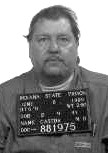
Marvin Castor
Murderer Brian Kevin Rosenfeld
Murderer · USA · 1985
Brian Kevin Rosenfeld Brian Kevin Rosenfeld was sentenced to three concurrent l…
23 victims
Brian Kevin Rosenfeld
Murderer · USA · 1985
Brian Kevin Rosenfeld Brian Kevin Rosenfeld was sentenced to three concurrent l…
23 victims
 Yahweh ben Yahweh
Murderer · USA · 1980
Yahweh ben Yahweh was born and legally named Hulon Mitchell Jr. (October 27, 19…
23 victims
Yahweh ben Yahweh
Murderer · USA · 1980
Yahweh ben Yahweh was born and legally named Hulon Mitchell Jr. (October 27, 19…
23 victims
 Russell Ellwood
Murderer · USA · 1991
Russell Ellwood was a former taxi driver. Authorities suspected him of killing…
20 victims
Russell Ellwood
Murderer · USA · 1991
Russell Ellwood was a former taxi driver. Authorities suspected him of killing…
20 victims
 Jean-Louis Turquin
Murderer · France · 1991
Jean-Louis Turquin was a Nice veterinary surgeon who was convicted of murdering…
1 victim
Jean-Louis Turquin
Murderer · France · 1991
Jean-Louis Turquin was a Nice veterinary surgeon who was convicted of murdering…
1 victim
 Emanuel Webb
Serial killer · USA · 1990
Emanuel Lovell Webb was sentenced in Connecticut for the strangling deaths of t…
5 victims
Emanuel Webb
Serial killer · USA · 1990
Emanuel Lovell Webb was sentenced in Connecticut for the strangling deaths of t…
5 victims
 Michael Sigala
Murderer · USA · 2000
Michael Adam Sigala was a Hispanic male with brown hair and hazel eyes. He was…
2 victims
Michael Sigala
Murderer · USA · 2000
Michael Adam Sigala was a Hispanic male with brown hair and hazel eyes. He was…
2 victims
 David Michael Barnett
Murderer · USA · 1996
David Barnett had been living with friends in the Glendale area during January…
2 victims
David Michael Barnett
Murderer · USA · 1996
David Barnett had been living with friends in the Glendale area during January…
2 victims
 William Beggs
Murderer · United Kingdom · 1987
William Beggs was originally from Moira, County Down, Northern Ireland. He was…
2 victims
William Beggs
Murderer · United Kingdom · 1987
William Beggs was originally from Moira, County Down, Northern Ireland. He was…
2 victims
- Gender
- male
- Country
- USA
- Location
- Wayne County, Indiana, USA
- Date of birth
- February 9, 1941
- Age at first offence
- 45
- Characteristics
- rape?, rapist, police officer, to avoid arrest, history of mental illness, domestic violence
- Victim profile
- Malcolm Grass, 42 (Hancock County Deputy Sheriff)
- Method of murder
- Shooting (.357 handgun)
- Date(s) of murder
- May 8, 1986
- Years active
- 1986
- Date of arrest
- Same day
- Status
-
Imprisoned
Sentenced to death on July 29, 1988; resentenced to 60 years in prison in 1992
Case record: Marvin Castor
Status and procedural posture
Marvin D. Castor was convicted of murder and sentenced to death. On direct appeal, the court affirmed his murder conviction but reversed the death sentence and remanded for resentencing. After a new sentencing hearing, the trial court sentenced Castor to sixty years imprisonment. On direct appeal after resentencing, the appellate court affirmed the trial court.
Timeline
- May 1986 — Marvin D. Castor worked as a salesman for the Sugar Creek Resort located near Greenfield, Indiana, and reviewed documents concerning Collett Ventures.
- May 6 — Castor met Bill Collett and demanded $250,000 in exchange for documents.
- May 7 — The FBI recorded telephone conversations between Castor and at least two representatives from Collett Ventures.
- May (next day after the recordings) — Castor waited in his pickup truck at the agreed location; Malcolm Grass and FBI agents arrived to arrest him.
- July 29, 1988 — The trial court sentenced Castor to death.
- 1992 — The appellate court affirmed Castor’s murder conviction but reversed the sentence of death and remanded for resentencing.
- 1996 — The trial court found Castor competent and conducted a new sentencing hearing.
- November 1994 — In a competency-related hearing, counsel for Castor inquired whether Castor suffered a mental illness at the time of the crime.
- September 13, 2001 — The appellate decision was issued in the appeal concerning whether the sentence was manifestly unreasonable in light of Castor’s mental illness.
Background
In May 1986, Marvin D. Castor worked as a salesman for the Sugar Creek Resort located near Greenfield, Indiana. The resort was affiliated with a business entity known as Collett Ventures. Castor and his brother, who also worked for the resort, obtained and reviewed documents concerning Collett Ventures. They concluded their employer was engaged in defrauding lending institutions.
Castor decided to approach a representative of Collett Ventures and request $250,000 in exchange for the documents. On May 6, Castor demanded payment in exchange for the documents in a meeting with Bill Collett, who was Castor’s superior at Collett Ventures.
After Castor left the office, Collett reported the incident to the Hancock County Sheriff’s Department, which contacted the Federal Bureau of Investigation. The following day, the FBI recorded telephone conversations between Castor and at least two representatives from Collett Ventures.
During the telephone conversations, Castor said he believed Collett Ventures had sent “hit men” to his house with the intent to injure him. Castor also stated that he was armed to the teeth and that the “hit men” would not intimidate him. The Collett Ventures representatives assured Castor there were no “hit men” after him but that his extortion attempt had been reported to the police. The representatives and Castor discussed arrangements for paying the money he demanded.
Castor claimed that the company had hired hit men who had looked for him and ransacked his home.
The offence
A jury convicted Castor of murder. The State sought the death penalty because Malcolm Grass was a law enforcement officer acting in the course of his duty.
The appellate court later noted that the conviction and sentence stemmed from the events surrounding the deputy sheriff’s killing at the arrest.
Investigation and law enforcement operation
The FBI recorded telephone conversations between Castor and representatives from Collett Ventures. The recorded conversations included references by Castor to “hit men” and his belief that Collett Ventures was involved in illegal activity.
A meeting was arranged for the payoff to take place at an Amoco station on State Road 9 just north of I-70. Castor and his brother arrived driving separately. Castor waited inside his truck.
Witness accounts varied concerning when or whether officers announced themselves as police or FBI. The only visual identification showing the men were law enforcement personnel was a hat worn by one officer emblazoned with the letters “FBI.”
Arrest
Malcolm Grass, a Hancock County deputy sheriff, and a number of FBI agents arrived to arrest Castor. All the officers arrived in unmarked vehicles and none wore uniforms. One vehicle pulled directly in front of Castor, blocking his escape.
Deputy Malcolm Grass jumped out with his gun drawn and officers announced themselves as Castor got out of his truck firing a .357. A ricochet bullet killed Deputy Grass. Castor surrendered.
During his surrender and arrest, Castor asked if they were members of the Mafia. He also said he believed the agents were “hit men.”
Trial
A jury convicted Marvin D. Castor of murder as charged. After the penalty phase, the jury recommended that the death penalty be imposed, and the trial court accepted the recommendation and sentenced Castor to death.
Castor ultimately surrendered and was arrested by FBI agents.
Sentencing
July 29, 1988 — death sentence
On July 29, 1988, the trial court sentenced Castor to death. The conviction also included “Carrying a Handgun Without a License.” The death sentence was imposed as a six months concurrent sentence.
The trial court’s aggravating and mitigating circumstances included the following:
- Aggravating Circumstances: Victim was law enforcement officer.
- Mitigating Circumstances: None.
Direct appeal and remand for resentencing
On direct appeal in 1992, the appellate court affirmed Castor’s conviction for murder but reversed the sentence of death and remanded for a new penalty phase hearing. The proceedings were delayed due to Castor’s incompetency to stand trial.
1996 — sixty-year sentence after remand
In 1996, the trial court found Castor competent and conducted a new sentencing hearing. The trial court found three aggravating factors:
- Substantial risk that Castor would commit another crime of the same magnitude as murder.
- Castor knew Grass was a law enforcement officer acting in the course of duty when he was murdered.
- Castor was in need of correctional and rehabilitative treatment that could best be provided by long-term commitment to a penal facility.
The trial court found only one mitigating factor: no history of criminal activity. The aggravating factors outweighed the single mitigating factor, and the trial court sentenced Castor to sixty years imprisonment.
The appellate court later reviewed and upheld this sentence.
Appeals
2001 — appeal after resentencing
In the appeal decided on September 13, 2001, the appellate court considered Castor’s contention that his sentence was manifestly unreasonable in light of his mental illness.
Castor argued the trial court failed to consider his severe mental illness as a significant mitigating factor. He also argued the trial court did not adequately articulate its reasons for using the “in need of correctional or rehabilitative treatment” aggravator. The appellate court disagreed and affirmed the trial court.
The appellate court described governing principles:
- Determination of sentences was a matter of discretion for the trial court.
- When enhancing a sentence, the court had to state all significant aggravating and mitigating factors and articulate the balancing process by which it determined that the aggravating factors outweighed the mitigating ones.
- A defendant asserting failure to find a mitigating circumstance had to establish the mitigating evidence was both significant and clearly supported by the record.
Castor pointed to his “hit men” references and his belief that Collett Ventures was involved in illegal activity to argue the entire tragedy was a product of mental illness.
The appellate court concluded that Castor did not carry his burden of proof. It reasoned that even if the conduct could be described as bizarre or unusual, that did not necessarily mean Castor was mentally ill at the time of the crime. It also reasoned that the fact he underwent eight competency evaluations between 1992 and 1996 did not itself show he was mentally ill at the time of the crime.
The appellate court explained that the record showed mental health professionals had at various times testified or submitted reports concluding Castor suffered a mental illness and was unable to assist counsel in his defense, but there was no testimony that Castor was mentally ill at the time the crime was committed. It discussed Dr. Richard Lawlor’s testimony from a November 1994 hearing.
Verbatim quotation (Dr. Richard Lawlor)
Dr. Richard Lawlor, a clinical psychologist at the Indiana University School of Medicine, responded when counsel for Castor asked whether it was possible that Castor suffered a mental illness at the time of the crime:
“I don’t know whether that would be true or not . . . . And I think that he was probably able, if it did exist at that time, to maintain outward control during those periods of time with the help of what seems to be a significant amount of intelligence.”
The appellate court concluded it found no error in the trial court’s sentencing on the mental illness mitigation issue.
Regarding articulation of the “in need of correctional or rehabilitative treatment” aggravator, the appellate court stated that when relying on this aggravator, a trial court had to articulate why the specific defendant required corrective or rehabilitative treatment that could best be provided by commitment to a penal facility for a period in excess of the presumptive sentence.
The appellate court noted that the trial court cited this aggravator because Castor had been incarcerated since May 1986 and continued to make threats of killings while awaiting trial, after conviction of murder, and while awaiting retrial on the penalty phase. The trial court’s statement was treated as sufficient to support use of the aggravator.
Verbatim quotation (trial court statement)
The appellate court quoted the trial court’s statement:
“has been incarcerated since May 1986, and Defendant continues to make threats of killings while awaiting trial on the murder charge, and after conviction of murder and awaiting retrial on the penalty phase . . . .”
The appellate court then addressed its constitutional sentencing review authority and applied the “manifestly unreasonable” standard. It concluded that a sixty-year sentence for murdering a law enforcement officer in the performance of his duty, knowing he was in fact an officer, was not manifestly unreasonable. The appellate court affirmed the trial court.
Outcome
Other details
Case and court identifiers
- The appeal was before the Supreme Court of Indiana.
- The Supreme Court cause number was 89S00-9803-CR-182.
- The case was Marvin D. Castor, Appellant-Defendant, v. State of Indiana, Appellant-Plaintiff.
- The appeal was from the Wayne Superior Court.
- The Honorable Barbara A. Harcourt was a Special Judge.
- The trial court cause number was S2861933CR.
Sentencing factors and legal references
The appellate court referenced:
- Ind. Code § 35-38-1-7.1 and related sentencing principles.
- Ind. Appellate Rule 7(B).
- Ind. Const. art. 7, § 4.
- Ford v. State, Harris v. State, Johnson v. State, Wallace v. State, Carter v. State, and Young v. State in its analysis.
- It also included a footnote referencing Ind. Code § 35-50-2-9(b)(6)(A) as listing law enforcement officer killed while acting in the course of duty as an aggravating factor for seeking a death sentence or life imprisonment without parole.
Concurrence
Shepard, C.J., and Dickson, Sullivan and Boehm, JJ. concurred.


Spotted an error, or have more information about this case?