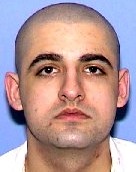
Juan Edward Castillo
Murderer Robert Martines Perez
Murderer · USA · 1994
Name: Robert Martines Perez · Other name used in proceedings: Robert Martinez P…
15 victims
Robert Martines Perez
Murderer · USA · 1994
Name: Robert Martines Perez · Other name used in proceedings: Robert Martinez P…
15 victims
 Billy Frank Vickers
Murderer · USA · 1993
Billy Frank Vickers Vickers was executed by lethal injection in Texas on Januar…
14 victims
Billy Frank Vickers
Murderer · USA · 1993
Billy Frank Vickers Vickers was executed by lethal injection in Texas on Januar…
14 victims
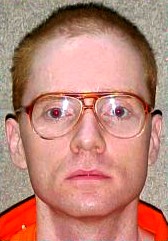 Robert Glen Jones
Murderer · USA · 1996
Defendant: Robert Glenn Jones (ADC#070566) · Co-defendant: Scott Nordstrom (ADC…
7 victims
Robert Glen Jones
Murderer · USA · 1996
Defendant: Robert Glenn Jones (ADC#070566) · Co-defendant: Scott Nordstrom (ADC…
7 victims
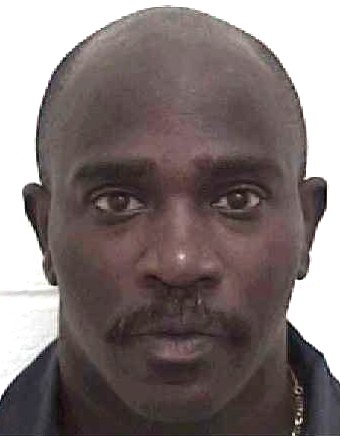 Keith Leroy Tharpe
Murderer · USA · 1990
Keith Leroy Tharpe, 39, was sentenced to death in January 1991 in Jones County…
1 victim
Keith Leroy Tharpe
Murderer · USA · 1990
Keith Leroy Tharpe, 39, was sentenced to death in January 1991 in Jones County…
1 victim
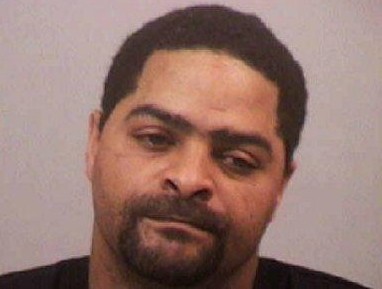 David Lance Bruce
Murderer · USA · 2005
David Lance Bruce was convicted in the death of a Fairfield County woman. He wa…
3 victims
David Lance Bruce
Murderer · USA · 2005
David Lance Bruce was convicted in the death of a Fairfield County woman. He wa…
3 victims
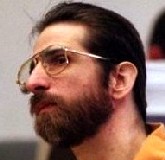 John Famalaro
Murderer · USA · 1991
John Joseph Famalaro was sentenced to death for the first degree murder of Deni…
1 victim
John Famalaro
Murderer · USA · 1991
John Joseph Famalaro was sentenced to death for the first degree murder of Deni…
1 victim
 Molly Midyette
Murderer · USA · 2006
Molly Midyette was convicted of child abuse resulting in death in the 2006 deat…
1 victim
Molly Midyette
Murderer · USA · 2006
Molly Midyette was convicted of child abuse resulting in death in the 2006 deat…
1 victim
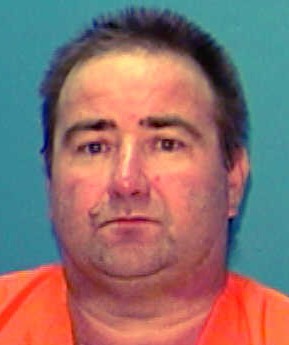 James D. Ford
Murderer · USA · 1997
James D. Ford was a defendant in a capital case in Florida. Ford’s date of birt…
2 victims
James D. Ford
Murderer · USA · 1997
James D. Ford was a defendant in a capital case in Florida. Ford’s date of birt…
2 victims
- Gender
- male
- Country
- USA
- Location
- Bexar County, Texas, USA
- Date of birth
- April 3, 1981
- Age at first offence
- 22
- Characteristics
- robbery, kidnapping
- Victim profile
- Tommy Garcia, Jr., 19
- Method of murder
- Shooting
- Date(s) of murder
- December 3, 2003
- Years active
- 2003
- Date of arrest
- —
- Status
-
Sentenced to death
Sentenced to death on September 27, 2005
Case information
Juan Edward Castillo (TDCJ Number 999502) was convicted of capital murder and sentenced to death.
Castillo was a Hispanic male. His date of birth was 04/03/1981. His height was 5' 11'' and his weight was 180. His eye color was Brown. His hair color was Black.
Castillo was received on 09/27/2005 at age 24 and had an education level of 10. The date of offense was 12/03/2003 when he was 22.
The offense county was Bexar County, Texas.
Prior history
Castillo previously had TDCJ# 1066210 on a two year sentence for Deadly Conduct with a Firearm from Bexar County.
Before prior prison record, his prior occupation was Cook, Laborer.
Background
Castillo was an appellant in a direct appeal to the Court of Criminal Appeals of Texas (No. AP-75,246), from cause no. 2004-CR-1461A in the 186th Criminal District Court, Bexar County.
The opinion was delivered by Holcomb, J. The court delivered the opinion on May 2, 2007.
The offence
On 12/03/2003 in Bexar County, Castillo and 3 co-defendants fatally shot a 19 year old Hispanic male after demanding his money.
The victim was identified as Tommy Garcia, Jr.
Castillo was convicted in August 2005 of capital murder under Tex. Penal Code § 19.03(a).
Based on the jury's answers to the special issues set forth in Texas Code of Criminal Procedure Article 37.071, sections 2(b) and 2(e), the trial judge sentenced appellant to death (Art. 37.071 § 2(g)).
Investigation and evidence at trial
Accomplice testimony
Francisco Gonzales and Debra Espinosa were accomplice witnesses for the State.
Both testified that they, Castillo, and Teresa Quintana planned to rob the victim, Tommy Garcia, Jr.
Espinosa called Garcia and made arrangements for him to pick her up and drive to Clamp Street, a secluded area, for sex.
As Garcia and Espinosa were parked on Clamp Street, Castillo and Gonzales came up behind the car. Castillo smashed one of the windows with the butt of his gun, opened the car doors and demanded that Garcia hand over his money.
Appellant had a loaded gun, and Gonzales had a gun as well, but it was "just for show" because it did not work.
Gonzales and Espinosa testified that Castillo shot Garcia numerous times as he attempted to run.
Key non-accomplice testimony
Several people testified that they saw Garcia wearing his gold medallion necklace on the night of the offense. The necklace was described as a "spinner" medallion on a thick gold chain.
Jessica Cantu testified that she saw Castillo wearing the necklace on the afternoon after the killing. She told Castillo the necklace looked familiar. When Cantu saw Castillo a little while later, he was no longer wearing the necklace.
Cantu told Garcia's mother that she had seen Castillo wearing Garcia's necklace.
Frank Russell and Robert Jimenez testified that they were at Jimenez's house with Garcia in the late night and early morning hours of December 2 and 3, 2003, when Garcia received a phone call from Espinosa. Garcia agreed to meet Espinosa and offered to give Russell a ride home on the way.
Jimenez testified that ten or fifteen minutes after Garcia and Russell left, he received a phone call from Espinosa who was crying hysterically and told him that someone had shot Garcia.
Jimenez drove to Russell's and the two of them went to Clamp Street where Espinosa said the shooting had occurred. When they arrived, they saw Garcia's car with the doors open and Garcia lying face-down in the street. He appeared dead. They told police what they knew about Garcia's plans to meet Espinosa.
Gerardo Gutierrez testified that in March 2003, he was an inmate in the same area of the Bexar County Jail as Castillo.
Gutierrez testified that Castillo told him that he and two friends, Frank and Bita, planned to rob a person, but "it turned out wrong" when the victim took off running and Castillo shot him numerous times.
Gutierrez also testified that Castillo told him that the female accomplice, Bita, was the one who had turned him in. Castillo said they would have a hard time convicting him because they did not have the weapon.
Lucinda Gonzales testified that she was the younger sister of Francisco ("Frank") Gonzales, one of the accomplice witnesses.
At the time of the murder, Lucinda was living in the same house with Gonzales and his girlfriend Teresa ("Bita") Quintana, among others.
Lucinda testified that on the night of the offense, Castillo called numerous times looking for Gonzales, and eventually came over with his girlfriend, Debra Espinosa.
Castillo and Gonzales asked to borrow Lucinda's car, and she finally agreed to let Teresa drive it.
Castillo, Gonzales, and Teresa left in Lucinda's car around 9:30 p.m. that evening. Espinosa left earlier in her own car.
Teresa returned around 2:30 a.m., and she told Lucinda that Gonzales had been arrested on a child-support warrant.
The following day, Lucinda saw a news report about Garcia's murder.
A couple of days later, Gonzales was charged with Garcia's murder and arrested.
Later that day, Lucinda covertly listened in on a phone conversation between Teresa and Castillo. Lucinda described the exchange verbatim:
"I heard Teresa say that, you know, what was going to happen to Frank [Gonzales]. And [appellant] said nothing, because he didn't do it, I did it, but they ain't going to know it because they ain't got any evidence. . . . He said that he - after the shooting, that he had ran through an open field and he discarded the - he had a mask, gloves, and the gun, and that he threw everything in the open field."
Lucinda called the police and reported what she had heard.
A few days later, Lucinda confronted Castillo and called him a murderer. Appellant made a threatening gesture toward her and told her that Gonzales was going to stay locked up.
Bryan Anthony Brown testified that at the time of the offense he was fifteen and living in the same house with his aunt Lucinda, his uncle Frank Gonzales and Frank's girlfriend Teresa, and others.
Brown testified that on the night of the offense, Castillo and his girlfriend came over. Castillo had a gun and a bullet-proof vest.
Brown testified that Castillo, his girlfriend, Gonzales, and Teresa all left in Lucinda's car.
Brown found out the next day that Gonzales had been arrested.
A couple of days later, Brown was riding in a car with Castillo and Teresa when Castillo said that he had to get out of town, that he had shot someone a bunch of times, and that he had hidden the gun and vest in a field.
Trial and legal issues raised on appeal
Appeal points and arguments
Castillo’s direct appeal was automatic.
The Court of Criminal Appeals of Texas reviewed Castillo’s four points of error.
After reviewing appellant's four points of error, the court found them to be without merit and affirmed the trial court's judgment and sentence of death.
Point of error one
Castillo claimed that the evidence was insufficient to corroborate the accomplice-witness testimony as required by Article 38.14.
Article 38.14 provided:
"A conviction cannot be had upon the testimony of an accomplice unless corroborated by other evidence tending to connect the defendant with the offense committed; and the corroboration is not sufficient if it merely shows the commission of the offense."
The court described the standard under which reviewing courts eliminate accomplice testimony and examine remaining portions of the record to see if there was any evidence tending to connect the accused.
The court referenced:
- Solomon v. State , 49 S.W.3d 356, 361 (Tex. Crim. App. 2001).
- Gribble v. State , 808 S.W.2d 65, 71 n.13 (Tex. Crim. App. 1990):
- McDuff v. State , 939 S.W.2d 607, 613 (Tex. Crim. App. 1997):
"The non-accomplice evidence does not have to directly link appellant to the crime, nor does it alone have to establish his guilt beyond a reasonable doubt." "There must simply be some non-accomplice evidence which tends to connect appellant to the commission of the offense alleged in the indictment."
"unlike extrajudicial confessions, testimony of an accomplice need be corroborated only as to facts 'tending to connect the defendant with the offense committed' and not as to the corpus delicti itself."
The court found that the non-accomplice testimony—including evidence that Castillo was seen wearing the victim's necklace shortly after the murder, that Castillo was seen with a gun and with the accomplices in the hours before the murder, that the victim made a plan just prior to his murder to meet one of the accomplices, that Castillo told a fellow inmate that he and accomplices had planned a robbery, that Castillo shot the victim multiple times when the victim attempted to run, that Lucinda overheard appellant admit to Teresa that he was responsible for shooting someone, and that Brown overheard a similar conversation between Castillo and Teresa—was sufficient to tend to connect Castillo with the murder and robbery.
Point of error one was overruled.
Point of error two
Castillo claimed that the evidence was factually insufficient to support a finding that he robbed the victim or that he shot the victim.
The court described factual insufficiency using Watson v. State , 204 S.W.3d 404, 414-15 & 417 (Tex. Crim. App. 2006).
Castillo referred to Lucinda and Brown as "clearly unfairly biased, late in forthcoming, last hour rescuing, highly suspicious testimonies."
Castillo argued that Lucinda and Brown "went into hiding" shortly after the offense and "conveniently surfaced" "in dubious support of" Gonzales's plea-bargain agreement.
Castillo suggested that Gutierrez was biased as the "ex-boyfriend of Francisco Gonzales's niece."
Castillo pointed to defense witness Ralph Edward Pedrigone as evidence that Gonzales, not Castillo, was the shooter.
Ralph Edward Pedrigone testified that he was an inmate in the same area of the jail with accomplice Gonzales and that after seeing a television news report about Garcia's murder, Gonzales stated:
"[t]hat's the guy I killed. I mean they killed."
Castillo also contended the evidence was insufficient to support the robbery element of the capital murder because the victim was found wearing five pieces of jewelry and had $574 and a baggie of marijuana in his possession.
The court found that accomplices Gonzales and Espinosa testified that they planned the robbery of Garcia with Castillo and that Castillo shot Garcia numerous times, and that their testimony was consistent with and corroborated by the non-accomplice evidence described above.
The court stated that Garcia’s money and jewelry in his possession after the botched robbery did not mean Castillo did not murder him in the course of "committing or attempting to commit the offense of robbery" as charged in the indictment, citing Tex. Penal Code § 19.03(a)(2) (emphasis added).
The court also found that credibility issues were for the jury and that Castillo’s arguments did not demonstrate factual insufficiency.
The court determined that Pedrigone’s testimony did not exonerate Castillo and remained subject to more than one interpretation, which still supported party liability.
Point of error two was overruled.
Point of error three
Castillo claimed that the death penalty was cruel and unusual punishment under the Eighth Amendment and sought commutation to life.
The court held that the death penalty did not violate the Eighth Amendment, citing Threadgill v. State , 146 S.W.3d 654, 672-73 (Tex. Crim. App. 2004) and Jurek v. Texas , 428 U.S. 262 (1976).
The court also noted Castillo did not assert anything about the facts of his case that would render imposition of the death penalty unconstitutional as applied to him, referencing Roper v. Simmons , 543 U.S. 551 (2005) and Atkins v. Virginia , 536 U.S. 304 (2002).
Point of error three was overruled.
Point of error four
Castillo claimed the trial court erred when it denied his pretrial motion objecting to the testimony of the two accomplice witnesses.
Castillo asserted the accomplice testimony would violate Rule 3.04 of the Texas State Bar Rules of Professional Conduct and 18 U.S.C. §§ 201(b)(1)(A), 201(b)(3).
Castillo argued that because Gonzales and Espinosa entered plea-bargain agreements under which they would receive forty-year sentences instead of the death penalty in exchange for their testimony against Castillo, their testimony violated the federal anti-bribery statute and the state rules of professional conduct and should have been excluded.
The court noted that a majority of federal courts, including the Fifth Circuit, rejected such claims about the federal anti-bribery statute, citing United States v. Haese , 162 F.3d 359, 366-68 (5th Cir. 1998), which concluded that Congress did not intend section 201(c)(2) to be used when prosecutors offer lenity for a witness' truthful testimony.
The court declined to follow United States v. Singleton , 144 F.3d 1343 (10 th Cir. 1998), which was vacated by an en banc court on rehearing, and cited United States v. Singleton , 165 F.3d 1297 (10 th Cir. 1999)(en banc) for vacating panel opinion and affirming trial court’s denial of suppression motion.
The court was also not persuaded by Castillo's claim under the state disciplinary rules.
Rule 3.04(b) provided that a lawyer shall not:
falsify evidence, counsel or assist a witness to testify falsely, or pay, offer to pay or acquiesce in the offer or payment of compensation to a witness or other entity contingent upon the content of the testimony of the witness or outcome of the case.
The court concluded that even if a plea bargain were considered "payment of compensation" within the meaning of the rule, the plea bargain in this case was not contingent upon the content of the witness's testimony but only upon its truthfulness.
The court also concluded that a disciplinary rule violation was not a "violation of the law" for the purpose of excluding evidence under the state exclusionary rule, Article 38.23.
Point of error four was overruled.
Outcome
The judgment of the trial court was affirmed.
Castillo’s conviction for capital murder and sentence of death were affirmed on direct appeal.
Aftermath
No further post-appeal outcomes were included beyond the affirmation of the judgment and sentence of death.
Spotted an error, or have more information about this case?