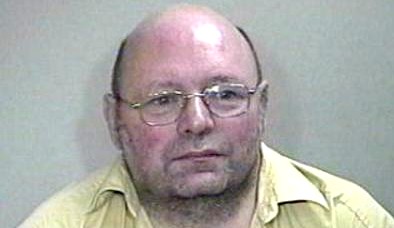
Ronald Castree
Murderer John Cooper
Murderer · United Kingdom · 1985
John Cooper was a serial killer from Milford Haven, Pembrokeshire. Cooper was c…
4 victims
John Cooper
Murderer · United Kingdom · 1985
John Cooper was a serial killer from Milford Haven, Pembrokeshire. Cooper was c…
4 victims
 Andrew Walker
Murderer · United Kingdom · 1985
Royal Scots corporal Andrew Walker killed three Army colleagues in a payroll ro…
3 victims
Andrew Walker
Murderer · United Kingdom · 1985
Royal Scots corporal Andrew Walker killed three Army colleagues in a payroll ro…
3 victims
 Arthur Hutchinson
Murderer · United Kingdom · 1983
Arthur Hutchinson was an English murderer and rapist who committed three murder…
3 victims
Arthur Hutchinson
Murderer · United Kingdom · 1983
Arthur Hutchinson was an English murderer and rapist who committed three murder…
3 victims
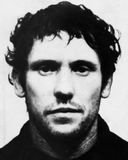 Barry Prudom
Murderer · United Kingdom · 1982
Barry Prudom was the prime suspect in the killings of police officers after pol…
3 victims
Barry Prudom
Murderer · United Kingdom · 1982
Barry Prudom was the prime suspect in the killings of police officers after pol…
3 victims
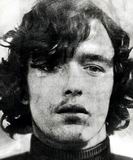 David McGreavy
Murderer · United Kingdom · 1973
David McGreavy was born in 1950 or 1951. He was an English convicted murderer w…
3 victims
David McGreavy
Murderer · United Kingdom · 1973
David McGreavy was born in 1950 or 1951. He was an English convicted murderer w…
3 victims
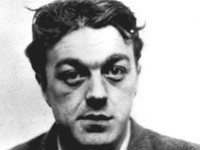 Harry Maurice Roberts
Murderer · United Kingdom · 1966
Name: Harry Maurice Roberts Birth year: 1936 Birthplace: Kennington, London, En…
3 victims
Harry Maurice Roberts
Murderer · United Kingdom · 1966
Name: Harry Maurice Roberts Birth year: 1936 Birthplace: Kennington, London, En…
3 victims
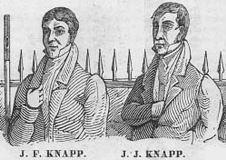 Francis & Joseph Knapp
Murderers · USA · 1930
Francis Knapp and Joseph Jenkins Knapp were the brothers known as the Knapps. T…
1 victim
Francis & Joseph Knapp
Murderers · USA · 1930
Francis Knapp and Joseph Jenkins Knapp were the brothers known as the Knapps. T…
1 victim
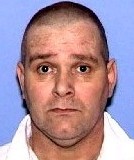 Keith Thurmond
Murderer · USA · 2001
Keith Thurmond was sentenced to death on November 14, 2002. He was executed by…
2 victims
Keith Thurmond
Murderer · USA · 2001
Keith Thurmond was sentenced to death on November 14, 2002. He was executed by…
2 victims
 Clifton McCree
Mass murderer · USA · 1996
Clifton McCree was a black man who had worked for the city as part of a beach c…
5 victims
Clifton McCree
Mass murderer · USA · 1996
Clifton McCree was a black man who had worked for the city as part of a beach c…
5 victims
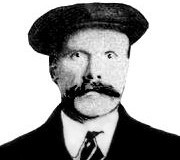 Albert Burrows
Murderer · United Kingdom · 1920
Albert Burrows (also named Albert Edward Burrows): married farm labourer who to…
4 victims
Albert Burrows
Murderer · United Kingdom · 1920
Albert Burrows (also named Albert Edward Burrows): married farm labourer who to…
4 victims
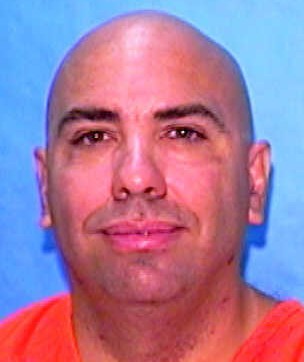 Jose Antonio Jimenez
Murderer · USA · 1990
Jose Antonio Jimenez (DOB: 10/12/63) was sentenced to death on December 14, 199…
2 victims
Jose Antonio Jimenez
Murderer · USA · 1990
Jose Antonio Jimenez (DOB: 10/12/63) was sentenced to death on December 14, 199…
2 victims
- Gender
- male
- Country
- United Kingdom
- Location
- Manchester, Great Manchester, England, United Kingdom
- Date of birth
- October 18, 1953
- Age at first offence
- 22
- Characteristics
- rape
- Victim profile
- Lesley Molseed, 11
- Method of murder
- St abbing with knife
- Date(s) of murder
- October 5, 1975
- Years active
- 1975
- Date of arrest
- November 5, 2006 (31 years later)
- Status
-
Life imprisonment
Sentenced to life imprisonment with a minimum term of 30 years on November 12, 2007
Case overview
Ronald Charles Edward Castree was convicted for the murder of Lesley Molseed. He was sentenced to life imprisonment with a minimum term of 30 years on November 12, 2007. During the trial, a scientist described DNA evidence linking Castree to semen found on Lesley Molseed's underwear, with Dr Gemma Escott stating the chances of the semen samples belonging to anyone other than the defendant were one in one billion.
Timeline
- 5 November 2006 — It was announced that a 53-year-old man had been arrested in connection with the murder of Lesley Molseed, which took place in 1975.
- 7 November 2006 — Ronald Castree of Shaw and Crompton, Greater Manchester, made his first court appearance and was remanded in custody.
- 19 April 2007 — At a court hearing, Castree pleaded not guilty.
- 23 April 2007 — Castree was refused bail.
- 22 October 2007 — Castree’s trial began at Bradford Crown Court.
- 12 November 2007 — Castree was found guilty.
- 11 November 2007 — Outteridge gave evidence at the trial of Castree.
Investigation and evidence
A DNA sample from Castree, taken in 2005 when he was arrested but not charged in connection with another sex attack, was a direct match with a semen sample found on Lesley Molseed's underwear. Dr Gemma Escott explained to Bradford Crown Court the chances of the semen samples belonging to anyone other than the defendant were one in one billion.
The offence
Lesley Molseed was murdered as an 11-year-old British girl in 1975. On the day of her murder, she had agreed to go down to the shop to get some bread for her mother. She never returned. A search began and her body was found three days later on the moors nearby. She had been stabbed 12 times. Her clothing was undisturbed, but the killer had ejaculated on her underwear.
Trial
Castree was charged with the murder of Lesley Molseed. His first court appearance took place on 7 November 2006, and he was remanded in custody. At a court hearing on 19 April 2007, he pleaded not guilty. On 23 April 2007 he was refused bail. The trial began at Bradford Crown Court on 22 October 2007. The jury found him guilty on 12 November 2007 by a 10-2 majority.
Sentencing
On 12 November 2007, Castree was jailed for life, with a recommendation to serve a minimum of 30 years. The minimum term was expected to keep him in prison until the age of 84.
Other persons and related history
Stefan Kiszko and the earlier case
The murder case involved an earlier miscarriage of justice in which Stefan Kiszko, a tax clerk, was wrongly convicted of the sexual assault and murder which took place on 5 October 1975 in Rochdale, Greater Manchester. Kiszko was cleared and released from prison custody the following day after a judicial investigation began on 17 February 1992. The investigation was heard by three judges: Lord Lane, Mr Justice Rose, and Mr Justice Potts. Lord Chief Justice Lane said:
"It has been shown that this man cannot produce sperm. This man cannot have been the person responsible for ejaculating over the girl's knickers and skirt, and consequently cannot have been the murderer"
Kiszko had been convicted by a 10-2 majority jury verdict on 21 July 1976 at Leeds Crown Court after five hours and 35 minutes deliberation. He was given a life sentence for committing Molseed’s murder. At Kiszko’s appeal, his appeal was thrown out on May 25, 1978, when Lord Justice Bridge said:
"We can find no grounds whatsoever to condemn the jury's verdict of murder as in any way unsafe or unsatisfactory"
Kiszko had been attacked in prison multiple times and developed schizophrenia while in prison, including delusions about being targeted for incarceration to test the effects of imprisonment.
Defence counsel and prosecution in Kiszko’s trial
Kiszko was defended by David Waddington QC, who later became Home Secretary in October 1989. The prosecuting QC was Peter Taylor, who later became Lord Chief Justice.
Earlier police evidence and allegations
During the search in 1975, three teenage girls claimed that Stefan Kiszko had indecently exposed himself to them the day before Lesley Molseed was murdered, and one girl also claimed he had exposed himself to her on Bonfire night a month after the murder, and had been stalking her prior to that. West Yorkshire Police formed the view that Kiszko fitted the profile of the person likely to have killed Lesley Molseed, despite him having never been in trouble with the law and having no social life beyond his mother and aunt. Kiszko’s hobby of writing down registration numbers of cars that annoyed him led to the belief that he was a likely suspect. Acting on the girls’ information and this hobby, police arrested Kiszko on 21 December 1975. They seized inconsistencies between his various accounts and he confessed after two days of questioning. The police did not tell Kiszko of his right to have a solicitor present, refused his request to have his mother present during questioning, and did not caution him until well after they had decided he was the prime suspect.
During the later investigation into the wrongful conviction, the three females involved in the conviction admitted that the evidence they gave which led to Kiszko’s arrest and conviction was lies and that they had given it “for ‘a laugh’”. They stated that Kiszko had not exposed himself to them and had not been stalking them, but that they had seen a taxi driver urinating behind a bush on the day of Molseed’s murder.
Medical and forensic issues in Kiszko’s case
Traces of sperm were found on Molseed’s clothes, while the semen sample taken from Kiszko contained no sperm. Medical evidence indicated that Kiszko had broken his ankle some months before the murder and, given his overweight condition, it would have been difficult for him to scale the slope to the murder spot. The sperm findings were suppressed by the police and were never disclosed to the defence team or the jury, and the medical evidence of his broken ankle was also not disclosed. On the later review, Kiszko had male hypogonadism, which rendered him infertile, contradicting forensic evidence obtained at the time of the murder.
Imprisonment and treatment of Kiszko
Kiszko remained in Armley Jail after entering it on Christmas Eve 1975. He was nicknamed “Oliver Laurel” because of his girth and the perplexed air of Oliver’s comedy sidekick Stan Laurel. He remained there until his murder trial began on 7 July 1976, and he was defended by David Waddington QC. Kiszko needed constant protection and was isolated for his own safety under Rule 43.
Kiszko was attacked the day after his conviction when six prisoners punched and kicked him repeatedly, severely injuring his leg and making him unable to walk for six weeks; guards pulled the prisoners away to prevent further injury. He was attacked again on May 11, 1977 when another inmate hit him with a mop handle, causing a head wound that required 17 stitches. He was never physically attacked again during his time in prison.
Castree’s background and character
Ronald Castree was unpopular with his neighbours, who said he had a very nasty temper. His former wife said: "he was foul with his mouth, and foul with his fists". Castree was originally from the Turf Hill estate of Rochdale and lived in nearby Shaw and Crompton. For many years he worked as a taxi driver.
Two weeks before he killed Molseed, Castree’s wife gave birth to a son whose biological father was a man she had an affair with. It was believed that this was a trigger into Castree’s murder of Molseed.
Developments after Castree’s conviction
In 1994, Detective Chief Inspector Dick Holland and the forensic scientist Ronald Outteridge (retired) were formally charged with “doing acts tending to pervert the course of justice” by allegedly suppressing evidence against Kiszko, namely results of scientific tests on semen taken from the victim’s body and from the accused. On May Day 1995, defence barristers challenged the case on the basis that it was an abuse of process and that charges should be stayed due to the passage of time making a fair trial impossible. The presiding magistrate agreed, and because the case had never appeared before a jury, the law regarded the accused as innocent.
DCI Holland retired in 2000 and died in February 2007 at the age of 74. Outteridge gave evidence at the trial of Castree.
Aftermath and reactions
Police apology and statements
The West Yorkshire Police apologised for Kiszko’s wrongful arrest and imprisonment on November 12, 2007. Detective Chief Superintendent Max McLean said of Kiszko’s wrongful imprisonment:
"We are very sorry. It was a dreadful miscarriage of justice. I am so pleased that today we have put things right."
Compensation and later deaths
Kiszko needed further treatment but was allowed home fully a few months after being cleared. The years of incarceration and his ordeals had mentally and emotionally destroyed him, and he became a recluse. He showed no interest in anything or anyone and support seemed to frighten him when he ventured out.
Kiszko died of a massive heart attack two days before Christmas 1993, exactly 18 years to the day after he made the confession that led to his wrongful conviction for murder. He was 41 years old. Lesley Molseed’s sister attended his funeral two weeks later. Kiszko’s mother Charlotte died four months later on May 3, 1994 at the age of 70.
After his release, Kiszko was told he would receive £500,000 in compensation for the years he spent in prison. An interim payment was made, but neither he nor his mother received the full amount as both died before it was due to be received.
Public statements by officials and family
Anthony Beaumont-Dark, a Conservative MP said: "This must be the worst miscarriage of justice of all time" and demanded an inquiry. Sir Hugh Park apologised for what had happened to Kiszko but said he wasn’t sorry for how he had handled the court case. Lesley Molseed’s family publicly apologised for urging Kiszko’s execution after his conviction.
Lesley Molseed’s father hurled a volley of angry verbal abuse at Charlotte Kiszko outside the court after her son was convicted, but he apologised in 1992. Kiszko’s mother said that David Waddington ought to be “strung up” for his pro capital punishment views and for the way he handled her son’s defence at the 1976 trial.
Castree conviction re-anchored among later legal context
As Castree was convicted of Molseed’s murder on 12 November 2007, the jury verdict by a 10-2 majority coincided with the margin that Stefan Kiszko had been found guilty of in 1976.
Spotted an error, or have more information about this case?