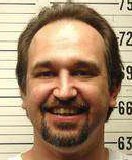
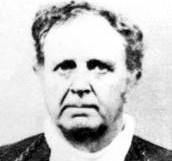
Ronnie Cauthern
Murderer Brian Kevin Rosenfeld
Murderer · USA · 1985
Brian Kevin Rosenfeld Brian Kevin Rosenfeld was sentenced to three concurrent l…
23 victims
Brian Kevin Rosenfeld
Murderer · USA · 1985
Brian Kevin Rosenfeld Brian Kevin Rosenfeld was sentenced to three concurrent l…
23 victims
 Yahweh ben Yahweh
Murderer · USA · 1980
Yahweh ben Yahweh was born and legally named Hulon Mitchell Jr. (October 27, 19…
23 victims
Yahweh ben Yahweh
Murderer · USA · 1980
Yahweh ben Yahweh was born and legally named Hulon Mitchell Jr. (October 27, 19…
23 victims
 Russell Ellwood
Murderer · USA · 1991
Russell Ellwood was a former taxi driver. Authorities suspected him of killing…
20 victims
Russell Ellwood
Murderer · USA · 1991
Russell Ellwood was a former taxi driver. Authorities suspected him of killing…
20 victims
 Ignacio Cuevas
Murderer · USA · 1974
Ignacio Cuevas was executed in Texas by lethal injection on May 23, 1991, for h…
3 victims
Ignacio Cuevas
Murderer · USA · 1974
Ignacio Cuevas was executed in Texas by lethal injection on May 23, 1991, for h…
3 victims
 Nixzaliz Santiago
Murderer · USA · 2006
Nixzmary Brown was a seven-year-old child who died after being abused and murde…
1 victim
Nixzaliz Santiago
Murderer · USA · 2006
Nixzmary Brown was a seven-year-old child who died after being abused and murde…
1 victim
 Naomi Gaines
Murderer · USA · 2003
Naomi Gaines was a 24-year-old mother from St. Paul, Minnesota. On July 4, 2003…
1 victim
Naomi Gaines
Murderer · USA · 2003
Naomi Gaines was a 24-year-old mother from St. Paul, Minnesota. On July 4, 2003…
1 victim
 Gerald Casey
Murderer · USA · 1989
Gerald Casey — capital defendant and convicted person · Carla Smith — accomplic…
1 victim
Gerald Casey
Murderer · USA · 1989
Gerald Casey — capital defendant and convicted person · Carla Smith — accomplic…
1 victim
 Carl Brandt
Homicide - Murderer · USA · 1971
Carl “Charlie” Brandt · Jan. 3, 1971 — Carl Brandt killed his pregnant mother a…
6 victims
Carl Brandt
Homicide - Murderer · USA · 1971
Carl “Charlie” Brandt · Jan. 3, 1971 — Carl Brandt killed his pregnant mother a…
6 victims
- Gender
- male
- Country
- USA
- Location
- Montgomery County, Tennessee, USA
- Date of birth
- September 5, 1967
- Age at first offence
- 20
- Characteristics
- robbery, rape
- Victim profile
- Patrick and Rosemary Smith (both Captains in the United States Army)
- Method of murder
- Strangulation
- Date(s) of murder
- January 9, 1987
- Years active
- 1987
- Date of arrest
- 3 days after
- Status
-
Sentenced to death
Sentenced to death on March 18, 1988
Case overview
Ronnie M. Cauthern was convicted of the 1987 slayings of a husband and wife who were both captains in the U.S. Army nursing corps at Fort Campbell. On the night of January 9, 1987, Cauthern and co-defendant Brett Patterson drove to the home of Patrick and Rosemary Smith, who were both captains in the United States Army assigned to Fort Campbell as nurses. The defendants wore masks and gloves, and each carried a loaded revolver. After severing the telephone line, the defendants broke a door pane, unlocked the door, and entered the Smiths’ house. They were after a large sum of money thought to be kept in the bedroom. Once inside, they discovered that the Smiths were at home asleep and awakened them, pulling them out of bed.
The jury found Cauthern guilty of felony murder of Patrick Smith and his wife Rosemary Smith during the perpetration of first degree burglary, and aggravated rape of Mrs. Smith. In the guilt phase, the jury found both defendants guilty of the two murders, first degree burglary and aggravated rape. At the guilt phase, the jury sentenced Patterson to life imprisonment and Cauthern received the death penalty.
Cauthern’s death sentence was later set aside for resentencing, and after a resentencing hearing in Gibson County the sentence of death was affirmed. The Supreme Court of Tennessee ultimately affirmed the sentence of death by electrocution.
Timeline
- January 9, 1987 — Police responded to a “burglary in progress” at the home of Patrick and Rosemary Smith in Clarksville, Tennessee; the bodies of Patrick Smith and Rosemary Smith were discovered.
- January 12, 1987 — Cauthern and Patterson were arrested; search warrants were obtained for Cauthern’s car and Patterson’s house.
- Monday morning 12 January 1987 (about 11:00 a.m.) — James Phillip Andrew telephoned the Clarksville Police and asked to speak to an officer he had seen on T.V. news in a segment reporting on the double murder.
- That afternoon (Monday, 12 January 1987) — Cauthern and Patterson were arrested.
- Saturday afternoon (after Saturday at the trailer, after first telling while “high” on marijuana) — Cauthern began telling James Phillip Andrew about his role in the Smith murders.
- Friday morning, 9 January — Andrew went to work at the base as usual and saw Cauthern again that night at the trailer and later at Rockvegas.
- Thursday night (8 January 1987) — Cauthern and Patterson were “solemn” and “quiet” according to Cauthern’s former girlfriend, Jackie Pigue.
- Thursday night, 8 January 1987 (about 9:30 p.m.) — Cauthern, Patterson, and Jackie Pigue went to Arby’s; the group did not eat; eyes were dilated and they were “laid back.”
- Tuesday, 13 January 1987 — Cauthern gave a taped interview; the investigation interview terminated at 4:53, January 13.
People
- Ronnie M. Cauthern — Defendant.
- Brett Patterson — Co-defendant.
- Patrick Smith — Victim; husband; a captain in the U.S. Army nursing corps at Fort Campbell; a nurse.
- Rosemary Smith — Victim; wife; a captain in the U.S.
- James Phillip Andrew — Witness; in the U.S. Army stationed at Fort Campbell; living in a trailer in a mobile home park in Oak Grove, Kentucky; Andrew testified about statements Cauthern made.
- Joe Denning — Witness; roommate of Andrew; acquainted with Cauthern and Patterson.
- Jackie Pigue — Witness; Cauthern’s former girlfriend.
- Charles Denton — Officer who took statements from Cauthern.
- Joe Griffy — Officer who took statements from Cauthern.
- Earl Mullins — Jailer who testified about Cauthern requesting to talk to Officers Griffy or Denton.
- Detective Charles Denton — Detective; read a statement into evidence during the resentencing hearing proceedings as described.
- Dr. Charles Harlan — Medical examiner who concluded the victims died of ligature strangulation.
- Charles Tracy — Teacher for the Department of Correction who testified as described.
- Hugh R. Poland, Jr. — Counsel for appellant at the later proceedings described.
- John Knox Walkup — Attorney General and Reporter at the later proceedings described.
- Michael E. Moore — Solicitor at the later proceedings described.
- John P. Cauley — Assistant Attorney General at the later proceedings described.
- Clayburn Peeples — District Attorney General at the later proceedings described.
- John Carney — District Attorney General at the later proceedings described.
- Steve Garrett — Assistant District Attorney General at the later proceedings described.
- John H. Peay — Trial judge referenced for the direct appeal proceedings described.
- David H. Welles — Judge referenced for the Court of Criminal Appeals opinion described in the appendix.
- David G. Hayes — Judge referenced as concurring.
- Cornelia A. Clark — Special Judge referenced as concurring.
- Dick Jerman, Jr. — Sentencing judge referenced in the appendix for resentencing.
Background
Cauthern and co-defendant Brett Patterson were indicted and tried in Tennessee for the 1987 slayings of Patrick and Rosemary Smith at the Smiths’ home in Clarksville, Tennessee. The Smiths were both captains in the U.S. Army nursing corps at Fort Campbell and both were nurses.
Police observed broken glass in the rear door and both cars in the garage after neither Patrick nor Rosemary Smith reported to their duty stations on the morning of 9 January 1987 and telephone calls to their home received no answer.
The investigation later focused on Cauthern and Patterson after James Phillip Andrew telephoned the Clarksville Police and asked to speak to an officer he had seen on T.V.
The offence
On the night of January 9, 1987, Cauthern and Patterson drove to the Smith home. The defendants:
- wore masks and gloves,
- each carried a loaded revolver,
- severed the telephone line near its entry into the outside wall,
- broke a door pane, unlocked the door, and entered the Smiths’ house,
- were after a large sum of money thought to be kept in the bedroom.
Once inside, they discovered the Smiths were at home asleep. They awakened them and pulled them out of bed. Patrick Smith tried to fight them off.
According to the testimony described, Brett Patterson made repeated attempts to subdue Patrick Smith by applying a “sleeper,” a wrestling hold designed to cause unconsciousness. Failing this, Patterson strangled Mr. Smith with a length of “880” military cord.
Rosemary Smith was strangled with a silk scarf into which a narrow vase was inserted to form a tourniquet. The medical examiner found the cartilage in her throat had been fractured, which was described as an injury that would have resulted only from application of great force.
The record also described sexual assault. Mrs. Smith had been raped.
After the killings, the house was ransacked. Chest of drawers were open and luggage and clothing were scattered about. In the master bedroom, police found a piece of paper upon which was written Cauthern’s name, address and telephone number.
Investigation and arrest
A 911 call was made after police were unable to reach the Smiths by telephone. Police arrived promptly and discovered the body of Patrick Smith lying face down on the bed in the master bedroom. He was wrapped in the top sheet and was described as facing 90 degrees counter clockwise from his sleeping position. He had been strangled to death, apparently with a length of 880 military cord. The bed was broken and tilted, indicating a violent struggle.
Rosemary Smith’s nude body was found on the floor. A scarf was tied around her neck and a small vase had been inserted into the scarf. The vase was described as used to twist the scarf and reduce the circumference. She died of strangulation. Both victims were described as having massive hematoma of the neck area. Mrs. Smith’s nightgown and buttons torn from it were found in the room. Semen was apparent on the gown and a comforter from the bed. Sperm was found in the vaginal vault. Test revealed the presence of PGM Type 1 secretions. A forensic serologist testified that the PGM Type 1 from the swab was “consistent with Cauthern, as well as Rosemary Smith.”
Police found a shoe print on the back door that matched Patterson’s shoe.
In a statement given to police, Patterson admitted kicking the back door once or twice but said it would not open; they obtained a hammer and broke the pane of glass nearest the door knob to gain entry.
When Cauthern and Patterson were arrested, they were described as working on Cauthern’s car at a duplex where they lived. Search warrants were obtained for Cauthern’s car and Patterson’s house. From the car and the house, police found numerous credit cards, identification cards, receipts, checks, and other items of personal property belonging to the Smiths. A roll of 880 military cord was found. Two ski masks, several handguns, and Patrick Smith’s jacket were found as described in the later resentencing record.
Police found that the telephone line had been cut near its entry into the outside wall of the house and that the house had been ransacked. In the master bedroom a slip of paper containing Cauthern’s name was also found.
Trial and guilt phase
The direct appeal described that Cauthern and Patterson were indicted for felony murder of Patrick Smith and his wife Rosemary Smith during the perpetration of first degree burglary, and aggravated rape of Mrs. Smith.
The jury found both defendants guilty of the two murders, first degree burglary and aggravated rape. At the guilt phase, Patterson was sentenced to life imprisonment and Cauthern received the death penalty.
Statements and suppression issues (pretrial and trial)
Cauthern raised the issue that the trial judge erred in failing to suppress all statements made to police because they were obtained by coercion.
The record described that Cauthern made two oral statements on January 12, the day of arrest, and gave a taped interview on Tuesday, January 13, 1987. The officers were Charles Denton and Joe Griffy.
At a suppression hearing, Officers Denton and Griffy testified that Cauthern did not testify at the hearing. The first oral statement was made shortly after Cauthern was brought to the police station from the place of arrest. He was given complete Miranda warnings and signed a waiver. He denied knowledge of the Smith murders or burglary.
The second oral statement was made to Griffy. Griffy testified that while fingerprinting and photographing were being done, Cauthern began telling him about some things about the Smiths. Griffy testified that Cauthern told him he had known them for some time, had worked on the Smiths’ car, and that he was having an affair with Mrs. Smith. Griffy testified that Cauthern said she called him during the day of the murders and told him to come that night, and that he and Patterson went to the house and knocked on the door for 15 or 20 minutes before entering.
Earl Mullins testified that around 3:00 p.m. on January 13, he passed Cauthern’s cell and Cauthern asked him to contact Officer Griffy or Denton and tell them he wanted to talk. Mullins delivered that message and officers came to the jail about 4:00 p.m. Again, full Miranda warnings were given and Cauthern signed a waiver of rights. Just before the warnings were read, Cauthern said:
CAUTHERN: But, I', I'll tell you how it is. If I'm going to have to spend five years, I'd rather just die. O.K.? And, later:
CAUTHERN: It is to me, I mean, I'm going to go crazy up there. I'm going crazy up there now.
After Denton read aloud the waiver as follows:
DENTON: It says here, I have read the statement of my rights and I understand what my rights are. I am willing to make statements and answer questions. I do not want a lawyer at this time. I understand and know what I am doing. No promises or threats have been made to me and no pressure or coercion of any king has been used against me. And if you want to talk to us without your lawyer, you need to sign this right here on these lines.
Cauthern gave the taped interview. During the interview, Denton asked:
DENTON: Are you guilty?
CAUTHERN: Of murder, no.
DENTON: What are you guilty of?
CAUTHERN: Not rape and murder and taking anything
DENTON: After telling me things, would you like to tell me again, just exactly this time, just exactly what happened?
CAUTHERN: No.
DENTON: Why?
CAUTHERN: Cause I know what I'm facing. (attempted to turn off machine)
DENTON: It's got to stay on.
CAUTHERN: No. Chuck.
The record described that Cauthern attempted to turn off the tape recorder and succeeded later in turning it off and trying to erase the tape. The taped interview also included the hidden recording portion and statements including:
DENTON: Don't cut it off.
CAUTHERN: And I know it's over and I know I can't change it and that's it. It was my fault.
DENTON: Ronnie, you planned this thing.
CAUTHERN: No, I didn't.
DENTON: You went to this house?
CAUTHERN: I didn't plan it, Chuck, I did not plan it. I knocked on the door for her to come downstairs.
...
CAUTHERN: It was my fault.
...
DENTON: Investigation interview terminated 4:53, January 13.
The direct appeal described that Cauthern sought to terminate the interrogation after saying he was not guilty of rape, murder or taking anything and after attempting to turn off the tape recorder. The Supreme Court held that the admission of the contents of the statement after Cauthern’s first attempt to turn off the tape recorder was plain error and in violation of Miranda. It then remanded for a resentencing hearing.
Resentencing in Gibson County and automatic review
After the Supreme Court reversed the death penalty based on the statement suppression issue, the case proceeded to a resentencing hearing in Gibson County.
In addition to the death sentence imposed for the murder of Rosemary Smith, the jury returned a life sentence for the murder of Patrick Smith.
At resentencing, after reviewing alleged errors raised by the defendant—including sufficiency of the evidence and jury instruction related to the heinous, atrocious, or cruel aggravating circumstance; jury instruction as to the penalty of life without parole; prosecutorial misconduct; and whether the death penalty was disproportionate—the Supreme Court of Tennessee determined beyond a reasonable doubt that none of the alleged errors affected the sentence imposed by the jury. The evidence was described as supporting the jury’s sentence of death and the sentence as not disproportionate.
The Supreme Court affirmed the sentence of death by electrocution. It also described that the sentence of death would be carried out as provided by law on the 23rd day of June, 1998, unless otherwise ordered by the court or other proper authorities, and that costs were taxed to the defendant.
Resentencing: aggravating circumstance instruction and evidence supporting it
The resentencing record included an instruction issue related to the statutory aggravating circumstance.
The defendant argued that the jury instruction as to Tenn. Code Ann. § 39-13-204(i)(5) was reversible error because the 1989 amendment was instructed to the jury rather than the statute as it existed at the time of the offense in 1987.
The aggravating circumstance at the time of the offense was described as:
- Tenn. Code Ann. § 39-2-203(i)(5) (1982): “[t]he murder was especially heinous, atrocious, or cruel in that it involved torture or depravity of mind.”
The 1989 amendment was described as:
- Tenn. Code Ann. § 39-13-204(i)(5) (1991): “[t]he murder was especially heinous, atrocious, or cruel in that it involved torture or serious physical abuse beyond that necessary to produce death.”
The Supreme Court concluded there was error in charging the jury with the 1989 version of the statute rather than the statute as it existed in 1987. It then analyzed harmless error and found the error harmless beyond a reasonable doubt with respect to whether the jury would have sentenced the defendant to death based on the torture factor.
The Supreme Court described the evidence supporting torture. It described that Rosemary Smith was placed in a closet while her husband was murdered in the next room, then raped twice, ridiculed, suffered through a bungled attempt at strangulation, and was strangled to death with a tourniquet device placed around her neck that caused massive damage to her throat and larynx. The record described that Rosemary Smith attempted to relieve pressure on her neck while still alive and conscious, and it described that she could have been alive for three to six minutes after the blood supply was cut off, with possible unconsciousness in approximately thirty seconds.
The Supreme Court concluded that proof of torture established beyond a reasonable doubt that the jury would have sentenced Cauthern to death, even without weight given to the invalid criteria of “serious physical abuse.”
The Supreme Court also concluded sufficient evidence supported depravity of mind if properly instructed, referencing the definitions and prior cases.
Resentencing: sufficiency, mitigation, and weighing
The defendant argued the evidence was insufficient to support the “heinous, atrocious or cruel” aggravating circumstance and insufficient to support a finding that the lone factor outweighed mitigating circumstances.
The Supreme Court rejected these contentions, stating the evidence established Cauthern as a major participant in the crimes. It described:
- Cauthern and Patterson kicked in the door to the victims’ home in the middle of the night and cut the phone lines,
- the defendant awakened Rosemary Smith and placed her in a closet while Patrick Smith was murdered,
- the defendant raped the victim, poured alcohol on her, and attempted to strangle her to death, requiring use of a tourniquet.
The Supreme Court described the jury instruction included statutory mitigating factors and also nonstatutory circumstances. It listed statutory mitigating factors as:
- the defendant had no significant criminal history;
- the murders were committed while the defendant was under the influence of extreme mental or emotional disturbance;
- the youth of the defendant;
- the defendant’s capacity to appreciate the wrongfulness of his conduct or to conform his conduct to the requirements of the law was substantially impaired as a result of mental disease or defect or intoxication through ingestion of drugs, insufficient to establish a defense but substantially affecting judgment;
- any other mitigating evidence raised by the evidence.
Nonstatutory mitigating circumstances were described as:
- the defendant was an enterprising young man at the time of the crimes;
- the defendant had a minor child;
- the defendant was married.
The jury found beyond a reasonable doubt that the aggravating circumstance outweighed the mitigating circumstances.
Resentencing: life without parole instruction
The defendant argued the trial court erred by not instructing the jury that life without possibility of parole was a possible punishment.
The Supreme Court agreed the issue was waived and also addressed the merits, concluding life without parole was unavailable because, before July 1, 1993, punishments for first degree murder were life imprisonment or death and the statute adding life without parole applied specifically to offenses committed on or after July 1, 1993. It also concluded the trial court lacked statutory authority to instruct on life without possibility of parole in this case.
Resentencing: prosecutorial misconduct and closing argument
The Supreme Court addressed prosecutorial misconduct claims. It described that the defendant argued that the prosecutor’s argument led to arbitrary and unreliable sentencing.
The Supreme Court quoted portions of the closing argument in which the prosecutor used biblical language and repeatedly referred to the defendant as “the evil one,” used “combat and destroy” language, and urged general deterrence and punishment beyond the charged offense.
It then analyzed whether improper conduct could have affected the sentence and concluded the improper argument did not affect the sentence or render the jury’s decision arbitrary or unreliable under the Eighth and Fourteenth Amendments and Tennessee constitutional provisions.
Resentencing: excluded mitigation evidence—letter from son
The defendant argued the trial court committed reversible error by excluding evidence offered in mitigation: a note written to the defendant by his son that read:
Dear Dad, I Love you Dad. I hope I come again gen [sic]. Some time. we went to Chuck [sic] Cheese. We went to Wall [sic] Mart and we had fun. Love always, Ryan
The Supreme Court concluded the trial court erred in excluding the letter but held the exclusion was harmless beyond a reasonable doubt, stating the essence of the excluded evidence was presented to the jury in other forms, including testimony and a photograph and the jury instruction that it could consider the fact that the defendant had a minor son as a non-statutory mitigating factor.
Resentencing: proportionality analysis and outcome
The Supreme Court performed a comparative proportionality review and concluded the death penalty was neither arbitrary nor disproportionate as applied.
It described factors including:
- means of death as ligature strangulation;
- manner of death as tortuous;
- motivation as robbing the victims and burglarizing their home;
- evidence of planning;
- absence of provocation or justification;
- the defendant’s youth at age 19 at the time of the crimes and lack of criminal record; and
- the defendant’s major role in planning and executing the offenses.
It also addressed disparity with co-defendant Patterson’s life sentence by concluding there was a discernible basis for different sentences.
The Supreme Court concluded the sentence of death was affirmed and not excessive or disproportionate to penalties in similar cases.
Appendix: Court of Criminal Appeals issues described
The appendix described additional rulings by the Tennessee Court of Criminal Appeals on matters including:
- constitutional challenges to the especially heinous, atrocious, or cruel aggravator language;
- admission of a videotape depicting the crime scene;
- evidence of unrelated crimes including a different robbery for which acquitted;
- admission of a transcript of a recorded statement where the original recording was lost;
- refusal to instruct on additional nonstatutory mitigating factors;
- competency of juror foreperson reading ability regarding the verdict form;
- denial of individual and sequestered voir dire;
- refusal to give a mercy instruction;
- admission of evidence of underlying felonies;
- excusing a prospective juror with perceived views against imposing the death penalty;
- admission of appellant’s statements during the resentencing hearing following the Supreme Court’s prior mandate;
- constitutionality of the death penalty;
- jury and trial events such as quoted jury exchanges during return of verdicts.
Direct quotes preserved from the appendix section
During the jury’s return exchange on verdict forms, the record described:
THE COURT: All right. I'm going to ask you to read that for me if you will. With regard to the first count of the indictment which alleges the murder of Patrick Smith, what is your verdict? MS. VALERIE CLARK: Life imprisonment. We, the jury- THE COURT: Will you read it-read that for me? MS. CLARK: We, the jury-okay-what's that? THE COURT: Unanimously. MS. CLARK: Unanimously. determine that one- THE COURT: Statutory. MS. CLARK: Statutory. THE COURT: Aggravating. MS. CLARK: Aggravating- THE COURT: Circumstances. MS. CLARK: Circumstances has been proven by the State beyond a reasonable doubt. We, the jury, therefore, find the sentence shall be imprisonment for life. THE COURT: And, you've each affixed your name to that. Is that right? MS. CLARK: Right.
With regard to the second count which alleges the death of Rosemary Smith, the record included:
MS. CLARK: Punishment of death. THE COURT: Will you read that for me, please? MS. CLARK: We, the jury- THE COURT: Unanimously. MS. CLARK: Unanimously find that the following list-listing- THE COURT: Statutory. MS. CLARK: Statutory. THE COURT: Aggravating. MS. CLARK: Aggravating. THE COURT: Circumstances. ... MS. CLARK: The murder was especially human- THE COURT: Heinous. MS. CLARK:-heinous- THE COURT: Atrocious. MS. CLARK:-atrocious, and cruel, in that is involved- THE COURT: Torture. MS. CLARK:-torture- THE COURT: Or serious- MS. CLARK:-or serious physical abuse beyond that necessary to prove- THE COURT:-produce death. MS. CLARK:-produce death. ... THE COURT: Mitigating. MS. CLARK:-mitigating circumstances. Therefore, we, the jury, unanimously find that the punishment for the defendant, Ronnie- THE COURT: Be seated please. MS. CLARK:-Cauthern shall be death. THE COURT: Be seated please.
Closing argument quote preserved
The appendix also referenced parts of the prosecutor’s closing argument, including Lord’s Prayer language and “evil one” references. The Supreme Court included the following verbatim closing argument excerpt:
Yes, we are asking for the death penalty. Why? Why should Ronnie Cauthern die? I once heard an interpretation of the Lord's Prayer. “Deliver us from evil,” originally translated and actually read, “Deliver us from the evil one”-far more personally [sic], far more graphic, and far more intense-the evil one. In the 1960's, the Rolling Stones came out with a song. The refrain after each chorus was, “Pleased to meet you. Hope you guess my name.” And, I suggest to you it was a song about the evil one appearing in person throughout the ages in many different guises. Mr. Poland says civilized society-in civilized society, we don't kill. But in civilized society, we must address-we must stand up to, we must confront the realities of our daily existence and our daily survival not only of ourselves but of our children and their children. It came to dawn on me after I thought about, “Pleased to meet you, hope you guess my name”-that on January 8th and January 9th, 1987, the evil one descended upon Patrick and Rosemary Smith, and the evil one is smart, the evil one is skilled, the evil one is wily, and the evil one is manipulative. A simple little demonstration of that, ladies and gentlemen, is this. The evil one appeared today and produced greeting cards-“Merry Christmas,” “Happy Holidays.” But on January the 8th, 1987, the evil one appeared at the door of 351 Hampshire Drive, a home not unlike yours in a neighborhood not unlike yours-the evil one appeared there in disguise-a mask, a black jacket, a pistol, strangling rope, and the evil one is capable of taking advantage of what was available inside their house. Yes, whether you like it or not-whether you volunteered or not, you are engaged in the ultimate battle in everyday combat with the evil one, and he's not going to go away. He appeared in Minnesota in the form of Jeffrey Dahlmer [sic]. He appeared in Union, South Carolina, and on January the 9th, he appeared in the door of Patrick and Rosemary Smith. You cannot negotiate with the evil one, ladies and gentlemen. You cannot deal in good faith with the evil one. You have got to destroy and destroy, or he and his benefactors will destroy you. He'll destroy us. He'll destroy our children. The evil one took the name of Ronnie Cauthern on that day. That was his name, and he's beyond redemption. He's beyond rehabilitation. There is no treatment for this individual posing in a mask and taking human form. There is no treatment for this person. This person has been around through the ages and will appear again. You cannot cure him. Don't try to save him. Engage him in combat and destroy him. Do your duty. When you open that paper and you find that the State has carried out your instruction, you will have scaled the ramparts at least one time, and you will have been a part of bringing back peace and tranquility in your community and in our community, and you will send a message to the evil one. You will send a message that we stand ready-armed, and ready to fight for all in the world, for everything that you believe in, for the sanctity of your home, the blessing of seeing your children reach adulthood and have your grandchildren, and you will take that step and leave a legacy to your children that they someday will not have to grapple with what the Smiths had to deal with and what Karen Rivetna and her mother have to deal with. “Holiday Greetings”-a time for loved ones to get together. Horrible chaos has been reaped and racked on this family. I'm asking you to do your duty. Stand tall. Thank you.
Other details
Victims’ military status and residence
The Smiths were both stationed at Fort Campbell, Kentucky, and lived in a split-level home in Clarksville, Tennessee that they had purchased shortly after assignment to the nearby base.
Medical examiner conclusions and strangulation timing
Dr. Charles Harlan concluded the victims died of ligature strangulation. Neither victim died instantaneously and could have lived for as much as three to six minutes after blood supply was cut off; however, they could have been rendered unconscious in approximately thirty seconds.
Evidence of wine and semen
The resentencing record included evidence that Cauthern raped the victim, poured alcohol on her, and attempted to strangle her. Evidence at the scene described semen apparent on Rosemary Smith’s nightgown and comforter and sperm found in the vaginal vault.
Arrest and property found
The police found credit cards, identification cards, receipts, checks, and other personal property belonging to the Smiths as well as two key rings containing keys which unlocked the Smiths’ home and automobiles. Costume jewelry was found but no jewelry of value was found.
Cauthern’s mitigation testimony
During resentencing, Cauthern testified he was nineteen years old at the time of the murders. He said he never knew his birth father and saw his birth mother approximately three times; his birth mother died; he was adopted by his maternal grandmother and step-grandfather; and his maternal grandmother and step-grandfather moved to Clarksville in 1973. He attended Northeast High School but dropped out to care for his grandmother who had Parkinson’s disease so his step-grandfather could continue to work.
He stated he was married at age eighteen, had an eight-year-old son at the time of the hearing, and continued to see his son every three to five months after divorcing his son’s mother. Since incarceration, he said he remarried; his wife lived in Canada and was not at the hearing. He testified he helped his parents by writing letters for them and stated he completed a Graduate Equivalency Examination and a paralegal course since being incarcerated. He testified he served as a teacher’s aide to the unit prison teacher and had achieved “A” status at Riverbend Maximum Security Institution for privilege purposes. He introduced letters of appreciation from a correctional officer and the prison teacher and introduced a Unit Review Panel Hearing form containing positive comments about his behavior and attitude. He also testified he made extra money by drawing greeting cards and selling them to other prisoners.
Consent and relationship evidence described by witnesses
James Phillip Andrew testified that Cauthern told him about his role in the murders after Andrew saw news reporting and after Andrew and others got “high” smoking marijuana at the trailer. Andrew testified Cauthern brought a box into the trailer containing credit cards, identification cards in the names of Patrick and Rosemary Smith, clothing, and other items taken from their home.
Cauthern’s former girlfriend, Jackie Pigue, testified that on Thursday night, January 8, 1987, Cauthern and Patterson were “solemn” and “quiet,” that Cauthern gave her a watch and wedding ring, told her someone owed him money and he was holding the items as collateral, and that when she later saw a news report regarding the murders and Cauthern’s arrest she went to the police and gave them the jewelry.
Statements attributed to Cauthern in the later record
James Phillip Andrew testified Cauthern told him he broke into the Smiths’ home and made the woman get into the closet while Cauthern and Patterson strangled the man. Andrew testified that Cauthern told him he raped the woman once and had stolen a wedding ring, a VCR, and some credit cards. Andrew testified that Cauthern seemed proud and threatened to kill Andrew if he repeated anything.
Joe Denning testified that Cauthern admitted his role, told Denning that he had cut telephone lines, broken in through the back door, shined flashlights in victims’ faces to wake them, and placed Rosemary Smith in a closet; that he raped Rosemary Smith and poured wine coolers over her; and that he attempted to strangle her by tying a scarf around her neck but used a vase as a tourniquet after he did not have the strength to kill her. Denning also testified about Cauthern’s demeanor, describing it as “hyper” and “excited,” and that Cauthern said he was going to be famous and would not be caught alive.
Defense and constitutional issues addressed
The direct appeal described multiple legal issues raised by the defendant, including Miranda suppression error, sufficiency of the evidence for first-degree murder aggravating factors, voir dire issues regarding pretrial publicity and death penalty questioning, constitutionality of death penalty statute under the Eighth Amendment and state constitution, and cruel and unusual punishment challenges. The Supreme Court set aside the death penalty due to the Miranda violation but found harmless error regarding guilt.
After resentencing, the Supreme Court affirmed the sentence of death by electrocution.

Spotted an error, or have more information about this case?