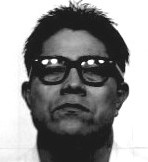
Ignacio Cuevas
Murderer Ervil LeBaron
Murderer · USA · 1972
Ervil Morrell LeBaron (1925 to August 16, 1981) was the leader of a polygamous…
35 victims
Ervil LeBaron
Murderer · USA · 1972
Ervil Morrell LeBaron (1925 to August 16, 1981) was the leader of a polygamous…
35 victims
 Marvin Gray
Murderer · USA · 1975
Marvin Gray was convicted killer who claimed responsibility for 23 slayings and…
23 victims
Marvin Gray
Murderer · USA · 1975
Marvin Gray was convicted killer who claimed responsibility for 23 slayings and…
23 victims
 Yahweh ben Yahweh
Murderer · USA · 1980
Yahweh ben Yahweh was born and legally named Hulon Mitchell Jr. (October 27, 19…
23 victims
Yahweh ben Yahweh
Murderer · USA · 1980
Yahweh ben Yahweh was born and legally named Hulon Mitchell Jr. (October 27, 19…
23 victims
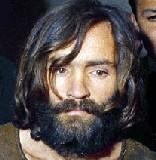 Charles Manson
Murderer · USA · 1969
Charles Milles Manson (born November 12, 1934) was an American criminal and mus…
9 victims
Charles Manson
Murderer · USA · 1969
Charles Milles Manson (born November 12, 1934) was an American criminal and mus…
9 victims
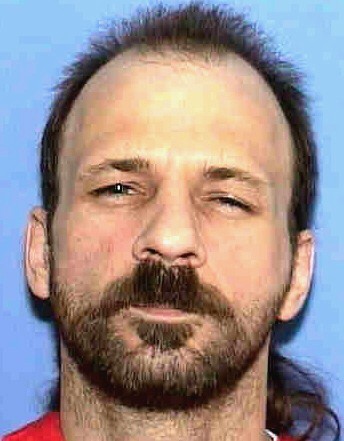 Tracy Hansen
Murderer · USA · 1987
Tracy Alan Hansen was convicted of gunning down Mississippi Highway Patrolman D…
1 victim
Tracy Hansen
Murderer · USA · 1987
Tracy Alan Hansen was convicted of gunning down Mississippi Highway Patrolman D…
1 victim
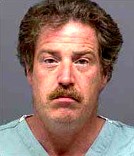 Ward Weaver
Murderer · USA · 2002
Ward Francis Weaver III was born April 6, 1963. His father abandoned the family…
2 victims
Ward Weaver
Murderer · USA · 2002
Ward Francis Weaver III was born April 6, 1963. His father abandoned the family…
2 victims
 William Baker
Mass murderer · USA · 2001
William D. Baker, 66, returned to the Navistar International engine plant in Me…
4 victims
William Baker
Mass murderer · USA · 2001
William D. Baker, 66, returned to the Navistar International engine plant in Me…
4 victims
 Carl Henry Blue
Murderer · USA · 1994
Carl Henry Blue was sentenced to death for capital murder involving Carmen Rich…
1 victim
Carl Henry Blue
Murderer · USA · 1994
Carl Henry Blue was sentenced to death for capital murder involving Carmen Rich…
1 victim
 Debra Hartmann
Murderer · USA · 1982
Debra Hartmann was sentenced to 22 years in prison for conspiracy connected to…
1 victim
Debra Hartmann
Murderer · USA · 1982
Debra Hartmann was sentenced to 22 years in prison for conspiracy connected to…
1 victim
- Gender
- male
- Country
- USA
- Location
- Harris County, Texas, USA
- Date of birth
- J uly 31, 1931
- Age at first offence
- 43
- Characteristics
- —
- Victim profile
- ??? / Julia Standley and Elizabeth Beseda (hostages)
- Method of murder
- Shooting
- Date(s) of murder
- ??? / July 24, 1974
- Years active
- 1974
- Date of arrest
- —
- Status
-
Executed
Executed by lethal injection in Texas on May 23, 1991
Case overview
Ignacio Cuevas was executed in Texas by lethal injection on May 23, 1991, for his part in a prison siege in 1974 at the Walls Unit of the Texas Department of Corrections in Huntsville, Texas. Cuevas was serving a 45-year term for murder at the time of an attempted prison break and was convicted three times of capital murder, with the first two convictions overturned on appeal. He was convicted under a Texas law that made all participants equally responsible for crimes committed in the same incident.
Cuevas’s last statement was: “I’m going to a beautiful place. O.K., Warden, roll ‘em.”
Timeline
- July 24, 1974 — Cuevas and two other inmates of Huntsville’s Walls Unit seized control of the prison library and held 16 hostages handcuffed and at gunpoint.
- August 3 — Cuevas and other inmates tried to escape behind a shield dubbed “The Trojan Horse,” with eight hostages handcuffed to the outside; officers intercepted them, streams of water smashed into the shield, and gunfire erupted. The chaplain was wounded; Cuevas and the hostage to whom he was handcuffed were unhurt.
- May 23, 1990 — The district court concluded that Cuevas had exhausted his state remedies and that Cuevas was not entitled to relief on any of the claims raised in his petition.
- May 13, 1991 — The Supreme Court denied certiorari.
- May 20, 1991 — The state trial judge denied a request for stay and a motion for an evidentiary hearing on competency to be executed and filed findings of fact and conclusions of law.
- May 21, 1991 — The Texas Court of Criminal Appeals denied Cuevas’s request based on the trial court’s findings and conclusions of law.
- May 22, 1991 — The United States District Court denied Cuevas’s petition for habeas relief.
- May 23, 1991 — Cuevas was executed by lethal injection in Texas.
Background
Ignacio Cuevas, age 59 (43), was described as the illiterate son of a Mexican peasant. He had an education level of 7th grade or less. Cuevas had an IQ test made on entering the Texas Department of Corrections reflecting an IQ of 70.
Cuevas was serving a 45-year term for murder at the time of the attempted prison break. In federal habeas proceedings, Cuevas challenged issues related to his capital trial and sentence.
The offence
Cuevas and two fellow inmates seized control of the prison library on July 24, 1974, holding 16 hostages handcuffed and at gunpoint.
On August 3, the three inmates tried to escape behind a shield, dubbed “The Trojan Horse,” made of chalkboards on wheels and law books. Eight hostages were handcuffed to the outside of the shield. Each of the convicts handcuffed himself to a woman hostage and took them inside the shield with a prison chaplain. As they rolled the shield down a ramp, they were intercepted by officers. High-powered streams of water smashed into the shield and gunfire erupted. The chaplain was wounded, but Cuevas and the hostage to whom he was handcuffed were unhurt.
Cuevas was convicted for the slaying of Julia Standley, a prison librarian who died of shots fired by another inmate. Elizabeth Beseda, a teacher in the prison, also died in the gunfire. Evidence showed the bullets that killed Standley came from the gun of one of the inmates who died trying to escape.
During the siege, accomplices Fred Gomez Carrasco and Rudolfo Dominguez were killed during a shootout 10 days later, along with hostages Julia Standley and Elizabeth Beseda.
Cuevas did not shoot either of the women, but was convicted under the Texas law that held all participants equally responsible.
Investigation
The federal habeas record included a statement of procedural history and the dismissal and appellate review of Cuevas’s petitions. The habeas appeal included discussion of the Supreme Court’s denial of certiorari, the execution schedule, and rulings on stay applications and certificates of probable cause.
Arrest
Ignacio Cuevas was indicted in 1974 for the felony offense of capital murder while attempting an escape from the Walls Unit of the Texas Department of Corrections in Huntsville, Texas.
Trial
Cuevas had three juries convicting him of capital murder, and each sentenced him to death.
The first two convictions and death sentences were reversed by the Texas Court of Criminal Appeals for errors in the jury selection process:
- Cuevas v. State, 575 S.W.2d 543 (Tex.Crim.App.1978)
- Cuevas v. State, 641 S.W.2d 558 (Tex.Crim.App.1982)
The Texas Court of Criminal Appeals affirmed the third conviction and sentence of death on July 1, 1987:
- Cuevas v. State, 742 S.W.2d 331 (Tex.Crim.App.1987), reh’g denied, Nov. 4, 1987
- cert. denied, 485 U.S. 1015
Cuevas was originally scheduled for execution on November 2, 1988. He petitioned the state trial court for a writ of habeas corpus, and that court changed the date of execution to February 1, 1989, to allow time for a response by the state, followed by new dates of April 5, 1989 and then May 9, 1989.
On April 14, 1989, the state trial court entered findings of fact and conclusions of law denying the requested relief. On April 28, 1989, the Court of Criminal Appeals affirmed.
Issues raised on direct appeal and federal habeas
Cuevas asserted the following grounds for relief on direct appeal, each again raised and denied in state court habeas and in an earlier federal petition:
- His rights under the Eighth and Fourteenth Amendments were violated when the trial court excused venire member Glenda Davis because of her expressed feelings regarding the death penalty. He argued the trial court erred in applying ex post facto the standards in Wainwright v. Will [Witt], 469 U.S. 412 (1985), rather than the standards in effect at the time of trial in Witherspoon v. Illinois, 391 U.S. 510 (1968), and Adams v. Texas, 448 U.S. 38 (1980).
- His Sixth, Eighth, and Fourteenth Amendment rights were violated when the trial court denied challenges for cause to certain other prospective jurors on the basis of bias or prejudice, pursuant to Enmund v. Florida, 458 U.S. 782 (1982), because they could not fairly consider mitigating evidence during the punishment phase, or because they would have held the state to a lower burden of proof on intent and future threat to society.
- He was deprived of the right to individualized sentencing in violation of the Sixth, Eighth, and Fourteenth Amendments due to the trial court’s refusal to give the jury a specific instruction that the law of the parties did not apply to the first punishment issue, which allowed the jury to consider the actions of others in assessing his punishment.
- The trial court misapplied state law in affirming the exclusion of certain venirepersons, in refusing to apply the rule of Green v. State, 682 S.W.2d 271 (Tex.Crim.App.1984), cert. denied, 470 U.S. 1034 (1985), and in applying the harmless error rule.
- There was insufficient evidence to support the jury’s finding that he deliberately caused the death of the deceased.
- The Texas capital sentencing scheme, as applied, violated his rights under the Eighth and Fourteenth Amendments by failing to provide the jury the requisite opportunity to consider mitigating evidence.
Cuevas appealed to the Fifth Circuit only the “refusal of the state trial court to instruct the jury at the penalty stage of the trial, that the Texas law of parties was inapplicable and ... that court’s rulings on challenges to various veniremen.”
The Fifth Circuit decision:
- Cuevas v. Collins, 922 F.2d 242 (5th Cir. 1991)
Execution scheduling and competency proceedings
Cuevas filed an application for writ of habeas corpus in the 177th District Court of Harris County, Texas, and requested a stay of execution and moved for an evidentiary hearing on competency to be executed.
On May 20, the state trial judge denied the request for stay and motion for evidentiary hearing and filed findings of fact and conclusions of law. The trial court found that there was no credible evidence demonstrating Cuevas was not competent to stand trial in 1983, that Cuevas failed to make a threshold showing that he did not know of his pending execution, comprehending that it was approaching, and failed to demonstrate that he did not understand the reasons for his sentence.
The trial court found that Cuevas’s evidence was either not mitigating or could have been fully considered by the jury within the scope of the special issues. It also found that Cuevas was “procedurally barred” from contending that the Texas sentencing scheme precluded the development of Cuevas’s alleged “mental retardation, organic brain damage, and childhood socioeconomic deprivations.” The trial court rejected the contention that Cuevas’s low IQ, assertedly an IQ of 70, was alone of mitigating value.
The trial court also concluded that “the mere fact that applicant’s assigned hostage was not killed, standing alone, has no mitigating value.”
The trial court further concluded that if the jury was persuaded that the hostage assigned to Cuevas during the prison breakout survived due to a decision on Cuevas’s part, the jury’s conclusion could be expressed in its answer to the special interrogatories.
On May 21, the Texas Court of Criminal Appeals denied Cuevas’s request on the basis of the findings and conclusions of the trial court.
On May 22, 1991, the United States District Court denied Cuevas’s petition for habeas relief.
Federal appellate decision (subsequent habeas petition and stay)
The Fifth Circuit considered a subsequent petition for writ of habeas corpus in a capital case. The case was:
- 932 F.2d 1078, Ignacio Cuevas, Petitioner-Appellant, v. James A. Collins, Director, Texas Department of Criminal Justice, Institutional Division, Respondent-Appellee
- No. 91-2510
- United States Court of Appeals, Fifth Circuit
- May 22, 1991
- Appeal from the United States District Court for the Southern District of Texas
- Before HIGGINBOTHAM, JONES, and BARKSDALE, Circuit Judges
- PER CURIAM
The Fifth Circuit:
- denied an application for stay of execution,
- vacated the district court’s grant of a certificate of probable cause as improvidently granted,
- affirmed the dismissal of the petition by the United States District Court.
It stated execution was scheduled for May 23, 1991, between midnight and sunrise.
Habeas claims addressed in the decision
Cuevas’s habeas petition raised issues not raised in the appeal from the dismissal of his first federal habeas petition.
He raised:
- A Penry claim that the sentencing jury was wrongly precluded from giving expression to his mitigating evidence, and that the development of his mitigating evidence was chilled by realization that such evidence might simultaneously erode his position on future dangerousness.
- A claim that, due to mental deficiencies, he was not competent to stand trial.
- A counsel-urged claim that Cuevas was now not competent to be executed.
The Fifth Circuit discussed writ abuse and procedural bar, including that:
- Cuevas’s Penry arguments were not presented in his earlier habeas petition and were treated as an abuse of the writ and barred.
- The portion related to chilling development of mitigation evidence was not preserved in the state trial court and was rejected based on absence of contemporaneous objection and procedural bar.
Cuevas also argued writ abuse was no bar because his counsel was ineffective in his first federal habeas proceedings. The Fifth Circuit stated the argument failed the prejudice prong of Strickland v. Washington, 466 U.S. 668 (1984).
The Fifth Circuit also addressed competency to stand trial and competency to be executed, referencing that the state trial judge concluded Cuevas had failed to make a threshold showing regarding knowledge of execution and understanding of the reasons for the sentence, and agreeing with those conclusions.
The Fifth Circuit concluded the application for stay of execution and certificate of probable cause was denied and affirmed the district court’s dismissal.
Sentencing
Cuevas received death sentences three times after three juries convicted him of capital murder.
The first two death sentences were overturned on appeal by the Texas Court of Criminal Appeals due to errors in the jury selection process.
The Texas Court of Criminal Appeals affirmed the third death sentence on July 1, 1987.
O.K., Warden, roll ‘em.”
Appeals
On May 13, 1991, the Supreme Court denied certiorari:
- Cuevas v. Collins, --- U.S. ----, 111 S.Ct. 2043, 114 L.Ed.2d 127 (1991)
In the final stages, a last-minute appeal was rejected by:
- United States District Judge Norman Black in Houston on Wednesday, and later by
- the United States Court of Appeals for the Fifth Circuit in New Orleans.
The Fifth Circuit ruled on May 22, 1991, and the application for stay of execution and certificate of probable cause was denied.
The Fifth Circuit affirmed the dismissal of the petition and reached the merits of the district court’s dismissal.
Outcome
Ignacio Cuevas was executed by lethal injection in Texas on May 23, 1991.
Aftermath
The execution occurred shortly after the climax of the 1974 siege at the Walls Unit of the Texas Department of Corrections in Huntsville. The imprisonment siege that involved taking 16 hostages was described as the nation’s longest prison siege. Accomplices Fred Gomez Carrasco and Rudolfo Dominguez were killed in a shootout 10 days later along with hostages Julia Standley and Elizabeth Beseda.
The Fifth Circuit record included extensive discussion of procedural history, including execution scheduling changes and multiple federal habeas petitions.
Other details
- Venue names and legal references in the federal habeas decision included Murray v. Carrier, McCleskey v. Zant, Selvage v. Lynaugh, Engle v. Isaac, Smith v. Murray, Dugger v. Adams, and Lowenfield v. Butler.
- Trial counsel included Will Gray.
- Cuevas’s sentencing strategy included presenting evidence of his low IQ, poor education, and inability to plan the escape and perceive its consequences.
- Cuevas relied on test scores from prison testing, including an IQ test made on entering the Texas Department of Corrections reflecting an IQ of 70.
- Cuevas offered testimony from one of the witnesses to the escape who said she thought Cuevas was “just plain dumb.”
- Cuevas offered drawings made while in prison.
- Will Gray argued at the sentencing phase that Cuevas had not acted deliberately within the meaning of the first interrogatories.
- Will Gray also argued that the drawings demonstrated “a spark of humanity.”
- The Fifth Circuit discussed his trial strategy as portraying himself as weak-minded and a follower of Carasco in the escape attempt.
Spotted an error, or have more information about this case?