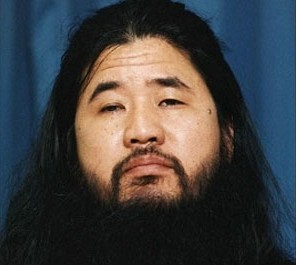
Shoko Asahara
Murderer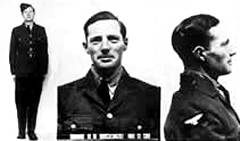 Gordon Cummins
Spree killer · United Kingdom · 1942
Gordon Frederick Cummins was called “The Count” due to his claims of noble birt…
4 victims
Gordon Cummins
Spree killer · United Kingdom · 1942
Gordon Frederick Cummins was called “The Count” due to his claims of noble birt…
4 victims
 Timothy Wayne Adams
Murderer · 2002
Timothy Wayne Adams was a Black male who was executed by lethal injection in Te…
1 victim
Timothy Wayne Adams
Murderer · 2002
Timothy Wayne Adams was a Black male who was executed by lethal injection in Te…
1 victim
 Melvin Turner
Murderer · USA · 1979
Melvin Turner was a parolee who got a job at the airport. Turner and Teague Ham…
2 victims
Melvin Turner
Murderer · USA · 1979
Melvin Turner was a parolee who got a job at the airport. Turner and Teague Ham…
2 victims
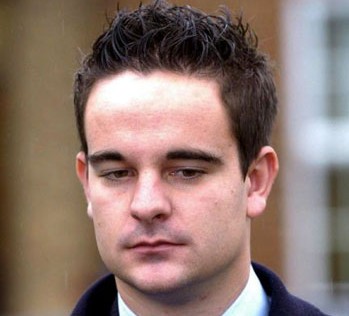 Benjamin Geen
Murderer · United Kingdom · 2004
Benjamin Geen was a former nurse. He worked at the accident and emergency depar…
2 victims
Benjamin Geen
Murderer · United Kingdom · 2004
Benjamin Geen was a former nurse. He worked at the accident and emergency depar…
2 victims
- Gender
- male
- Country
- Japan
- Location
- Tokyo, Japan
- Date of birth
- March 2, 1955
- Age at first offence
- 40
- Characteristics
- anarchist, angel of death, abuse, fugitive, murder-for-hire, torture
- Victim profile
- Men and women (subway commuters)
- Method of murder
- Poisoning ( Sarin gas )
- Date(s) of murder
- March 20, 1995
- Years active
- 1995
- Date of arrest
- —
- Status
-
Sentenced to death
Sentenced to death on February 27, 2004
Case identification
Shoko Asahara was the founder of Japan's controversial Buddhist religious group Aum Shinrikyo, now known as Aleph. He was born as Chizuo Matsumoto.
Background
Asahara was born into a large, poor family of tatami mat makers in Japan's remote Kumamoto Prefecture. Afflicted at birth with infantile glaucoma, he was blind in his left eye and only partially sighted in his right. As a child, he was enrolled in a school for the blind. Some anecdotes described him as a bully toward other students while in school.
He graduated in 1977 and turned to the study of acupuncture and Chinese medicine. He married in 1978.
His religious quest reportedly started during those early times when he was intensely working to support his family. He dedicated his free time to the study of various religious concepts, starting with Chinese astrology and Taoism. Later, he practiced Indian esoteric yoga and Buddhism. Relatively little was known about this period of his life.
Asahara’s attitude toward religion was not typical among Japanese people. While religion did not play a significant daily role in the lives of ordinary Japanese people, except on days of religious ceremonies such as funerals and weddings, his goal was to “achieve the ultimate enlightenment” mentioned in multiple ancient religious texts. He tried various schools, meditations and approaches to find an effective way to reach this enlightenment.
He pursued Agonshu, a Buddhist religious group which he joined in the early 1980s. The most serious of its religious practices was the practice of 1000 consecutive days of offerings. Those who offered money daily throughout this period were promised enlightenment. Despite financial hardships, Asahara completed the course, but enlightenment never came. He later recalled the story to his disciples to illustrate the importance of faith: despite serious doubts regarding the effectiveness of practice and the religious organization itself, he continued to the very last day.
During a period when he continued to live in a small one-room apartment in Tokyo’s Shibuya district with his wife and two daughters, he gained the support of his first, most loyal disciples. He started to teach them yoga. Financial hardship continued to constrain his efforts, as he refused to accept any payment for his coaching; this was described as contradictory to religious principles he had been taught—specifically, that only those who have achieved enlightenment may accept material offerings.
Founding and development of Aum Shinrikyo
In 1987, Asahara returned from a visit to India and explained to his disciples that he had attained his ultimate goal: enlightenment. His closest disciples offered him money, which he could now accept. He used this money to organize an intensive yoga seminar lasting several days and attracting many people interested in spiritual development. He coached the participants, and the group quickly started to grow.
At the time, there was no monastic order as such. That same year, Shoko Asahara officially changed his name and applied for government registration of the group Aum Shinrikyo. Authorities were initially reluctant to grant the status of a religious organization, but eventually granted legal recognition after an appeal in 1989. After this, the monastic order was established and many lay followers decided to join.
Doctrine and organization of Aum Shinrikyo
The doctrine of Aum Shinrikyo was based on original Buddhist sutras known as the Pali Canon. Besides the Pali Canon, Aum Shinrikyo used other texts such as Tibetan sutras, Yoga-Sutra by Patanjali, and Taoist scriptures. The sutras were studied together with comments written by Asahara himself.
The learning system (kyogaku system) had several stages: only those who completed a preliminary stage could advance to further steps if they successfully passed the examination.
Asahara wrote many religious books, including Beyond the Life and Death, Mahayana Sutra, and Initiation. His teachings stressed the importance of ascetic practice, similar to those of a Kargyudpa—a Tibetan Buddhist school. Modern technology, such as computers and CD players, could be used to complement ancient meditations.
To justify the achievement of a certain stage of religious practice, practitioners had to demonstrate signs such as cessation of oxygen consumption, reduction of heart activity, and changes in electromagnetic activity of the brain. Intensive practice retreat rooms were equipped with corresponding sensors.
He also wrote a variety of religious sermons and commentaries, and taught ideas about meditation posture and methods of raising a healthy child.
Aum’s followers were divided into two groups: lay practitioners and “samana” (monks and nuns) comprising a sangha (monastic order). Aum classified stages that followers could attain by religious practice, including Raja Yoga, Kundalini Yoga, Mahamudra (sometimes called Jnana Yoga), Mahayana Yoga, Astral Yoga, Causal Yoga, and the ultimate stage, the Ultimate Realization.
For a follower to be considered an attainer, specific conditions had to be met before senior sangha members recognized the follower, and advancement through stages depended on examinations.
The offence(s) and accusations
Tokyo subway sarin gas attack
On March 20, 1995, members of Aum attacked the Tokyo Subway System with the nerve gas Sarin. Twelve commuters died and thousands more suffered from after-effects.
After finding sufficient evidence, authorities accused Aum Shinrikyo of complicity in the attack and in a number of smaller-scale incidents. Tens of disciples were arrested, Aum’s facilities were raided, and a court issued an order for Shoko Asahara’s arrest. Asahara was discovered in a very small, completely isolated room of the building belonging to Aum, meditating.
Asahara faced 27 murder counts in 13 separate indictments. The prosecution argued that he “gave orders to attack the Tokyo Subway”, in order to “overthrow the government and install himself in the position of king of Japan”. Several years later, the prosecution introduced another theory—that the attacks were ordered to “divert police attention” (from Aum).
The prosecution also accused him of masterminding the Matsumoto incident and the Sakamoto family murder.
Other alleged crimes mentioned in the case record
The legal record also referenced accusations involving Matsumoto and the Sakamoto family murder. It stated that, according to Asahara’s defense team, a group of senior followers initiated the atrocities, keeping them a secret from Asahara. Some disciples testified against Asahara.
Trial
Asahara was found guilty on 13 of 17 charges (three were dropped) and sentenced to death by hanging on February 27, 2004.
The trial was referred to as the “trial of the century” by Japanese media.
Yoshihiro Yasuda, described as the most experienced attorney on Asahara’s defence team, was arrested and was unable to participate, though he was subsequently acquitted before the end of the trial. Human Rights Watch criticized Yasuda’s isolation. Asahara was defended solely by court-appointed lawyers.
Shortly after the beginning of the trial, Asahara cooperated with defence counsel and provided explanations regarding the doctrine of Aum Shinrikyo, aims of the organization, and other matters. Later, he resigned from the post of Aum Shinrikyo representative to defend the group from forceful dissolution. Since then, the case record described him as ceasing to speak even with his family members and spending his days in meditation. Media reports had referred to him “sitting with eyes closed” or “incoherently mumbling” during trial hearings.
The legal team appealed the ruling on the grounds that Asahara was mentally unfit, and psychiatric examinations were undertaken. During these examinations, conducted by a team of psychiatrists, Asahara began to talk. Although he answered just a few questions, his answers were precise and relevant, convincing the examiners that he was maintaining his silence out of free will (as stated in the report). The appeal was declined.
Court proceedings and behaviour described with quotations
On May 22, 1997, Asahara was ordered not to interrupt court proceedings after he stood up during his trial and shouted, “I'm Shoko Asahara.” He also kept muttering while witnesses testified.
On April 24, 1997, Asahara stated:
“I issued an order to stop (the attack) but was defeated (by my disciples)”
He also said that he “never ordered” the death of Tsutsumi Sakamoto. During the statement, he addressed the court “in Japanese and English” and continued muttering while a prosecutor read out a summary of indictments.
In the same session, he claimed he had already been found not guilty in 16 of the 17 charges, and claimed that an order for his release had already been handed down because he had been detained for more than one year since his arrest. After one of his lawyers asked him whether he recognized that his trial was still continuing, Asahara said in English:
“They say this is a court, but I think this is like a play.”
On February 14, 1997, during courtroom proceedings, the case record described him shouting:
“You are all hypnotized.”
It also recorded him telling the court:
“Therefore, let me leave.”
After being escorted out, he shouted:
“I am being raped and abused, everyone can hear that.”
On January 30, 1997, Asahara accused a former disciple, saying:
“Yoshihiro Inoue was the leader in this case. Why do other people have to be arrested as accomplices?”
On January 6, 1997, following a purification ritual workers began demolishing the former headquarters of the AUM Supreme Truth at base of Mt. Fuji.
On October 24, 1996, he was reportedly placed in protective custody after going berserk in his jail cell, where he repeatedly screamed and banged on his cell walls.
On October 18, 1996, the record described Asahara as saying:
“I feel bitter thinking about the suffering people would face by tormenting such a great soul as Inoue.”
It also recorded him telling Yoshihiro Inoue:
“I may appear to be mentally disturbed, but will you try to float from where you are?”
Asahara later asked that he be allowed to sit in the lotus position.
On April 6, 1997, the Tokyo District Court said it would cancel one of April’s four scheduled court appearances for Asahara.
On March 29, 1997, Kazuo Konya testified, saying that in an 1988 initiation ritual he paid $8,100 to drink their guru’s blood. The case record also said other former cult members testified they paid for blood, strands of Asahara’s hair, and his bath water, and some said they paid $2,400 for an intravenous injection of an unknown substance.
On March 20, 1997, a meeting at Kasumigaseki Station involved survivors and relatives who handed out 500 copies of a 44-page compilation of their memories.
On March 20, 1997, the record quoted Shizue Takahashi, saying:
“Those around us think it's history,” and: “We just want people to know that many of us are still tormented, and that it could have happened to anyone.”
Sentencing
Asahara was sentenced to death by hanging on February 27, 2004.
Appeals
His legal team appealed the death sentence, but the appeal has been declined.
The record further described that the Tokyo High Court postponed its decision on the appeal until results were obtained from a court-ordered psychiatric evaluation to determine whether he was fit to stand trial. It stated that in February 2006 the court ruled he was indeed fit to stand trial, and on March 27 rejected the appeal against his death sentence. It also stated that Japan’s Supreme Court upheld this decision on September 15, 2006. It added that Japan does not announce dates of executions, which are by hanging, in advance of them being carried out.
Outcome and aftermath
Post-sentence related details
After the Tokyo subway attack and trial, the record stated that Asahara ceased to speak even with family members and spent his days in meditation.
The record also discussed changes in the organization known as Aleph: it renamed itself in January (after stating earlier that it announced it renamed itself Aleph), and the record described that the group was monitored and subjected to surveillance under laws passed by Japan’s parliament. It stated that Aum was stripped of legal status and tax privileges as a religious organization, but that the government concluded it was no longer a threat and stopped short of using an anti-subversion law to ban it.
Compensation and civil proceedings mentioned
The record described a settlement in which a court-appointed trustee for the bankrupt Supreme Truth cult agreed to pay up to 1.12 billion yen in damages to survivors and families of those killed in the Tokyo subway gas attack, mediated by the Tokyo District Court. It stated the settlement wrapped up suits by 42 survivors and the families of the 12 people killed in the March 1995 attack.
It also described that on March 9, 2000, the Tokyo District Court ordered seven former senior members to pay compensation to 41 plaintiffs including some injured in the 1995 Tokyo subway trains gas attack, after plaintiffs sought a total of 668 million yen from 15 members.
Other details
Organisations and naming
Aum Shinrikyo was the former name of a controversial group now known as Aleph. The record stated that in 2000, after the attack, the organization changed its name to Aleph, described as the first letter of the Hebrew alphabet.
Statements about Sarin and its effects
The record included extensive information about sarin, including that it is an extremely toxic substance and that it is a nerve agent. It described that sarin is a colorless, odorless liquid at room temperature, and explained its biological effects as an irreversible cholinesterase inhibitor. It described symptoms following exposure, and stated that antidotes included atropine and pralidoxime.
Matsumoto incident and Sakamoto family murder context
The record described the Matsumoto incident as an occurrence of sarin poisoning in Matsumoto, Japan, in Nagano prefecture on the evening of June 27 and the morning of June 28, 1994, where seven people were killed and over 200 were harmed.
It described a Sakamoto family murder and said that Tsutsumi Sakamoto was murdered along with his wife and child by perpetrators who broke into his apartment. It stated that later it was established that the assassins had been members of Aum Shinrikyo at the time of the crime. It included details about the killing described as involving potassium chloride, injection, and strangulation, and stated that the bodies were hidden and were not found until the perpetrators revealed locations after capture.
It also stated that all of those implicated in the Sakamoto murders received death sentences and that Asahara continued to deny involvement.
Listed quote from a prosecutor
Deputy chief prosecutor Kunihiro Matsuo told a news conference on December 3, 1997:
“The prolongation of Asahara's trials would sharply amplify public distrust in Japan's criminal justice,” and: “This is also an extremely serious issue in terms of maintaining order. The prosecutors office said it would drastically reduce the number of people listed in the indictments as "injured" in the two separate gas attacks so that they could shorten court proceedings. The number of victims on whom prosecutors would need to present evidence and examine as witnesses would be slashed to only 18 from 3,938, thus cutting the length of the trial by up to eight years.”
Defence and admission described with testimony
Kiyohide Hayakawa testified, saying:
“There was no person other than Asahara who could order 'poa,' for he was thought of as the Buddha.”
Kazuo Konya testified that in an initiation ritual he paid $8,100 to drink their guru’s blood, and other testimonies referenced payments for blood, strands of Asahara’s hair and his bath water, and an intravenous injection of an unknown substance.
Spotted an error, or have more information about this case?