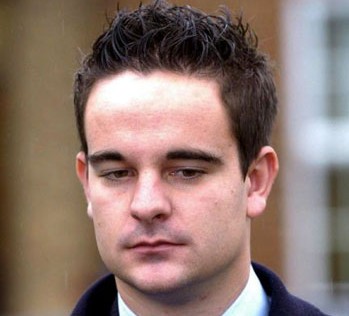
Benjamin Geen
Murderer Dale Cregan
Murderer · United Kingdom · 2012
Dale Christopher Cregan (born 6 June 1983) was convicted in the United Kingdom…
4 victims
Dale Cregan
Murderer · United Kingdom · 2012
Dale Christopher Cregan (born 6 June 1983) was convicted in the United Kingdom…
4 victims
 Rahan Arshad
Murderer · United Kingdom · 2006
Rahan Arshad (born 1970) was a taxi driver. He lived at Turves Road, Cheadle Hu…
4 victims
Rahan Arshad
Murderer · United Kingdom · 2006
Rahan Arshad (born 1970) was a taxi driver. He lived at Turves Road, Cheadle Hu…
4 victims
 Anthony Smith
Murderer · United Kingdom · 2001
Anthony Smith was a former sergeant in the Coldstream Guards. He had left the C…
3 victims
Anthony Smith
Murderer · United Kingdom · 2001
Anthony Smith was a former sergeant in the Coldstream Guards. He had left the C…
3 victims
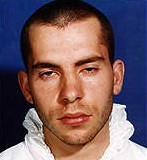 David John Copeland
Murderer · United Kingdom · 1999
David John Copeland was born in Isleworth, in the London Borough of Hounslow, a…
3 victims
David John Copeland
Murderer · United Kingdom · 1999
David John Copeland was born in Isleworth, in the London Borough of Hounslow, a…
3 victims
 Karl Bluestone
Murderer · United Kingdom · 2001
Karl Bluestone was a Gravesend police officer. · 28 August 2001 — Karl Blueston…
3 victims
Karl Bluestone
Murderer · United Kingdom · 2001
Karl Bluestone was a Gravesend police officer. · 28 August 2001 — Karl Blueston…
3 victims
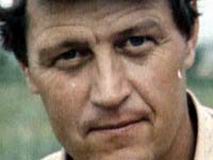 Anatoly Slivko
Serial killer · Russia · 1964
Anatoly Yelemianovich Slivko (Russian: Анатолий Емельянович Сливко; December 28…
7 victims
Anatoly Slivko
Serial killer · Russia · 1964
Anatoly Yelemianovich Slivko (Russian: Анатолий Емельянович Сливко; December 28…
7 victims
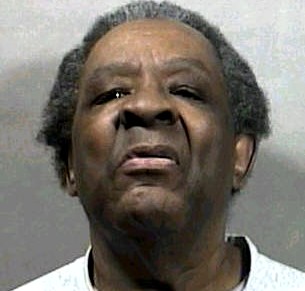 Leroy Snyder
Serial killer · USA · 1969
Leroy Snyder was a 38-year-old junkyard laborer. He was charged with the murder…
7 victims
Leroy Snyder
Serial killer · USA · 1969
Leroy Snyder was a 38-year-old junkyard laborer. He was charged with the murder…
7 victims
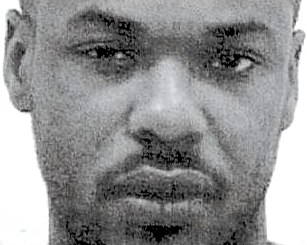 Kevin Cardwell
Murderer · USA · 1991
Kevin DeWayne Cardwell was executed by lethal injection in Virginia on December…
1 victim
Kevin Cardwell
Murderer · USA · 1991
Kevin DeWayne Cardwell was executed by lethal injection in Virginia on December…
1 victim
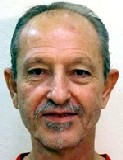 James Hunt
Murderer · USA · 2004
James Hunt was sentenced to death on July 28, 2006 in Floyd County for Burglary…
1 victim
James Hunt
Murderer · USA · 2004
James Hunt was sentenced to death on July 28, 2006 in Floyd County for Burglary…
1 victim
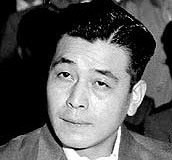 Masaru Okunishi
Mass murderer · Japan · 1961
Masaru Okunishi was a farmer from Kuzuo, a remote mountain village in Nabari ci…
5 victims
Masaru Okunishi
Mass murderer · Japan · 1961
Masaru Okunishi was a farmer from Kuzuo, a remote mountain village in Nabari ci…
5 victims
- Gender
- male
- Country
- United Kingdom
- Location
- Banbury, Oxfordshire, England, United Kingdom
- Date of birth
- 1980
- Age at first offence
- 24
- Characteristics
- poisoner, nurse
- Victim profile
- David Onley, 77 / Anthony Bateman, 67 (patients)
- Method of murder
- Poisoning ( toxic doses of drugs)
- Date(s) of murder
- January 2004
- Years active
- 2004
- Date of arrest
- February 9, 2004
- Status
-
Imprisoned
Sentenced to 30 years in prison; convicted of murdering two patients and causing grievous bodily harm to 15 other patients while working at Horton General Hospital in Banbury, Oxfordshire; conviction held at sentencing in May 2006
Background
Benjamin Geen was a former nurse. He worked at the accident and emergency department at Horton General Hospital in Banbury, Oxfordshire.
The offence
Between December 2003 and February 2004, at least 17 patients suffered respiratory arrests for then-unknown reasons while Geen was on duty. Fifteen patients recovered soon after developing breathing difficulties. Two patients died in January 2004: Anthony Bateman and David Onley.
At trial, the Oxford Crown Court heard that Geen purposely used potentially lethal doses of drugs to cause patients to stop breathing so he could enjoy the thrill of resuscitating them. The jury also heard that in the course of a nine-week period Geen deliberately administered drugs or other substances to patients in order to make them collapse so he could enjoy the excitement of trying to revive them. The offences involved unauthorised lethal doses of drugs that caused patients to stop breathing, which then required immediate resuscitation.
The court heard that Geen looked “elated” as his patients went into respiratory arrest and even “boasted” to one doctor: “There is always a resuscitation when I'm on duty.”
Geen denied murder charges involving David Onley and Anthony Bateman, and he also denied 18 charges of causing grievous bodily harm with intent to 18 patients between December 4 2003 and February 5 2004.
Investigation
Initially, doctors could not explain the abnormally high level of respiratory arrests between December 2003 and February 2004. Suspicion fell on Geen when it emerged that the incidents had taken place while he was on duty.
Detective Superintendent Andy Taylor, who led the murder investigation, said:
"Ben Geen abused this position of trust. We may never know what motivated him to select and poison his victims. It is clear that he wanted to be the centre of attention and in order to fuel this desire, brought some of his patients to the brink of death and coldly murdered two of them."
Arrest
Geen was arrested at the hospital on 9 February 2004. A syringe filled with a potentially lethal muscle relaxant was discovered in his pocket.
Trial
At trial, prosecutor Michael Austin-Smith QC told the jury that Geen purposely administered potentially lethal doses of drugs to cause patients to stop breathing so he could enjoy the thrill of resuscitating them.
The prosecution submission included that the defendant loved “these moments of drama.” Prosecutor Michael Austin-Smith QC told the jury:
"In the course of a nine-week period, he deliberately administered drugs or other substances to patients in order to make them collapse so he could enjoy the excitement of trying to revive them," and: "It's the prosecution's submission that this defendant loved these moments of drama. As he was later to tell police in interview, he hated the dullness of the minor side (non-critical section of A&E). He preferred to be where the action is." and: "People were at death's door. Most were lucky - two were not."
Prosecutors said Geen derived a thrill from taking patients to the brink of death so he could revive them. The court heard that he used different methods to send his victims to the point of death including overdoses of insulin and sedatives. The court also heard that the drugs used included insulin, muscle relaxants, sedatives, and that midazolam (a sedative) and vecuronium (a muscle relaxant) appeared in the urine sample of patient Timothy Stubbs; those drugs had not been prescribed by the doctors at the hospital.
The court heard about “Death's door” incidents involving patients and that most survived.
A patient identified as Robert Robinson was admitted to hospital after he drank a bottle of gin and took painkillers. He stopped breathing when he was given an anaesthetic which he did not need, the court heard. The court heard how Geen looked “elated” as his patients went into respiratory arrest and that he “boasted” to one doctor.
Geen was convicted in April 2006.
Sentencing
On 10 May 2006, Benjamin Geen was jailed for 30 years. He was given two life sentences at Oxford Crown Court for the murders and eight years for the assaults, with the sentences to run concurrently. The trial judge recommended that he should spend at least 30 years in prison before being considered for parole.
The jury convicted Geen of:
- murdering two of his patients (David Onley and Anthony Bateman), and
- causing grievous bodily harm to 15 other patients who recovered after they stopped breathing.
Police spokesperson Kate Smith said:
"No sentence will be long enough for what Geen has done,"
The sentencing coverage stated that the recommendation was likely to keep him behind bars until at least 2035.
Outcome
Benjamin Geen was convicted of murdering two patients and causing grievous bodily harm to a further 15 patients at Horton General Hospital in Oxfordshire, for offences committed between December 2003 and February 2004. He was sentenced to 30 years in prison.
Other details
David Onley was 77 and was from Deddington; he died on 21 January 2004. Anthony Bateman was 66 (and was from Banbury) and died on 6 January 2004. Benjamin Geen was aged 25 when convicted and sentenced, and he was described as a lieutenant in the Territorial Army.
Spotted an error, or have more information about this case?