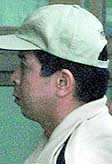
Yasutoshi Matsuda
Murderer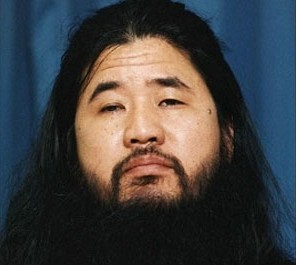 Shoko Asahara
Murderer · Japan · 1995
Shoko Asahara was the founder of Japan's controversial Buddhist religious group…
12 victims
Shoko Asahara
Murderer · Japan · 1995
Shoko Asahara was the founder of Japan's controversial Buddhist religious group…
12 victims
 Masahiro Kanagawa
Murderer · Japan · 2008
Masahiro Kanagawa (金川 真大; Kanagawa Masahiro; born 1983) was a Japanese man. · M…
2 victims
Masahiro Kanagawa
Murderer · Japan · 2008
Masahiro Kanagawa (金川 真大; Kanagawa Masahiro; born 1983) was a Japanese man. · M…
2 victims
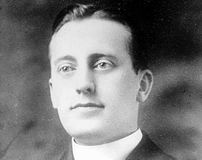 Hans Schmidt
Murderer · USA · 1913
Hans Schmidt was a Roman Catholic priest and was ordained in Germany in 1904. H…
1 victim
Hans Schmidt
Murderer · USA · 1913
Hans Schmidt was a Roman Catholic priest and was ordained in Germany in 1904. H…
1 victim
 Nelson Gongora
Murderer · USA · 2001
Nelson Gongora Nelson Gongora was sentenced to death on June 4, 2003. · April 7…
1 victim
Nelson Gongora
Murderer · USA · 2001
Nelson Gongora Nelson Gongora was sentenced to death on June 4, 2003. · April 7…
1 victim
 Harold Wayne Nichols
Murderer · USA · 1988
Defendant: Harold Wayne Nichols Victim: Karen Pulley (age 21) Place: Chattanoog…
1 victim
Harold Wayne Nichols
Murderer · USA · 1988
Defendant: Harold Wayne Nichols Victim: Karen Pulley (age 21) Place: Chattanoog…
1 victim
 Sara María Aldrete
Serial killer · Mexico · 1987
Sara María Aldrete (born September 6, 1964 in Matamoros, Tamaulipas, Mexico) wa…
15 victims
Sara María Aldrete
Serial killer · Mexico · 1987
Sara María Aldrete (born September 6, 1964 in Matamoros, Tamaulipas, Mexico) wa…
15 victims
 Melissa Memmer
Murderer · USA · 2003
Melissa Memmer — defendant; former Shelby Township caregiver; she admitted disc…
1 victim
Melissa Memmer
Murderer · USA · 2003
Melissa Memmer — defendant; former Shelby Township caregiver; she admitted disc…
1 victim
 Flor Contemplacion
Murderer · Singapore · 1991
Flor R. Contemplacion (January 1953 - March 17, 1995) was a Filipina domestic w…
2 victims
Flor Contemplacion
Murderer · Singapore · 1991
Flor R. Contemplacion (January 1953 - March 17, 1995) was a Filipina domestic w…
2 victims
- Gender
- male
- Country
- Japan
- Location
- Miyazaki Prefecture, Japan
- Date of birth
- 1967
- Age at first offence
- 34
- Characteristics
- robbery
- Victim profile
- Toshiko Hashida, 53 (bar operator) / Morie Manako, 82 (cigarette shop operator)
- Method of murder
- Stabbing with knife - Strangulation
- Date(s) of murder
- November-December 2001
- Years active
- 2001
- Date of arrest
- —
- Status
-
Sentenced to death
Sentenced to death in 2002; Supreme Court upheld the death sentence in dismissing Yasutoshi Matsuda’s appeal.
Case record: Yasutoshi Matsuda
Background
Yasutoshi Matsuda was a jobless man. He was 34 at the time of the murders described in court and prosecution accounts. He was later 38 when the Supreme Court dismissed his appeal.
The offence
Matsuda killed two women who lived alone in Miyazaki Prefecture.
He strangled Toshiko Hashida, 53, a bar operator in Saito, Miyazaki Prefecture, to death. After strangling her, he stole some 37,000 yen, described by the prosecution as taken to cover his entertainment expenses. One account also described that he stabbed Hashida, and that after strangling her he stole 40,000 yen.
Matsuda also suffocated Morie Manako, 82, a cigarette shop operator from Kunitomi, Miyazaki Prefecture, to death. After suffocating her, he stole some 630,000 yen.
Investigation
No specific investigation steps were described in the provided material.
Trial
Miyazaki District Court convicted Yasutoshi Matsuda of killing Toshiko Hashida and Morie Manako in November and December 2001.
At the Miyazaki District Court, prosecutors demanded the death penalty, describing the defendant’s crimes as “cruel, brutal and inhuman,” and arguing: “The defendant's crimes were cruel, brutal and inhuman, and his criminal responsibility is grave. It's impossible to rehabilitate him,” a prosecutor said.
Presiding Judge Heinai Komatsu sentenced Matsuda to death. Komatsu said:
“The crime was calculated and cold-blooded, and extremely malicious,” Komatsu said.
“Taking two lives was a grave and serious act.
“Matsuda prepared a method that was certain to kill his victims, and after the murders he went on an extravagant spree with the money he had stolen. With his anti-social character, there is no room for rehabilitation.”
Lawyers for Matsuda argued he should be given life imprisonment rather than the death penalty, and they said his upbringing had been poor and had marred his character, leaving him with a lack of perception. The court rejected that argument, stating that even when taking his upbringing into consideration, the mercilessness with which the crime was carried out could result in nothing but the death penalty.
Sentencing
Matsuda received the death sentence from the Miyazaki District Court.
Appeals
Lawyers planned to appeal the death sentence after it was handed down.
The Supreme Court upheld the death sentence in dismissing an appeal by Yasutoshi Matsuda. The Supreme Court described Matsuda’s crimes as involving “firm intention” of killing the victims and being “premeditated,” and it dismissed the appeal.
Justice Kohei Nasu, who presided over the top court's No. 3 Petty Bench, said there was no room for leniency. Nasu stated:
“firm intention”
and that the crimes were “premeditated.”
Matsuda’s lawyers had argued during the trial in December that the death penalty should be avoided because he “at first had no intention of murdering” in either case.
Nasu said the motive was to get money to live on or for entertainment and added:
“Even taking into account that he has repented, the death penalty is unavoidable,” Nasu said.
A separate Supreme Court decision was also referenced: “A week ago, the top court upheld the death penalty for three men over a 1994-1996 serial murder case.”
Outcome
The Supreme Court dismissed Matsuda’s appeal and upheld the death sentence. The number of death row inmates was described as soon bringing the total to 99 if the death sentences were finalized after remaining technical legal procedures.
Other details
Matsuda entered the home of 53-year-old Hashida on Nov. 25, 2001, and stabbed her, according to the ruling. After strangling her, he stole 40,000 yen, according to the ruling.
Matsuda entered the home of 82-year-old Manako on Dec. 7, and strangled her before making off with 630,000 yen, according to the ruling.
Matsuda was described as strangling Hashida to death “on Nov. 26,” in one prosecution account, and as having committed the murders in November and December 2001 in the conviction account.

Spotted an error, or have more information about this case?