Scott Lynn Christenson
Murderer Brian Kevin Rosenfeld
Murderer · USA · 1985
Brian Kevin Rosenfeld Brian Kevin Rosenfeld was sentenced to three concurrent l…
23 victims
Brian Kevin Rosenfeld
Murderer · USA · 1985
Brian Kevin Rosenfeld Brian Kevin Rosenfeld was sentenced to three concurrent l…
23 victims
 Yahweh ben Yahweh
Murderer · USA · 1980
Yahweh ben Yahweh was born and legally named Hulon Mitchell Jr. (October 27, 19…
23 victims
Yahweh ben Yahweh
Murderer · USA · 1980
Yahweh ben Yahweh was born and legally named Hulon Mitchell Jr. (October 27, 19…
23 victims
 Russell Ellwood
Murderer · USA · 1991
Russell Ellwood was a former taxi driver. Authorities suspected him of killing…
20 victims
Russell Ellwood
Murderer · USA · 1991
Russell Ellwood was a former taxi driver. Authorities suspected him of killing…
20 victims
 Robert Martines Perez
Murderer · USA · 1994
Name: Robert Martines Perez · Other name used in proceedings: Robert Martinez P…
15 victims
Robert Martines Perez
Murderer · USA · 1994
Name: Robert Martines Perez · Other name used in proceedings: Robert Martinez P…
15 victims
 Sheila Graham-Trott
Murderer · USA · 2010
Sheila Graham-Trott was convicted and sentenced to life in prison for first-deg…
1 victim
Sheila Graham-Trott
Murderer · USA · 2010
Sheila Graham-Trott was convicted and sentenced to life in prison for first-deg…
1 victim
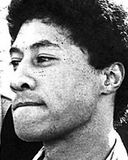 Raymond Ratima
Mass murderer · New Zealand · 1992
Raymond Wahia Ratima was an unemployed shearer and was aged 25. At the beginnin…
7 victims
Raymond Ratima
Mass murderer · New Zealand · 1992
Raymond Wahia Ratima was an unemployed shearer and was aged 25. At the beginnin…
7 victims
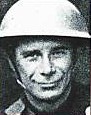 Horace Manton
Murderer · United Kingdom · 1943
Horace William Manton was convicted of the murder of his wife. He was arrested…
1 victim
Horace Manton
Murderer · United Kingdom · 1943
Horace William Manton was convicted of the murder of his wife. He was arrested…
1 victim
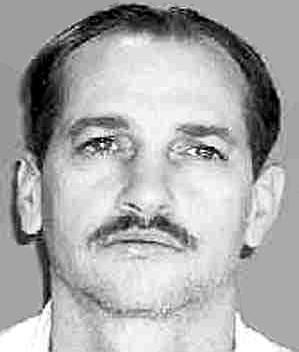 Michael Braae
Murderer · USA · 1997
Michael Braae was also known as “Cowboy Mike” and was described as a former cou…
4 victims
Michael Braae
Murderer · USA · 1997
Michael Braae was also known as “Cowboy Mike” and was described as a former cou…
4 victims
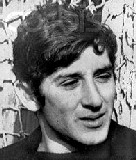 Milos Milosevic
Murderer · USA · 1966
Milos Milosevic (Serbian: Miloš Milošević) (July 1, 1941 – January 30, 1966) wa…
1 victim
Milos Milosevic
Murderer · USA · 1966
Milos Milosevic (Serbian: Miloš Milošević) (July 1, 1941 – January 30, 1966) wa…
1 victim
 Chen Zhaofeng
Murderer · China · 2001
Chen Zhaofeng was born in Mudanjiang, a city in Northeast China’s Heilongjiang…
2 victims
Chen Zhaofeng
Murderer · China · 2001
Chen Zhaofeng was born in Mudanjiang, a city in Northeast China’s Heilongjiang…
2 victims
- Gender
- male
- Country
- USA
- Location
- Harris County, Georgia, USA
- Date of birth
- 1971
- Age at first offence
- 18
- Characteristics
- robbery
- Victim profile
- Albert L. Oliver III, 31
- Method of murder
- Shooting
- Date(s) of murder
- July 6, 1989
- Years active
- 1989
- Date of arrest
- Next day
- Status
-
Died in custody
Sentenced to death in March 1990; died in prison on May 1, 2005
People
Scott Lynn Christenson (defendant)
Albert L. Oliver III (victim, 31)
Peggy Chapman (Corrections Department spokeswoman)
Charles Exum (Lowndes County Coroner)
Richard A. Bunn (trial attorney; continued as appellate counsel through exhaustion of direct appeals)
William L. Kirby II (trial attorney)
Dr. Karen Bailey-Smith (state psychologist)
Detective Cox (Columbus Police Department; witness in aggravation)
Jimmy D. Berry (for appellee)
J. Gray Conger (District Attorney, Chattahoochee Circuit; for appellant)
Thurbert E. Baker (Attorney General; for appellant)
Susan V. Boleyn (Senior Assistant Attorney General; for appellant)
Paige R. Whitaker (Assistant Attorney General; for appellant)
Justice Foster (from Tallapoosa Circuit; before whom proceedings occurred)
Hunstein and Carley, JJ. (Justices who dissented in Case No. S97A1435)
CARLEY, Justice (wrote a concurring in part and dissenting in part opinion)
THOMPSON, Justice (wrote the majority opinion)
Background
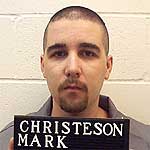
Scott Lynn Christenson was convicted of murder and armed robbery in 1990, and sentenced to death. The conviction and death sentence were affirmed, and later habeas corpus proceedings vacated the death sentence.
Christenson was last seen with Albert L. Oliver III in Oliver’s Toyota sports utility vehicle on July 6, 1989, with Christenson in the passenger’s seat. Oliver’s body, with five gunshot wounds, was found later that day.
Christenson was arrested for stealing gas in Lonoke, Arkansas, on July 7, 1989. He was alone and driving Oliver’s vehicle. Bloodstains were found in the vehicle and on some of Christenson’s clothes.
After Oliver’s body was discovered near Columbus, Georgia, Christenson admitted to killing Oliver in four separate statements: a written statement, two audiotaped statements, and a videotaped statement that included Christenson’s reenactment of the crime. According to his statements, Christenson hitched a ride with Oliver (with whom he was acquainted), tried to take his vehicle at gunpoint, struggled with Oliver for the weapon, and shot Oliver and dumped his body in a rural area.
Christenson had a juvenile record of burglaries and thefts and adult convictions for forgery, burglary and car thefts.
Christenson’s death sentence was vacated because trial counsel had been ineffective in the preparation for and the conduct of the sentencing phase.
Timeline
- July 6, 1989 — Albert L. Oliver III was last seen driving his Toyota sports utility vehicle with Scott Lynn Christenson in the passenger’s seat.
- July 6, 1989 — Oliver’s body, with five gunshot wounds, was found later that day.
- July 7, 1989 — Christenson was arrested in Lonoke, Arkansas, for stealing gas while alone and driving Oliver’s vehicle.
- March 1990 — Christenson was sentenced to death in Harris County.
- March 16, 1998 — Decided (habeas corpus appeal opinion).
- April 1, 1998 — Reconsideration denied.
- May 1, 2005 — Christenson died in prison after collapsing at Valdosta State Prison.
- May 10, 2005 — Associated Press reported Christenson’s death.
Investigation
The evidence at trial showed Oliver was last seen driving his Toyota sports utility vehicle on July 6, 1989, with Christenson in the passenger’s seat.
After Christenson admitted to the killing in multiple statements and after Oliver’s body was discovered near Columbus, Georgia, the evidence included bloodstains found in Oliver’s vehicle and on some of Christenson’s clothes.
Arrest and pretrial events
Christenson was arrested for stealing gas in Lonoke, Arkansas, on July 7, 1989, while he was alone and driving Oliver’s vehicle.
In the habeas proceedings, the trial court’s rulings included admissions of Christenson’s custodial statements, as discussed in the related Georgia Supreme Court decisions.
Trial
Christenson’s trial took place in March 1990.
Trial counsel appointment and division of labor
- In July 1989, shortly after Christenson’s arrest, the trial court appointed Mr. Richard A. Bunn and Mr. William L. Kirby II to represent the defendant.
- Trial counsel determined that, based on the evidence, there would likely be a conviction, and they treated the penalty phase as crucial.
- Mr. Kirby was primarily responsible for the guilt/innocence phase, and Mr. Bunn was primarily responsible for the penalty phase.
- Trial counsel had approximately eight months from appointment until trial but conducted little preparation and investigation until the eve of trial.
Motions and preparation
- In October 1989, trial counsel filed motions relating to guilt/innocence issues, including a motion to hire an investigator and a motion to suppress the defendant’s statements.
- The trial court denied the motion for an investigator in February 1990.
- After this denial, trial counsel traveled to Arkansas to interview law enforcement witnesses to Christenson’s arrest and initial statements; the trip took place less than two weeks before trial and after the Jackson-Denno hearing on admissibility of Christenson’s statements.
- Although trial counsel filed the motion to suppress statements in October 1989, they did nothing to obtain a hearing until February 1990.
- At the February 1990 hearing, counsel filed a motion to continue because they had not had an opportunity to get to Arkansas and interview witnesses in that state; the trial court denied the motion and conducted the hearing.
- The trial court delayed ruling on admissibility until the business day before trial, and at the final pretrial conference ruled that the statements were admissible.
- After counsel informed the trial court they were not prepared to proceed, the trial court treated this as a motion for continuance and denied it.
Guilt/innocence phase
- Mr. Kirby tried the guilt/innocence portion.
- In opening statement, Mr. Kirby told the jury the defense would show that Oliver had been a drug-dealing homosexual who initiated the events leading to his death by attempting to trade sex for drugs.
- As trial progressed, trial counsel had virtually no evidence to support this characterization.
- The only “evidence” cited included condoms found in Oliver’s sports utility vehicle, some friends who were teenage males, and that Oliver was unmarried, 31 years old, and lived alone.
- No evidence supported the defense theory of a drug deal gone bad because no drugs or drug residue were found in Oliver’s truck or apartment.
- Despite the lack of evidentiary support, the theme was persisted with in closing argument, including telling the jury to “come to what conclusions you may.”
- The jury convicted Christenson of malice murder and armed robbery.
Penalty phase
In the penalty phase, the State introduced one witness in aggravation: Detective Cox of the Columbus Police Department.
Detective Cox testified that while transporting Christenson back to Columbus from Jackson, Tennessee, where Christenson had been arrested after stealing a truck in Georgia, Christenson told him that he “was going to rob the individual and get the keys [to the truck] and that he would kill [the owner] if he didn't get the keys.”
Detective Cox stated this statement did not appear in the report he completed after he returned to Georgia with Christenson.
A year later, and one day after Christenson was arrested for Oliver’s murder, Detective Cox remembered the statement, prepared a supplemental report, and testified from the supplemental report.
Trial counsel failed to impeach Detective Cox with the first report that lacked the statement; the unchallenged statement about intending to kill a truck owner during a vehicle theft was allowed in.
Trial counsel presented 19 witnesses and 27 exhibits as mitigation evidence.
The witnesses included Christenson’s parents, grandfather, aunts, uncles, cousins, and Little League baseball coaches.
Trial counsel testified the strategy was to “humanize” Christenson by preparing witnesses to relate stories about “how Scott's childhood was a happy and normal childhood.”
Witnesses generally testified Christenson had been a good child until his beloved grandmother died when Christenson was 14, after which he became withdrawn, his grades dropped, and he began to get into trouble due to drugs.
Mitigation exhibits included baseball trophies and family photographs.
A key defense exhibit contradicted family witnesses: school records showed Christenson’s grades began to plunge two years before his grandmother’s death.
Some mitigation witnesses were contacted until the week before trial; some were telephoned the night before testifying, resulting in inadequate preparation for cross-examination.
The DA questioned witnesses about nearly two dozen specific property offenses, most from Christenson’s juvenile years.
Several witnesses admitted they had heard Christenson had been in trouble but did not know of his extensive juvenile and criminal record.
Little League baseball coaches admitted they had had almost no contact with Christenson since he was an adolescent.
Trial counsel admitted at the habeas hearing they were not aware of the extent of Christenson’s juvenile record and mistakenly believed specific juvenile offenses could not be referred to on cross-examination.
Some mitigation witnesses also testified that Christenson had many opportunities but chose to squander them, which matched the prosecution theme in closing argument that Christenson became a career criminal and a drug addict.
The DA argued that the last of Oliver’s five shots was fatal and that Christenson had the ability to stop short of killing the victim; trial counsel did not object despite testimony that there was no accurate way to determine the order of the shots.
The DA argued Christenson’s lack of remorse and described him as “fish-eyed” during trial.
Trial counsel presented this strategy in closing, including addressing the jury’s role after counsel’s opening statement.
Mr. Bunn argued for the defense and stated:
We don't know what went wrong with Scott. We don't know what happened to Scott along the way. . . . most of his prior offenses were juvenile offenses. The prior offenses were mostly burglaries and thefts (including auto theft). We don't know what happened to Scott after the age of 14. When I look at Scott Christenson, I wonder just like everyone else what happened. I don't know what happened. . . . I can't tell you how a boy with his potential ended up in this courtroom convicted of murder and armed robbery. When I look at his life, I can't explain it.
Mr. Bunn stated Christenson had “no excuses” and told the jury “I'm not telling you that Scott deserves mercy” and asked for mercy only for Christenson’s family.
The jury returned a recommendation of death.
Verdict
- The jury convicted Christenson of malice murder and armed robbery and later recommended death in the penalty phase.
Sentencing
Christenson was sentenced to death in March 1990 in Harris County.
Appeals
The Georgia Supreme Court affirmed Christenson’s convictions in Christenson v. State, 261 Ga. 80 (402 SE2d 41) (1991) (“Christenson I”) and remanded to determine if the State had a good faith basis for cross-examination during the sentencing phase and to conduct a Jackson-Denno hearing on the admissibility of a custodial statement introduced in the sentencing phase.
The United States Supreme Court denied Christenson’s petition for certiorari in Christenson v. Georgia, 502 U. S. 855 (112 SC 166, 116 LE2d 130) (1991).
In Christenson v. State, 262 Ga. 638 (423 SE2d 252) (1992) (“Christenson II”), the Georgia Supreme Court affirmed Christenson’s death sentence. Christenson’s petition for certiorari was again denied in Christenson v. Georgia, 508 U. S. 927 (113 SC 2388, 124 LE2d 291) (1993).
In 1995, Christenson filed this habeas action, raising numerous claims including ineffective assistance of counsel.
The habeas court:
- ruled many of Christenson’s claims were not subject to habeas review because they had been addressed on direct appeal, and that many other claims were procedurally defaulted; and
- vacated Christenson’s death sentence because trial counsel had been ineffective in preparation for and conduct of the sentencing phase.
The State appealed the habeas court’s vacation of the sentence (Case No. S97A1435), and Christenson cross-appealed the habeas court’s affirmance of conviction (Case No. S97X1438).
The Georgia Supreme Court affirmed the habeas court:
- holding that Christenson could not meet Strickland prejudice regarding convictions; and
- affirming the habeas court’s vacation of the death sentence due to ineffective assistance in the sentencing phase.
Hunstein and Carley, JJ. dissented to the judgment in Case No. S97A1435.
CARLEY, Justice concurred in part and dissented in part, stating he concurred in Case No. S97X1438 affirming denial of habeas relief as to convictions, but dissented regarding vacating the death sentence for the murder.
CARLEY, Justice included quotations from Strickland v. Washington:
“it is all too easy for a court, examining counsel's defense after it has proved unsuccessful, to conclude that a particular act or omission of counsel was unreasonable.”
“ "counsel reasonably likely to render and rendering reasonably effective assistance." (Cit.)' [Cit.]”
The Georgia Supreme Court stated: “DECIDED MARCH 16, 1998 — RECONSIDERATION DENIED APRIL 1, 1998.”
Outcome
Christenson’s convictions were affirmed, and his death sentence was vacated by the habeas court due to ineffective assistance of counsel in preparation for and conduct of the sentencing phase. The Georgia Supreme Court affirmed the habeas court’s judgment.
Aftermath
Christenson served a life sentence and later died in prison.
- May 1, 2005 — Christenson collapsed at Valdosta State Prison and was brought to a Valdosta hospital, where he died.
- Peggy Chapman, Corrections Department spokeswoman, said there “was no fight and it was not self-inflicted,” and she stated she could not discuss any health problems Christenson may have had.
- Charles Exum, Lowndes County Coroner, said Christenson visited and had lunch with his parents at the prison that morning.
- After lunch, Christenson went out on the prison yard and was playing basketball when he collapsed.
- Corrections officers attempted CPR and called for an ambulance.
- Exum stated the cause of death was not yet known but that Christenson had not been a victim of violence and had no injuries.
- The Associated Press report stated Christenson had been serving a life sentence for the 1989 murder of Albert L. Oliver III, who was shot to death in Harris County.
Other details
- Christenson’s habeas petition raised numerous claims including prosecutorial misconduct claims related to closing arguments, alleged improper comments outside the record, the prosecutor’s personal and religious beliefs, and the impact of the crime on the victim’s family.
- The habeas opinion included discussions of:
- barred claims that had been addressed on direct appeal,
- procedurally defaulted claims, and the cause-and-prejudice standard (Black v. Hardin; Turpin v. Todd; McCleskey v. Zant),
- ineffective assistance of counsel under Strickland v. Washington,
- psychiatric and mitigation evidence, including Bradley Center records and the state psychologist’s evaluation,
- Detective Cox’s conflicting reports and failure to impeach,
- mitigation witness preparation and cross-examination about prior offenses,
- prosecution closing argument themes including “career criminal and a drug addict,” and an argument about the fatal shot being the last of the five shots.
Spotted an error, or have more information about this case?