
Sheila Graham-Trott
Murderer Miranda Barbour
Murderer · USA · 2013
Miranda Barbour, 19, defendant. · Elytte Barbour, 22, defendant and husband of…
100 victims
Miranda Barbour
Murderer · USA · 2013
Miranda Barbour, 19, defendant. · Elytte Barbour, 22, defendant and husband of…
100 victims
 Tiffany Hall
Murderer · USA · 2006
Tiffany Hall was 24 when she was charged in September 2006. She later entered a…
5 victims
Tiffany Hall
Murderer · USA · 2006
Tiffany Hall was 24 when she was charged in September 2006. She later entered a…
5 victims
 Banita Jacks
Murderer · USA · 2007
Banita Jacks was a Washington, DC resident convicted of murdering her four daug…
4 victims
Banita Jacks
Murderer · USA · 2007
Banita Jacks was a Washington, DC resident convicted of murdering her four daug…
4 victims
 Holly Grigsby
Murderer · USA · 2011
Holly Grigsby was sentenced to life in prison without parole on July 15, 2014.…
4 victims
Holly Grigsby
Murderer · USA · 2011
Holly Grigsby was sentenced to life in prison without parole on July 15, 2014.…
4 victims
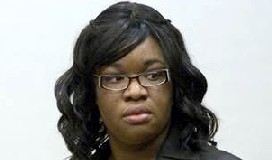 Jessica Tata
Murderer · USA · 2011
Jessica Tata was a Houston home day care owner who fled to Nigeria after a fire…
4 victims
Jessica Tata
Murderer · USA · 2011
Jessica Tata was a Houston home day care owner who fled to Nigeria after a fire…
4 victims
 Amanda Bennett
Murderer · USA · 2011
Amanda Bennett was an Indiana woman who shot her three children and set the fam…
3 victims
Amanda Bennett
Murderer · USA · 2011
Amanda Bennett was an Indiana woman who shot her three children and set the fam…
3 victims
 Brenda Humphrey
Murderer · USA · 1987
Brenda Humphrey was convicted with Gregory Wilson for the kidnapping, rape, rob…
1 victim
Brenda Humphrey
Murderer · USA · 1987
Brenda Humphrey was convicted with Gregory Wilson for the kidnapping, rape, rob…
1 victim
 Earl Clanton
Homicide/Murderer · USA · 1972
Earl Clanton Jr. was executed in the electric chair. He was 33 years old when h…
2 victims
Earl Clanton
Homicide/Murderer · USA · 1972
Earl Clanton Jr. was executed in the electric chair. He was 33 years old when h…
2 victims
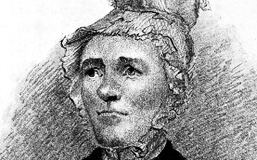 Elizabeth Ross
Murderer · United Kingdom · 1831
Elizabeth Ross, described as a common law wife of Edward Cook (sometimes “Mrs C…
1 victim
Elizabeth Ross
Murderer · United Kingdom · 1831
Elizabeth Ross, described as a common law wife of Edward Cook (sometimes “Mrs C…
1 victim
- Gender
- female
- Country
- USA
- Location
- Indialantic, Brevard County, Florida, USA
- Date of birth
- October 8, 1965
- Age at first offence
- 45
- Characteristics
- —
- Victim profile
- Kelly Brennan, 46 (her estranged husband's lover)
- Method of murder
- Hitting with a hammer
- Date(s) of murder
- February 16, 2010
- Years active
- 2010
- Date of arrest
- Next day
- Status
-
Life imprisonment
Sentenced to life in prison on September 17, 2014
Overview
Sheila Graham-Trott was convicted and sentenced to life in prison for first-degree premeditated murder connected to the February 2010 killing of Kelly Brennan.
Margret Byers watched her daughter stand as a jury said she was guilty of first-degree premeditated murder, and a judge sentenced her to life in prison. Byers recalled her daughter swimming in Georgian Bay in Ontario as a child. Byers said her daughter moved to Brevard County to study oceanography and that she loved the water. Byers said her daughter was not guilty.
Timeline
- February 2010 — Sheila Graham-Trott was arrested for the first-degree murder of Kelly Brennan.
- February 22, 2010 — Bail was denied to Sheila Graham-Trott in Brevard County as she was charged with first-degree murder.
- September 9, 2014 — Sheila Graham-Trott was in court for trial proceedings regarding the first-degree murder charge.
- September 11, 2014 — A failed plea deal delayed the start of testimony in the trial.
- September 15, 2014 — The defense rested in a Brevard love triangle murder trial before the verdict.
- September 17, 2014 — A judge sentenced Sheila Graham-Trott to life in prison.
Background
Kelly Brennan died in February 2010. Brennan was described as a Holmes Regional Medical Center nurse and as a former friend of Sheila Graham-Trott who began dating Graham-Trott’s estranged husband when the two separated in 2010.
The case involved relationships described as a love triangle and divorces. Graham-Trott was described as the estranged wife of former Indialantic Mayor Daniel Trott and as having been married to Trott for 20 years. Brennan and her husband were also described as going through a divorce. Authorities said the couples were friends and were in a group that ran triathlons together.
Witness accounts included family details. Byers said Graham-Trott was a vegetarian since ninth grade because her bus stop was near an abattoir. Byers also said Graham-Trott liked to garden and grew roses.
The offence
Sheila Graham-Trott was accused of the February 2010 killing of Kelly Brennan.
Prosecution evidence described injuries consistent with being hit with a hammer, although no murder weapon was found. The state said Brennan died after blunt injuries to the head consistent with being hit with a hammer.
The state presented a scenario in which Graham-Trott attacked Brennan from behind, while Brennan was in her yard. Prosecutors also described timing related to a phone call Brennan made at 7:48 p.m. and an estimated window until about 8:15, when Brennan would have usually left home to get to an appointment with a personal trainer. Prosecutors recalled testimony that the night Brennan died, Graham-Trott left her house at about 6 or 7 p.m., saying she needed to go to Walmart, and suggested Graham-Trott waited in Brennan’s yard on Cypress Street in Indialantic and attacked from behind.
The state said Graham-Trott moved Brennan’s body about 13 miles to where it was found. Prosecutors also described that Graham-Trott worked in real estate and could have accessed a lock box to a vacant property to clean up. Prosecutors said Brennan’s car was later found on Cato Court and that Graham-Trott could have left Brennan’s car and walked about half a mile back to her own car at Brennan’s home.
Investigation
Investigators found tire tracks and a drag mark and blood in the front yard of victim Kelly Brennan’s Indialantic home.
Brevard County Sheriff’s Investigator Deborah Demers field-tested blood found in the drag mark and found it was blood. Demers did not take a sample or a photo of the blood spot. She conceded the field test could not confirm the blood was human and said it was from a mammal, but was not sure if the test would distinguish bird blood.
While photos of the victim’s yard showed multiple photo markers said to note spots of blood, only one sample was taken and sent to a lab. That test came back negative.
The state showed the jury photos of blood spattered on the side and bumper of Brennan’s Honda Passport. With the jury sent outside the courtroom, Brevard County Sheriff’s Sgt. Terry Laufenberg explained he had training in reading patterns of blood spatter. Laufenberg opined that based on Brennan’s head injuries and the spots on the car, Brennan was not standing when the injuries were inflicted and her head was about two feet away. The judge did not allow that testimony, as Laufenberg had not been properly established as an expert in court on the topic of blood spatter. The jury returned and Laufenberg narrated a series of photos, noting spots the defense required him to refer to not as blood, but as “reddish brown” stains. Investigators took samples of those stains, and testimony about those test results was expected.
Police training and helicopter testimony described the search and scene findings. The Brevard County Sheriff’s Office helicopter pilot found Brennan’s body during a search. Chief pilot John Coppola testified he landed the helicopter nearby and ran to the body, thinking she might still be alive. He said:
“It was quite evident from what I could see, the person had been struck in the head a number of times,”
Crime scene investigator Candace Matthews testified that she could see what appeared to be blood in Brennan’s hair and that Brennan’s hair was matted up. Matthews found blood on the ground leading through the foliage to Brennan and described the distribution of sand and blood. Matthews said:
“I could see that she had what appeared to be blood in her hair, and her hair was matted up,”
A crime scene investigator narrated projected photos for the jury, including aerial landscapes and close-ups. Brennan was shown on her back in the photos, with stained sneakers and a heavily injured head. Yellow police tape was described as surrounding the sand parking lot and footpath and the area of brush where Brennan’s body lay. Brennan’s legs were described as sticking out from a stand of saw palmettos. Brennan was placed in a white bag with a medical examiner seal, identified as number 0020406.
During arrest-related statements in February 2010, Lt. Tod Goodyear described the location where Brennan’s body was found and said investigators did not know what caused the trauma:
“It was not in a place where people could easily spot her,”
“There is some trauma to the body, but we do not know what caused the trauma.”
Arrest and pretrial
Sheila Graham-Trott was arrested in February 2010 for the first-degree murder of Kelly Brennan, described as a Holmes Regional Medical Center nurse.
A Brevard County judge denied bail to Graham-Trott in a February 22, 2010 court proceeding. She was described as a 44-year-old Indialantic woman charged with killing her former friend, Kelly Brennan. Graham-Trott faced first-degree murder charges in connection with Brennan’s death. Graham-Trott’s attorney Richard Riehl requested a $10,000 bail and sought release before trial with an ankle bracelet and community supervision. Her second court appearance was described as March 11 and a grand jury was scheduled to convene March 15.
Sheriff’s deputies said Brennan, 46, was found Tuesday near a beach crossover south of Melbourne Beach. Authorities said Graham-Trott and her estranged husband were in the process of getting a divorce, and that Brennan and her husband were also getting a divorce. Investigators had not yet found a weapon but said Brennan had been hit in the head with an object.
After arrest-related developments, it was described that on Tuesday Graham-Trott began making odd statements to her two sons, and they called their grandmother for help. The mother drove to her daughter’s home, asked questions, and called 911. The mother told the operator that her daughter had killed someone and gotten rid of the body somewhere in the area south of Melbourne Beach.
Trial
Plea and jury
A failed plea deal delayed the start of testimony on September 11, 2014. The state offered a deal to Sheila Graham-Trott, who declined. The defense made a counter offer, but the state turned it down. The trial continued with testimony including evidence described as tire tracks, a drag mark, and blood in the front yard.
Prosecution arguments and evidence
Assistant State Attorney Samantha Barrett estimated Brennan died between a phone call Brennan made at 7:48 p.m. and about 8:15. Barrett recalled testimony that Graham-Trott left her house at about 6 or 7 p.m., saying she needed to go to Walmart. Barrett suggested Graham-Trott waited in Brennan’s yard on Cypress Street in Indialantic and attacked from behind.
Barrett said the injuries ended Brennan’s life and were consistent with being hit with a hammer, though no such weapon was ever found. Barrett said that while Graham-Trott weighed about 115 pounds at the time, her size did not matter.
Barrett suggested Graham-Trott had time to move Brennan’s body about 13 miles to where it was found. Barrett recalled Graham-Trott worked in real estate and could have accessed a lock box to a vacant property to clean up. Barrett then described how Brennan’s car was left later found on Cato Court and how Graham-Trott walked back to her own car.
Barrett recalled testimony that Graham-Trott’s son testified she appeared strangely when he got home at about 10 or 10:30 that night.
Assistant State Attorney Jim McMaster made arguments about premeditation. He said a possible scenario included planning and protective clothing:
“Which suggests the planning of taking additional clothing or wearing protective clothing at the time of the struggle with the victim,”
McMaster also described that the state countered the defense’s premeditation argument by saying premeditation could be shown by injuries aimed at vital areas.
Defense arguments
The defense pointed to a lack of evidence tying Graham-Trott to the crime and suggested Brennan’s husband could have killed her.
The defense emphasized the negative lab result on a sample taken from Brennan’s yard. The defense said only sample police took from Brennan’s yard, where the state said the killing took place, was tested and came back negative because it was not blood. The defense also said police did not test blood found near Brennan’s body and suggested it could have belonged to the true attacker.
The defense also raised issues about evidence handling. On September 11, 2014, it was described that a witness said evidence should have been handled differently to prevent possible contamination. Defense Attorney Mark Lanning pressed now-retired Brevard County Sheriff’s Investigator Deborah Demers about blood found in the drag mark.
During jury instruction discussions and pretrial comments, Judge James H. Earp made comments that the killing was premeditated and there was evidence that Graham-Trott admitted to the crime. The defense asked the judge to find their client not guilty on the grounds that the state had not proven premeditation. The judge denied the defense effort.
On September 15, 2014, after the judge denied the defense's effort, he said:
“I think the conclusion is easy to reach, that this was a premeditated homicide,”
While discussing jury instructions, the judge said there was “direct evidence of an admission.”
Witness testimony
Graham-Trott’s sons testified as part of the state’s case. Creighton Trott described coming home from work after his brother called about his mother having a seizure. He said they called paramedics and later took her to a hospital. In the middle of the night, she called out to them and he said:
“Mom woke up, saying she had a dream that Kelly had been hurt,”
Creighton testified they drove with her to find a body near Mark's Landing and that Graham-Trott drove them there. The defense and prosecutors discussed the sons’ accounts, including that the sons testified she appeared clean the night of the killing and that she had a dream Brennan had been hurt.
In testimony described during trial, Graham-Trott’s sons testified she led them to where Brennan’s body had been taken. During an earlier trial narrative, it was described that Creighton testified about the day their mother led them to Brennan’s body in a wooded area and that Brennan was reported missing when she did not show up at the gym where she said she would meet her boyfriend Dan Trott.
The trial included testimony and scene evidence from the helicopter pilot and crime scene investigator, as well as testimony concerning blood evidence and blood spatter.
Courtroom demeanor and family
Linda MacRae testified and described her friend Kelly Brennan as beautiful and charismatic. She said:
“I tried to look away,”
“She was beautiful,”
“She lit up a room. She was charismatic.”
When the verdict was read, Byers sat between Ariel Hill and one of Graham-Trott’s sons, both of whom had testified about the night Brennan went missing. Graham-Trott was led away in handcuffs. After the verdict, Byers left the courtroom with tears in her eyes. She was confronted in the hallway by reporters with lights shining as she walked to an elevator, and Hill pulled her away.
Sentencing
After the verdict, a judge sentenced Sheila Graham-Trott to life in prison on September 17, 2014.
Outcome
The jury found Sheila Graham-Trott guilty of first-degree premeditated murder, and the judge sentenced her to life in prison.
Brennan’s relatives declined to speak with Florida Today. One woman said they missed Brennan. They felt justice had been served.
While awaiting the verdict, Graham-Trott’s mother spoke about her daughter. Byers said:
“It’s hard in the heart,”
“If she’s found guilty, there’s something very wrong with the system.”
Other details
Brennan’s body was described as found near Mark’s Landing in Melbourne Beach, and references were made to Brennan’s home on Cypress Street in Indialantic. Brennan’s car was later found on Cato Court.
Brennan was described as 46 in February 2010. Graham-Trott was described as about 115 pounds at the time prosecutors discussed, and as standing about 5-foot-8.
A line in the trial narrative described Graham-Trott as wearing or having the potential to wear protective clothing during the struggle.
A conviction status was described through the sentencing outcome without mention of an appeal within the provided material.

Spotted an error, or have more information about this case?