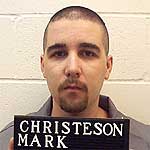
Mark Christeson
Murderer Russell Ellwood
Murderer · USA · 1991
Russell Ellwood was a former taxi driver. Authorities suspected him of killing…
20 victims
Russell Ellwood
Murderer · USA · 1991
Russell Ellwood was a former taxi driver. Authorities suspected him of killing…
20 victims
 Robert Martines Perez
Murderer · USA · 1994
Name: Robert Martines Perez · Other name used in proceedings: Robert Martinez P…
15 victims
Robert Martines Perez
Murderer · USA · 1994
Name: Robert Martines Perez · Other name used in proceedings: Robert Martinez P…
15 victims
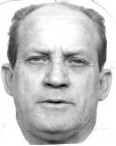 Billy Frank Vickers
Murderer · USA · 1993
Billy Frank Vickers Vickers was executed by lethal injection in Texas on Januar…
14 victims
Billy Frank Vickers
Murderer · USA · 1993
Billy Frank Vickers Vickers was executed by lethal injection in Texas on Januar…
14 victims
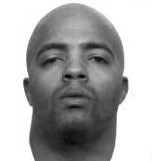 Anthony Nathaniel Bonham
Murderer · USA · 1981
Anthony Nathaniel Bonham (also shown as Antonio Nathanial Bonham) was executed…
1 victim
Anthony Nathaniel Bonham
Murderer · USA · 1981
Anthony Nathaniel Bonham (also shown as Antonio Nathanial Bonham) was executed…
1 victim
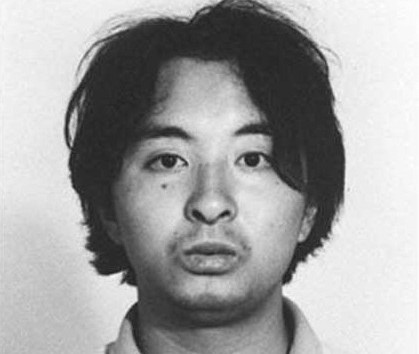 Tsutomu Miyazaki
Serial killer · Japan · 1988
Tsutomu Miyazaki was a Japanese serial killer. He murdered four girls aged betw…
4 victims
Tsutomu Miyazaki
Serial killer · Japan · 1988
Tsutomu Miyazaki was a Japanese serial killer. He murdered four girls aged betw…
4 victims
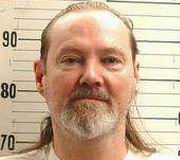 David Lee McNish
Murderer · USA · 1983
Defendant: David Lee McNish · Victim: Gladys E. Smith (also referred to as Mrs.…
1 victim
David Lee McNish
Murderer · USA · 1983
Defendant: David Lee McNish · Victim: Gladys E. Smith (also referred to as Mrs.…
1 victim
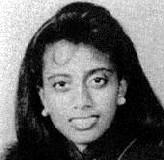 Sinedu Tadesse
Murderer · USA · 1995
Sinedu Tadesse (1974 - May 28, 1995) was a junior at Harvard University when sh…
1 victim
Sinedu Tadesse
Murderer · USA · 1995
Sinedu Tadesse (1974 - May 28, 1995) was a junior at Harvard University when sh…
1 victim
 David Ray Duren
Murderer · USA · 1983
David Ray Duren David Ray Duren was executed by electrocution in Alabama on Jan…
1 victim
David Ray Duren
Murderer · USA · 1983
David Ray Duren David Ray Duren was executed by electrocution in Alabama on Jan…
1 victim
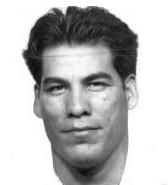 Arturo Daniel Aranda
Murderer · USA · 1976
Arturo Daniel Aranda was sentenced to death on May 18, 1979. Aranda Arturo, a 7…
1 victim
Arturo Daniel Aranda
Murderer · USA · 1976
Arturo Daniel Aranda was sentenced to death on May 18, 1979. Aranda Arturo, a 7…
1 victim
- Gender
- male
- Country
- USA
- Location
- Maries County, Missouri, USA
- Date of birth
- February 20, 1979
- Age at first offence
- 19
- Characteristics
- rape, robbery
- Victim profile
- Susan Brouk and her two children, Adrian, 12, and Kyle, 9
- Method of murder
- Drowning / Suffocation
- Date(s) of murder
- February 1, 1998
- Years active
- 1998
- Date of arrest
- 8 days after
- Status
-
Sentenced to death
Sentenced to death on October 14, 1999
Case information
Mark A. Christeson was convicted and sentenced to death for the 1998 murders of Susan Brouk and her two children, Adrian and Kyle.
Timeline
- January 31, 1998 — Christeson, then 18, and his cousin Jesse Carter, then 17, concocted a plan to run away while living in the home of a relative, David Bolin, in a rural area near Vichy, Missouri.
- February 1, 1998 — After Mr. Bolin left for work, Christeson and Carter took shotguns and went to Ms. Brouk's home; after hiding outside, they entered and began the confrontation that led to the killings.
- Tuesday evening — Kay Hayes called Ms. Brouk's home and there was no answer.
- Next evening — Family members discovered prescription glasses and coats still in the house and that the television, VCR, and Bronco were missing; officers secured the home and searched the premises.
- Next morning — Officers in a Missouri State Highway Patrol helicopter spotted a body floating in a pond slightly southeast of the Brouks’ residence and found the bodies of Ms. Brouk, Adrian, and Kyle partially submerged.
- February 9, 1998 — A detective with the Riverside County Sheriff's Department stationed in Blythe, California recognized Christeson and Carter from photographs on a law-enforcement flyer and the fugitives were arrested.
- October 8, 1999 — The trial court imposed sentence in accordance with the jury’s recommendation.
- June 26, 2001 — The Missouri Supreme Court handed down its opinion in State of Missouri, Respondent, v. Mark A. Christeson, Appellant, Case Number SC82082.
- April 2004 — The Missouri Supreme Court addressed Case Number SC85329.
- June 2001 — Missouri Supreme Court Case Number SC82082.
- October 14, 1999 — Christeson was sentenced to death.
Background
Christeson, who was 18 at the time, and his cousin Jesse Carter, who was 17 at the time, were living in the home of a relative, David Bolin. The Bolin home was located in a rural area near Vichy, Missouri. Susan Brouk lived about a half mile away with her children, twelve-year-old Adrian and nine-year-old Kyle.
On Saturday, January 31, 1998, Christeson and Carter concocted a plan to run away. On Sunday morning, February 1, 1998, after Mr. Bolin left for work, Christeson and Carter each took shotguns and went to Ms. Brouk's home. After hiding outside for a few minutes, they entered the home and found Adrian and Kyle sitting on the living room floor. Ms. Brouk came in from the kitchen and encountered Carter binding her children's hands with shoelaces that he had brought for that purpose.
The offence
Assault and abduction inside the home
Christeson forced Ms. Brouk into her daughter Adrian's bedroom at gunpoint and raped her on Adrian's bed. When Christeson brought Ms. Brouk back out to the living room, Carter bound her hands behind her back with a piece of yellow rope. Ms. Brouk said, "you had your fun, now get out."
At some point during the confrontation, Ms. Brouk and Kyle were both struck in the head with a blunt object.
Adrian recognized Carter and said "J.R.," Carter's nickname, and "Jesse Carter," which prompted Christeson to tell Carter "we got to get rid of 'em."
Christeson and Carter forced Ms. Brouk and her children into the back seat of Ms. Brouk's Bronco and also loaded her television, VCR, car stereo, video game player, checkbook, and a few other small items.
Killings at the pond
Christeson drove down the highway, down a gravel road, and then across a neighbor's field to a pond at the edge of a wooded area. They forced Ms. Brouk and her children to the bank of the pond.
Christeson kicked Ms. Brouk just below her ribs with enough force that she was knocked to the ground. Christeson then placed his foot on her mid-section and reached down and cut her throat with a bone knife. She bled profusely, but she did not die immediately. As she lay on the bank of the pond, she told Adrian and Kyle that she loved them.
Christeson then cut Kyle's throat twice and held him under the pond water until he drowned. Carter pushed Kyle's body farther out into the pond so the body would sink.
At Christeson's direction, Carter retrieved cinder blocks from a nearby barn. While there, Carter heard Christeson fire a shot from one of the shotguns. When Carter returned to the pond, Adrian was struggling to free herself from Christeson. Carter held Adrian's feet while Christeson pressed down on her throat until she suffocated, and Carter then pushed Adrian's body into the pond.
While Ms. Brouk was still alive, but barely breathing, Christeson grabbed her arms and Carter grabbed her legs, and they threw her into the pond on top of her children's bodies. As she drowned, Carter went into the woods to get a long stick and used it to push the Brouks' bodies further out into the pond.
Return to Mr. Bolin’s property and travel
Christeson and Carter returned to Mr. Bolin's property in the Bronco and parked it near a garbage pile. They took one of the shotguns back into Mr. Bolin's house. They loaded their personal belongings into an Oldsmobile, drove the Oldsmobile back to the garbage pile, transferred their belongings to the Bronco, and then drove off in the Bronco, eventually heading west on Interstate 44.
Investigation
Initial missing-person concerns
Ms. Brouk's sister, Kay Hayes, thought it was unusual that Ms. Brouk and her children did not come to Sunday dinner as planned. She was not concerned until Tuesday evening, when she called Ms. That evening, Ms. Hayes called another sister, Joy Lemoine, to inquire if she had heard from Ms. Brouk, but Joy Lemoine had had no contact either.
When family members went to Ms. Brouk's house the next evening, they discovered that Ms. Brouk's prescription glasses and the children's and Ms. Brouk's coats were still in the house, and that the television, VCR, and Bronco were missing. They called the police.
That night, officers from the Maries County Sheriff's Department secured the home and searched the premises.
Discovery and physical evidence
The next morning, officers in a Missouri State Highway Patrol helicopter conducting an aerial search spotted a body floating in a pond located slightly southeast of the Brouk's residence. After landing the helicopter in a field just south of the pond, they found the bodies of Ms.
The officers investigated the area around the pond and found a sixteen-gauge shotgun shell on the south bank, some leaves and soil splattered with blood, shoe impressions, and two cinder blocks on the west bank near the area where the bodies were recovered. There were also tire impressions leading from the pond to the garbage pile on Mr. Bolin's property where Christeson and Carter had parked the Bronco.
Flight and sale of property; pawnshop
In the meantime, Christeson and Carter were driving from Missouri to California. On the way, they sold several items of Ms. Brouk's property to pay for gas and food. Christeson also pawned the sixteen-gauge shotgun at a pawnshop in Amarillo, Texas.
On February 9, 1998, a detective with the Riverside County Sheriff's Department stationed in Blythe, California recognized Christeson and Carter from their photographs on a flyer that had been circulated by law enforcement officials, and later that day the fugitives were arrested.
Autopsy and forensic testing
A medical examiner's autopsy report showed that the cuts to Ms. Brouk's neck were not severe enough to cause her death immediately and that the actual cause of death was drowning.
Autopsies also revealed that Ms. Brouk and Kyle had hemorrhaging or bleeding under the scalp, indicating a blunt impact injury or blow to the head, and that there were two superficial cuts across Kyle's neck, but that he, too, died from drowning.
Adrian died from suffocation. There was also a small, shallow puncture wound in Adrian's left arm that could have been caused by a pellet from a shotgun shell, although no pellet was present.
DNA testing performed by the Missouri State Highway Patrol Crime Laboratory established that genetic material from semen recovered from Ms. Brouk's body and from Adrian's sheets matched Christeson's genetic profile.
Firearms-identification testing established conclusively that the sixteen-gauge shotgun Christeson pawned in Texas was the one that fired the shell found on the bank of the pond.
Arrest
On February 9, 1998, fugitives Christeson and Carter were arrested after a detective stationed in Blythe, California recognized them from circulated photographs.
Trial
Venue and verdict
The case was tried in Vernon County on a change of venue from Maries County. The jury returned verdicts of guilty for three counts of first-degree murder.
Christeson took the witness stand to deny his involvement in the murders. He testified that he had a secret sexual relationship with Ms. Brouk and that at about noon on Saturday, January 31, 1998, he had sex with her on Adrian's bed.
Christeson also claimed that on the morning of February 1, 1998, Carter stole Ms. Brouk's Bronco and asked Christeson to run away with him, and that Christeson did so simply because he, too, wanted to run away.
Penalty phase
Mike Wagner testified for the state that Christeson sodomized him when they shared a cell in February 1999 while incarcerated in the Vernon County jail.
Joy Lemoine provided victim impact testimony for the state.
In mitigation, Christeson’s mother, aunt, and former girlfriend testified about Christeson's difficult, abusive and unhappy upbringing. The defense also called Dr. Wanda Draper, a psychologist, who confirmed that Christeson had several unresolved traumatic experiences from his childhood.
At the conclusion of the penalty phase, the jury found four aggravating circumstances in the murder of Ms. Brouk:
- that the murder was committed during the unlawful homicide of her daughter, Adrian;
- that the murder was committed during the unlawful homicide of her son, Kyle;
- that the murder was committed during the perpetration of rape; and
- that the murder involved depravity of mind and was therefore outrageously and wantonly vile, horrible, and inhuman.
The jury found three aggravating circumstances in the murders of Adrian and Kyle:
- that the murders were committed during the unlawful homicide of their mother;
- that the murders were committed during the unlawful homicide of each other; and
- that the murders involved depravity of mind and were therefore outrageously and wantonly vile, horrible, and inhuman.
The jury returned verdicts of death on all three counts.
On October 8, 1999, the trial court imposed sentence in accordance with the recommendation of the jury.
Sentencing
Christeson was sentenced to death on each count of first-degree murder.
Appeals
Supreme Court case SC82082 (June 26, 2001)
The Missouri Supreme Court issued an opinion in State of Missouri, Respondent, v. Mark A. Christeson, Appellant, Case Number SC82082, Handdown Date: 06/26/2001.
The court affirmed the conviction and death sentence. Court en banc held:
- A claim of an attorney's conflict of interest based on trial court error in failing to grant the attorney's motion to withdraw—not on the attorney's alleged misconduct or ineffectiveness—was properly brought as part of a direct appeal.
- The court did not abuse its discretion in denying a defense attorney's motion to withdraw where there was no real conflict of interest between the attorney and the potential state witness she represented in an unrelated matter.
- Christeson failed to prove he was prejudiced by the court's denial of his request for a continuance. His cousin confessed to his role in the crime fourteen months before Christeson's trial and was deposed for more than six hours by Christeson's attorneys. At trial, defense counsel elicited detailed testimony from the cousin's psychological evaluators.
- The court did not abuse its discretion in denying individual voir dire or motions to strike two jurors where there was no evidence that a newspaper article published about the crime before jury selection would prevent any juror from impartially judging Christeson.
- The court did not abuse its discretion in striking for cause a venireperson who equivocated about his ability to impose the death penalty in a capital case and his unequivocal assertion that he could not sign a verdict form assessing the death penalty.
- No error occurred in statements made by the prosecutor during voir dire. One was misquoted by Christeson and was not improper. The others were not preserved by timely objections at trial and did not approach the manifest injustice standard necessary for plain error relief.
- An autopsy photo showing the injuries to Susan Brouk's head was not improperly admitted because it was relevant to help the jury understand the nature, location and timing of her injuries.
- Testimony of the officer who took the cousin's statement was properly admitted as a prior consistent statement to rehabilitate the cousin's testimony.
- Juror curiosity about the Bronco, which indisputably was in Christeson's possession during the crimes, did not constitute juror misconduct due to deliberation of the facts before the case was submitted.
- No error occurred in statements made by the prosecutor during his guilt phase closing argument. One was taken out of context by Christeson and was not improper.
- No plain error was evident in admitting, during the penalty phase, testimony about unadjudicated criminal conduct committed by Christeson while he awaited trial for the Brouk murders.
- No error occurred in statements made by the prosecutor during his penalty phase closing argument. One was merely a statement that murder was the worst crime in society and that is why it was the only crime for which the death penalty was available. The others were not preserved by timely objections at trial and did not show error, plain or otherwise.
- The statutory aggravating circumstances were not impermissibly duplicative.
- Christeson was not entitled to a new trial because his trial transcript was not materially inaccurate. As to most claimed inaccuracies, he failed to specify what the mistake was or how it affected his appeal. The rest either were trivial or inconsequential, or no prejudice resulted.
- The death penalty in this case passed independent review pursuant to section 565.035.
Opinion author was Stephen N. Limbaugh, Jr., Judge. The opinion vote was AFFIRMED. Price, C.J., White, Holstein, Wolff and Benton, JJ., concur. Stith, J., not participating.
Supreme Court case SC85329 (April 2004)
The Missouri Supreme Court also referenced Case Number SC85329 with a handdown in April 2004.
Outcome
The Missouri Supreme Court affirmed Christeson’s conviction and death sentence.
Other details
Pre-trial issues addressed on direct appeal
Christeson claimed the trial court erred by denying his trial counsel's motion to withdraw as his attorney. The motion to withdraw was based on a conflict of interest asserted by Valerie Leftwich, one of Christeson’s two trial attorneys. Leftwich explained she had previously represented Michael Gibbs in an unrelated matter years earlier and had confidential information regarding that representation. Leftwich believed a conflict existed because she might be forced to disclose the confidential information if the state called Gibbs and she had to cross-examine him, or if the defense needed to call Gibbs, the state might cross-examine to show Gibbs testified favorably for Christeson due to Leftwich’s connection.
The prosecutor stipulated that Gibbs would not be called as a witness for the state. However, Robert Milner testified for the state that while he was in jail with Christeson and Gibbs, he overheard Christeson tell Gibbs, "Of course I did, but they ain't got shit on me." The statement went unchallenged, and it was unclear whether Christeson referred to the murders, jailhouse sodomy, or some other misconduct. Christeson also claimed that Leftwich's conflict prevented her from calling Gibbs to dispute that the statement was made.
Christeson also claimed the trial court erred in denying a continuance based on the state's endorsement of Carter as a witness only thirteen days before trial. The court found Carter’s identity and involvement were known for almost a year and a half, Carter’s confession was provided fourteen months before trial, and defense counsel conducted a more than six-hour deposition of Carter two weeks before he testified. The defense had also called two of Carter’s psychological evaluators and questioned them in detail about Carter’s mental health issues. Christeson did not show what evidence he would have developed with a continuance or that prejudice resulted.
Voir dire issues and prosecutor comments during voir dire
Christeson argued he should have been allowed individual questioning during voir dire due to pre-trial publicity from a newspaper article on the front page of the Nevada Daily Mail on August 25, 1999. The article reported, based on preliminary hearing testimony later excluded by the court, that trouble between Christeson and Ms. Brouk began in January 1998 when she asked Christeson and Carter not to hunt on her property because her son played outside, and also stated that Adrian Brouk had tried to escape—something the opinion said was not part of the trial testimony. The article also noted Christeson would be brought to the courtroom early each morning so jurors would not see him in leg irons and shackles.
The court divided the jurors into small groups for questioning and prohibited inquiries about the jurors' specific recollections of the content of the article. The record indicated none of the jurors selected had formed an opinion that prevented them from deciding guilt or innocence based on the trial evidence.
Christeson also challenged jurors Gary Ashby and Elaine Allen for cause due to exposure to the newspaper article. The record showed neither read the article, and both said they had not formed any opinion about Christeson’s guilt.
Christeson challenged the striking for cause of venireperson Kent Thompson. During voir dire, the prosecutor asked: "Having reached the final point of decision . . . could you vote for life in prison without parole?" Thompson answered: "Yes." The prosecutor asked: "Could you vote for the other alternative of the death penalty?" Thompson answered: "Yes." The prosecutor asked: "Is there any hesitation, sir? You seem to be thinking about that as you were getting ready to answer, and certainly giving something some thought is often a good idea." Thompson answered: "It would be hard." The prosecutor asked: "Okay. Would it be fair to say you have some uncertainty about one or the other of those penalties?" Thompson answered: "Uncertainty about death." During later questioning: PROSECUTOR: "You were saying you had a hard time with the death penalty if I understood what you were saying; correct?" VENIREPERSON THOMPSON: "Yes." PROSECUTOR: "Mr. Thompson, I want you to assume that not only are you on this jury but that you have been elected foreperson of the jury. I will tell you that while the jury -- the vote of jury [sic] must be unanimous as to punishment, either for life or for death, that the foreperson of the jury would be the person that would come out and announce the verdict in open court. Do you think you could come out into open court and announce a death verdict?" MS. LEFTWICH: "I'm going to object, your honor. I think is [sic] inappropriate line of questioning under the law, and it misstates the law. He doesn't have to come out and announce the verdict. The foreperson signs on the line." PROSECUTOR: "Well, I'll get to that too, and I think this line of questioning is specifically approved by the Supreme Court." THE COURT: "The court will overrule that objection. Go ahead." PROSECUTOR: "You may answer, sir." VENIREPERSON THOMPSON: "Would you repeat that again." PROSECUTOR: "All right, understand that while the verdict must be unanimous, that when the jury comes out, it is the foreperson of the jury who turns over the verdict and announces the death verdict if that were your conclusion in open court. Do you think you could do that?" THOMPSON answered: "No." PROSECUTOR: "No. I'll ask the next question just to make it clear. I will tell you again that while the verdict must be unanimous, the verdict is signed by the foreperson alone. Could you sign a death verdict?" THOMPSON answered: "No."
Defense counsel attempted to rehabilitate Thompson: MS. LEFTWICH: "One more, Mr. Thompson. I missed you for a minute. Okay, again are you telling me--you talked to Mr. Ahsens previously about the death penalty. I think you finally indicated that you wouldn't be--you didn't think you [could] sign a verdict form imposing the death penalty; is that correct?" VENIREPERSON THOMPSON: "Yes." Q: "Could you--Could you consider the death penalty after you had found someone guilty of one, two or three first degree murders?" A: "Yes." Q: "Okay you will be able to consider it?" A: (Nods head.) Q: "Is that yes?" A: "Yes."
In striking venireperson Thompson for cause, the court stated: "[M]y impression was that he was not . . . for the death penalty. He had a hard time even saying -- looking at him and watching him, he'd look down and, very softly, he said -- he finally said he might be able to vote for the death penalty. But he never said he could sign a verdict. I think I'm going to strike . . . as not being able to realistically, I think, substantially comply with the law."
Christeson also alleged improper prosecutor comments during voir dire. One preserved claim was that the prosecutor misstated the law in reference to penalty phase when he remarked, "You're no longer interested in whether the defendant is guilty or not guilty; you have already made that decision." Christeson also raised plain error challenges to other comments that included: "Mr. Garrabrant is a well-trained and experienced prosecutor. Murder is, however, unusual in Vienna, Missouri, so he has wisely asked for help;" "The defense will present you evidence or argue factors that they feel make the death penalty inappropriate;" ". . . it's very likely in this case there will be evidence from both sides in the second part;" "You then have to decide whether mitigating circumstances which are offered by the defense outweigh it;" "You understand too, that the defense does not have to prove those mitigating circumstances beyond a reasonable doubt or any other way;" ". . . any mitigating circumstances that are presented by the defense . . . They will present that evidence, you will decide whether you believe it or not;" "The governor has signed them [statutory aggravating circumstances] into law."
Photograph evidence
Christeson argued the trial court abused its discretion by admitting an autopsy photograph depicting Ms. Brouk's scalp with the skin pulled back to reveal the injury to her head. The court rejected the claim, finding it relevant to help the jury understand the nature and location of the injury.
Juror note about seeing the Bronco
During the state's case, a juror sent a note asking if the jury could see the Bronco. The note stated, "Judge, Is there any way we can see the actual Bronco? F.J. Jeffries." The court called Ms. Jeffries to the bench: THE COURT: "I'm guessing this is your note is all I'm asking you." MS. JEFFRIES: "Yes, sir." Q: "Okay. Ms. Jeffries, it says here, is there any way we can see the actual Bronco. Is this something that you wanted to see or is this something where --" A: "Well, I think we all kind of wanted to but we didn't -- we're trying not to discuss it." Q: "You're trying not to discuss it?" A: "Right." Q: "But you think we all might want to see it?" A: "Yeah." Q: "Okay. A: We all had a question about whether the windows were tinted or not." Q: "I understand." A: "Because this seemed significant." Q: "Well I guess what I'm asking you is, are you all -- are you saying that you're sitting there discussing evidence and what it means?" A: "No, we're not. We're not. We're trying very hard not to."
Christeson moved for a mistrial based on alleged juror misconduct about discussing the facts before all evidence was presented, and the trial court denied the motion.
Jury transcript accuracy issue
Christeson alleged the trial transcript was materially inaccurate. The court addressed one significant claimed statement made by defense counsel while instructing venirepersons about the death penalty: "if you're chosen to sit on this jury, at the time whatsoever will the Court through its instructions require you to give the death penalty. . . ." The court found any potential prejudice was cured when counsel stated two sentences later that "at no time would you ever be required to give the death penalty." The trial court also instructed: "[t]he jury is never required to return a sentence of death."
Separate opinion
No separate opinion was included.
Spotted an error, or have more information about this case?